Uppercase identification Worksheets for Ages 4-5
5 filtered results
-
From - To
Discover our engaging Uppercase Identification Worksheets designed for ages 4-5! These printables are perfect for little learners to recognize and write uppercase letters. Each worksheet offers fun, educational activities that develop letter recognition, fine motor skills, and early literacy capabilities. Through tracing and colorful games, children will solidify their understanding of the alphabet. These resources are ideal for parents and educators seeking enjoyable, effective tools to support early childhood education. Give your child a head start in reading and writing with our Uppercase Identification Worksheets from Kids Academy today!
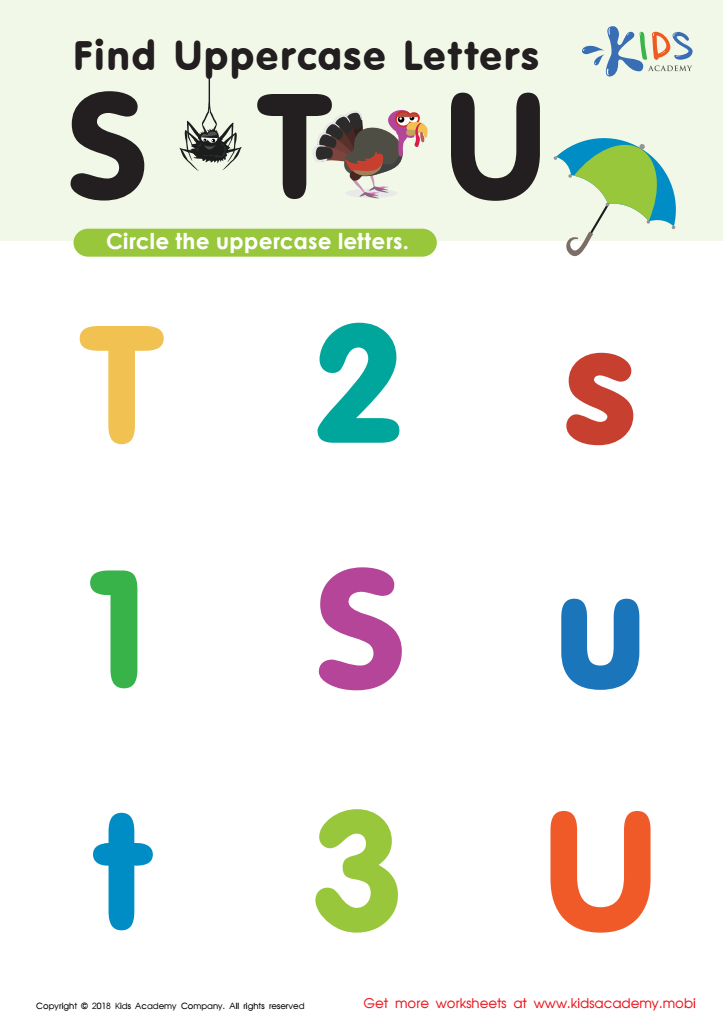
Find Uppercase Letters Worksheet
 Assign to My Students
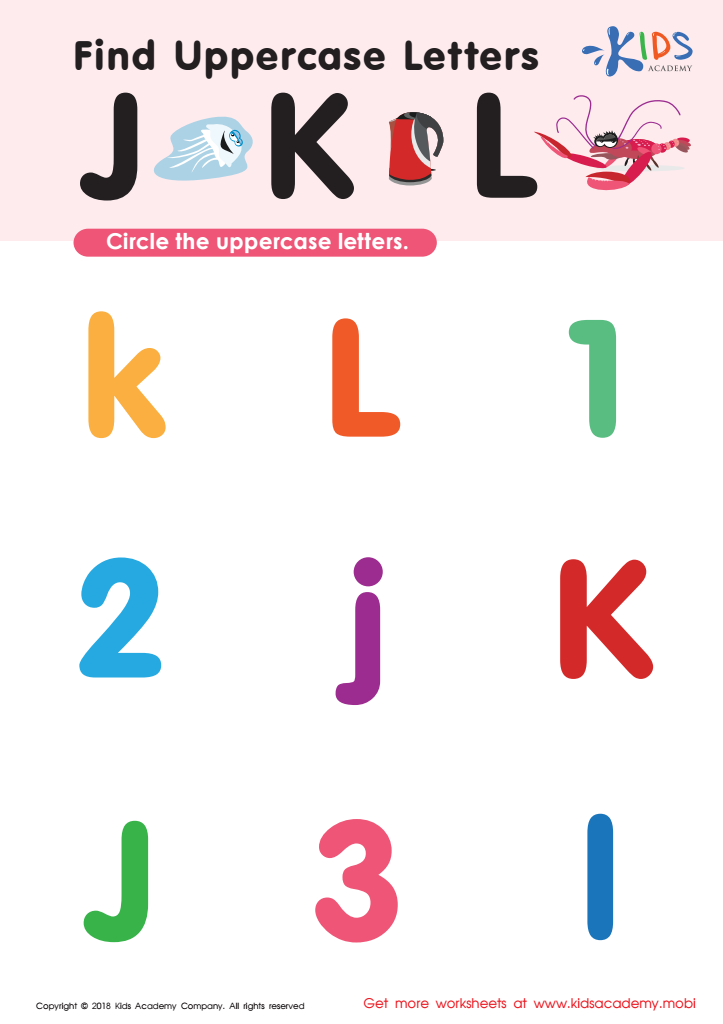
Find Uppercase Letters J, K, and L Worksheet

Find Uppercase Letters A, B, and C Worksheet
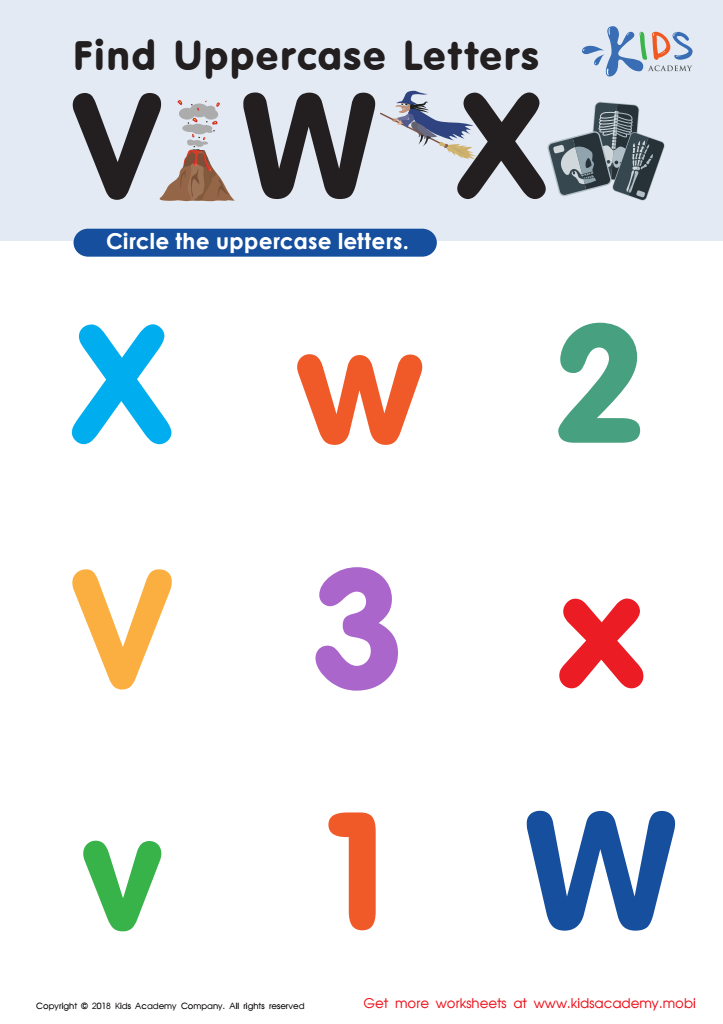
Find Uppercase Letters V, W, X Worksheet
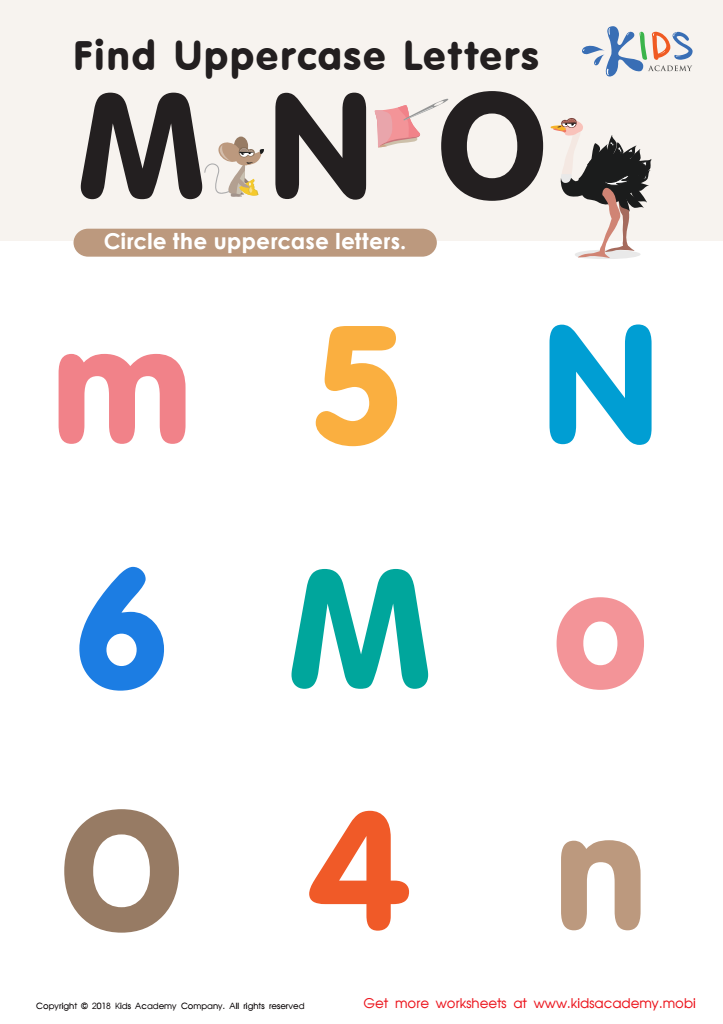
Find Uppercase Letters M, N, and O Worksheet


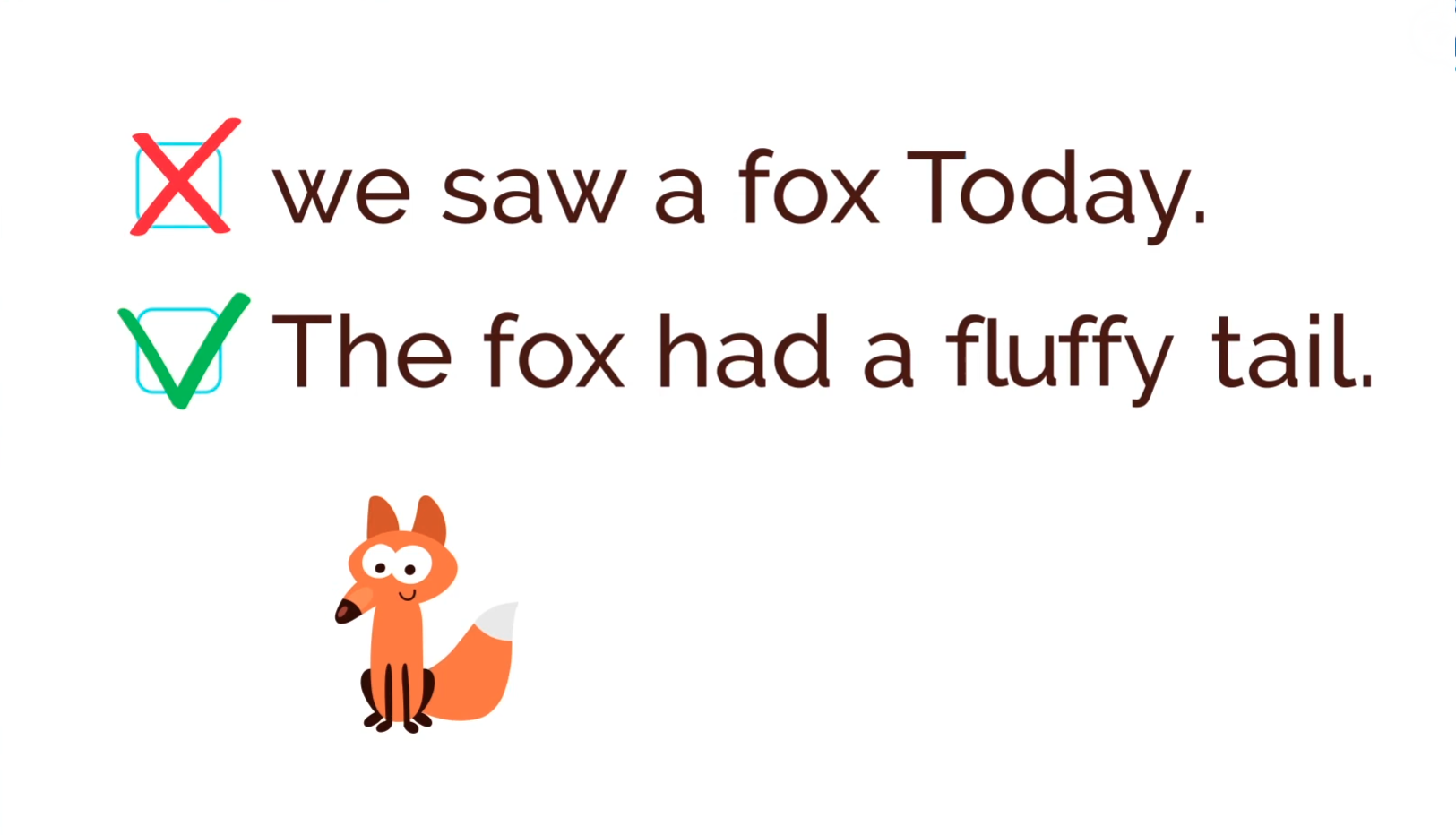





Understanding uppercase letters is crucial for young children aged 4-5 as it lays the foundation for their early literacy skills. During these formative years, recognizing uppercase letters helps children develop visual discrimination. This is essential since many instructional materials, road signs, and labels utilize uppercase letters, making them prevalent in a child's environment.
Moreover, uppercase letters are traditionally simpler in form and more distinct from one another compared to lowercase letters, making them easier for young minds to learn and recognize. This aids in building their confidence and self-efficacy in reading, as they can see their progress and success evident through their ability to name and identify letters.
Familiarity with uppercase letters also paves the way for children to follow along in reading and writing activities, enhancing their participation and engagement in class. This foundational skill set acts as a stepping stone to more complex literacy capabilities, including the understanding of lowercase letters, phonetic sounds, word formation, and eventually, reading comprehension.
Teachers and parents who prioritize uppercase letter identification give children a head start in their literary conventionality, cognitive development, and fine motor skills. The results are not only academic readiness but also an early joy and interest in the act of reading itself, creating an important early educational milestone.








