Word identification Worksheets for Ages 4-5
5 filtered results
-
From - To
Our Word Identification Worksheets for ages 4-5 are designed to enhance early reading skills in young learners. By incorporating age-appropriate activities, these worksheets help children recognize and identify common words, fostering their vocabulary development and phonemic awareness. Engaging exercises include matching words to pictures, sounding out letters, and completing fun puzzles, making learning enjoyable and effective. Ideal for preschool and kindergarten students, our expertly crafted worksheets provide the foundational skills needed for future reading success. Visit our site for high-quality, printable word identification worksheets tailored to growing readers' needs!
Long Vowel Sound A Worksheet
 Assign to My Students
Identify Individual Words Worksheet
What Do you See at School? Worksheet
Short Vowel Sound E Worksheet
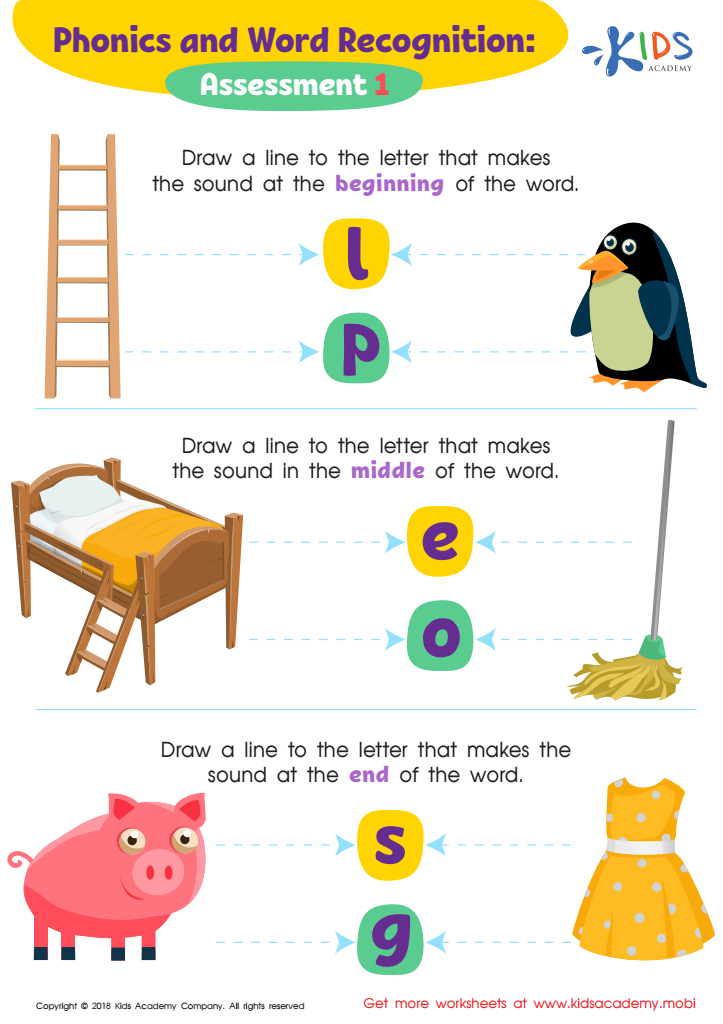
Phonics and Word Recognition: Assessment 1 ELA Worksheet








Word identification is a foundational skill that significantly impacts a child's overall literacy development, especially for children aged 4-5. At this critical stage, young learners are just beginning to comprehend the relationship between letters and sounds, which forms the bedrock of reading and writing abilities. When parents and teachers prioritize word identification, they help children recognize and understand individual words, a key component in the journey toward fluent reading.
Children with strong word identification skills can decode new words more easily, improving their reading accuracy and fluency. This early proficiency boosts their confidence and interest in reading, promoting a lifelong love of literature and learning. Conversely, children who struggle with word identification may find reading frustrating, potentially leading to reading difficulties that can extend into later academic years.
Furthermore, early word identification skills are closely linked to vocabulary development. As children identify and learn new words, their vocabulary expands, enhancing their comprehension and ability to express themselves. This linguistic growth positively impacts their communication skills and cognitive development.
By focusing on word identification for early learners, parents and teachers provide essential support that fosters academic success. They create a nurturing reading environment where young children can thrive, laying the groundwork for their future educational achievements.








