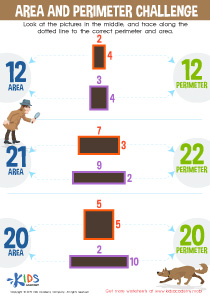
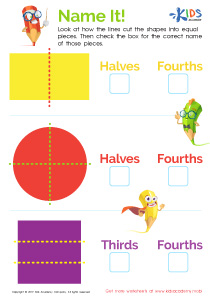
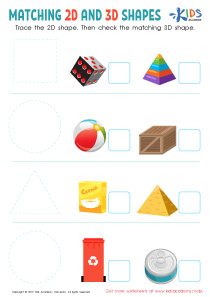
Pattern recognition 2D Shapes Worksheets for Ages 4-5
3 filtered results
-
From - To
Unlock your child’s potential with our engaging Pattern Recognition 2D Shapes Worksheets tailored for ages 4 to 5! Designed to develop essential math skills, these printable worksheets offer a fun and interactive way for young learners to identify and organize shapes. Through captivating activities, children will enhance their ability to spot patterns and comprehend spatial relationships, laying a strong foundation for future mathematical concepts. Our resources combine visual stimulation with skill-building exercises, ensuring kids remain engaged while learning. Encourage your child’s curiosity and creativity in a playful and educational environment—perfect for preschool learning at home or in the classroom!
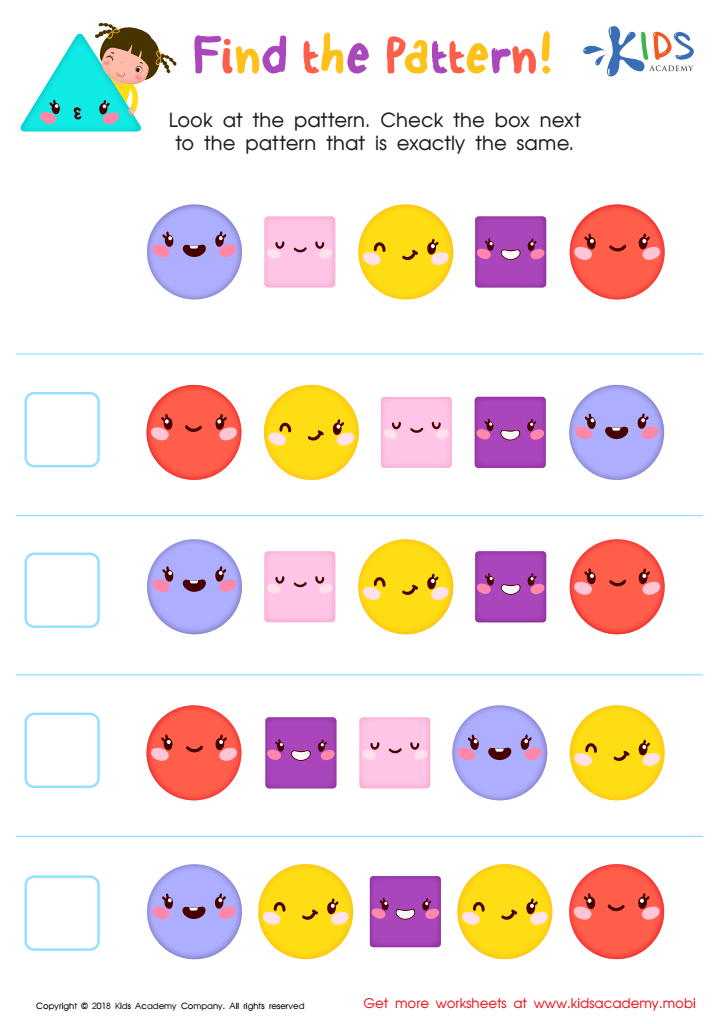
Find the Pattern Worksheet
 Assign to My Students







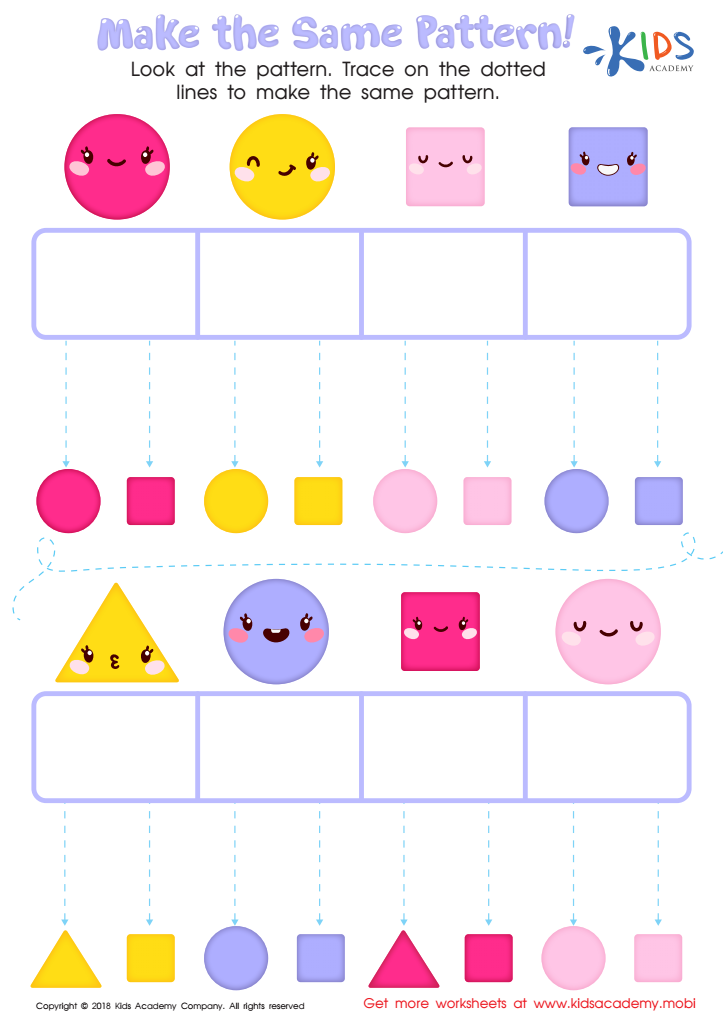
Make the Same Pattern Worksheet
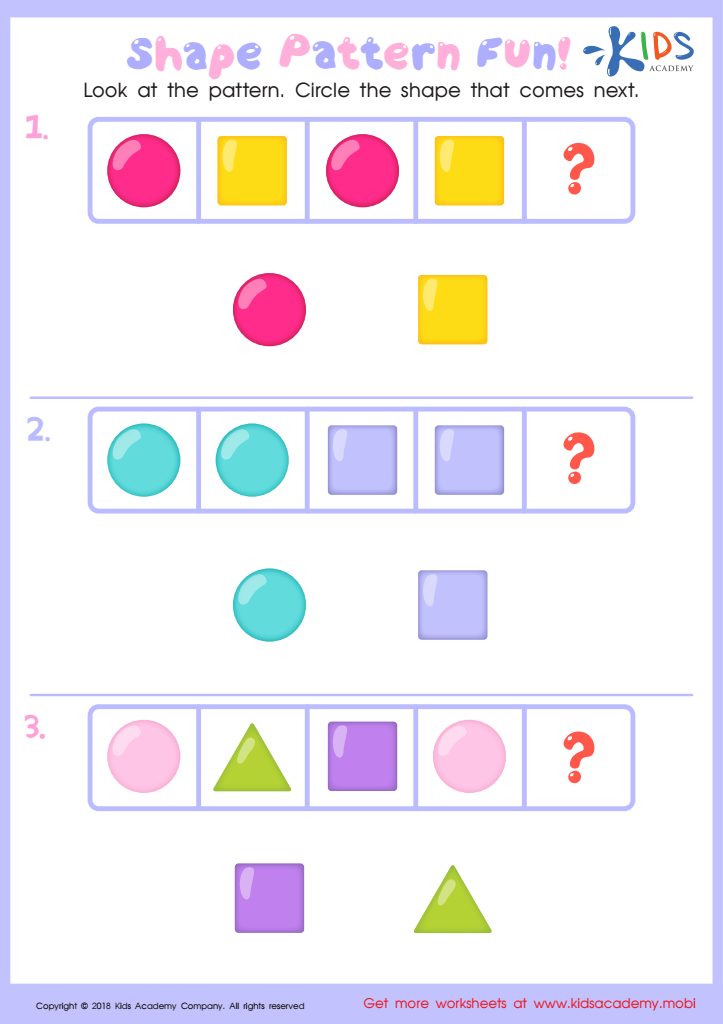
Shape Pattern Fun Worksheet








Pattern recognition with 2D shapes is a crucial skill for children aged 4-5 as it lays the foundation for their cognitive development and problem-solving abilities. Early engagement with patterns helps children improve their critical thinking skills, enabling them to identify relationships and sequences. Recognizing shapes and patterns fosters spatial understanding, which is essential in a variety of subjects, including math and science.
Additionally, pattern recognition enhances children's ability to categorize and classify objects, essential skills for early literacy as they begin to identify letters, sounds, and words. It encourages creativity as children learn to visualize and manipulate different shapes, enhancing their imagination. Introducing shapes and patterns in a fun and interactive way, such as through games or art projects, keeps children motivated and engaged in learning.
For parents and teachers, nurturing these skills means providing children with the tools they need for future academic success. It also fosters collaboration and social interaction when done in group settings, further developing their social skills. Supporting children in recognizing shapes and patterns contributes to building a strong foundation for their future learning experiences, helping them become confident learners. Investing time in this area ultimately prepares them better for the challenges of higher education.