Animal recognition Adding at the Zoo Worksheets for Ages 4-5
43 filtered results
-
From - To
Introduce your little one to the wonderful world of math and animals with our "Animal Recognition Adding at the Zoo Worksheets" designed for ages 4-5. These exciting, skill-building activities feature vibrant zoo animals, transforming addition practice into an engaging adventure. Your child will not only improve their addition skills but also enhance their ability to recognize different animals, fostering both cognitive and emotional development. Perfect for preschoolers, these worksheets offer a fun, interactive way to develop early math foundations while exploring the fascinating zoo setting. Help your child build confidence and enjoy learning with Kids Academy.
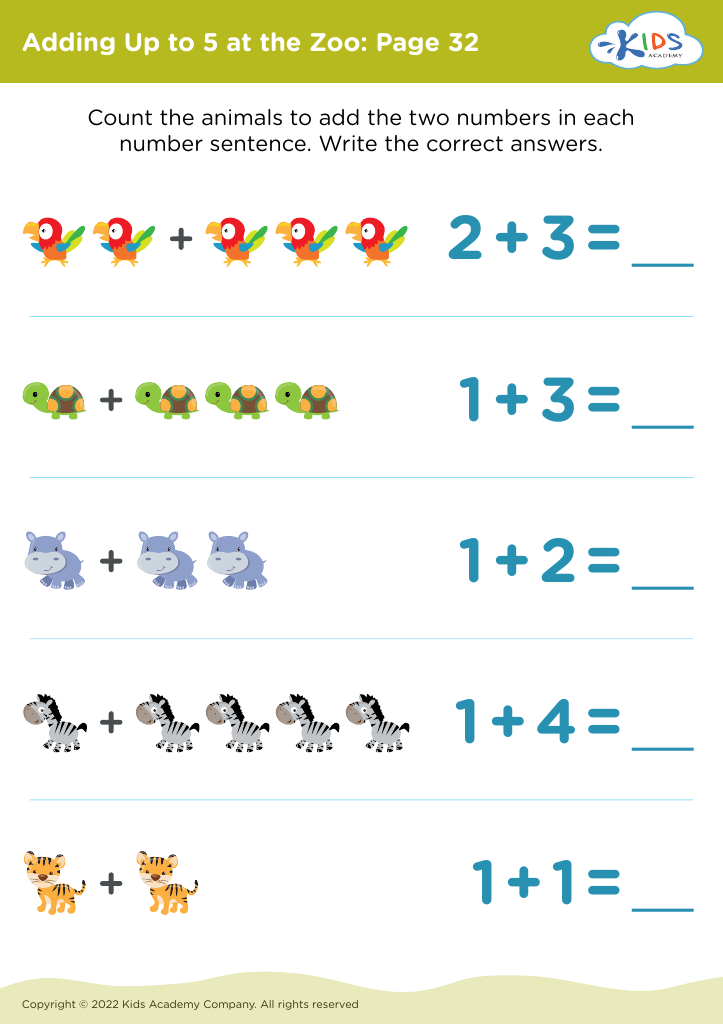
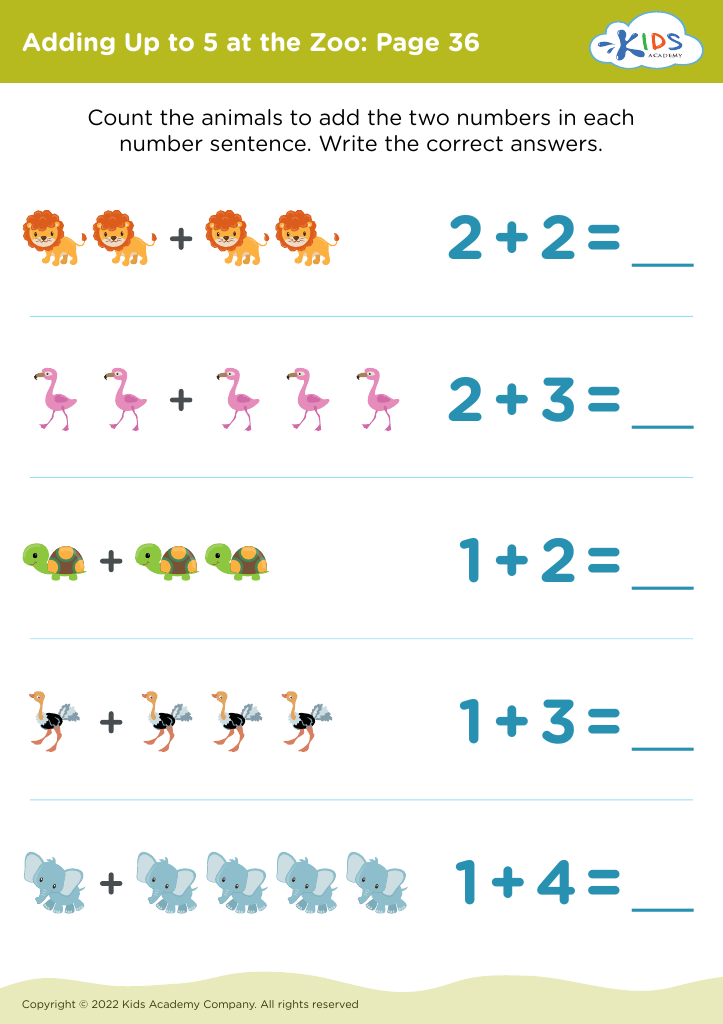
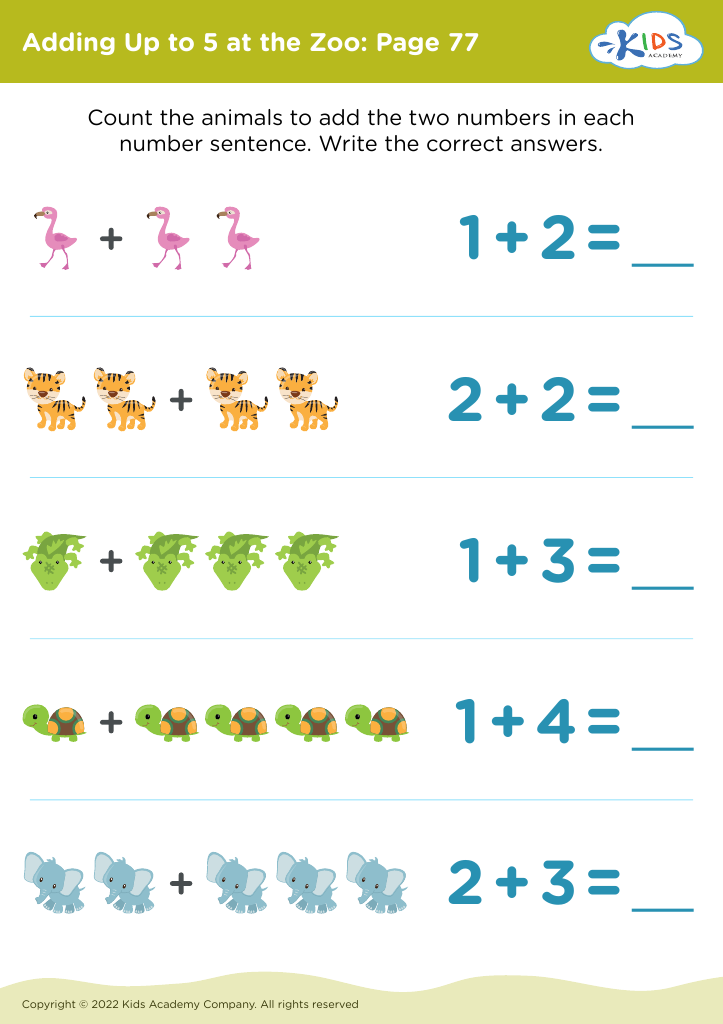
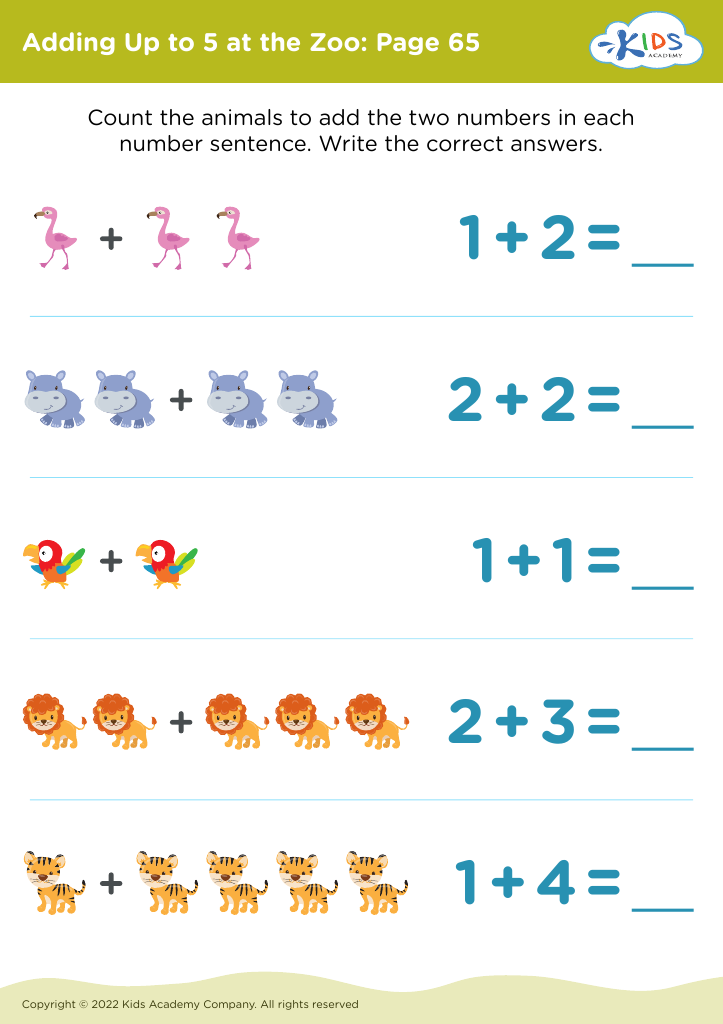
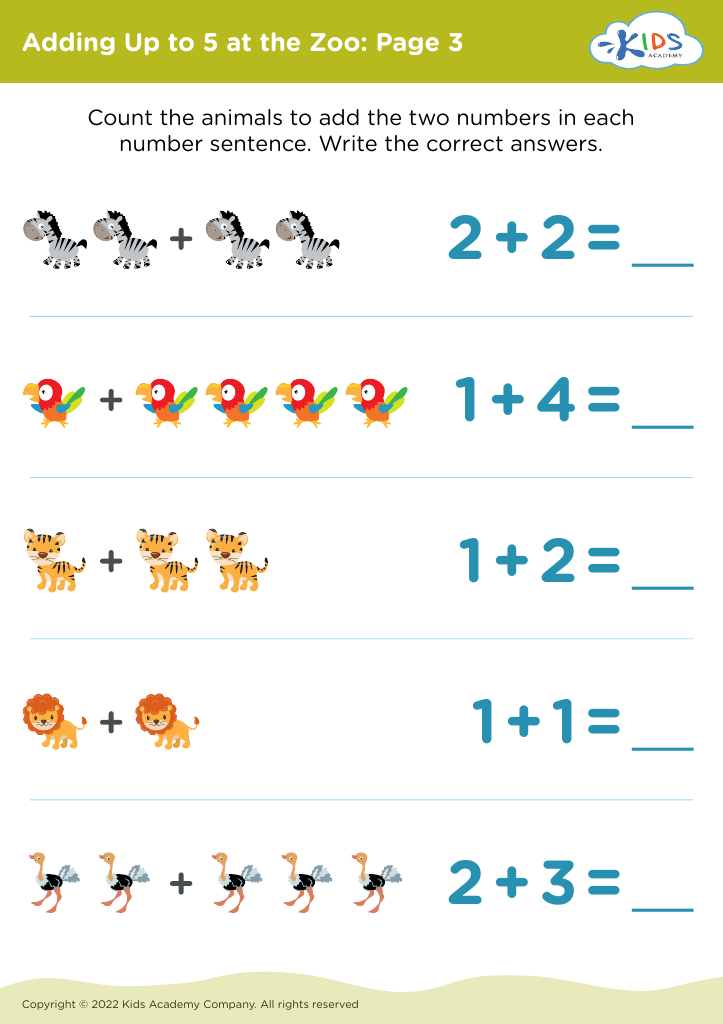
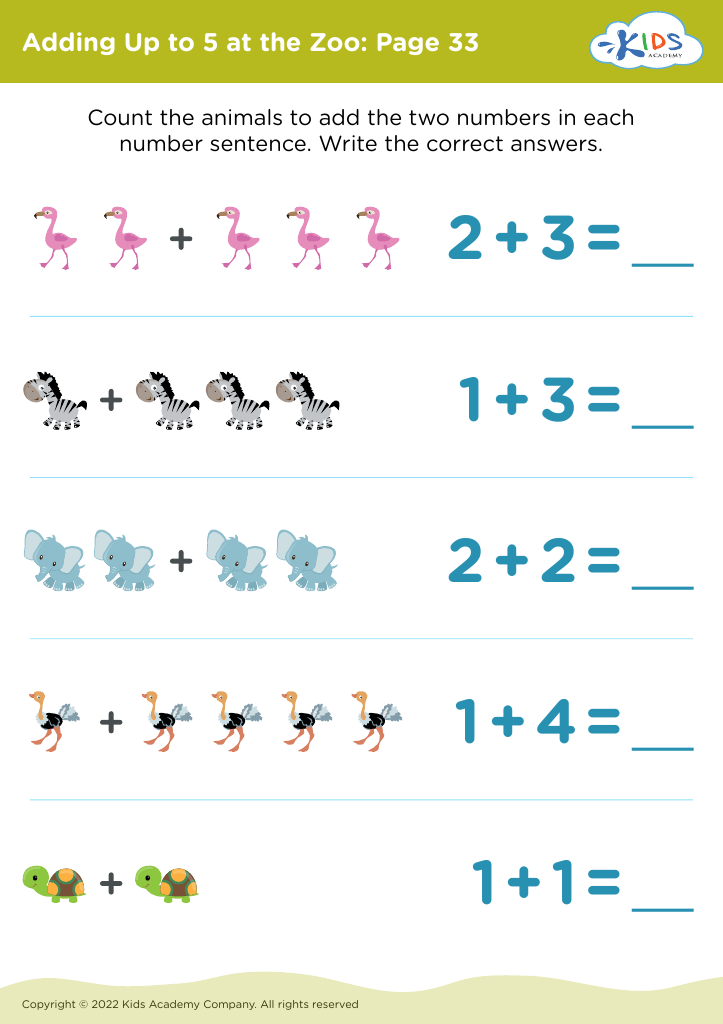
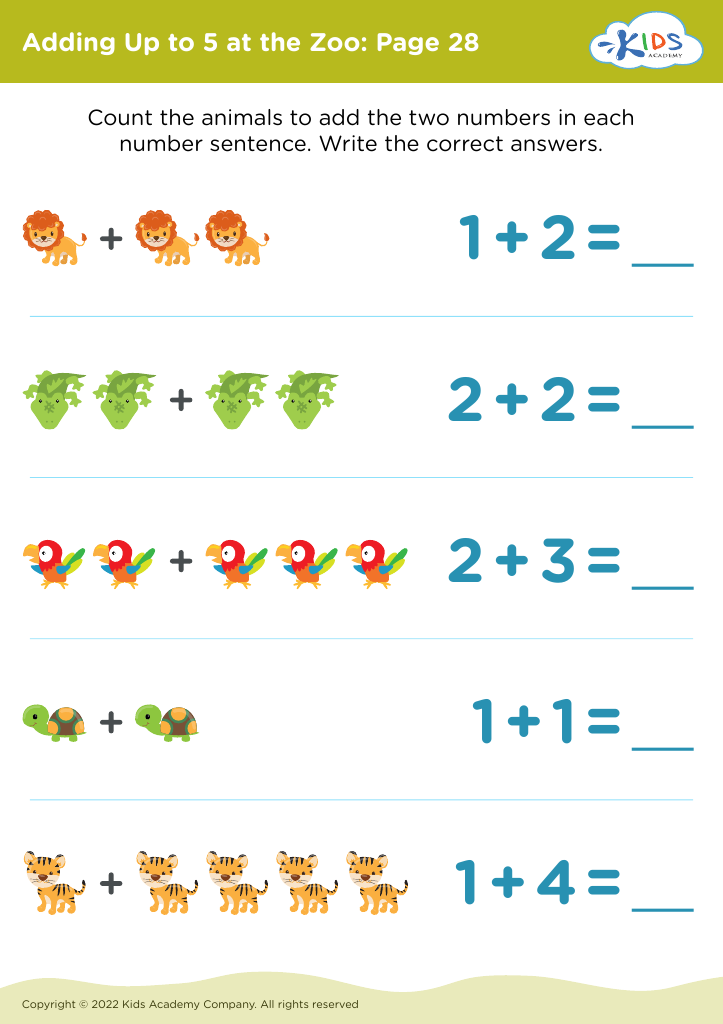
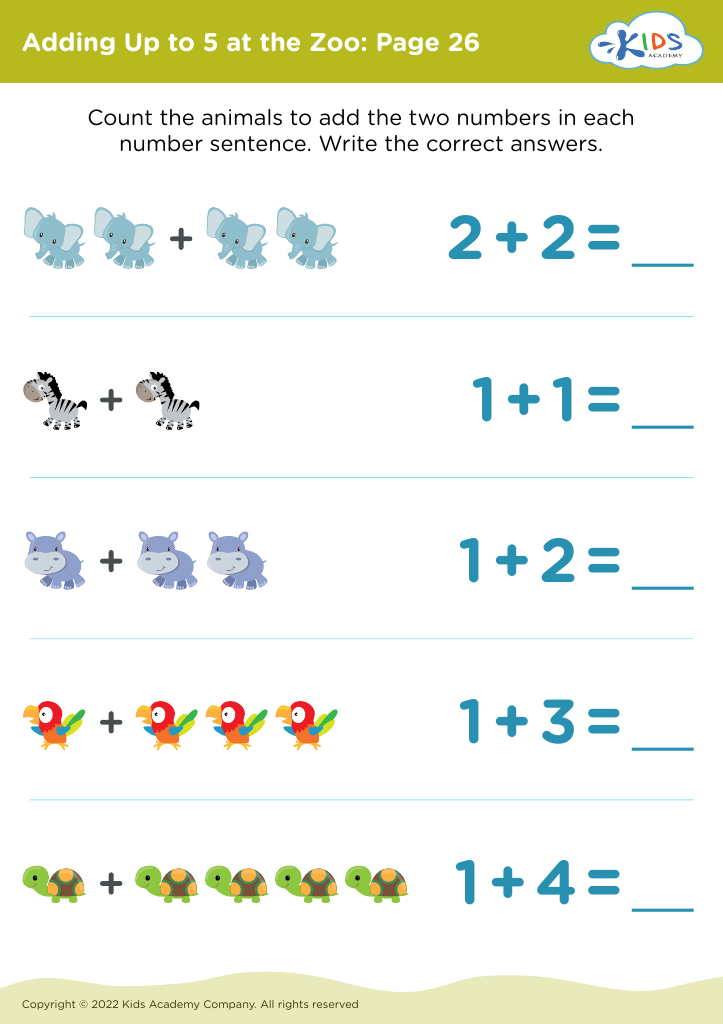
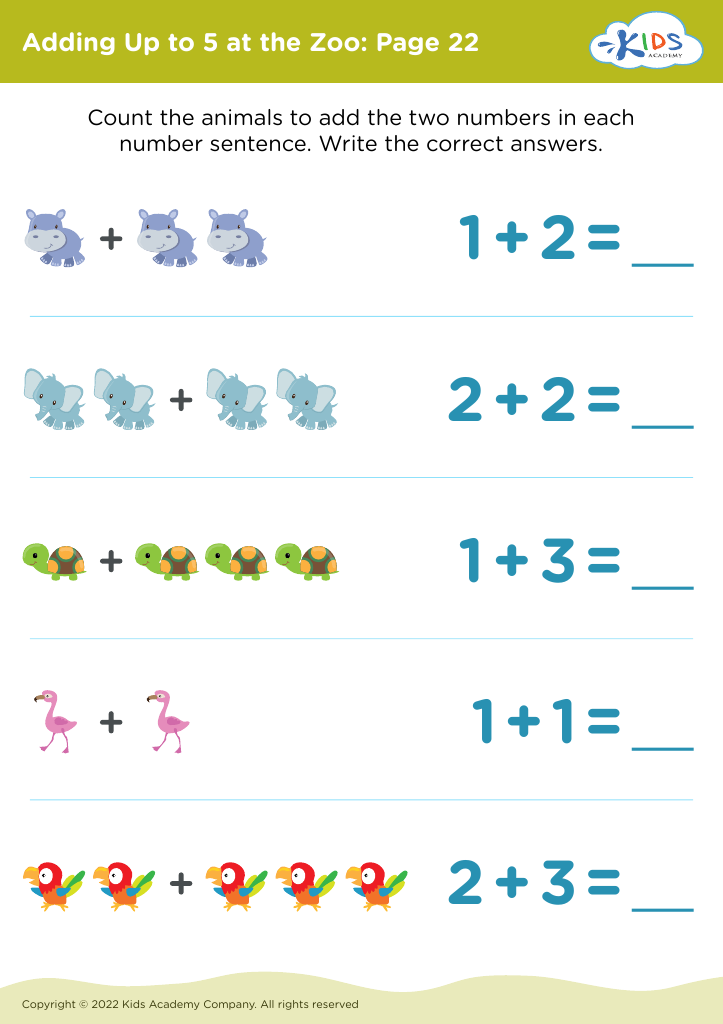
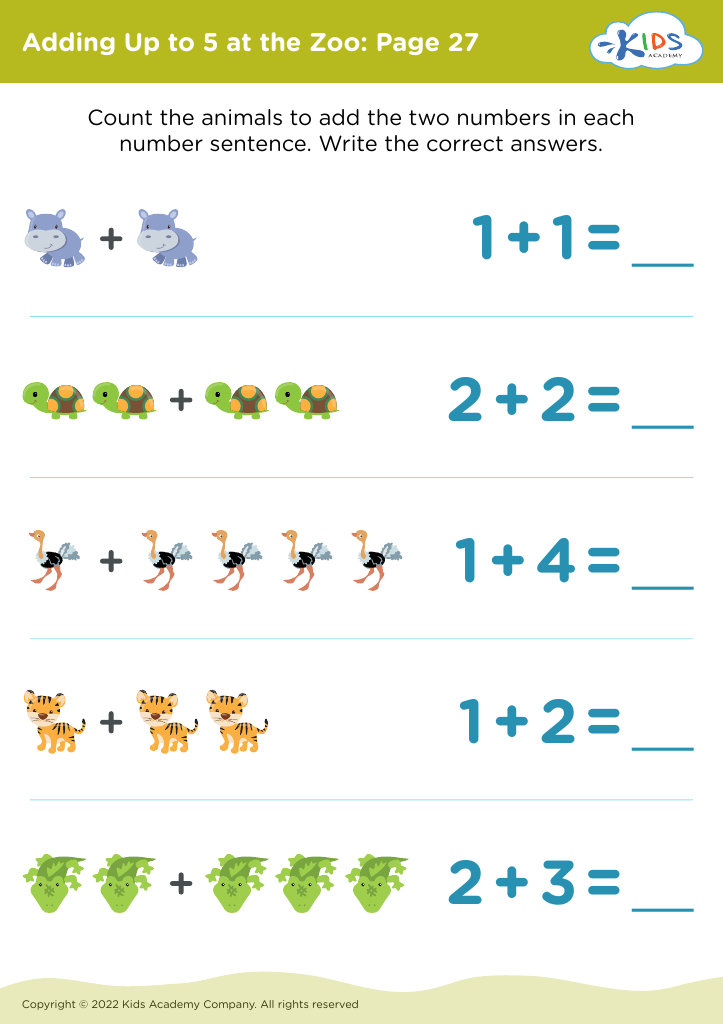
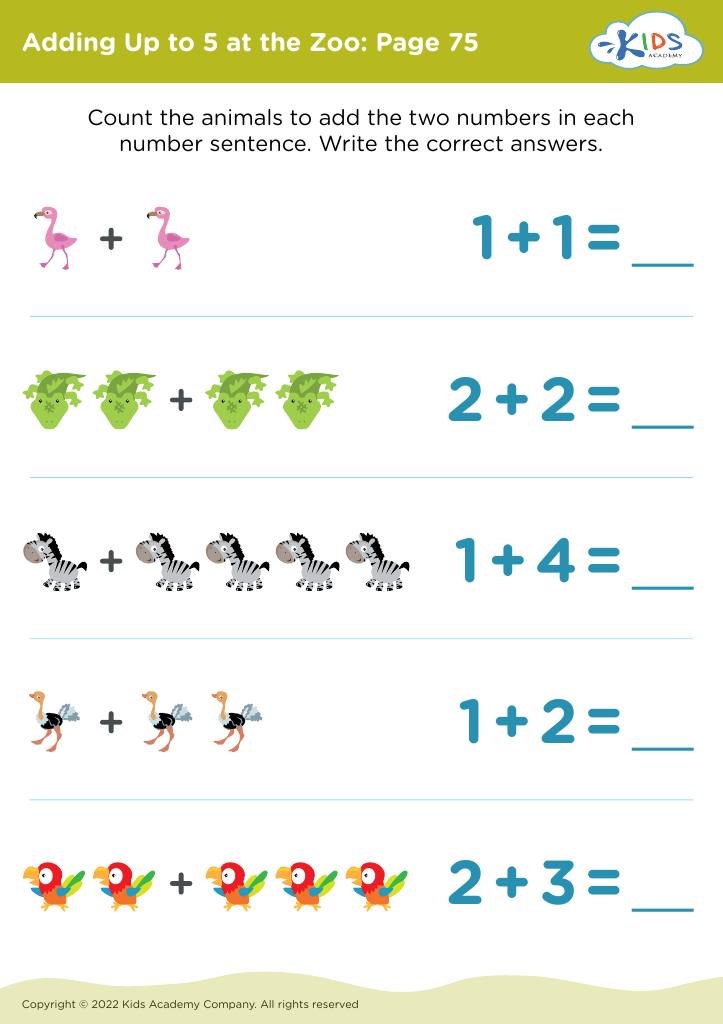
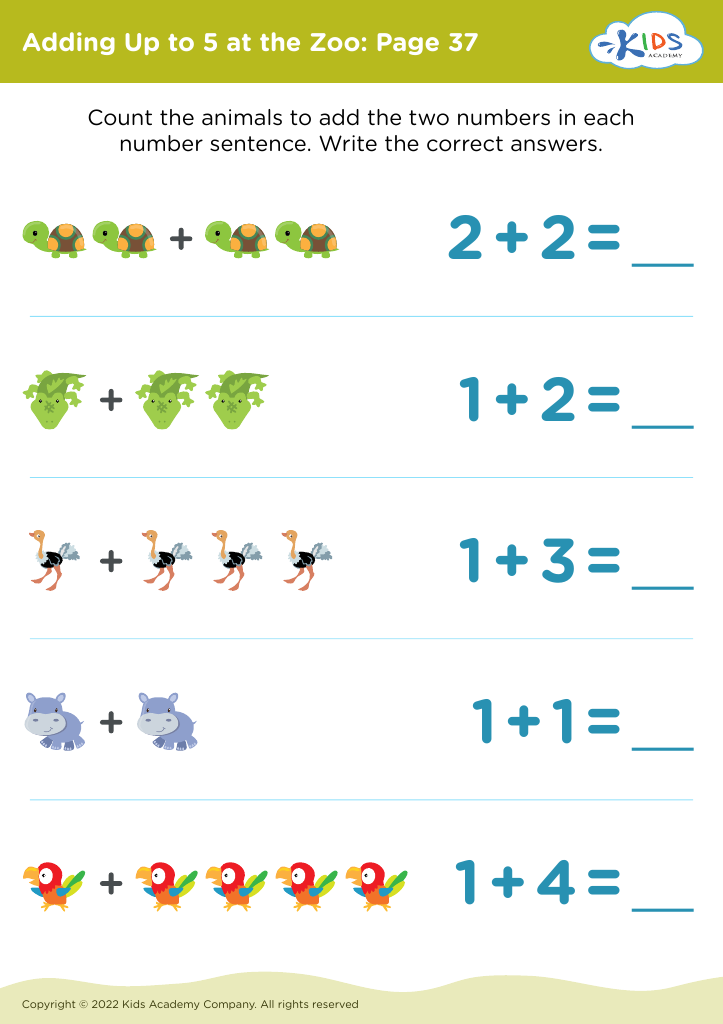
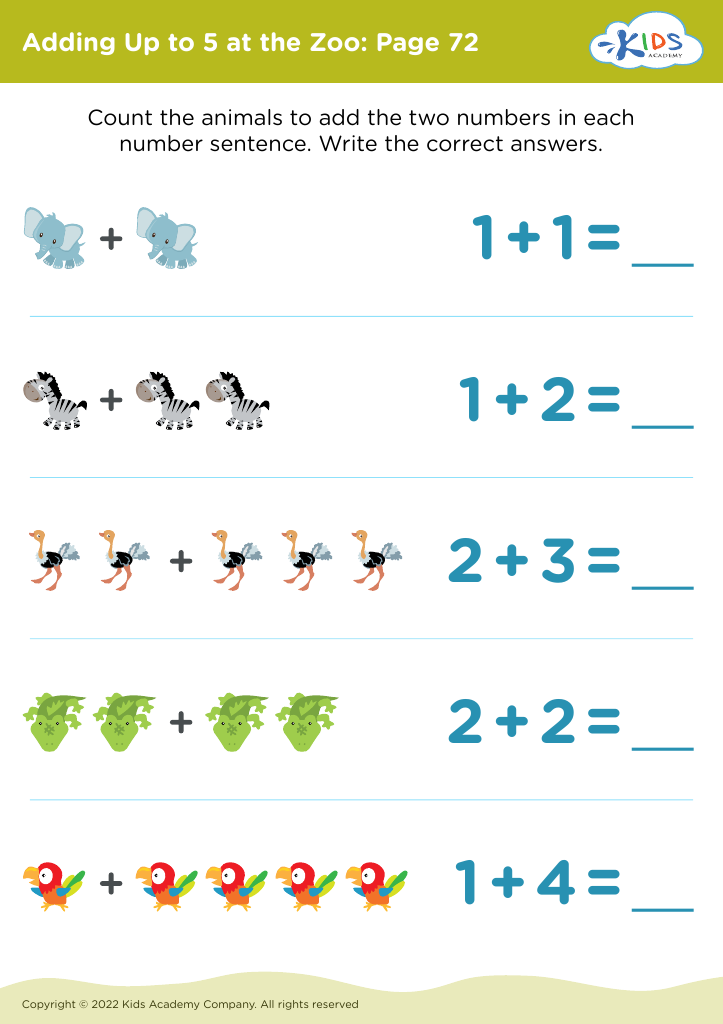
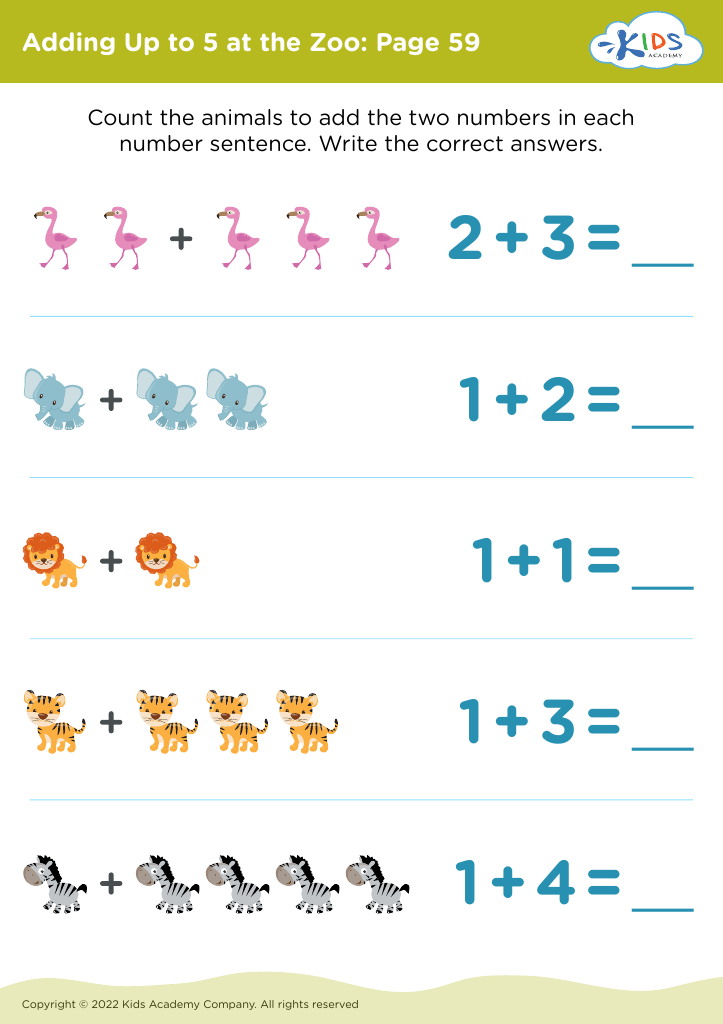
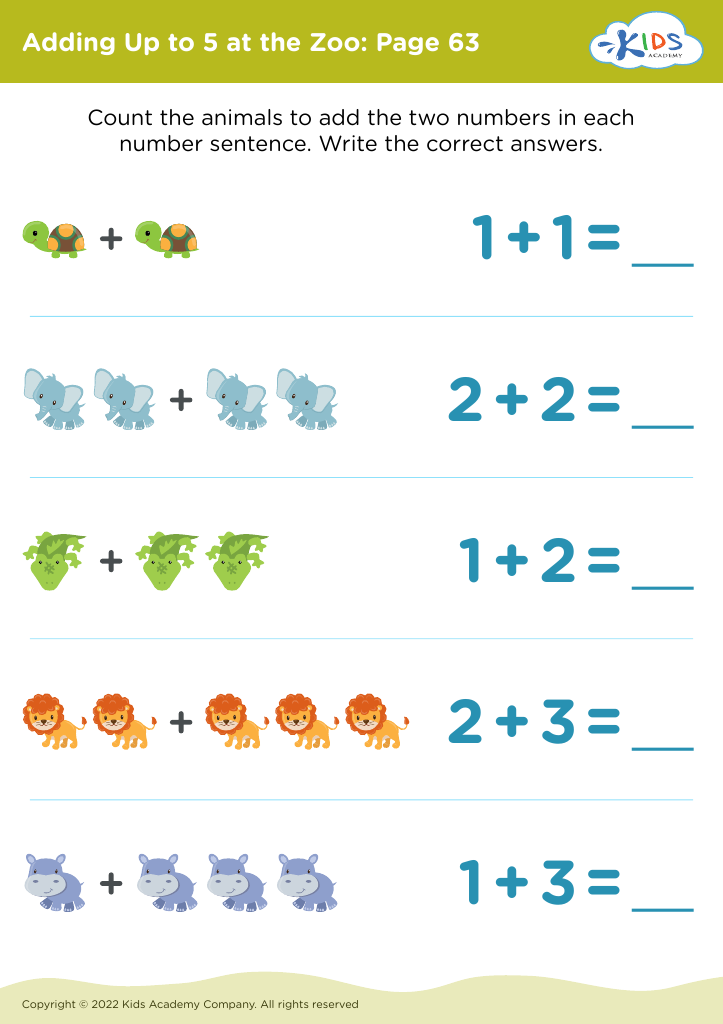
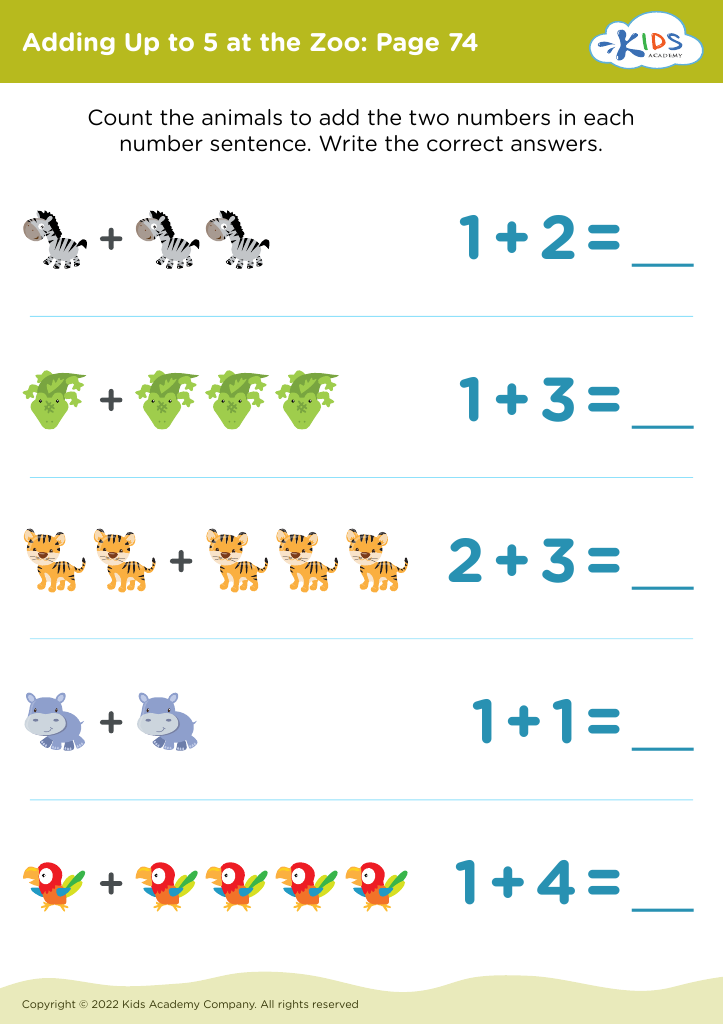
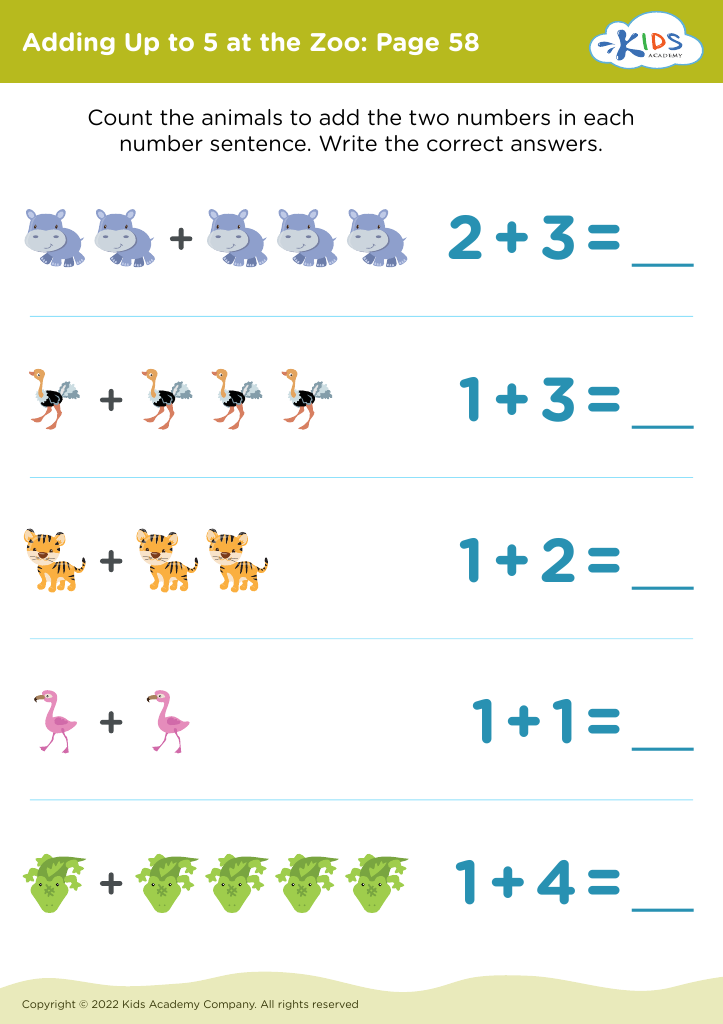
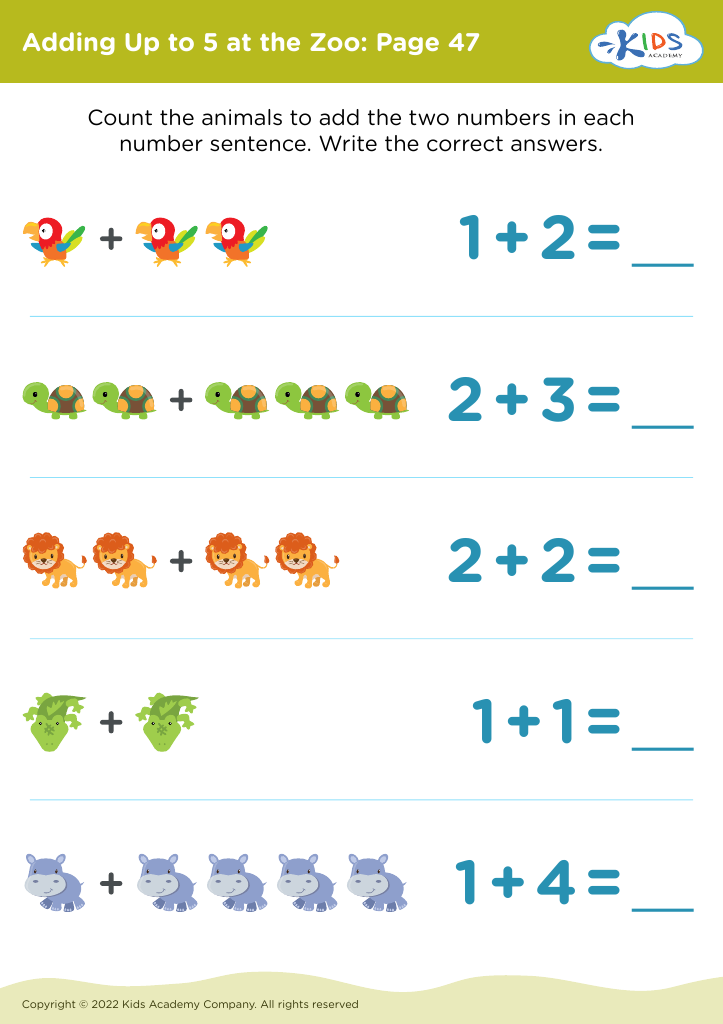
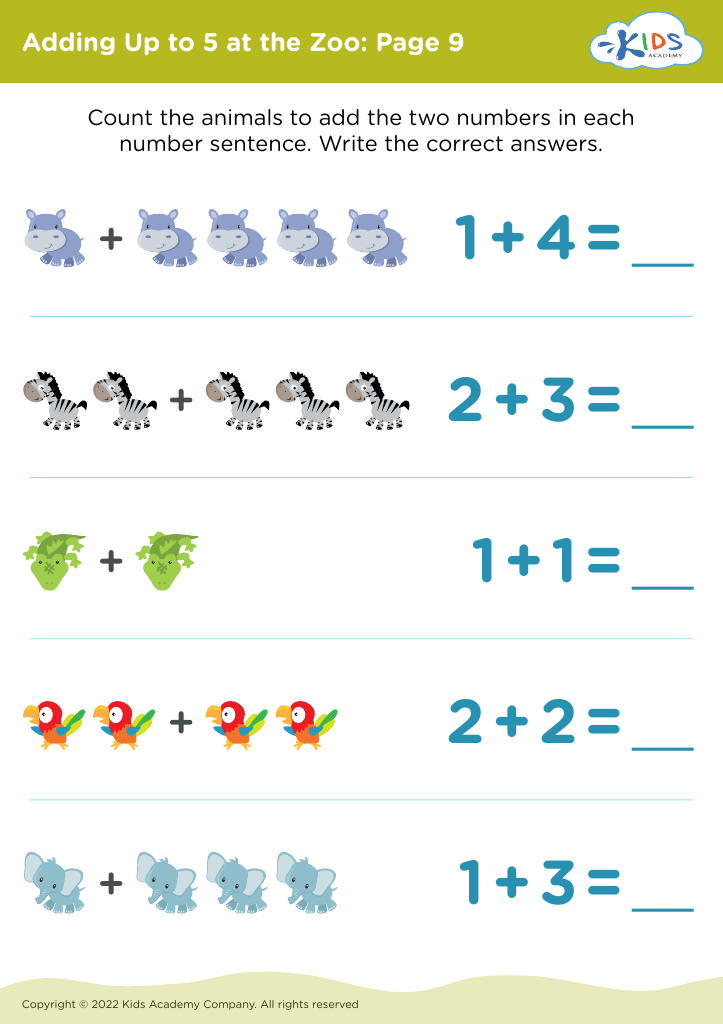
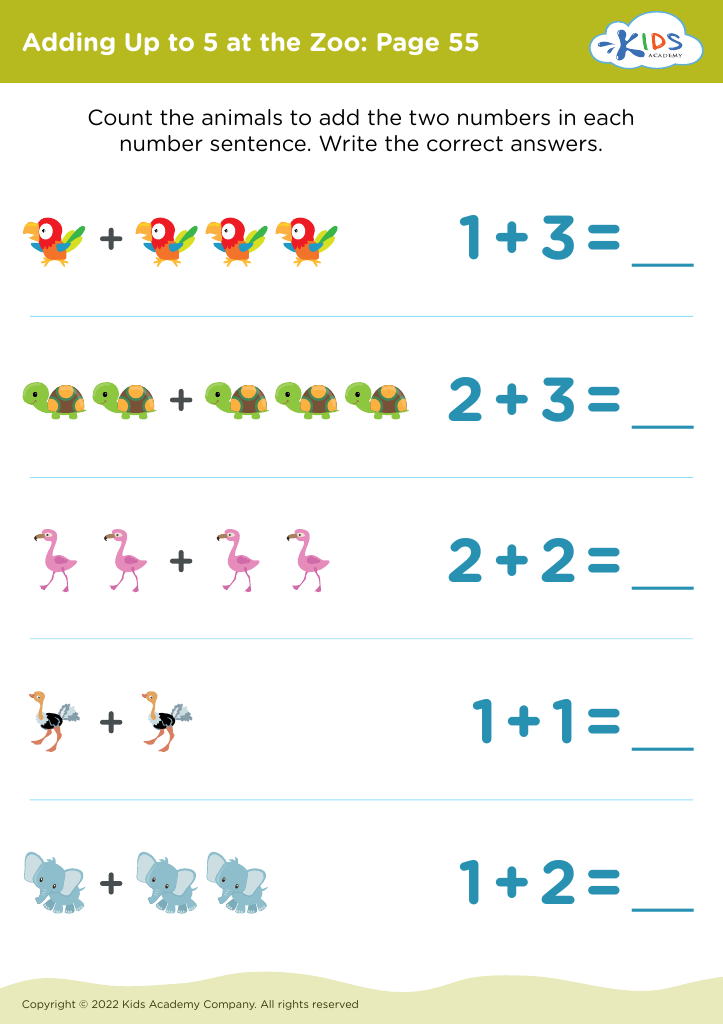
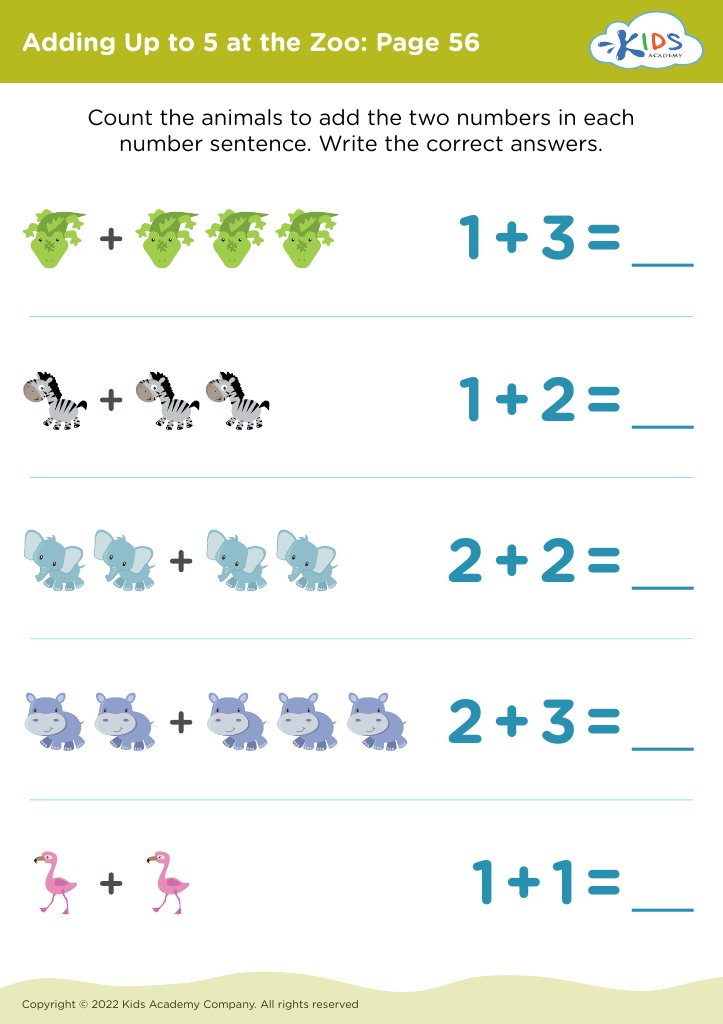
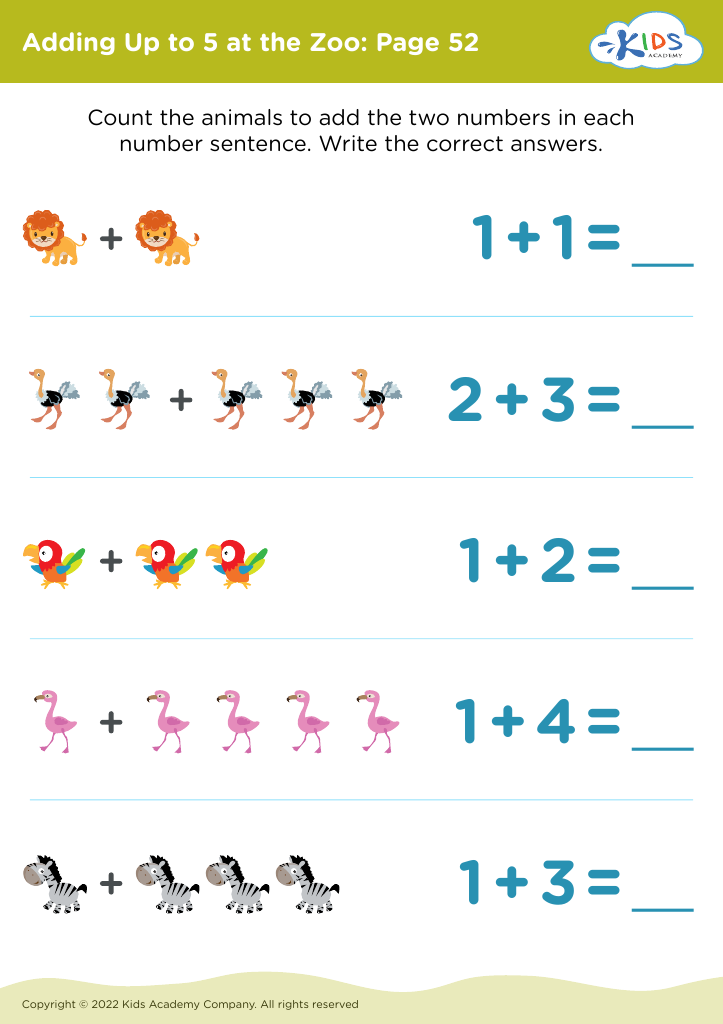
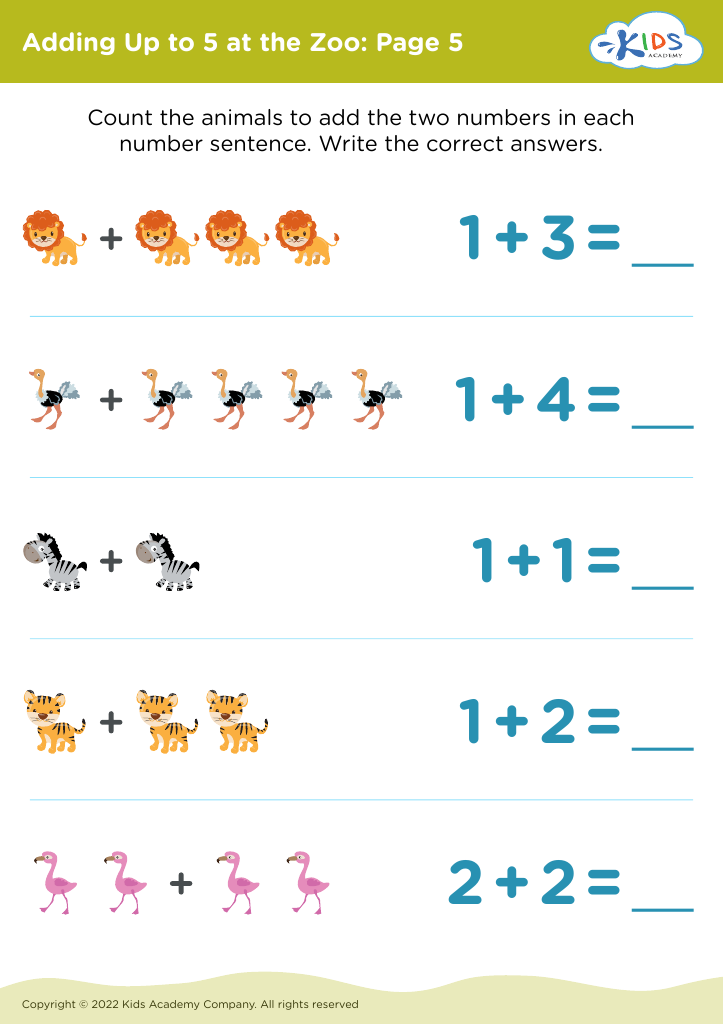
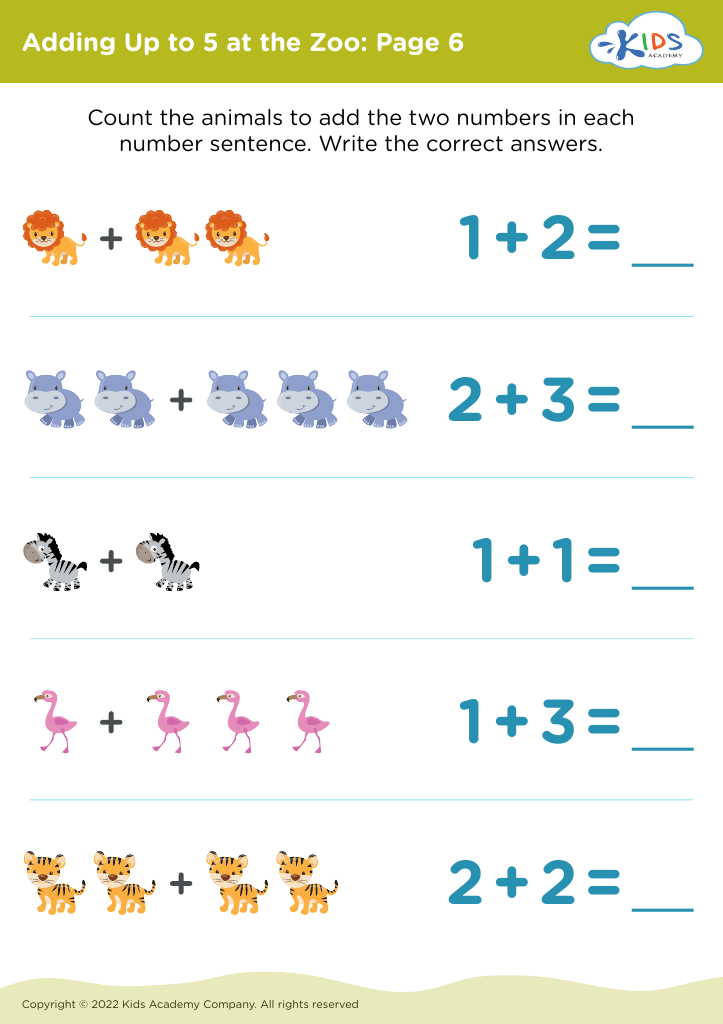



Animal recognition activities at the zoo for children aged 4-5 are incredibly valuable for a variety of developmental and educational reasons. At this formative age, children are naturally curious and excited about the world around them, making it an ideal time to introduce them to diverse types of animals. This not only enhances their knowledge of wildlife but also boosts cognitive development. Recognizing and naming animals can help improve memory and categorization skills, important early steps for later academic learning.
Additionally, interactions with animals facilitate emotional development. Understanding that animals have unique needs and behaviors can foster empathy and compassion in young minds. A trip to the zoo also provides a sensory-rich environment that encourages observational skills and vocabulary growth. For example, describing the texture of an elephant’s skin or the color patterns of a tiger adds new words to their budding lexicon.
Furthermore, learning about animals in a zoo setting builds an understanding of environmental stewardship. It emphasizes the importance of conservation and animal welfare, planting seeds for responsible and compassionate adulthood.
For both parents and teachers, these experiences are profoundly bonding, making learning delightful and reinforcing topics discussed at school or home. Overall, these visits lay a strong educational and emotional foundation, which is essential for healthy, rounded development.