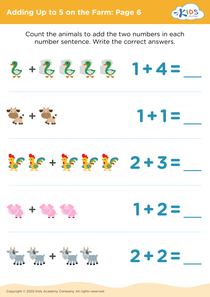
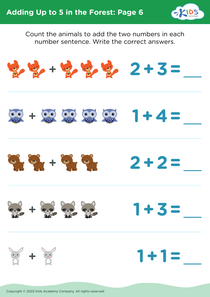
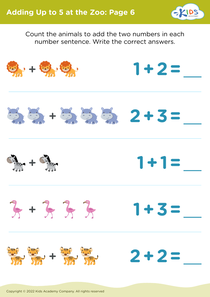
Basic addition practice Adding in the Sea Worksheets for Ages 4-5
3 filtered results
-
From - To
Dive into learning with our "Adding in the Sea" worksheets, designed specifically for children ages 4-5! These engaging printable resources introduce basic addition concepts through fun ocean-themed activities. Children will enjoy exploring underwater scenes while practicing simple addition problems, enhancing their mathematical skills in an interactive way. Each worksheet is crafted to promote number recognition, counting, and problem-solving abilities. Ideal for at-home learning or classrooms, our worksheets inspire young learners to build a strong foundation in addition. Start your child's journey in mathematics amid playful sea adventures, making learning a splash of fun! Download today and make math a thrilling ocean exploration!
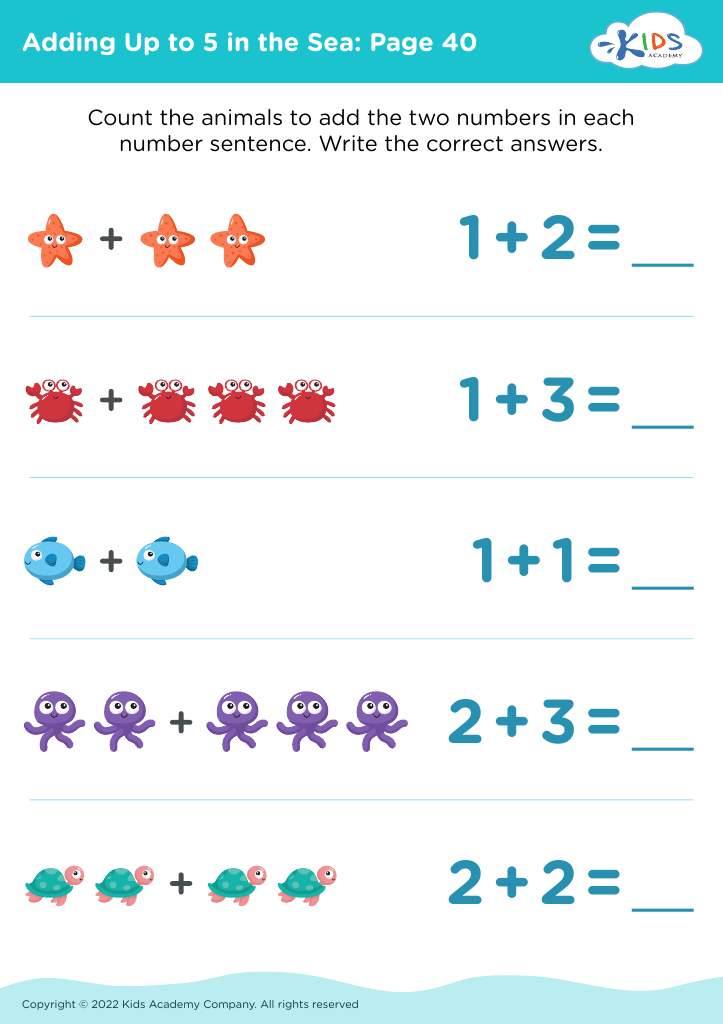
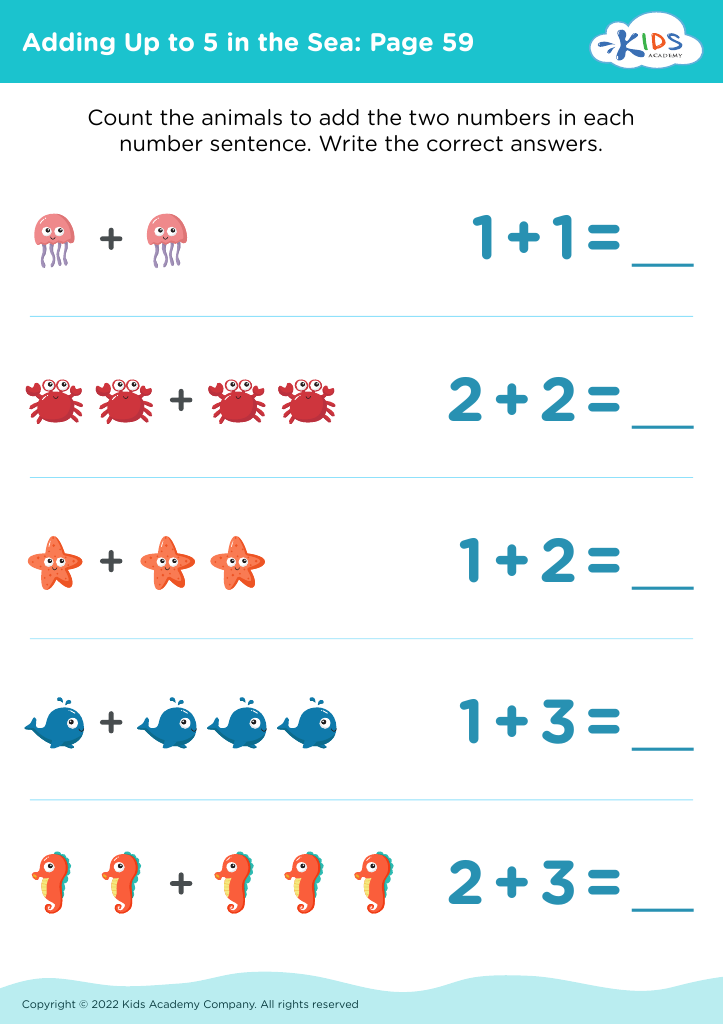
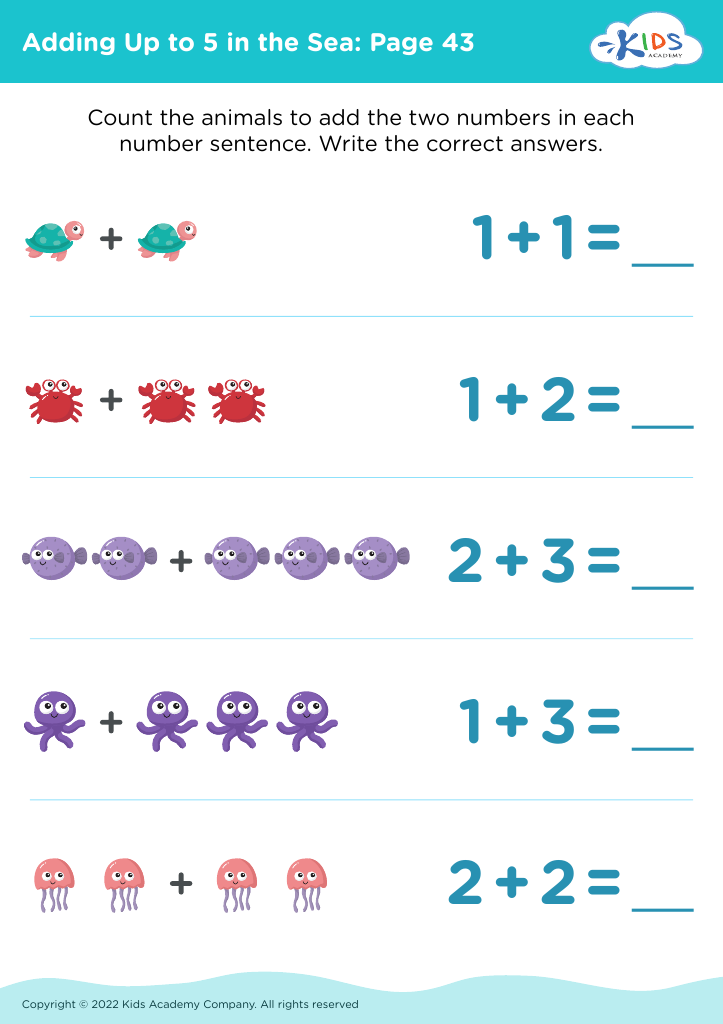



Basic addition practice, such as "Adding in the Sea," is crucial for children aged 4-5 for several key reasons. First, foundational math skills develop during these early years, serving as building blocks for future learning. Engaging activities like "Adding in the Sea" help make arithmetic fun and relatable, sparking interest in mathematics and fostering a positive attitude towards learning.
Second, preschool-aged children are in a critical period for cognitive development. Through playful, themed activities centered around addition, children enhance their problem-solving skills and logical reasoning. These experiences also promote critical thinking, nurturing their ability to analyze and manipulate numbers.
Also, practicing addition provides opportunities for social interaction and cooperative learning. When children work together, share ideas, and help one another, they develop essential social skills, teamwork, and communication abilities.
Finally, families and educators should ensure that children develop strong numeracy skills, which are essential for everyday life and various academic pursuits. By emphasizing enjoyable techniques like "Adding in the Sea," parents and teachers can create a supportive environment that builds confidence and lays the groundwork for long-term success in math and beyond.