Addition up to 5 Adding Up to 5 Worksheets for Ages 4-5
4 filtered results
-
From - To
Explore our fun and engaging "Addition up to 5" worksheets, perfect for children ages 4-5. Designed to make learning addition both enjoyable and educational, these worksheets provide simple exercises that help young learners grasp the concept of adding numbers up to 5. Each worksheet is filled with colorful illustrations and interactive problems that cater to early math skills, ensuring your child stays interested and motivated. Great for preschoolers and kindergarteners, these worksheets not only build foundational math abilities but also boost confidence in problem-solving. Start your child’s mathematical journey with our dynamic and supportive addition worksheets!
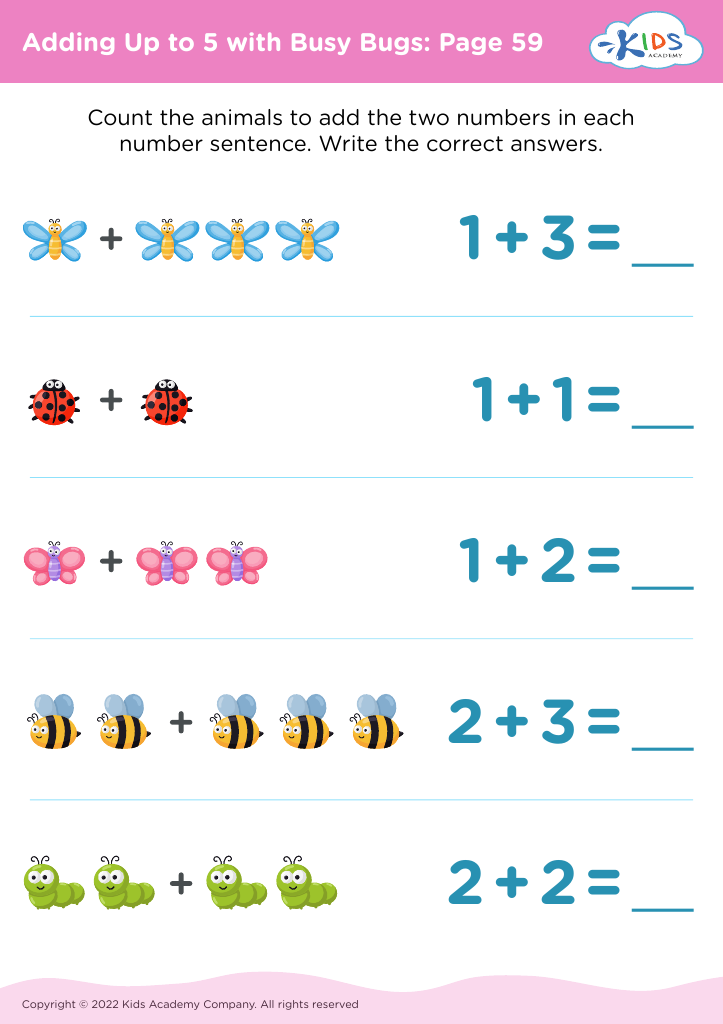
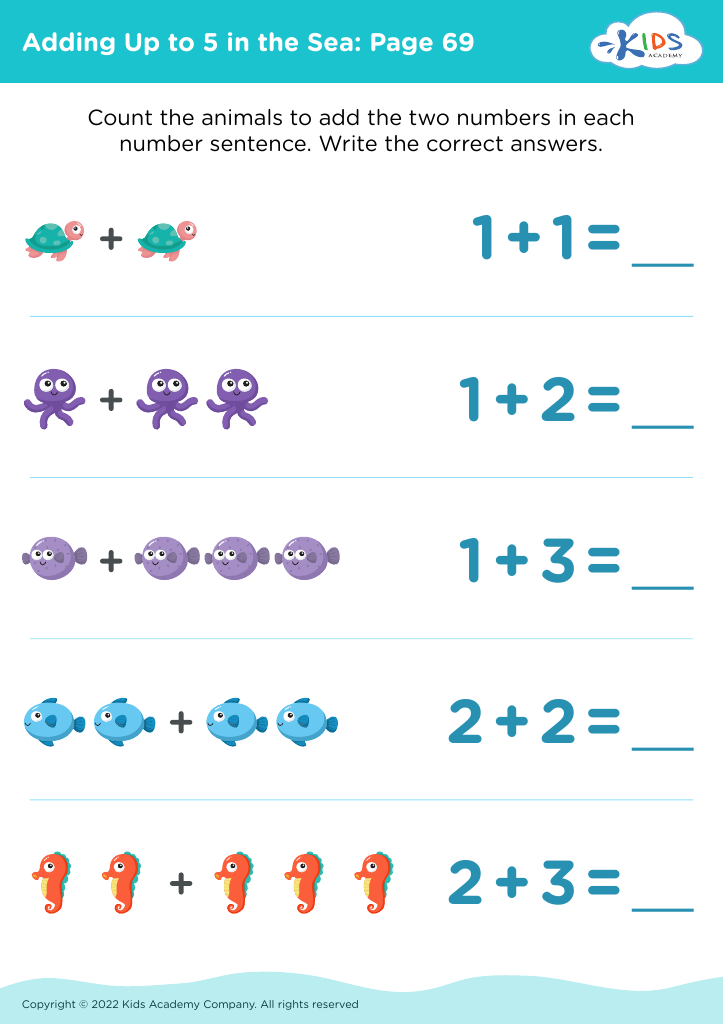
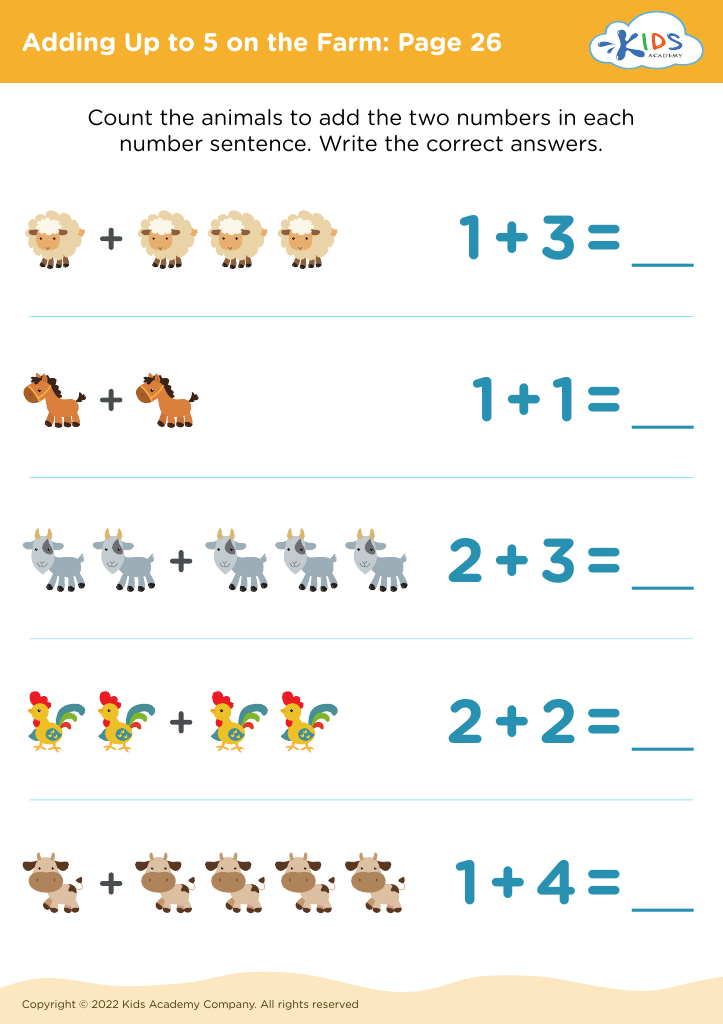
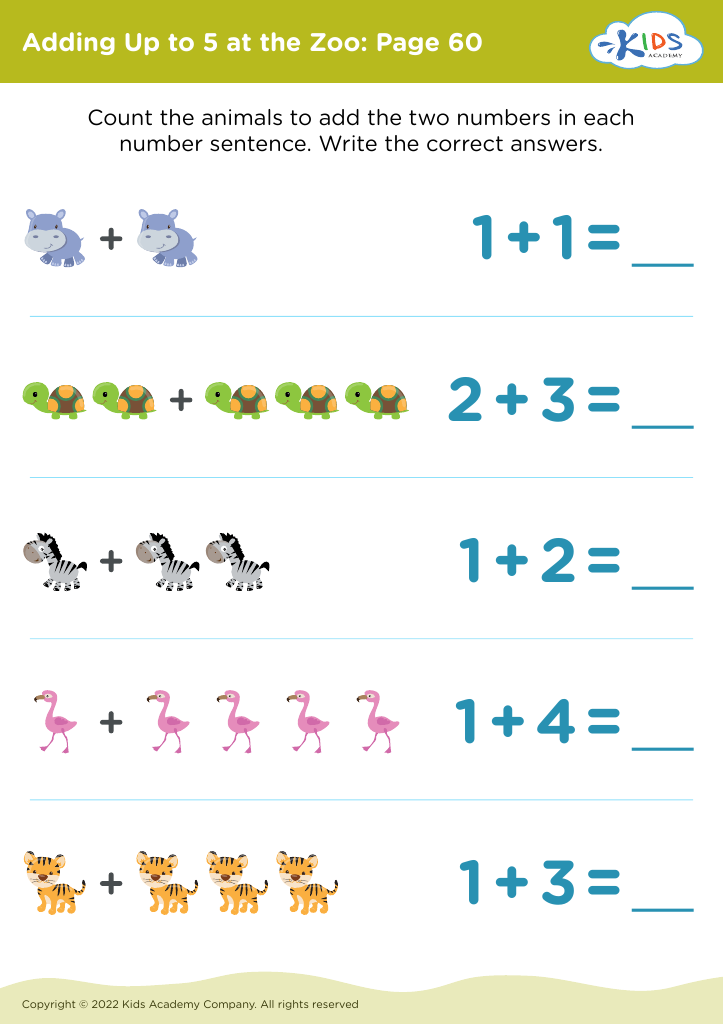








Parents and teachers should care deeply about teaching addition up to 5 for children ages 4-5 because it lays a critical foundation for mathematical understanding and cognitive development. This early exposure to basic arithmetic helps young learners develop number sense, an essential skill that enables them to recognize and work with numbers flexibly and accurately. Mastering addition up to 5 builds confidence and fosters a positive attitude toward math, setting the stage for future learning.
At this age, children's brains are particularly receptive to learning new concepts, and engaging with simple addition prepares them for more complex mathematical operations. It enhances their problem-solving skills, logical thinking, and ability to make connections between concepts. Teaching addition using tangible objects, visual aids, and interactive activities also encourages fine motor skills, attention to detail, and cooperation during group work.
Moreover, an early grasp on addition directly supports other academic areas, including reading and science, by improving overall cognitive abilities and focus. By focusing on addition up to 5, parents and teachers ensure that children build a robust mathematical foundation, making them more likely to succeed in school and beyond, ultimately aiding in their holistic development.








