Filters

21 filtered results

Clear all filters
Favorites
With answer key
Interactive

21 filtered results

Difficulty Level

Grade


Welcome to our "Basic Math Skills: Adding Up to 5 Worksheets" designed specifically for children aged 4-5! These engaging and interactive worksheets help young learners grasp fundamental math concepts while having fun. Focused on addition skills, these activities provide hands-on learning experiences that foster numerical understanding and critical thinking. Each worksheet is beautifully illustrated to capture the interest of little ones, making math enjoyable and approachable. Perfect for early education settings or homeschooling, our materials support cognitive development and build confidence in young mathematicians. Explore our worksheets today and help your child take their first steps in mastering addition up to 5!
Check out this FREE Trial Lesson on Adding Up to 5 for age 4-5!

L

Favorites
With answer key
Interactive
  • 4-5
  • Basic Math Skills
  • Adding Up to 5
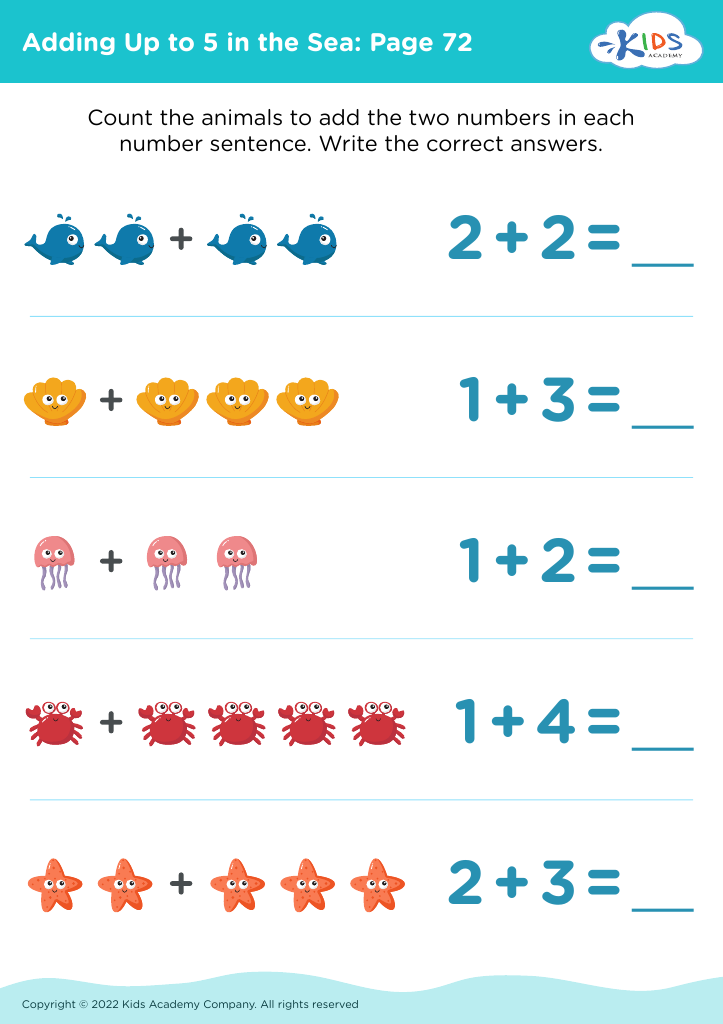
Adding Up to 5 in the Sea: Page 72
Worksheet
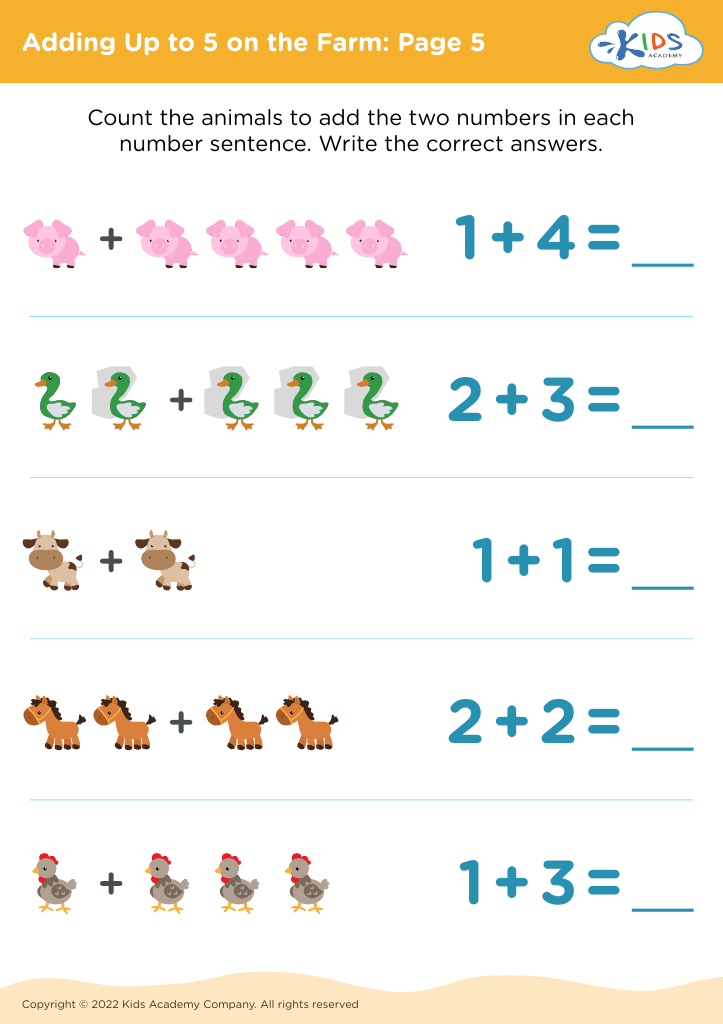
Adding Up to 5 on the Farm: Page 5
Worksheet
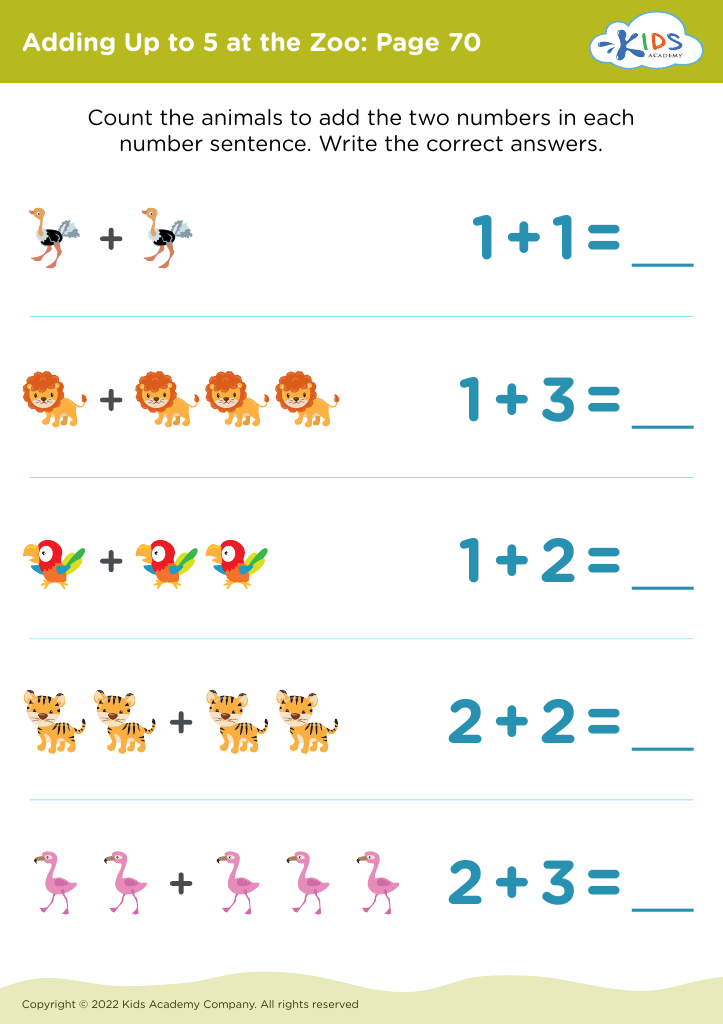
Adding Up to 5 at the Zoo: Page 70
Worksheet
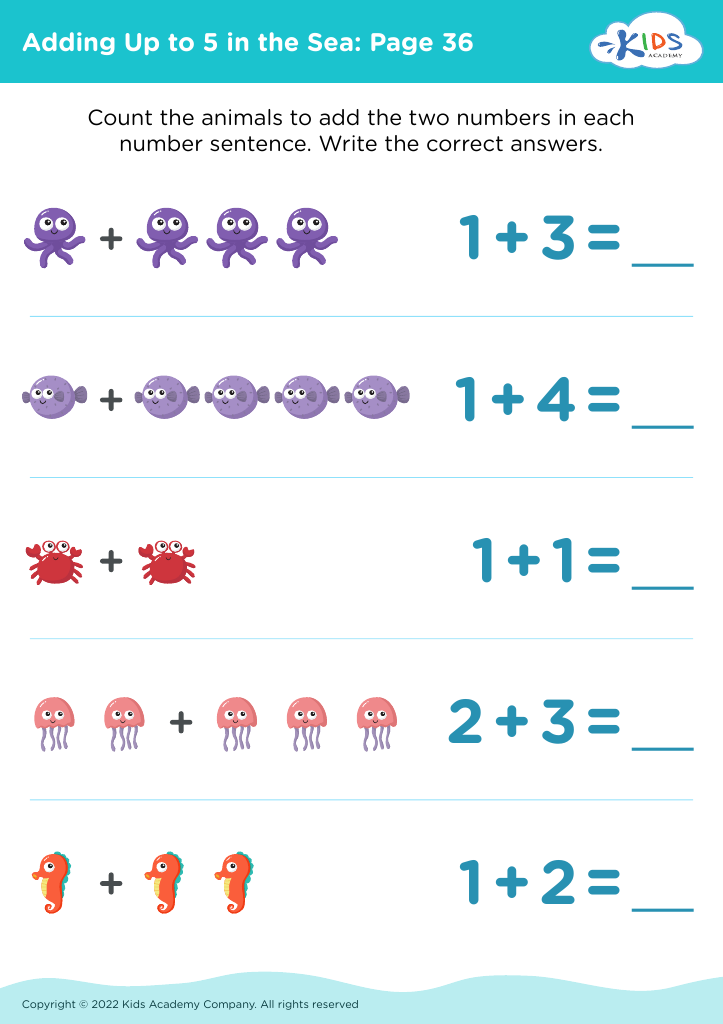
Adding Up to 5 in the Sea: Page 36
Worksheet
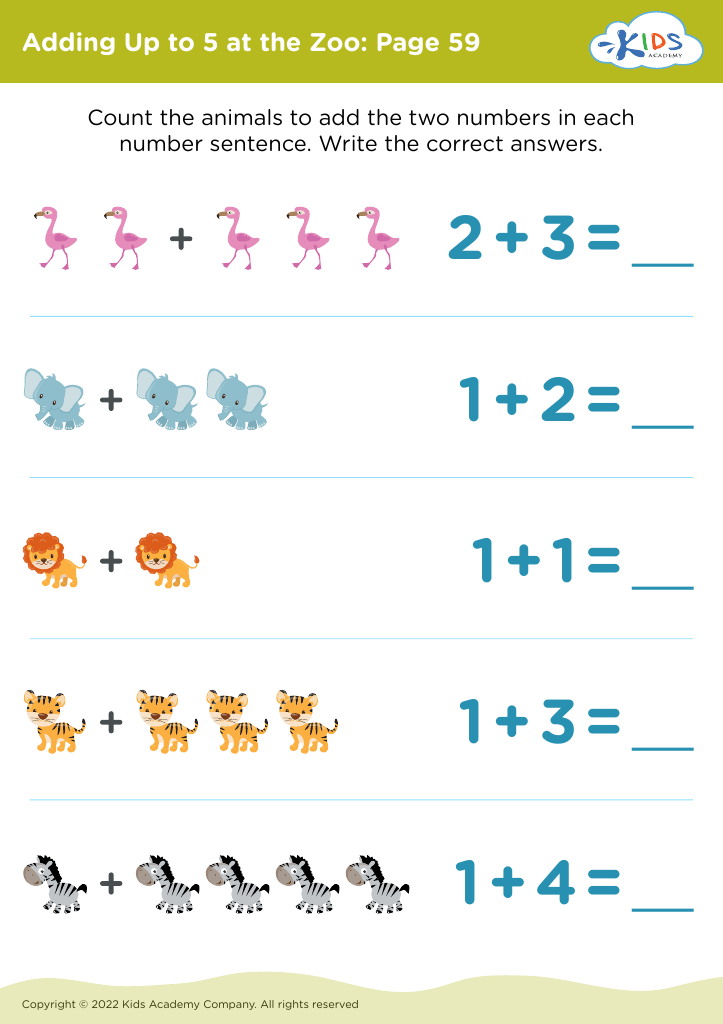
Adding Up to 5 at the Zoo: Page 59
Worksheet
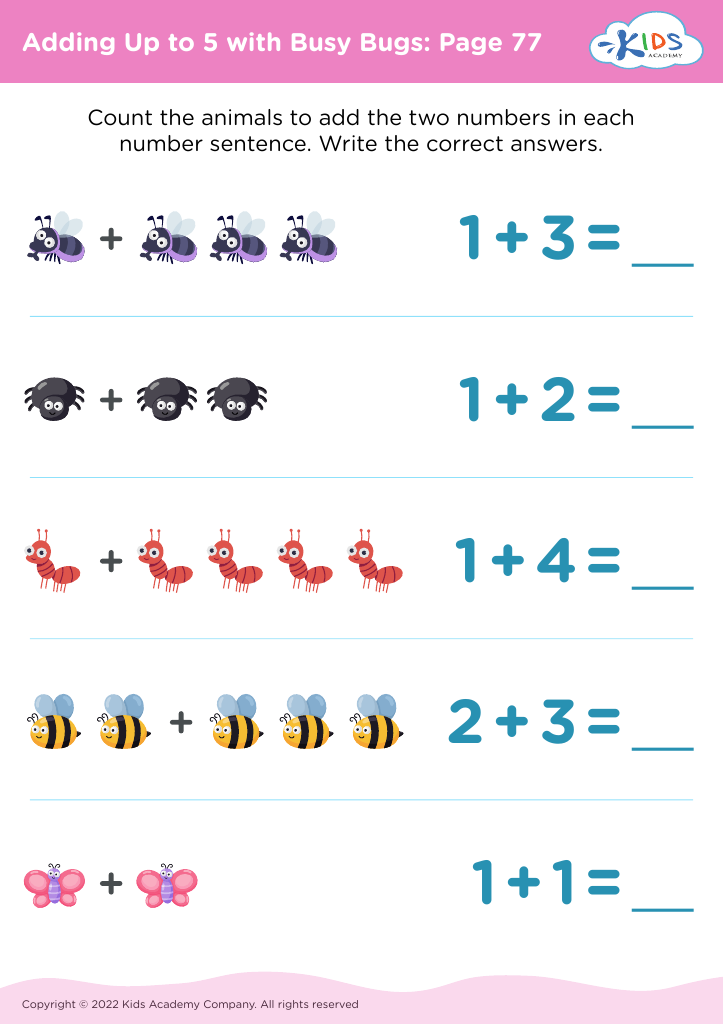
Adding Up to 5 with Busy Bugs: Page 77
Worksheet
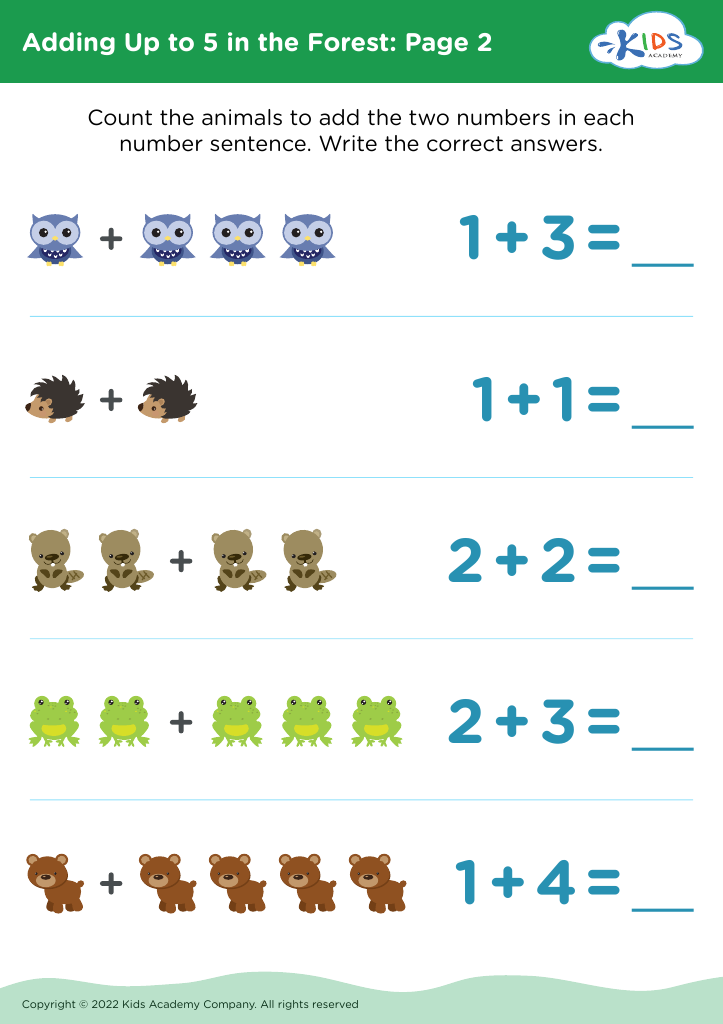
Adding Up to 5 in the Forest: Page 2
Worksheet
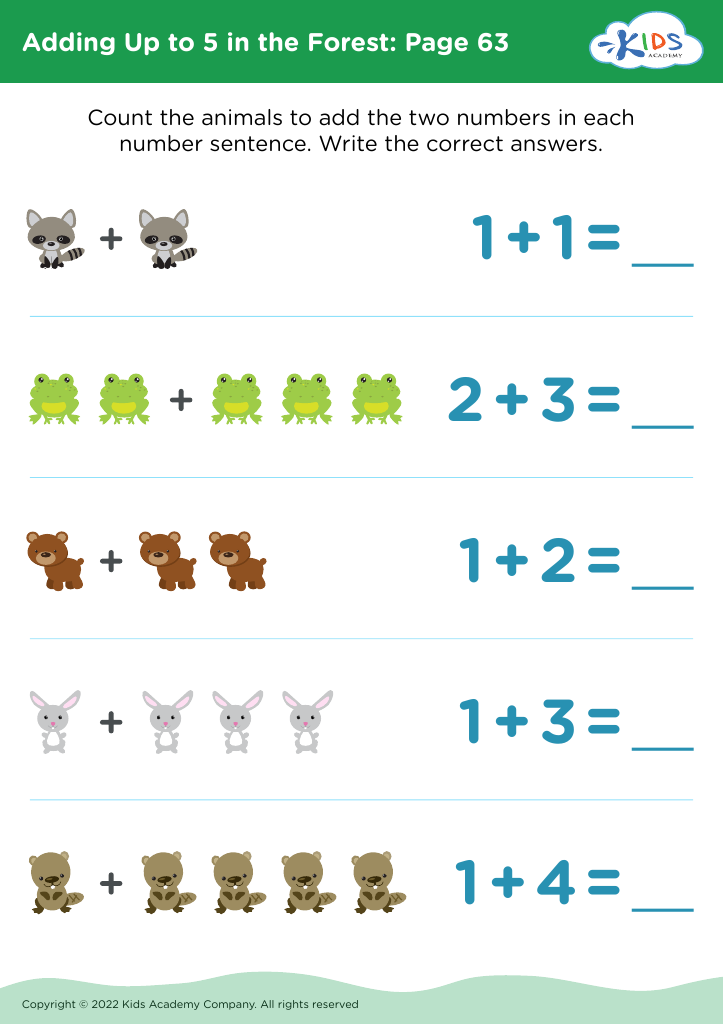
Adding Up to 5 in the Forest: Page 63
Worksheet
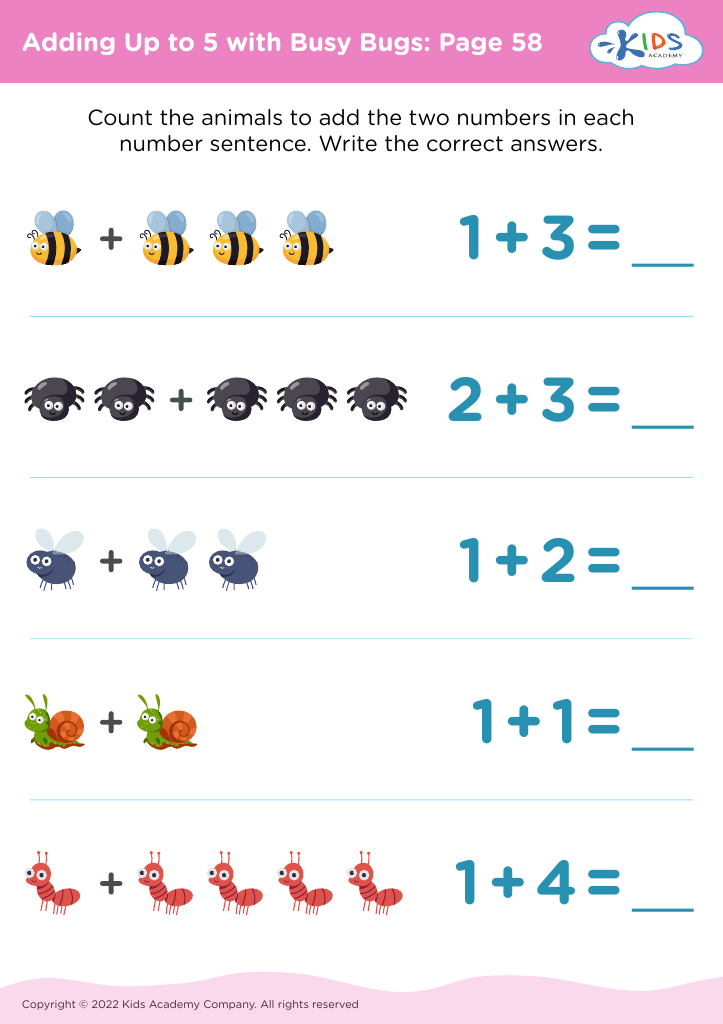
Adding Up to 5 with Busy Bugs: Page 58
Worksheet
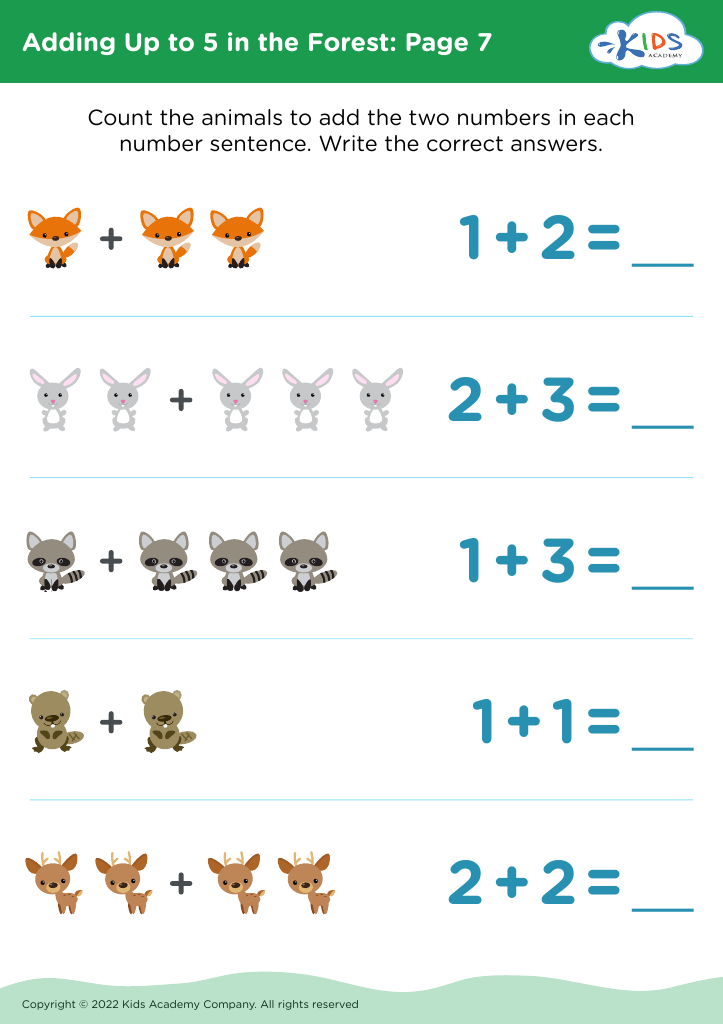
Adding Up to 5 in the Forest: Page 7
Worksheet
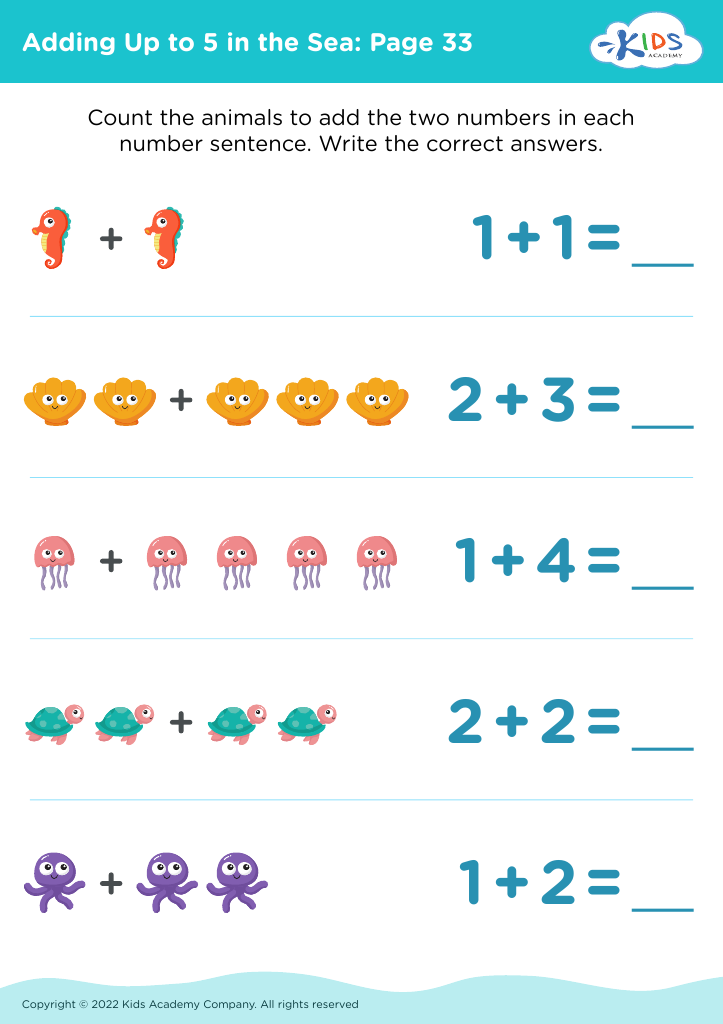
Adding Up to 5 in the Sea: Page 33
Worksheet
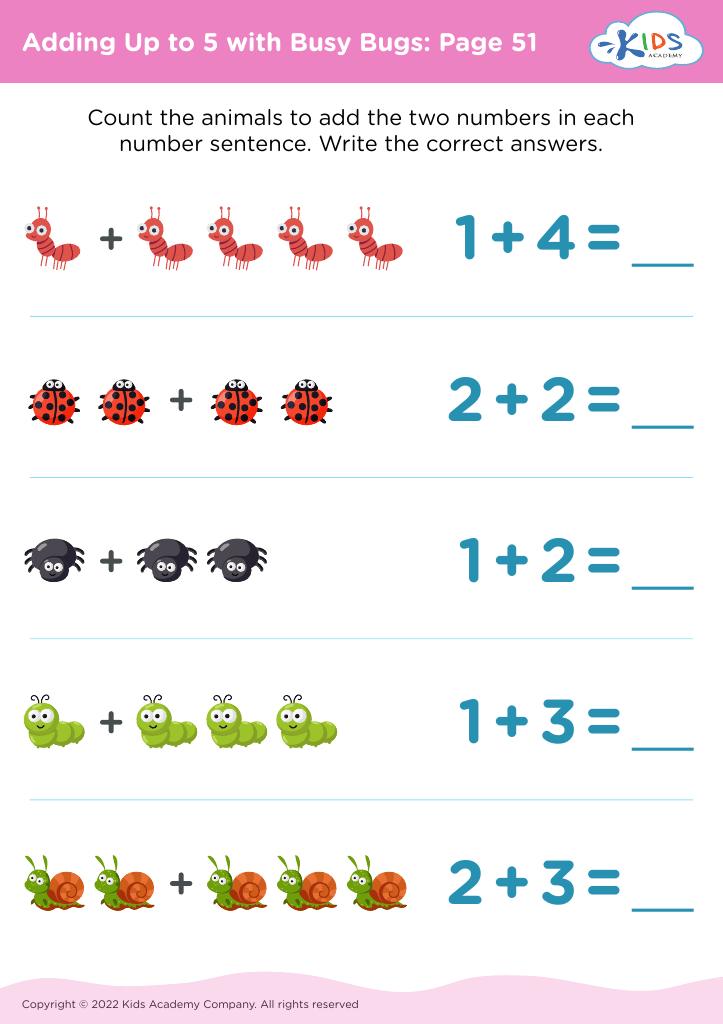
Adding Up to 5 with Busy Bugs: Page 51
Worksheet
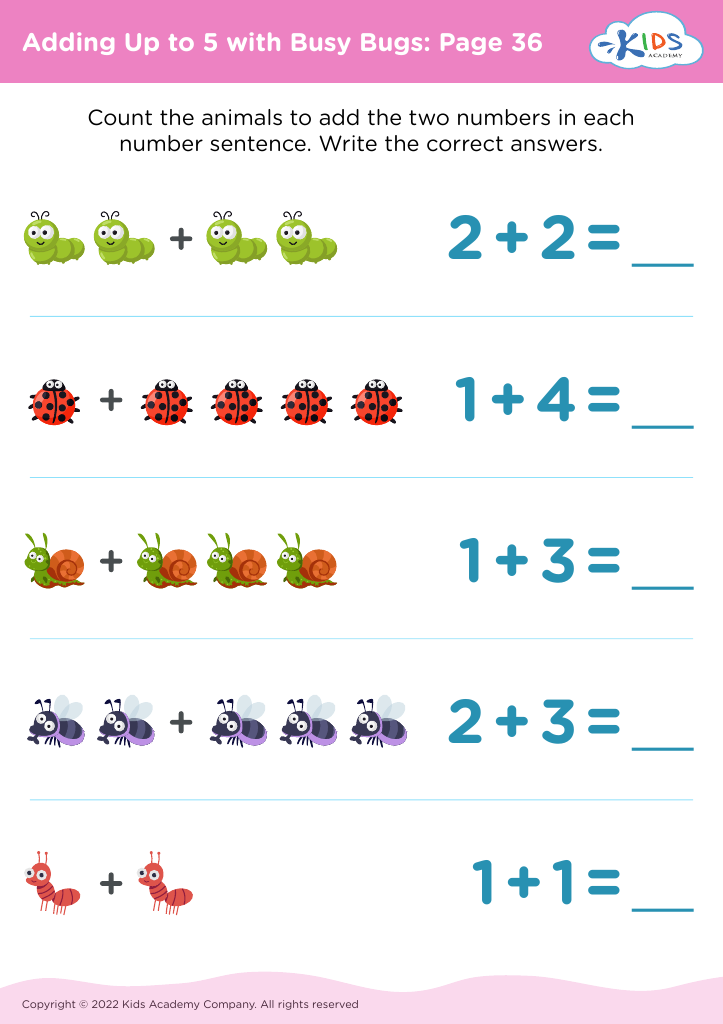
Adding Up to 5 with Busy Bugs: Page 36
Worksheet
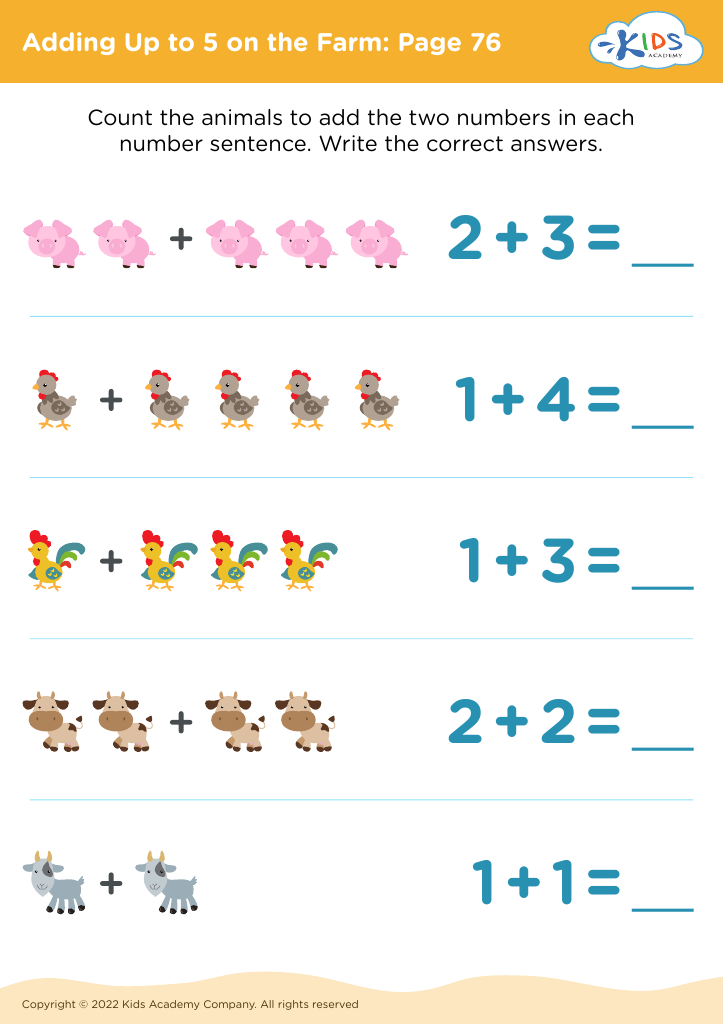
Adding Up to 5 on the Farm: Page 76
Worksheet
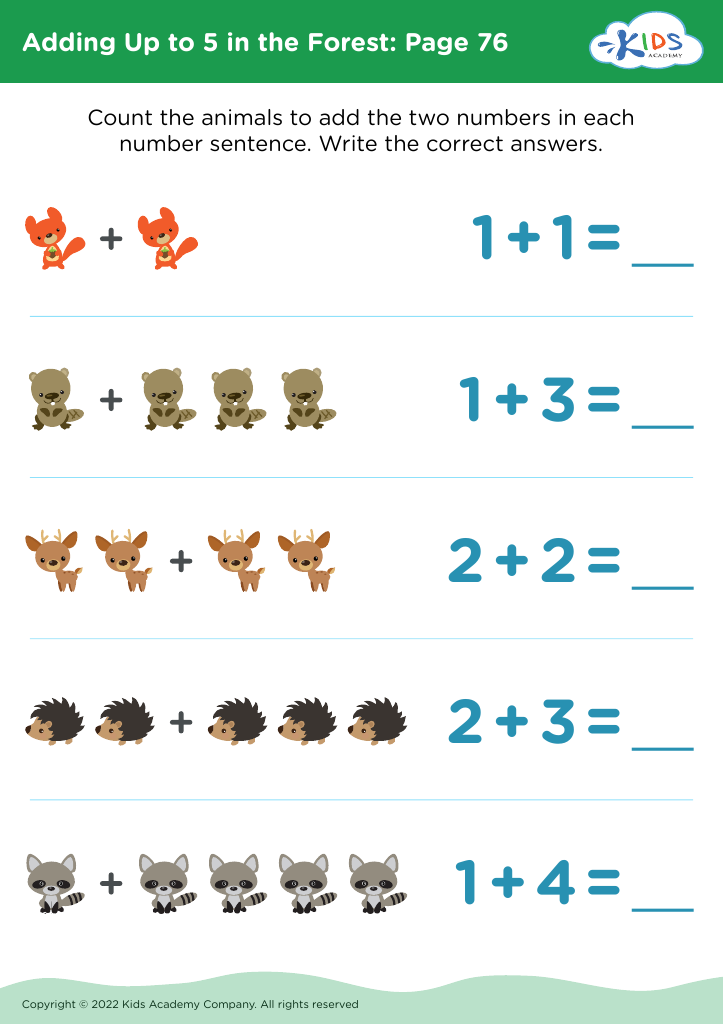
Adding Up to 5 in the Forest: Page 76
Worksheet
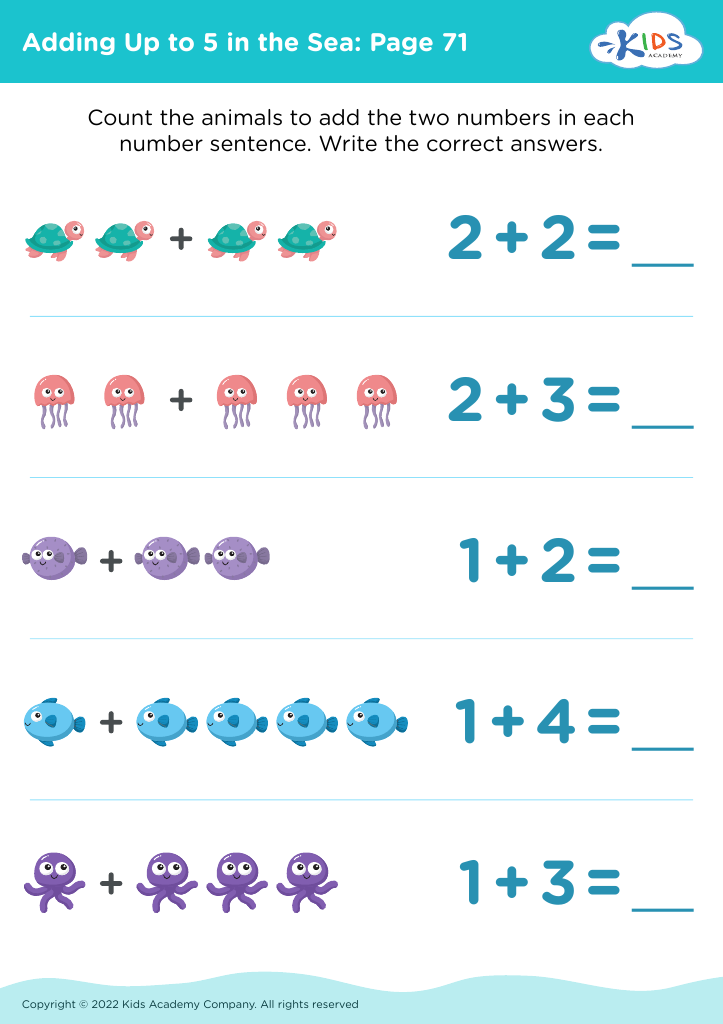
Adding Up to 5 in the Sea: Page 71
Worksheet
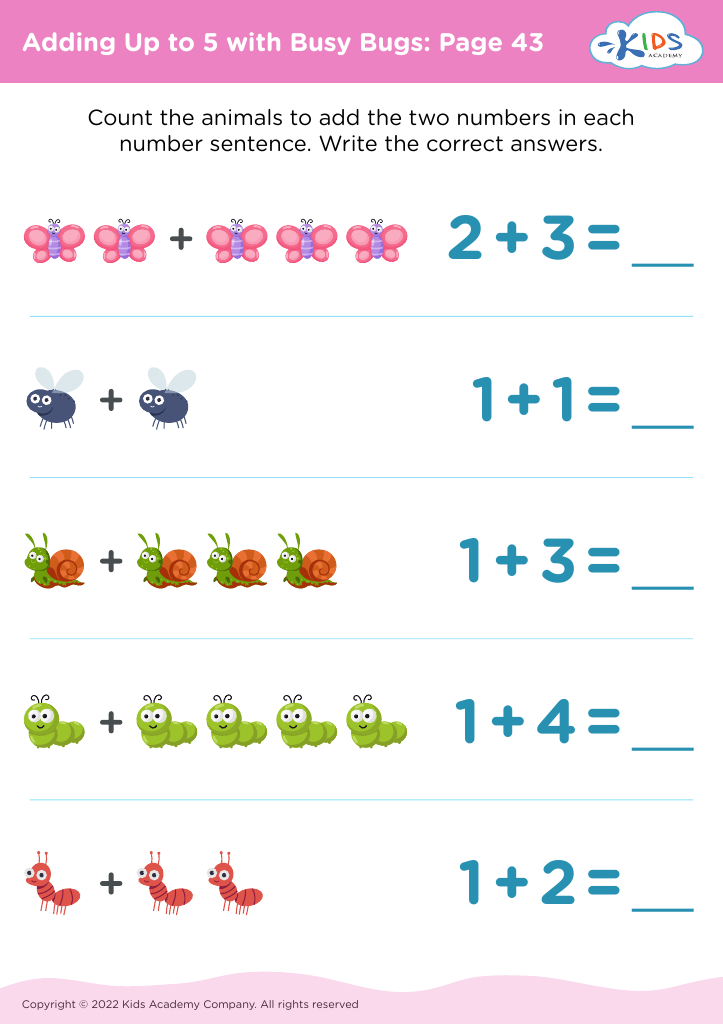
Adding Up to 5 with Busy Bugs: Page 43
Worksheet
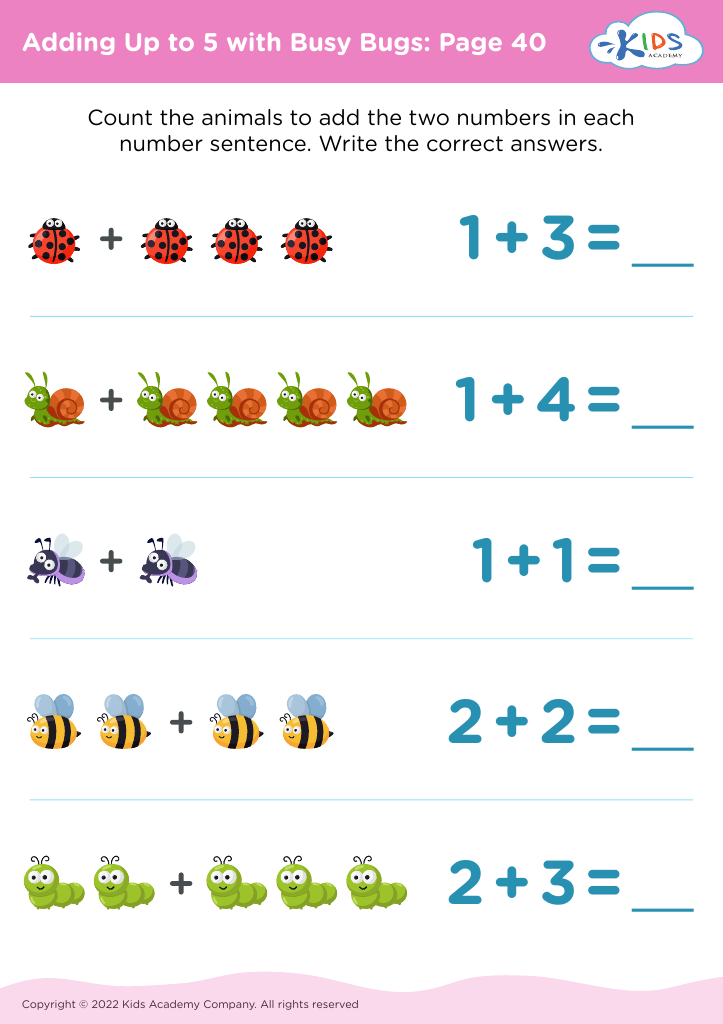
Adding Up to 5 with Busy Bugs: Page 40
Worksheet
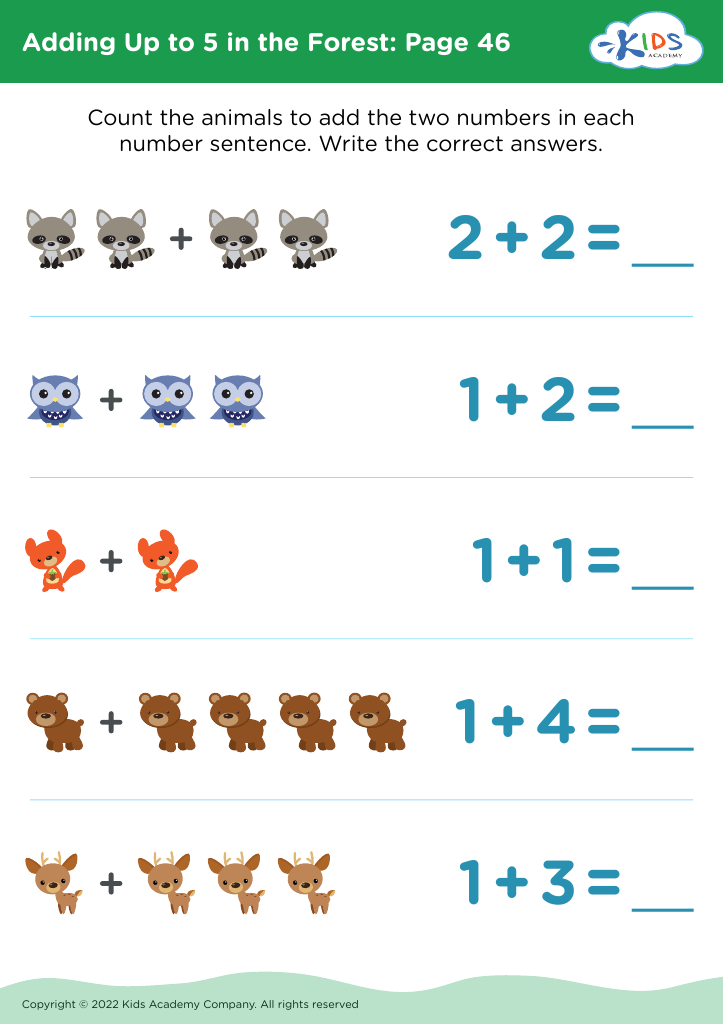
Adding Up to 5 in the Forest: Page 46
Worksheet
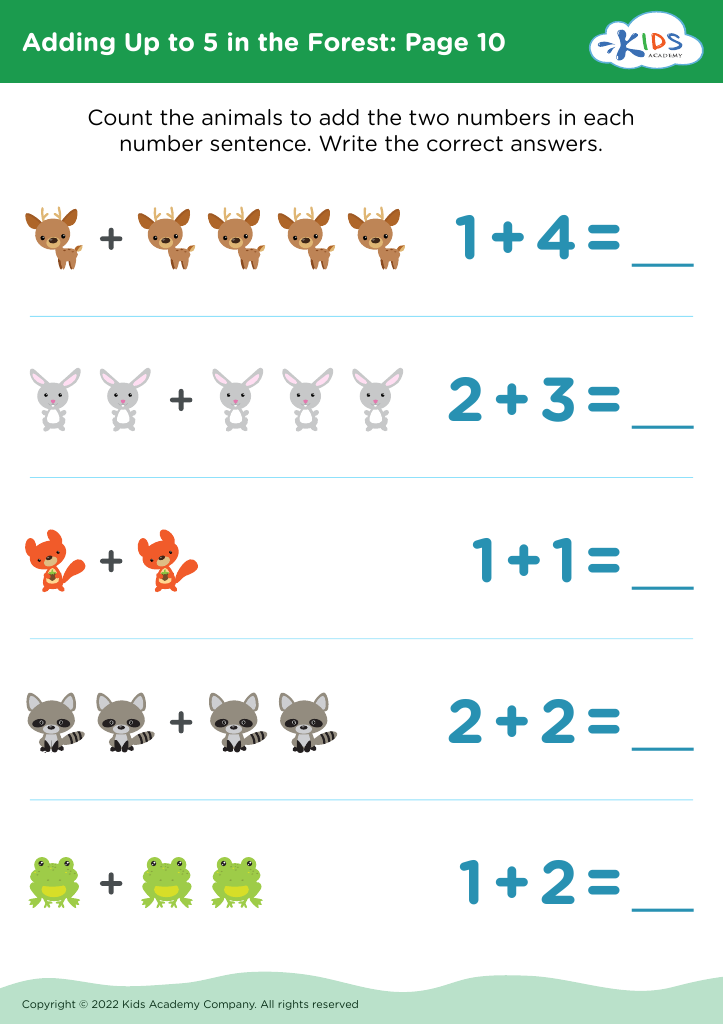
Adding Up to 5 in the Forest: Page 10
Worksheet
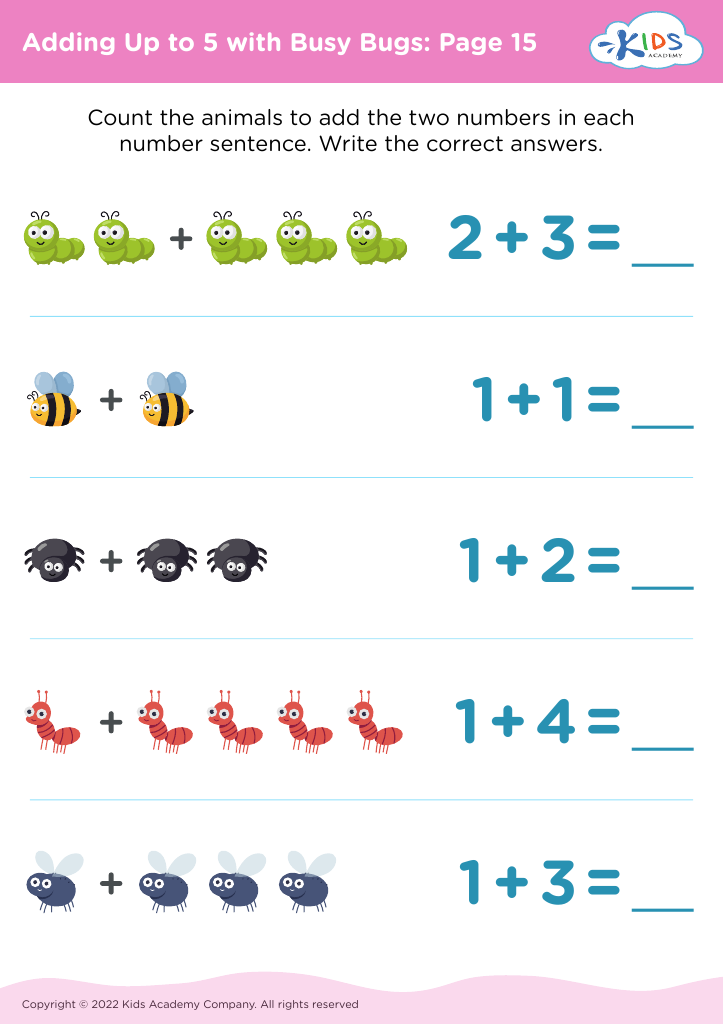
Adding Up to 5 with Busy Bugs: Page 15
Worksheet


Developing basic math skills, such as adding up to 5, is crucial for children aged 4-5 for numerous reasons. First, these foundational skills set the groundwork for future mathematical concepts. At this age, children are beginning to explore numbers and their relationships, and mastering simple addition helps them understand more complex ideas later on.

Furthermore, basic math skills enhance cognitive development. Engaging with numbers fosters critical thinking and problem-solving abilities. When children learn to combine groups of items, they practice counting, recognizing patterns, and categorizing—important skills that extend beyond math.

In addition, strong basic math skills can boost a child's confidence. Success in these early mathematical tasks encourages a positive attitude towards learning, making them more enthusiastic about engaging with subjects in school. It's also an opportunity for parents and teachers to bond over learning through playful activities and games that incorporate numbers.

Lastly, these skills can have real-world connections. Simple math helps children understand everyday activities, such as handling money or sharing equally among peers. Overall, by fostering basic math skills, parents and teachers play a vital role in laying the foundation for a child's lifelong learning and confidence.