Counting skills Adding Up to 5 Worksheets for Ages 4-5 - Page 5
102 filtered results
-
From - To
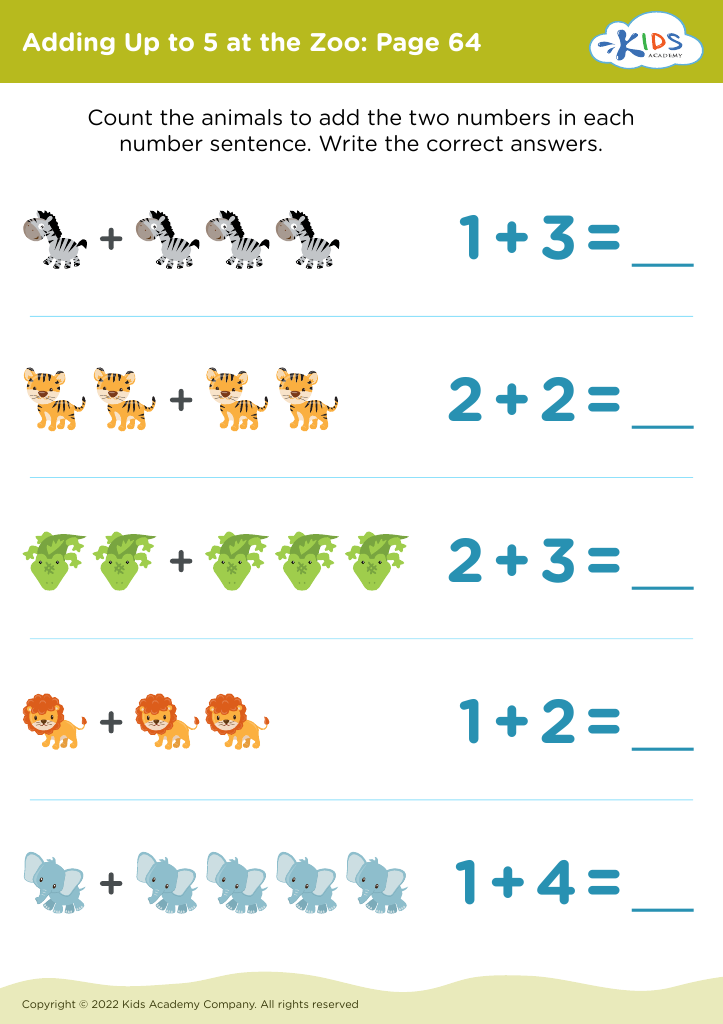
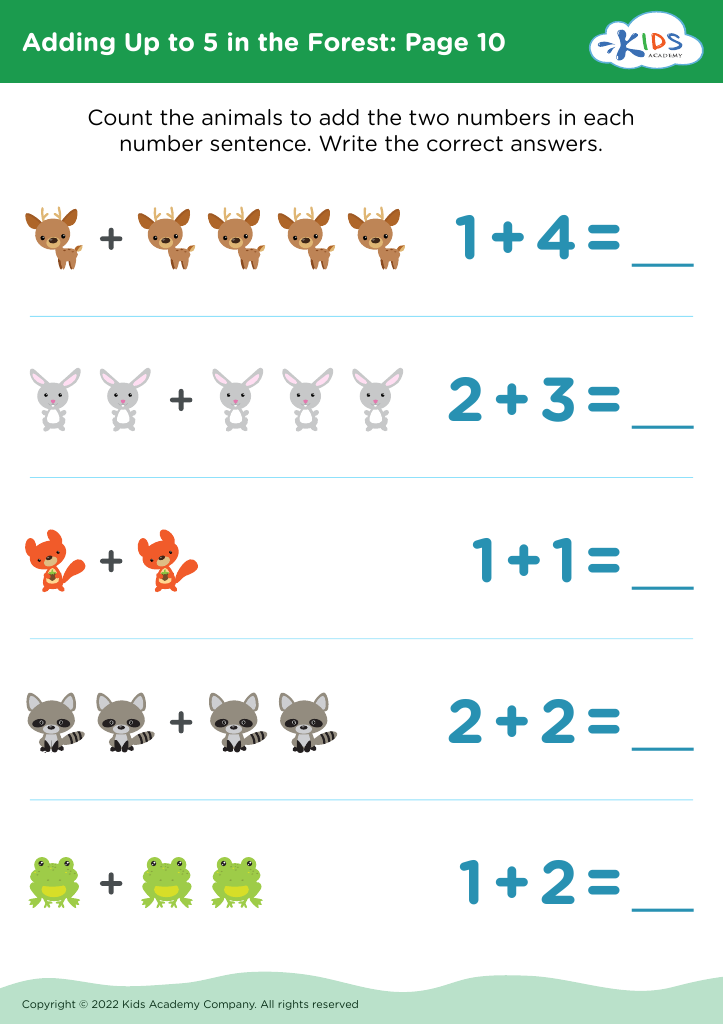
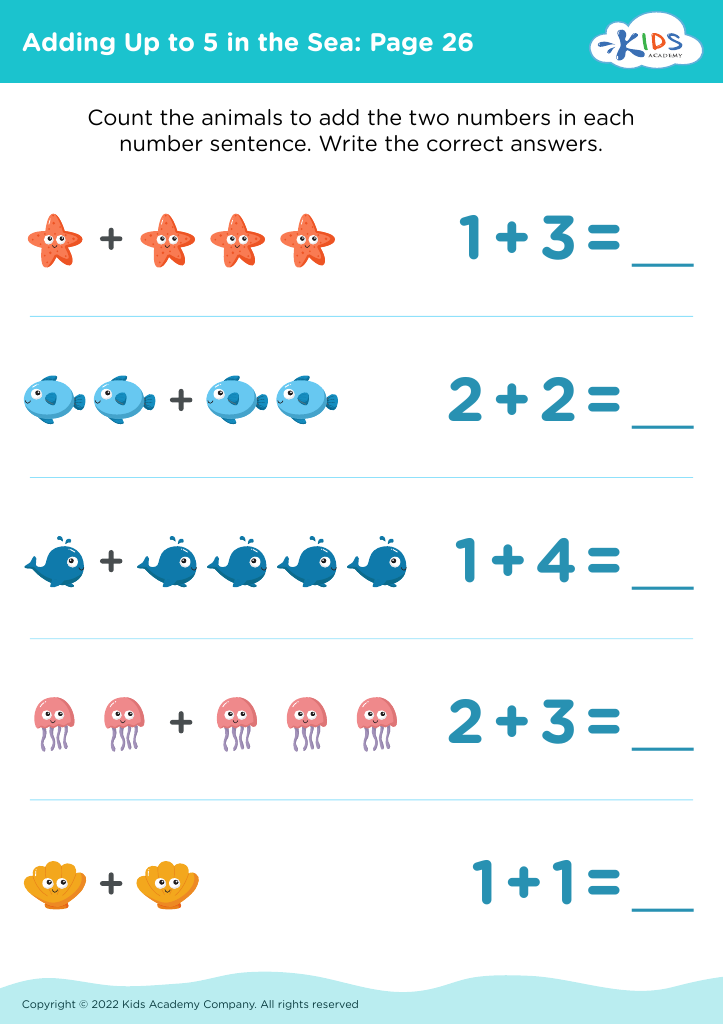
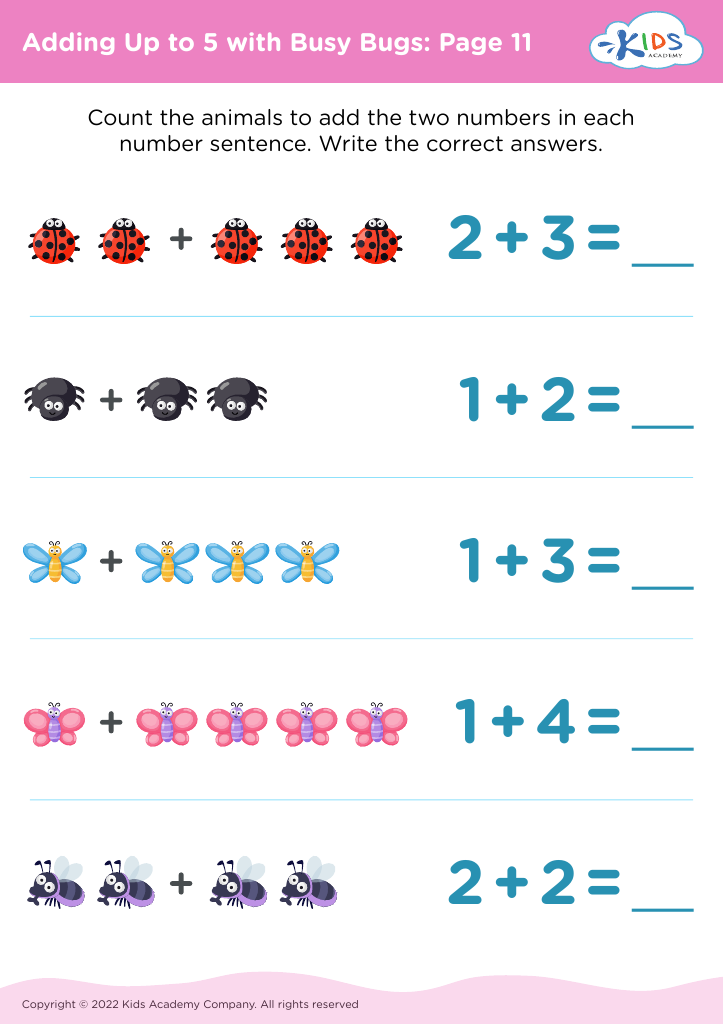
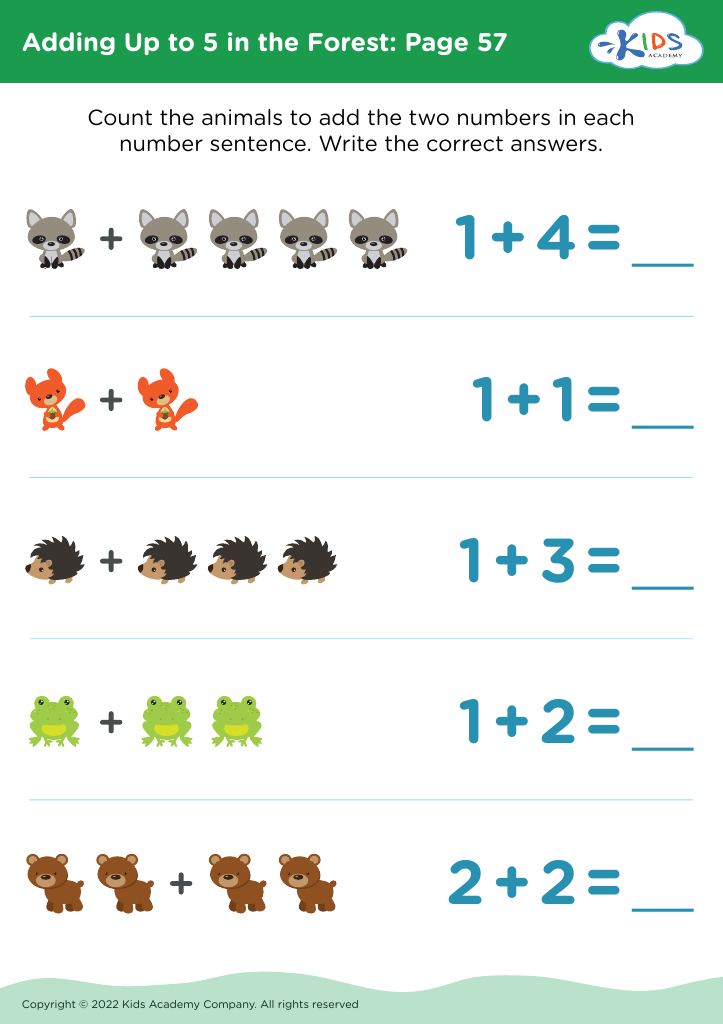
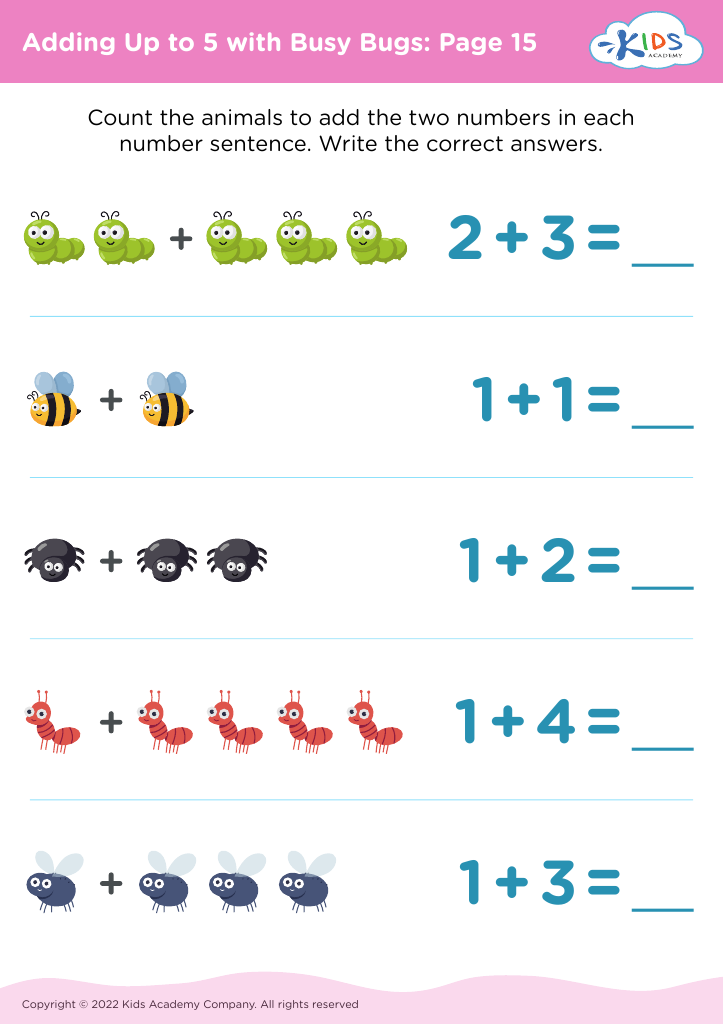








Counting skills, particularly the ability to add up to 5, are foundational for children aged 4-5 and have profound educational and developmental implications. At this age, children are engaging in crucial cognitive development; early mathematical skills foster logical reasoning, problem-solving abilities, and critical thinking. Understanding how to count and add small numbers sets the stage for more complex math concepts later on, such as subtraction, multiplication, and division.
For parents and teachers, facilitating counting skills promotes not just academic success but also builds confidence in children. Mastering the basics empowers them to participate more fully in activities that require quantitative reasoning, such as games, cooking, and shopping. Furthermore, counting relates to everyday experiences, making math relevant and engaging.
In addition, building a strong numerical foundation nurtures positive attitudes toward math, combating anxiety that often arises in later years. By integrating counting into play and daily interactions, caregivers reinforce learning in a fun, meaningful way. Ultimately, emphasizing proficiency in counting skills lays the groundwork for lifelong learners, ensuring children are well-prepared for future academic challenges and everyday applications of math in their lives. Making counting a priority enriches a child’s learning experience significantly.








