Hand-eye Coordination Adding Up to 5 Worksheets for Ages 4-5
15 filtered results
-
From - To
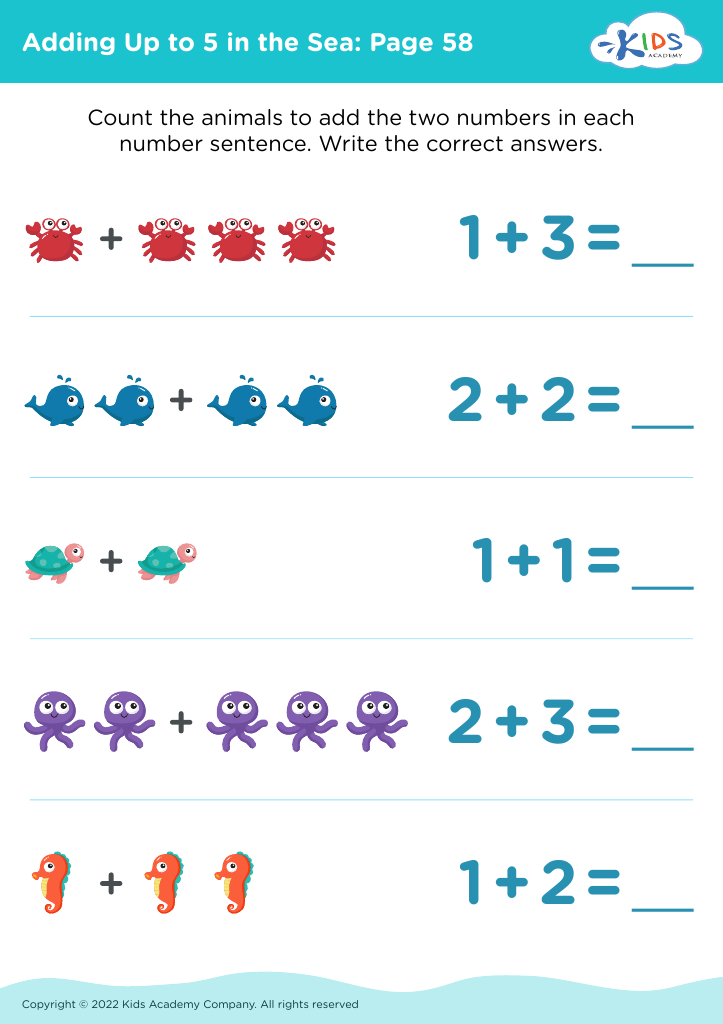
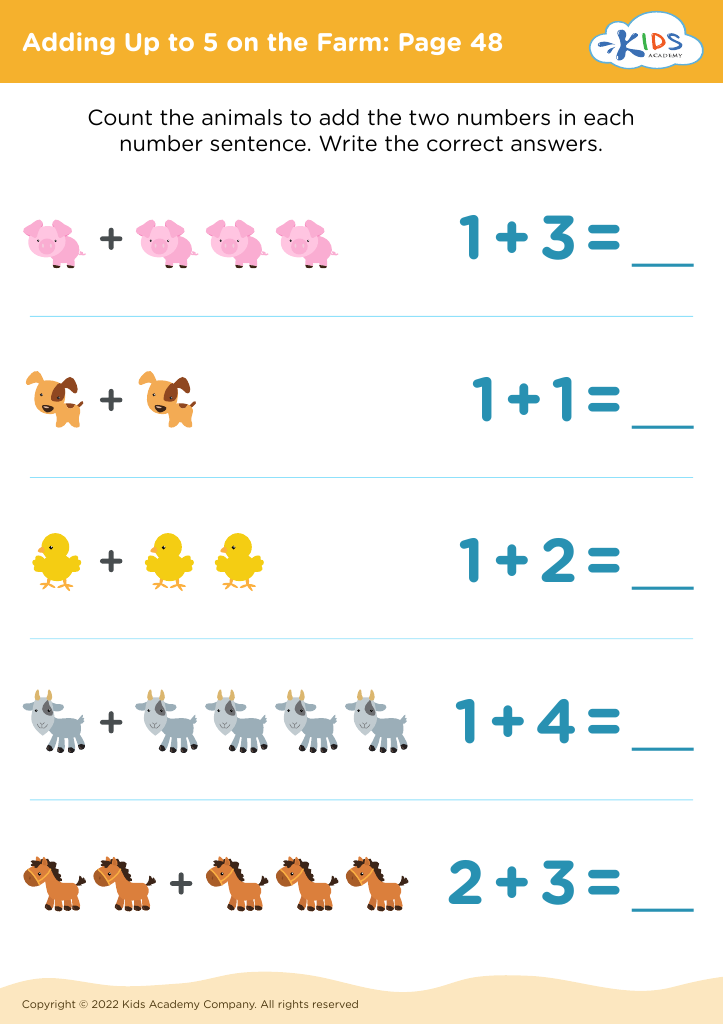
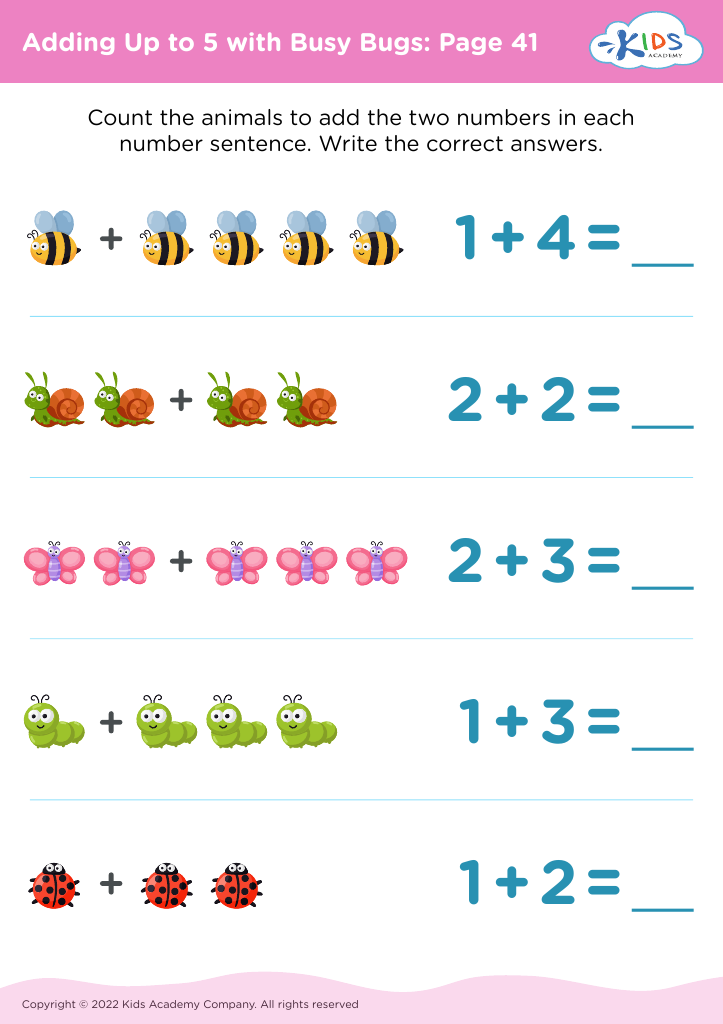
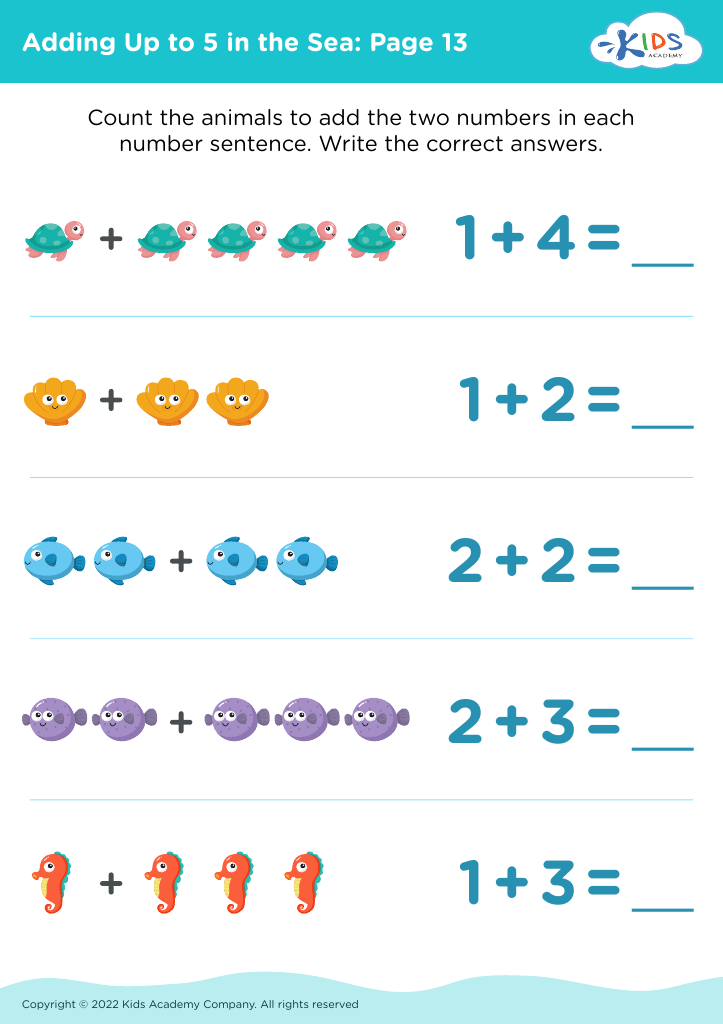
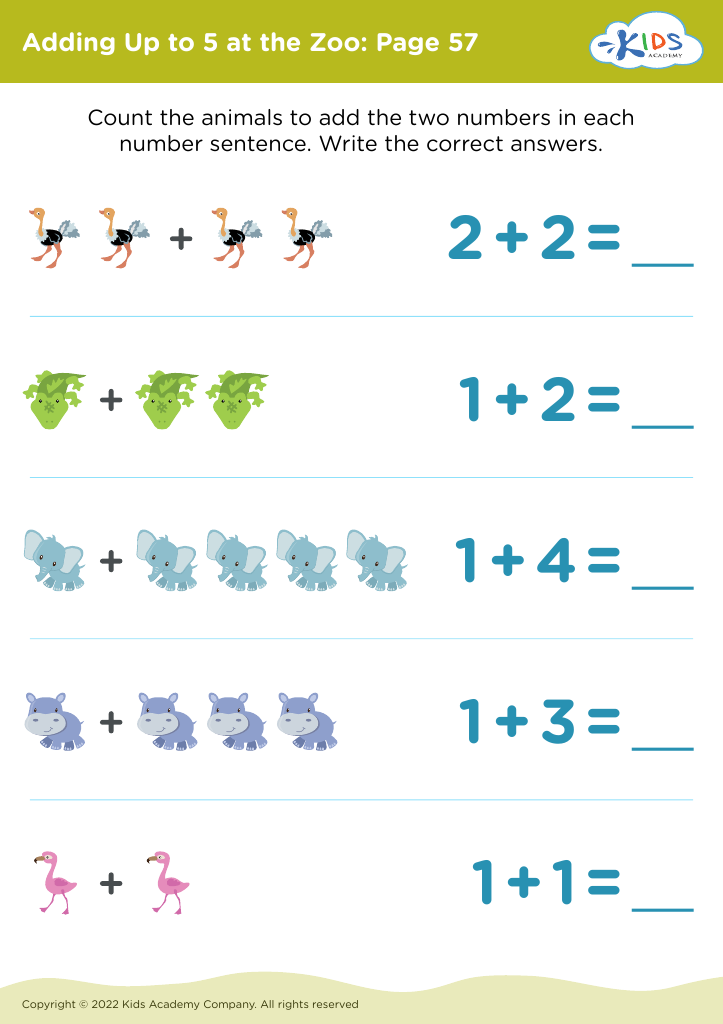
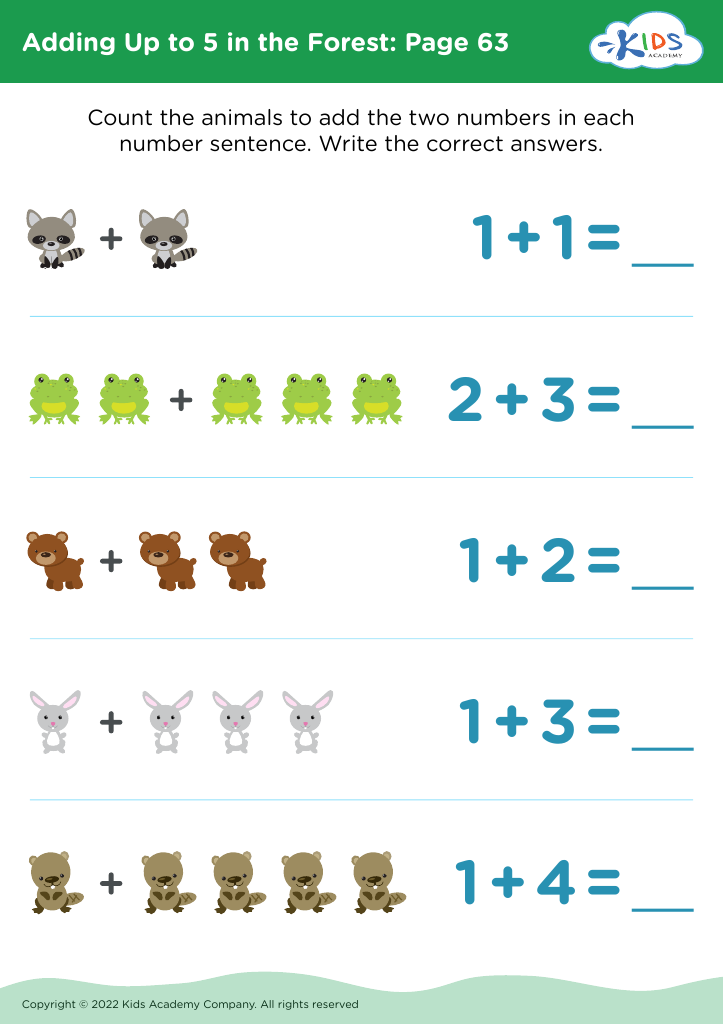
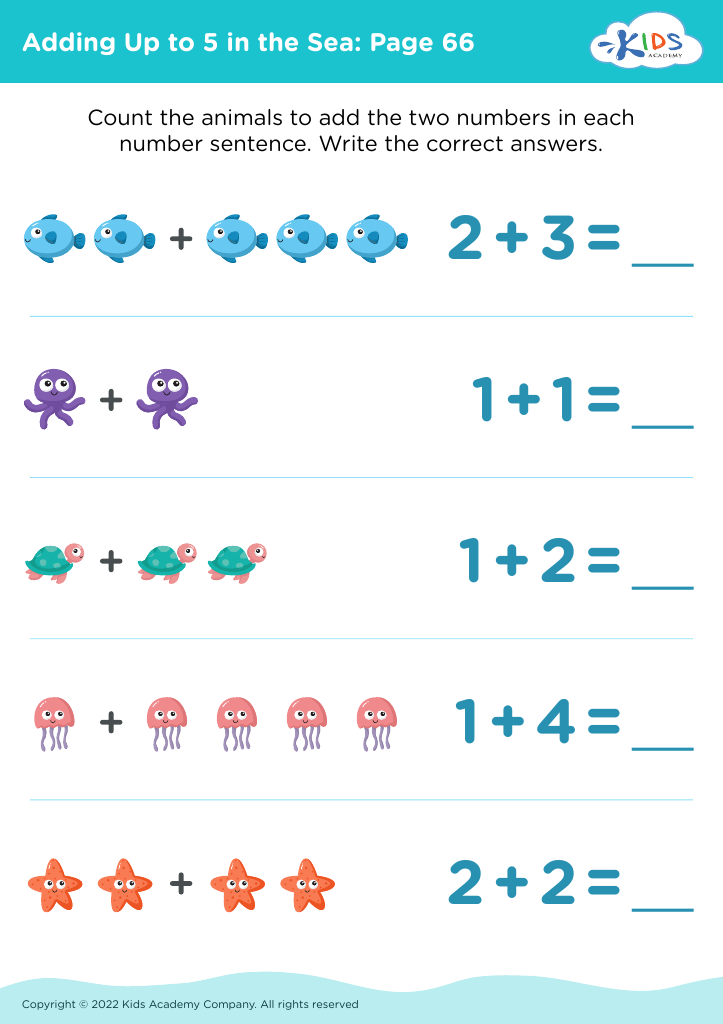
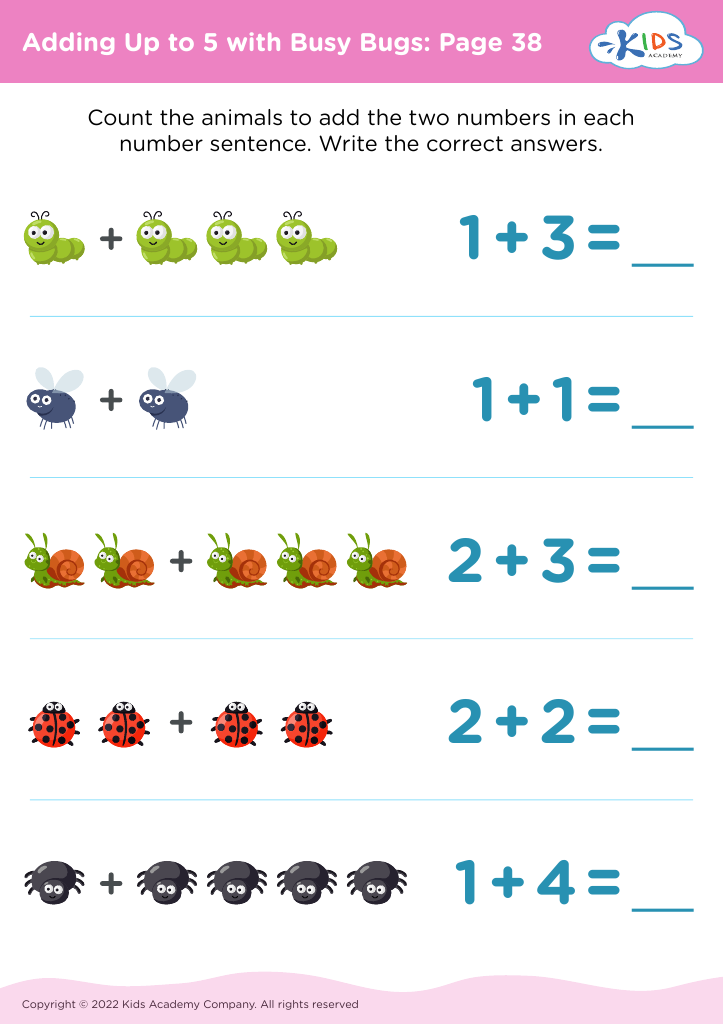
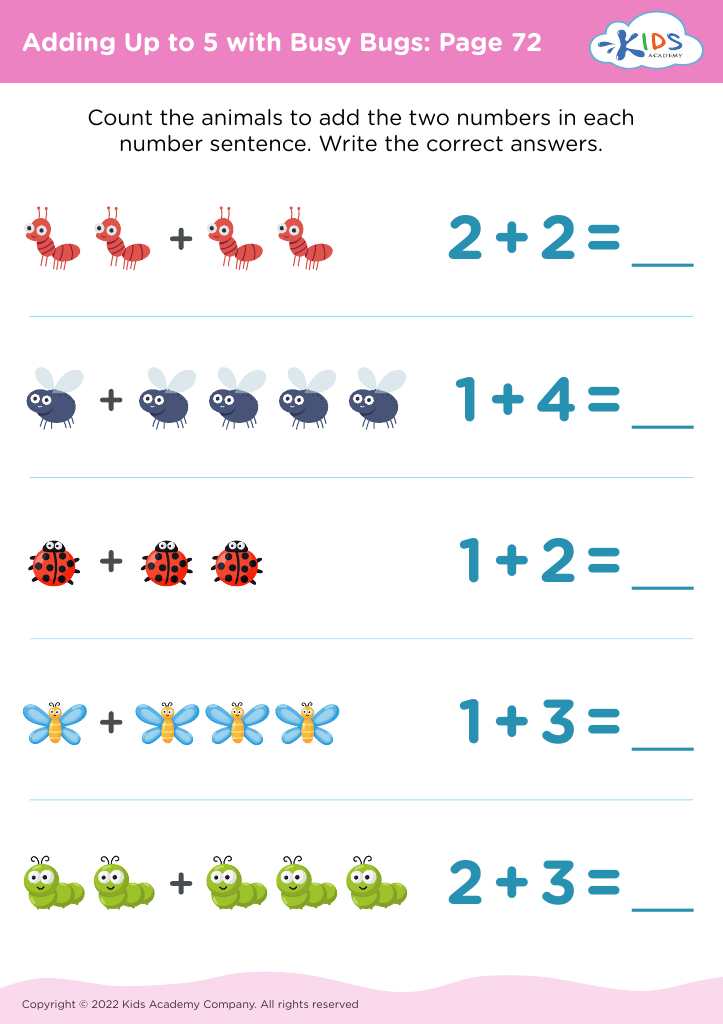
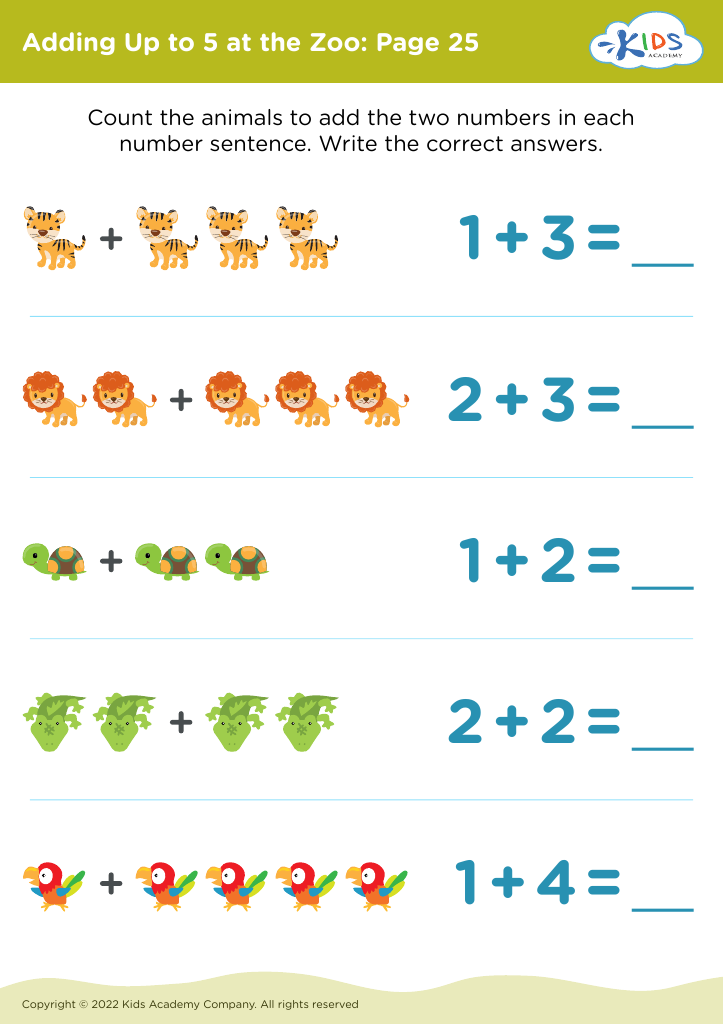
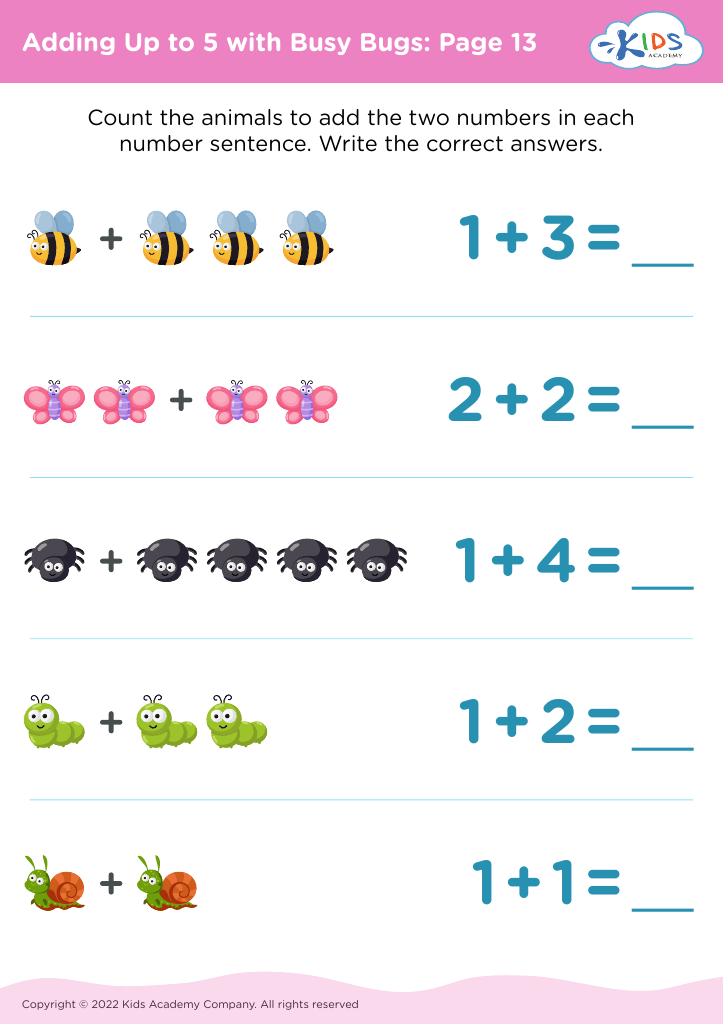
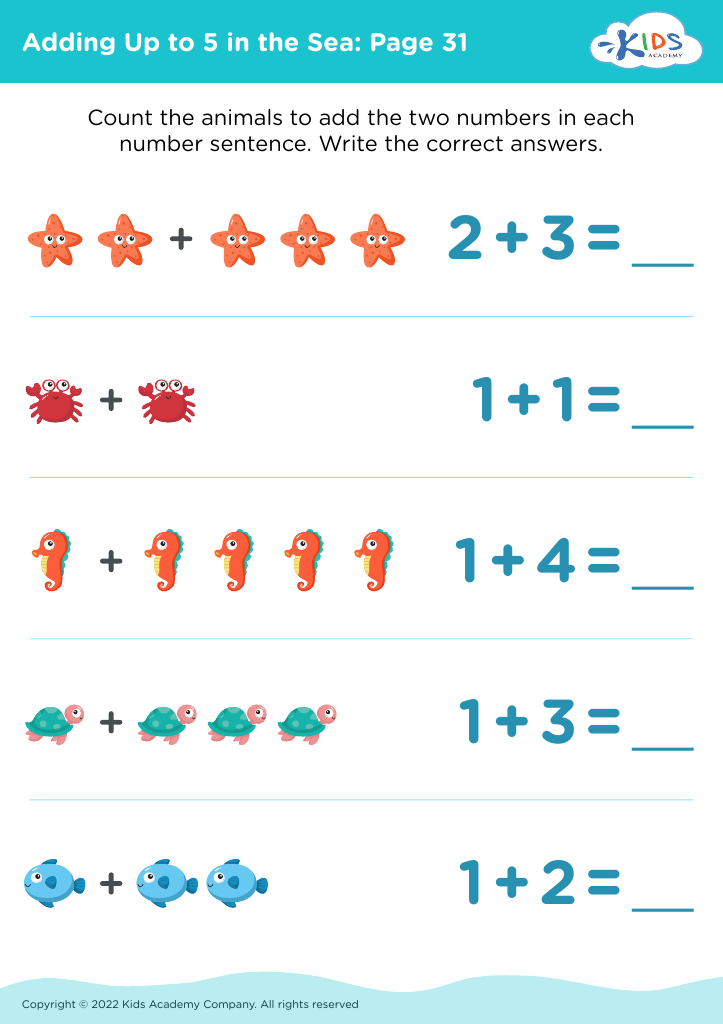
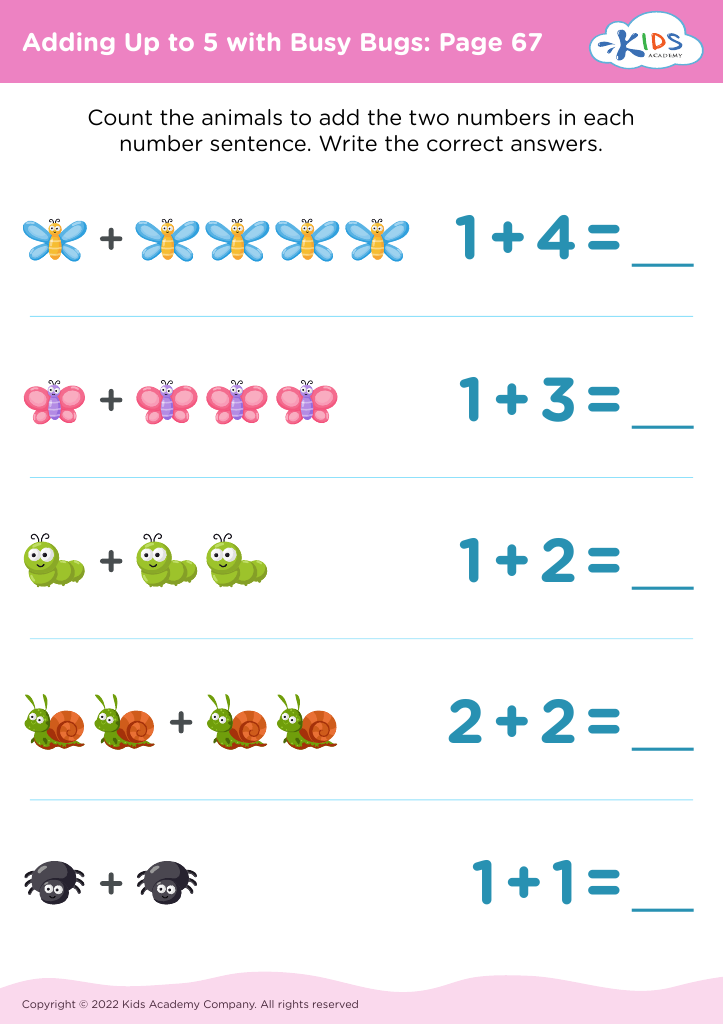
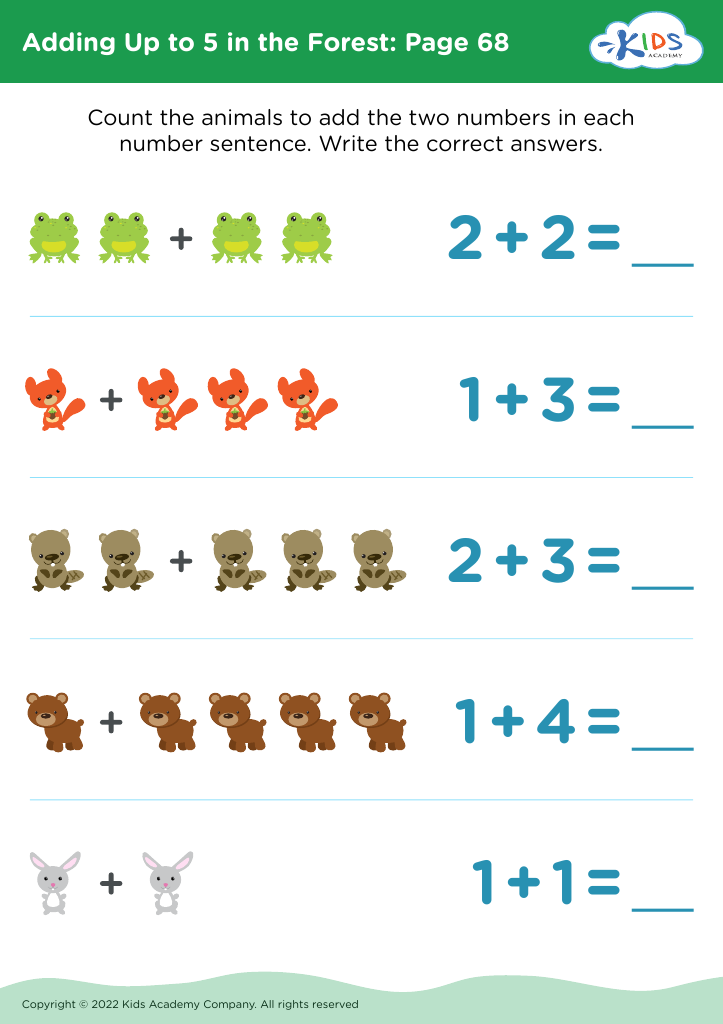
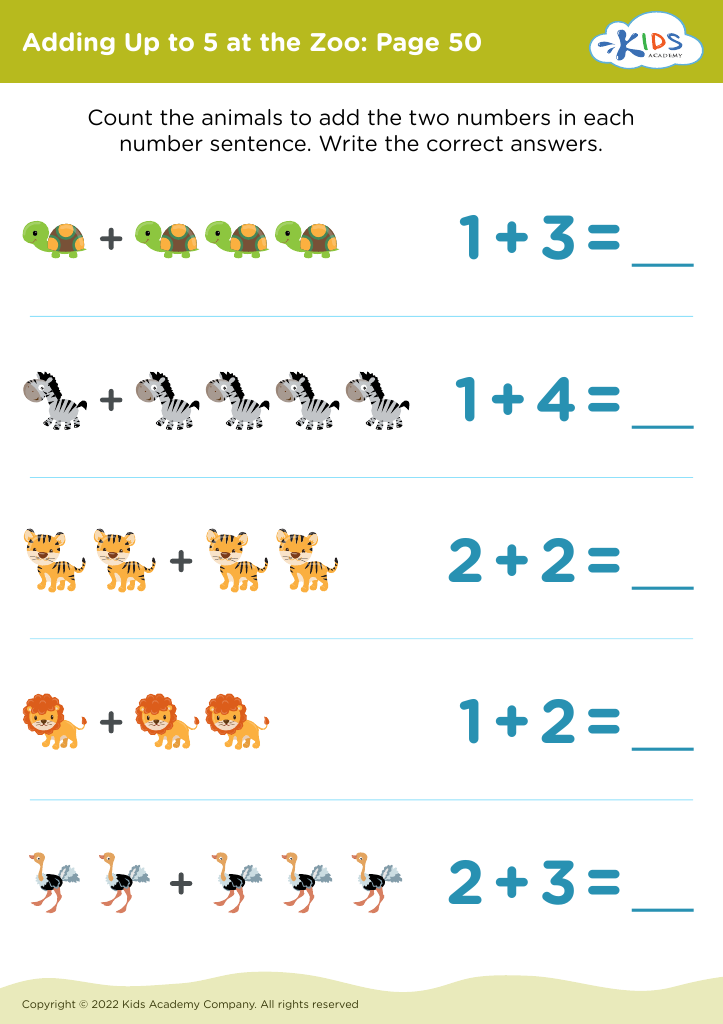
Enhance your child's hand-eye coordination and math skills with our engaging "Hand-eye Coordination Adding Up to 5 Worksheets" designed specifically for ages 4-5. These worksheets combine fun activities that promote motor skills and early math comprehension by helping children learn to add up to 5. Each worksheet features colorful illustrations and interactive elements that capture your child's attention, making learning enjoyable. Perfect for classroom use or at-home practice, these resources support essential developmental milestones. Watch your child gain confidence in both their mathematical abilities and coordination as they explore numbers in a playful, hands-on way!




.jpg)



Hand-eye coordination is a crucial skill for children aged 4-5 years, as it lays the foundation for numerous life skills. When teaching concepts like adding up to 5, integrating hand-eye coordination activities enhances both learning and motor skills. Parents and teachers should prioritize this development because effective hand-eye coordination aids in various everyday tasks, from writing and coloring to playing sports and performing self-care activities.
Activities that combine hand-eye coordination with basic math concepts can make learning engaging and interactive for young children. For instance, using blocks, counters, or draw-and-throw games can help children physically manipulate objects while reinforcing their understanding of addition. By participating in these activities, children develop spatial awareness and the ability to track movements visually, which are essential for future academic success.
Moreover, fostering these skills at an early age builds confidence and promotes a positive attitude toward learning. A child who is adept in both motor skills and foundational math will find it easier to explore more complex concepts later on. Thus, for their holistic development—socially, cognitively, and physically—parents and teachers should care about enhancing hand-eye coordination while teaching children to add up to 5.








