Understanding numerical values Adding Up to 5 Worksheets for Ages 4-5
4 filtered results
-
From - To
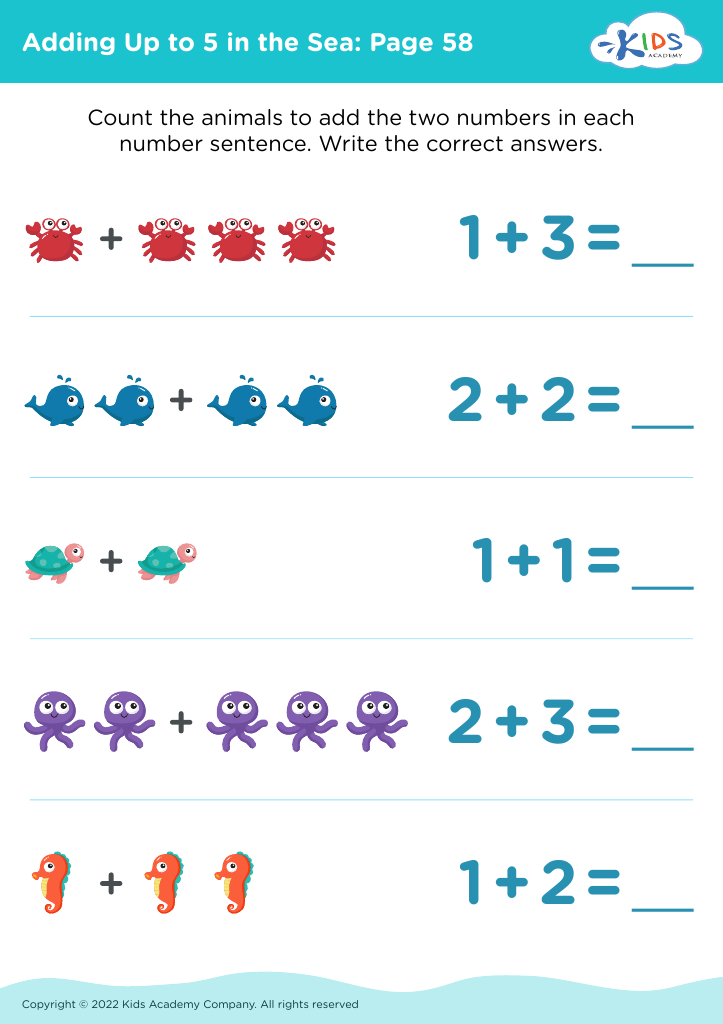
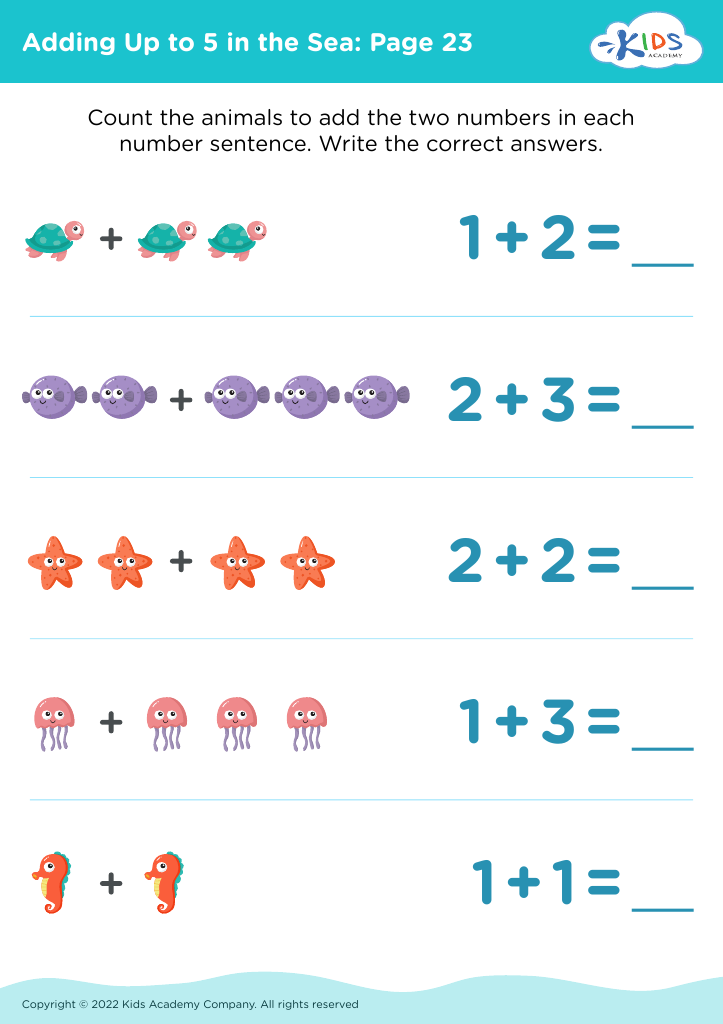
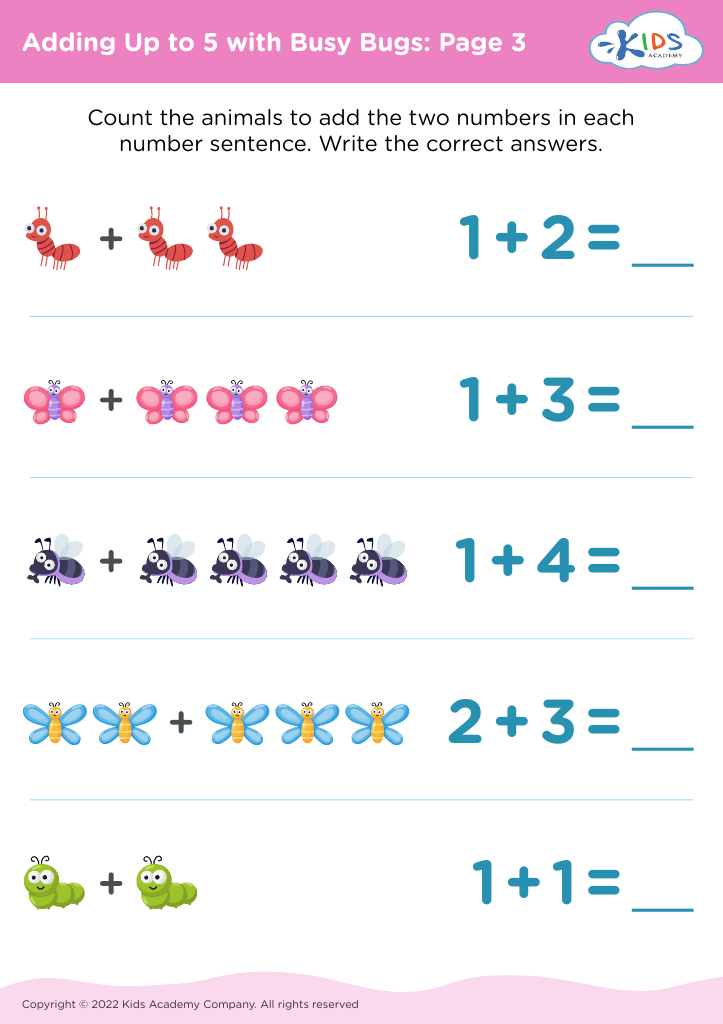
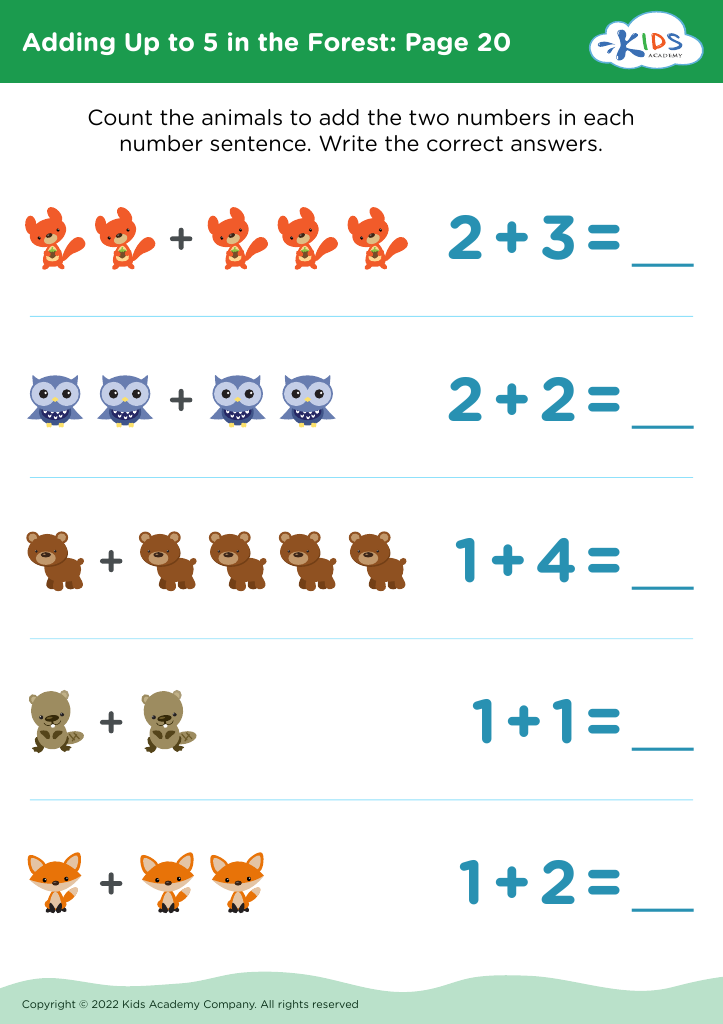
Introduce your preschooler to the world of numbers with our "Understanding Numerical Values: Adding Up to 5" worksheets! Designed specifically for children aged 4-5, these engaging activities help young learners grasp the concept of numerical values and improve their addition skills. Through fun illustrations and user-friendly formats, kids will explore various ways to combine numbers while developing critical thinking and problem-solving abilities. Ideal for parents, teachers, and caregivers, this resource supports early math education and prepares children for future academic success. Encourage your child's love for learning with our carefully crafted worksheets that make math enjoyable and interactive!








Understanding numerical values and mastering the concept of adding up to 5 is crucial for children aged 4-5 as it lays the foundation for their future mathematical skills. At this developmental stage, children are naturally curious and eager to explore basic math concepts. Engaging with the numbers one through five helps them to recognize and understand how quantities work in the world around them, fostering essential problem-solving abilities.
Moreover, this understanding enhances cognitive skills, such as reasoning and memory, which are critical for academic success. When parents and teachers encourage children to add up to 5 using visual aids like blocks, fingers, or drawings, they promote hands-on learning and make abstract concepts more tangible. Such activities build confidence and autonomy in children as they start to solve simple problems.
Additionally, mastering basic addition prepares children for more complex math topics later in life. It also drives social interaction, as they often learn and play together, developing communication and collaboration skills. By prioritizing this foundational understanding, parents and educators not only contribute to academic readiness but also support overall cognitive and emotional development, ensuring children are well-equipped for future learning challenges.








