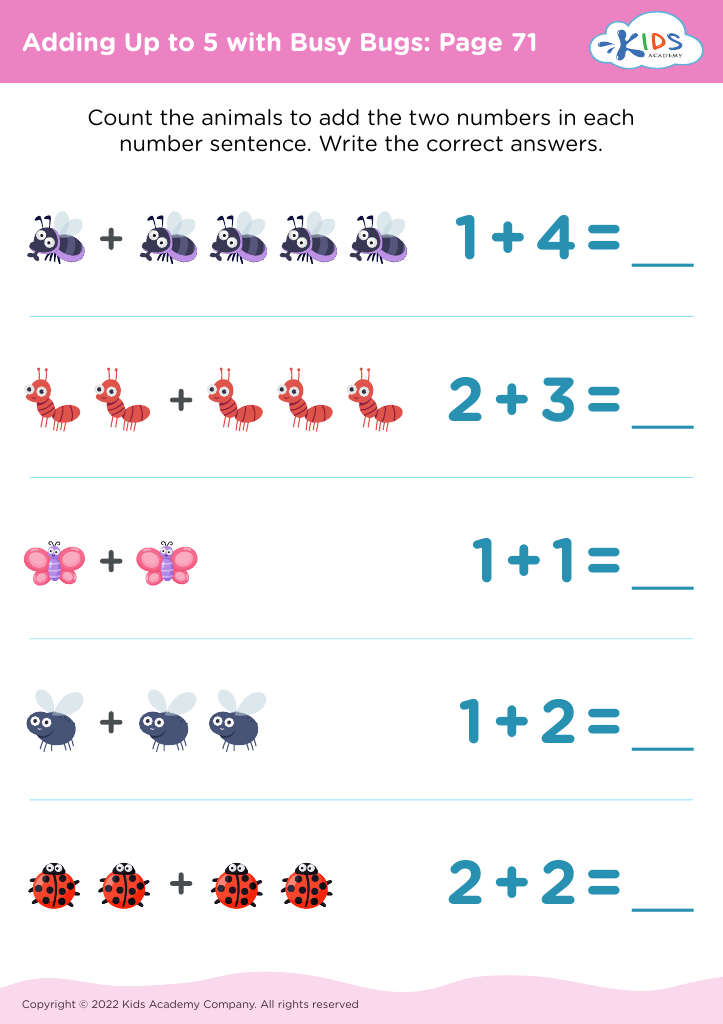
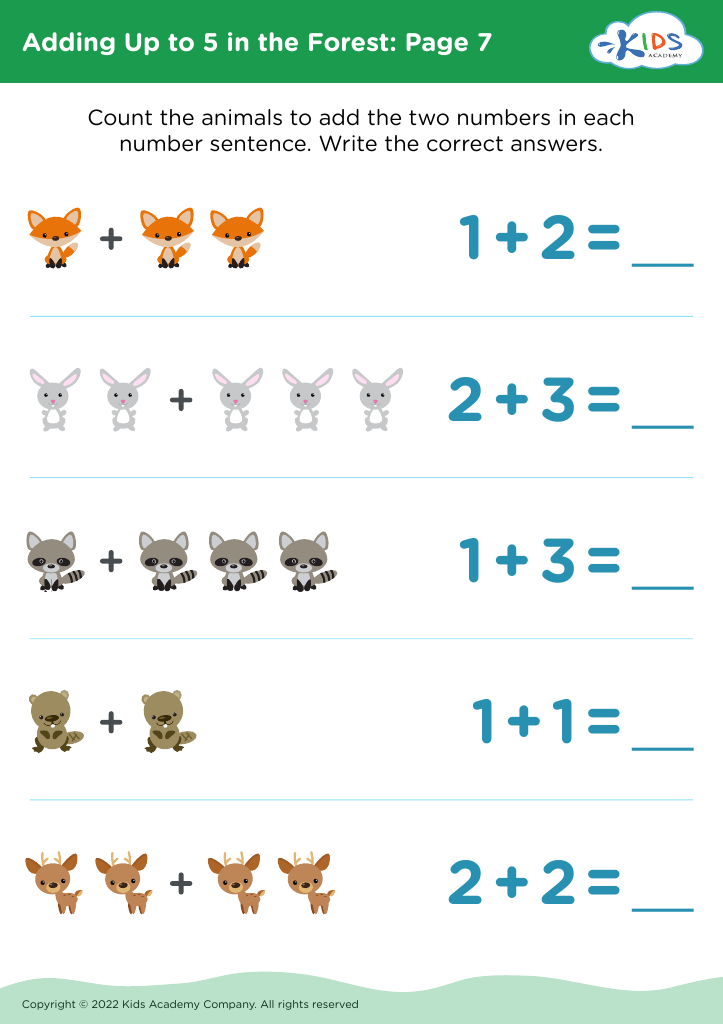
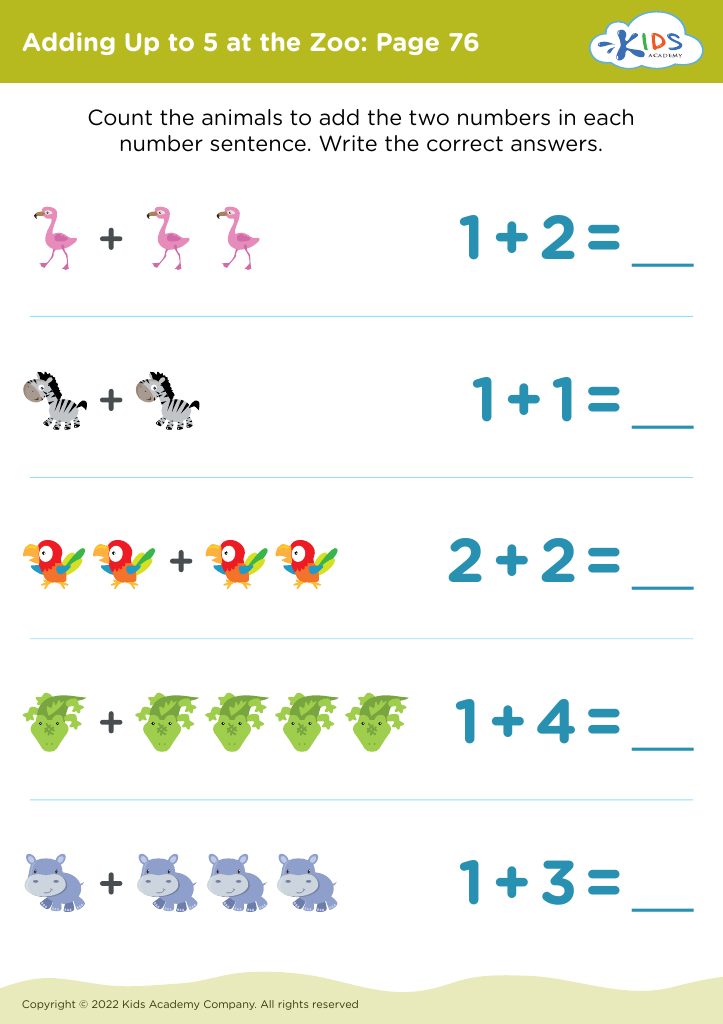
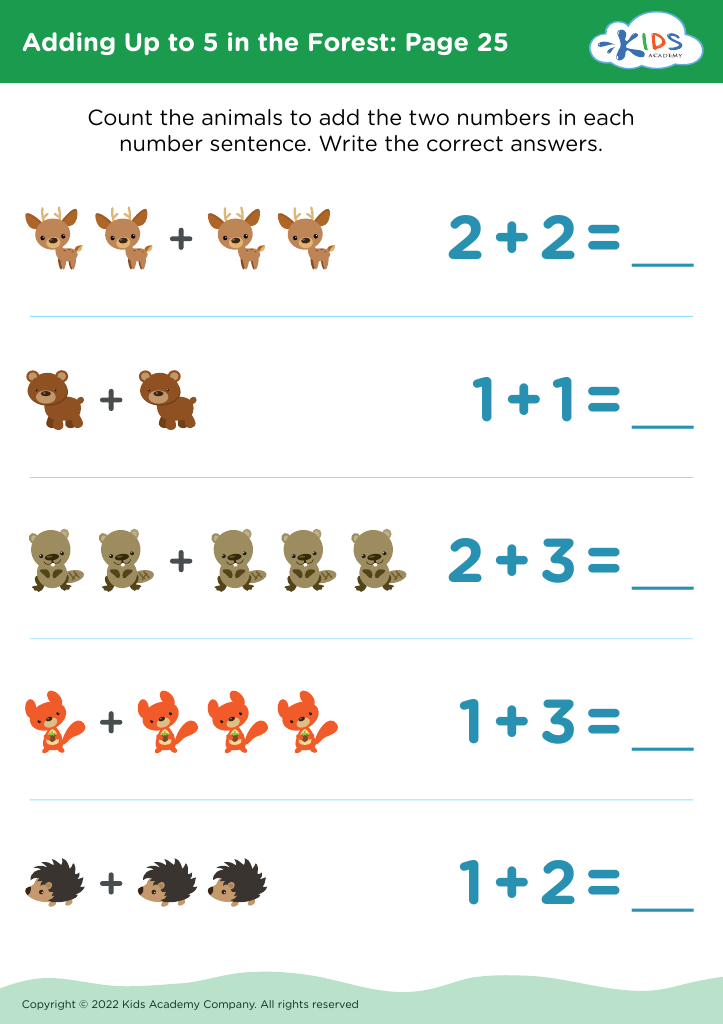
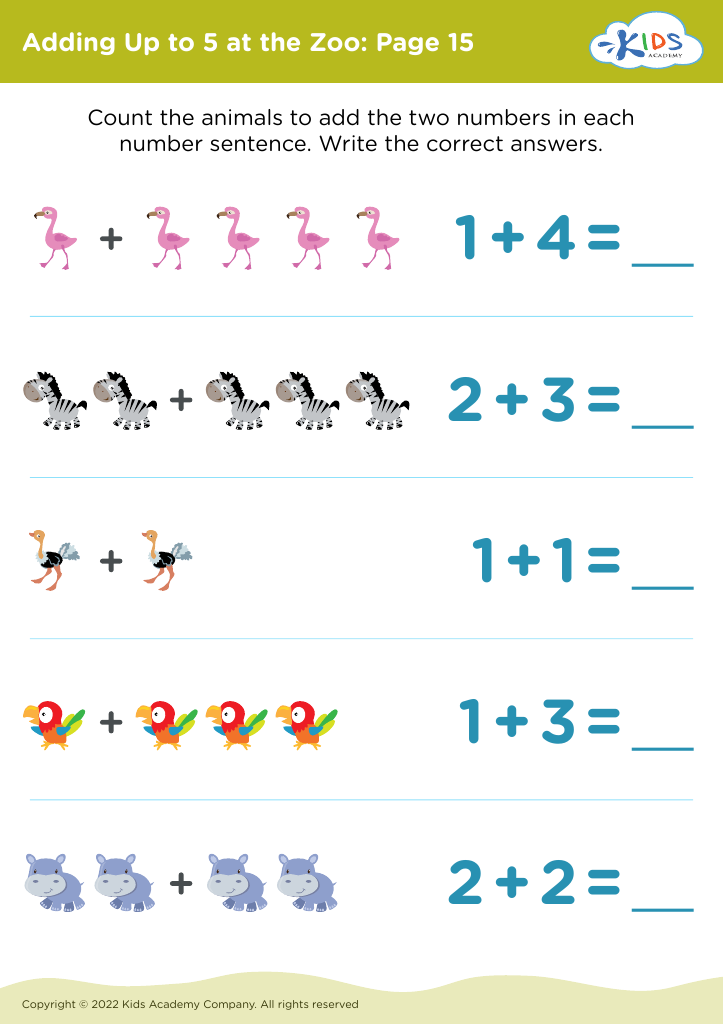
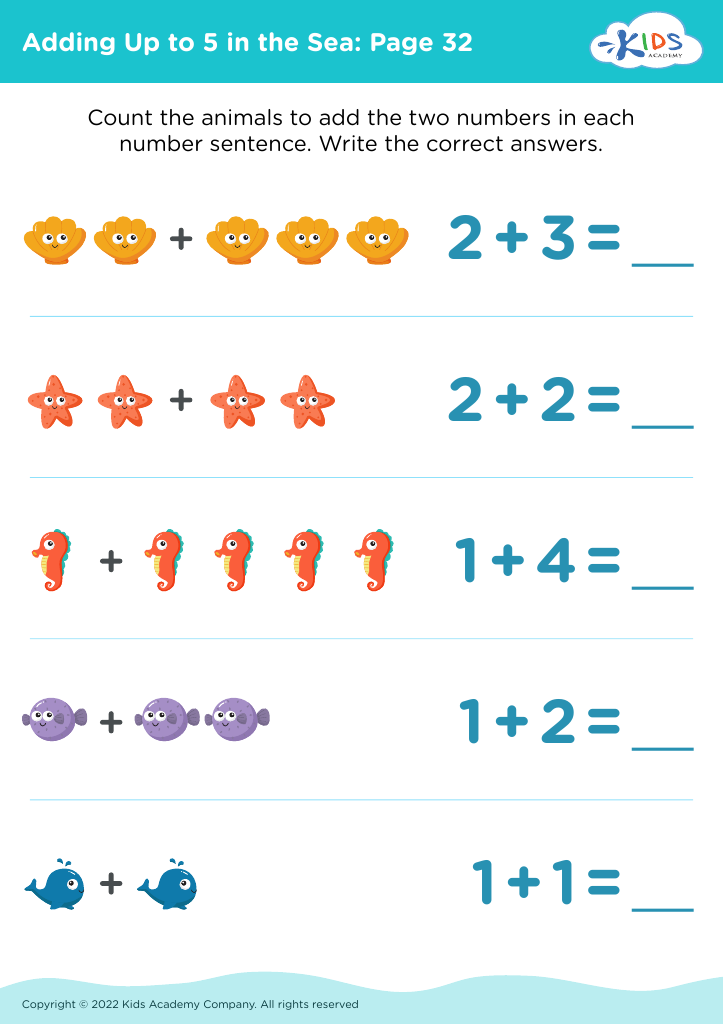
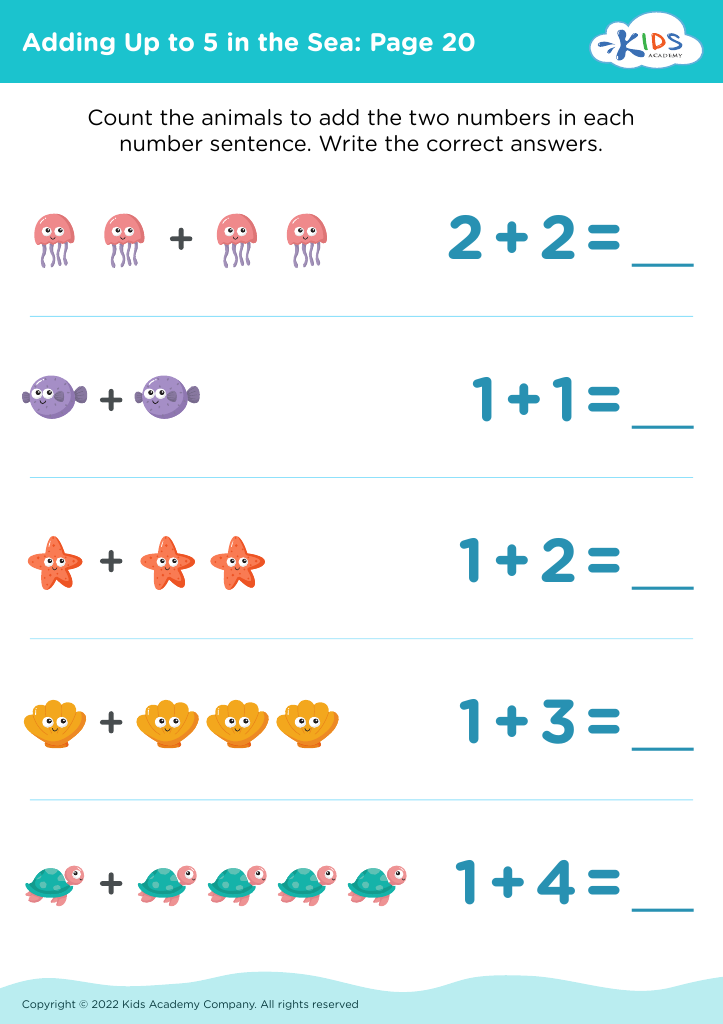
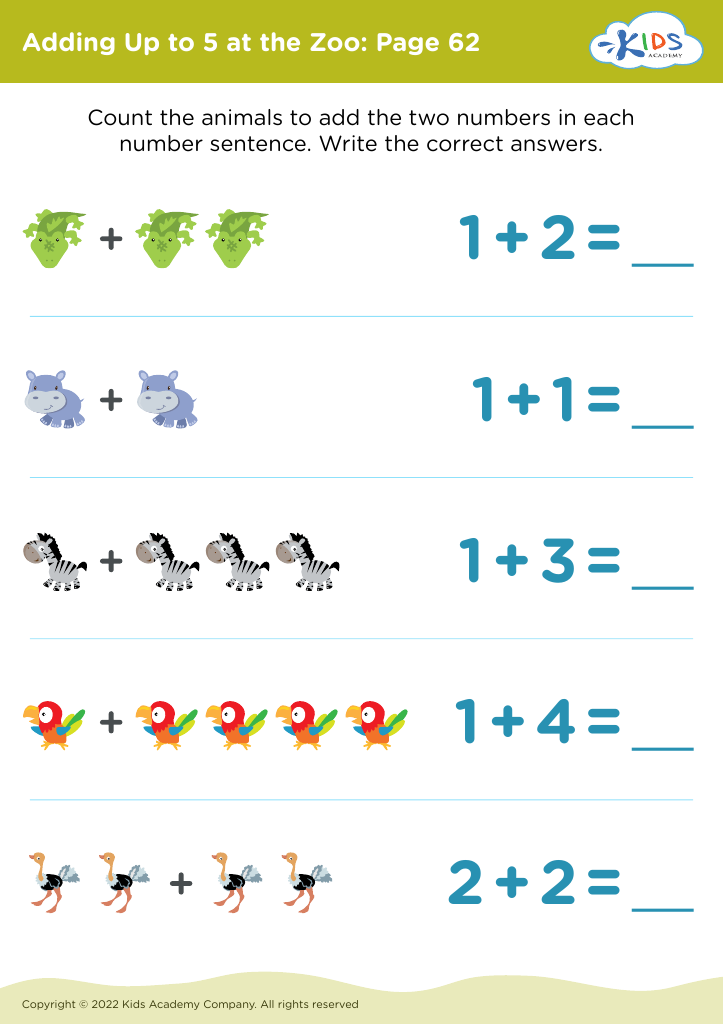
Our "Understanding Quantities Adding Up to 5" worksheets are perfect for ages 4-5, designed to build foundational math skills in a fun and engaging way. These printable worksheets help young learners visualize and grasp basic addition concepts by counting and combining items to reach sums up to 5. Through colorful illustrations and interactive activities, children develop their number sense, improve counting skills, and build confidence in their math abilities. Ideal for preschool and kindergarten settings, these educational resources are an excellent addition to any early learning curriculum, offering a strong start for future math success.
Check out this FREE Trial Lesson on Adding Up to 5 for age 4-5!

L

Favorites
With answer key
Interactive
  • 4-5
  • Understanding Quantities
  • Adding Up to 5
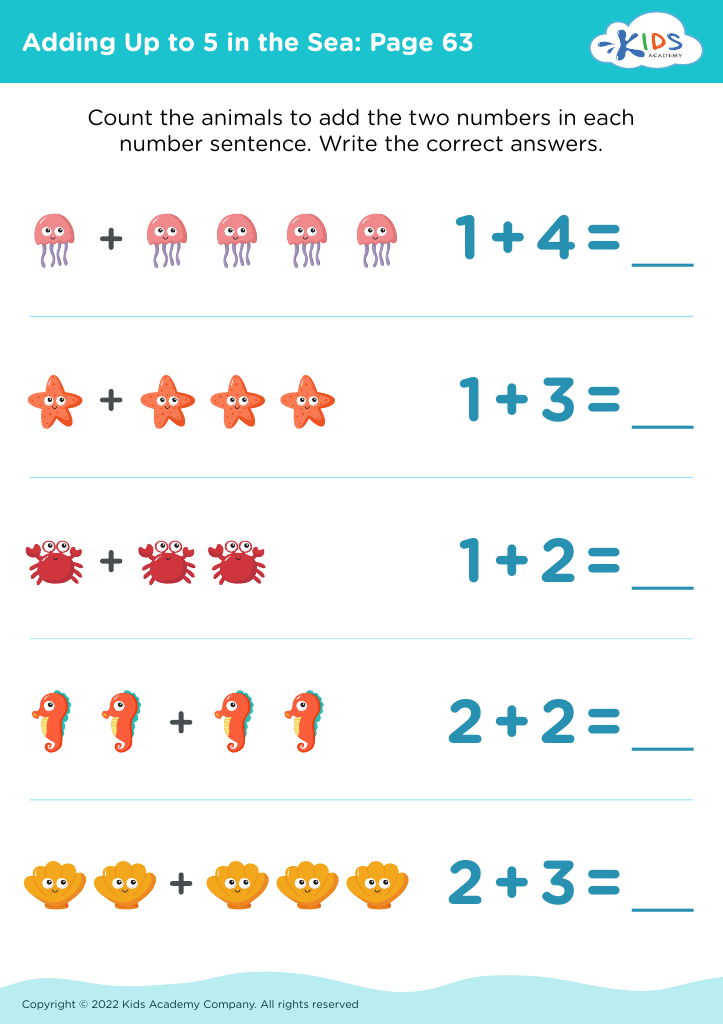
Adding Up to 5 in the Sea: Page 63
Worksheet
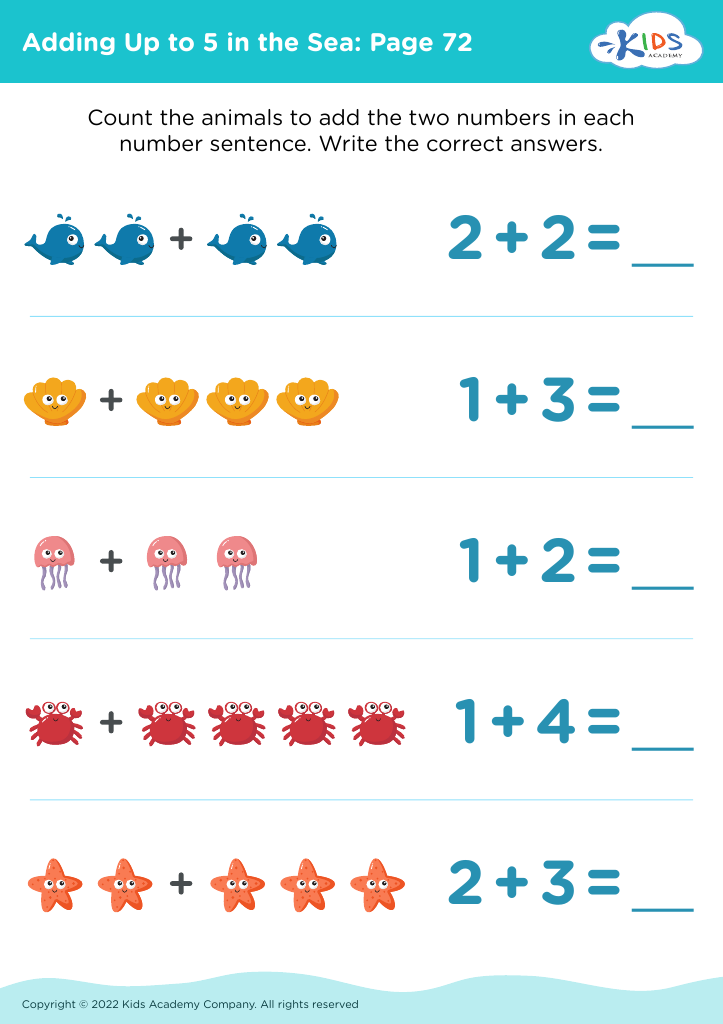
Adding Up to 5 in the Sea: Page 72
Worksheet
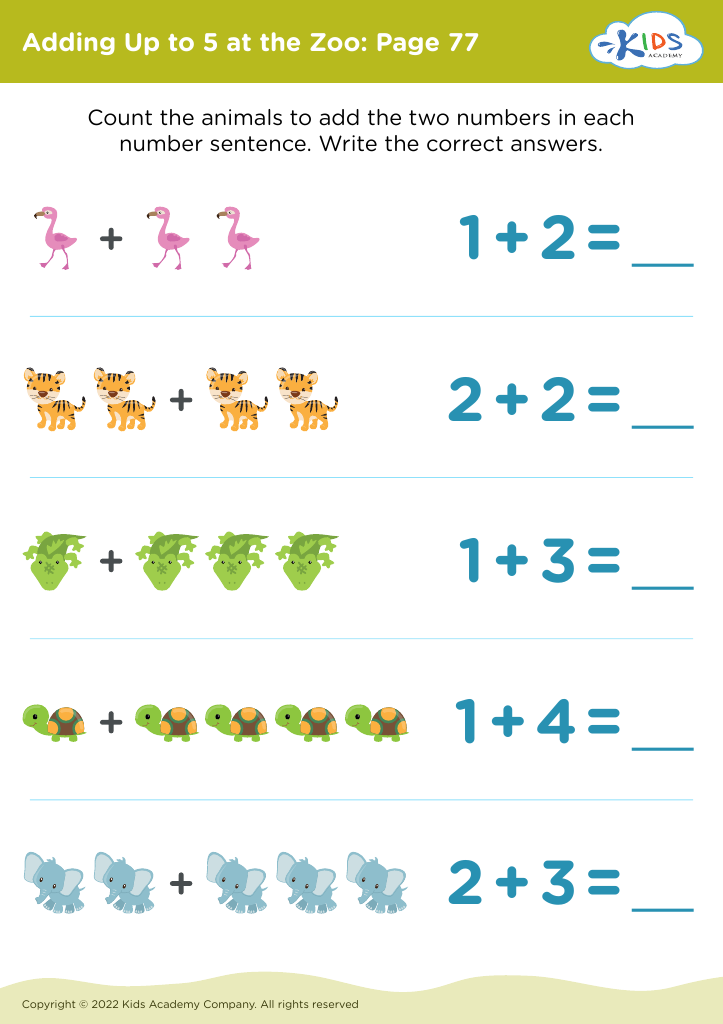
Adding Up to 5 at the Zoo: Page 77
Worksheet
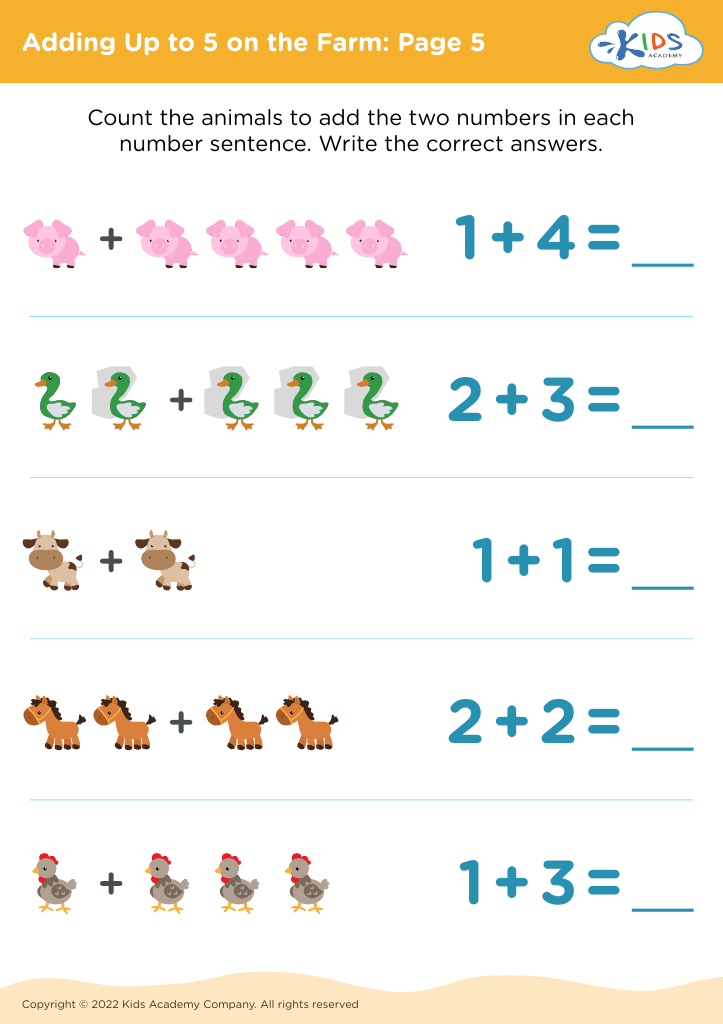
Adding Up to 5 on the Farm: Page 5
Worksheet
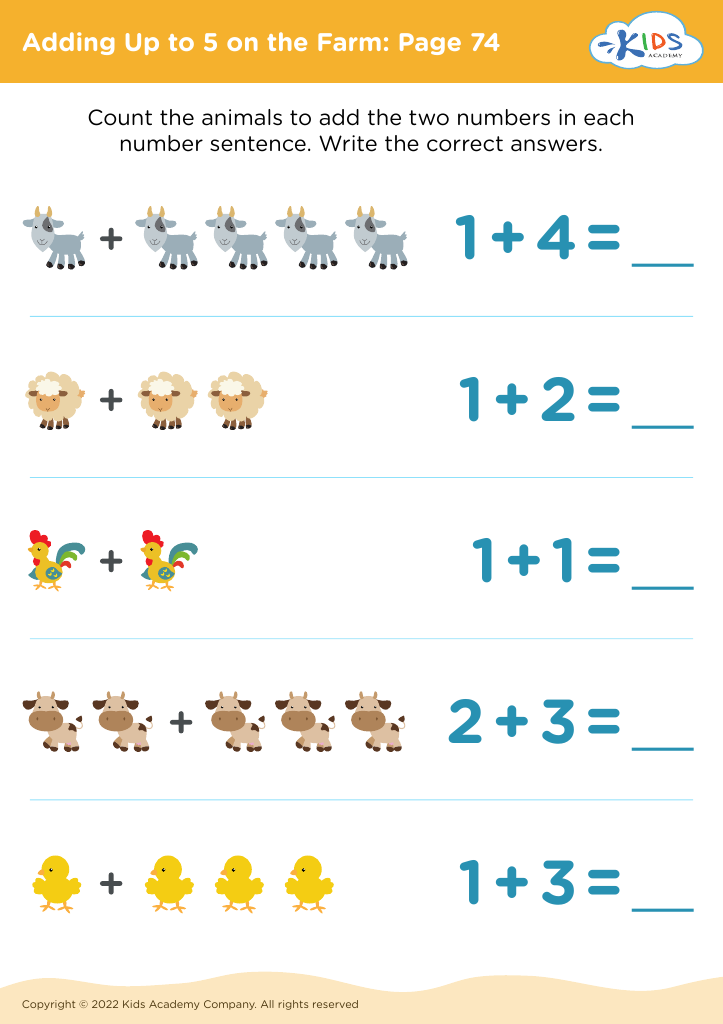
Adding Up to 5 on the Farm: Page 74
Worksheet
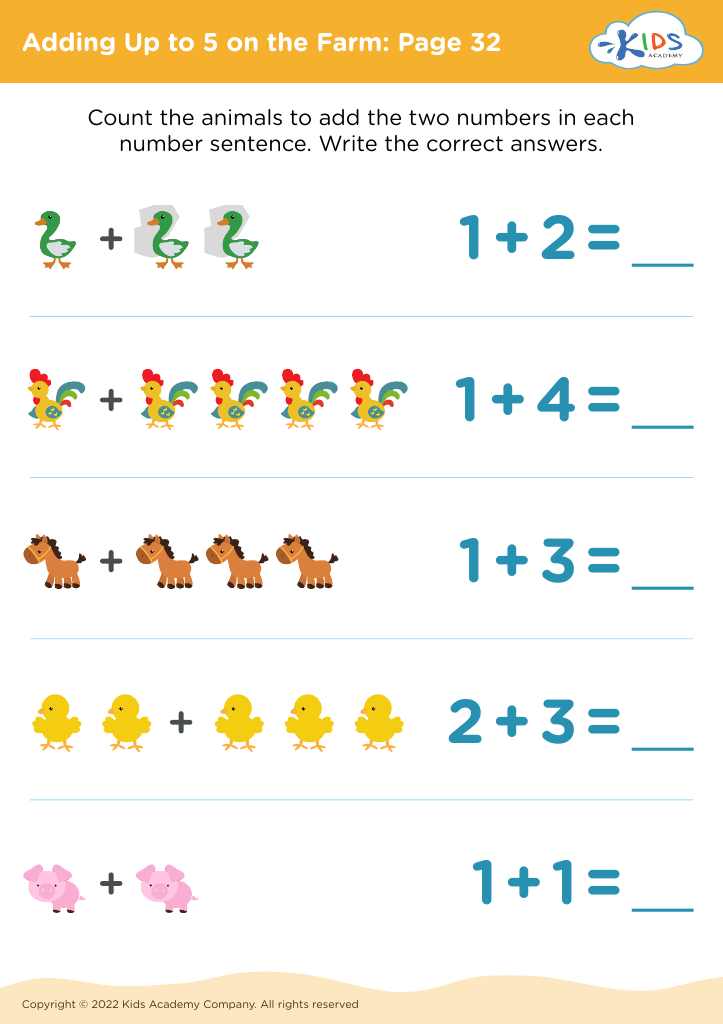
Adding Up to 5 on the Farm: Page 32
Worksheet
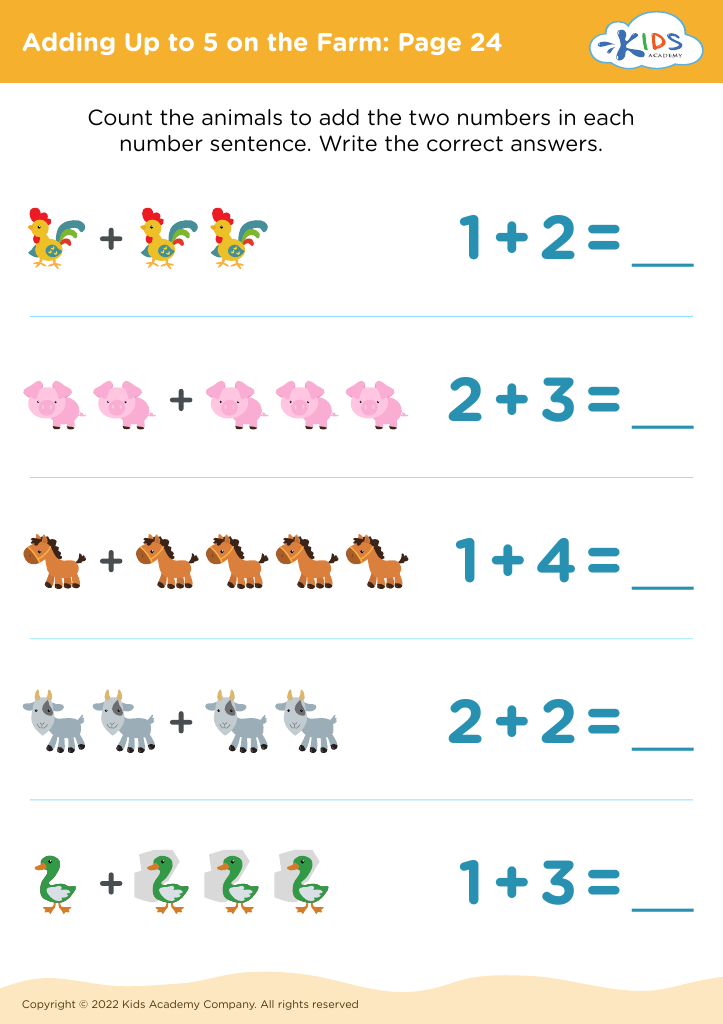
Adding Up to 5 on the Farm: Page 24
Worksheet
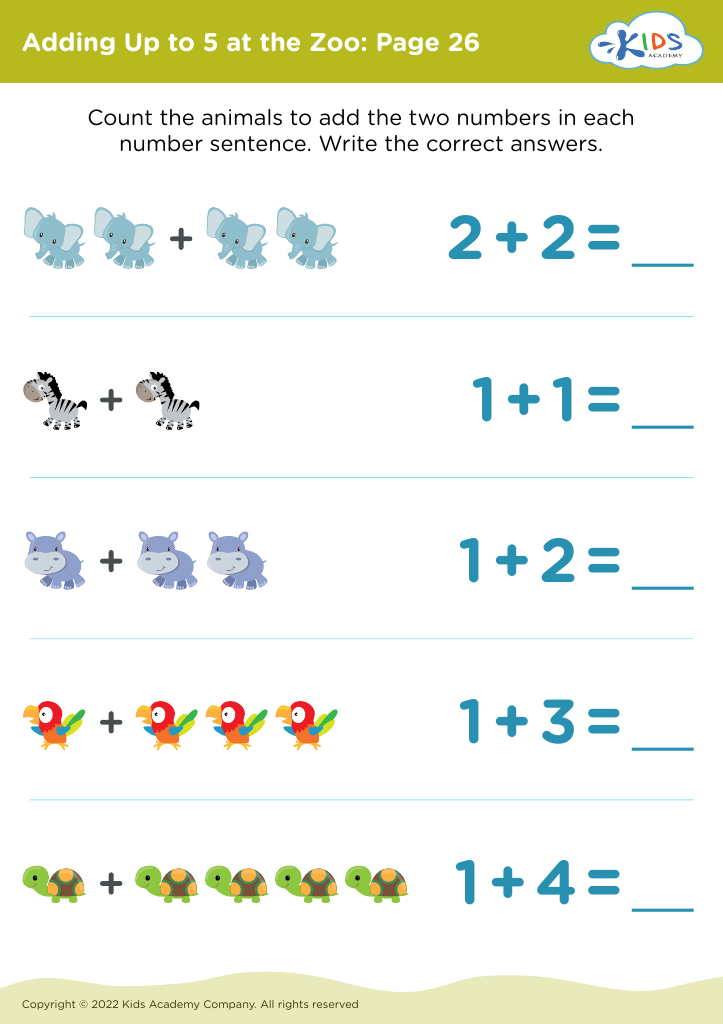
Adding Up to 5 at the Zoo: Page 26
Worksheet
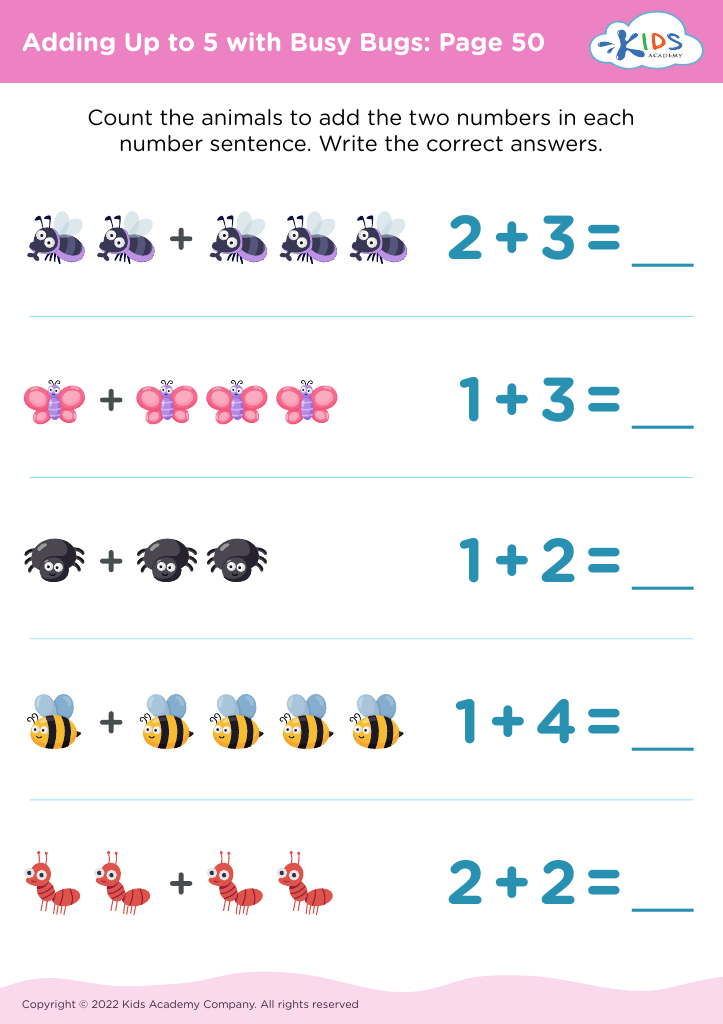
Adding Up to 5 with Busy Bugs: Page 50
Worksheet
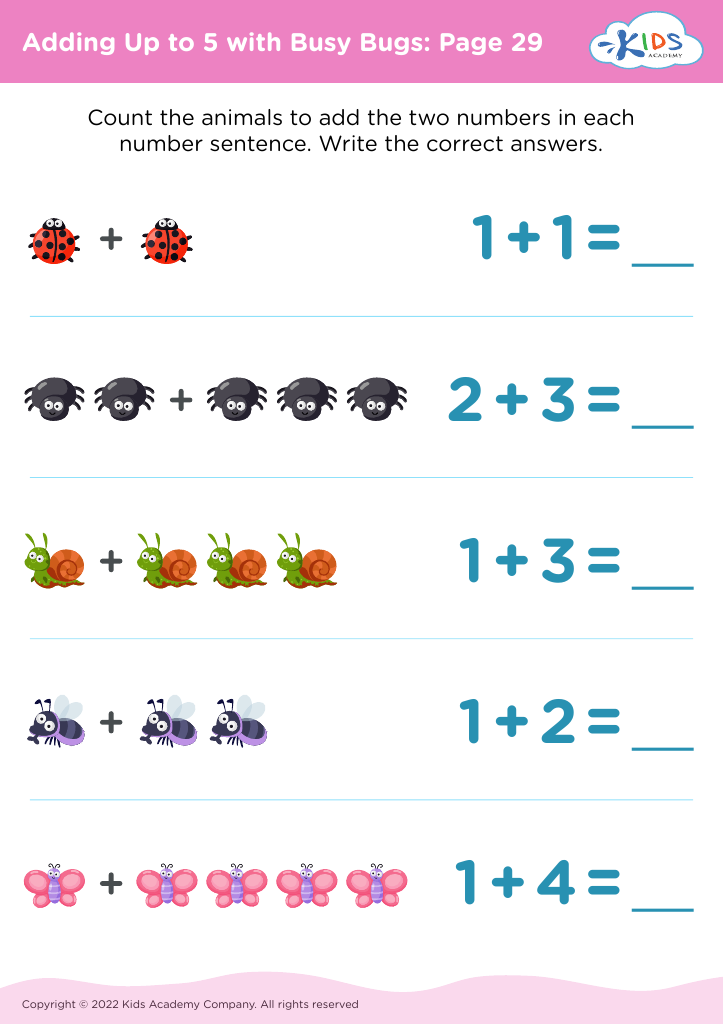
Adding Up to 5 with Busy Bugs: Page 29
Worksheet
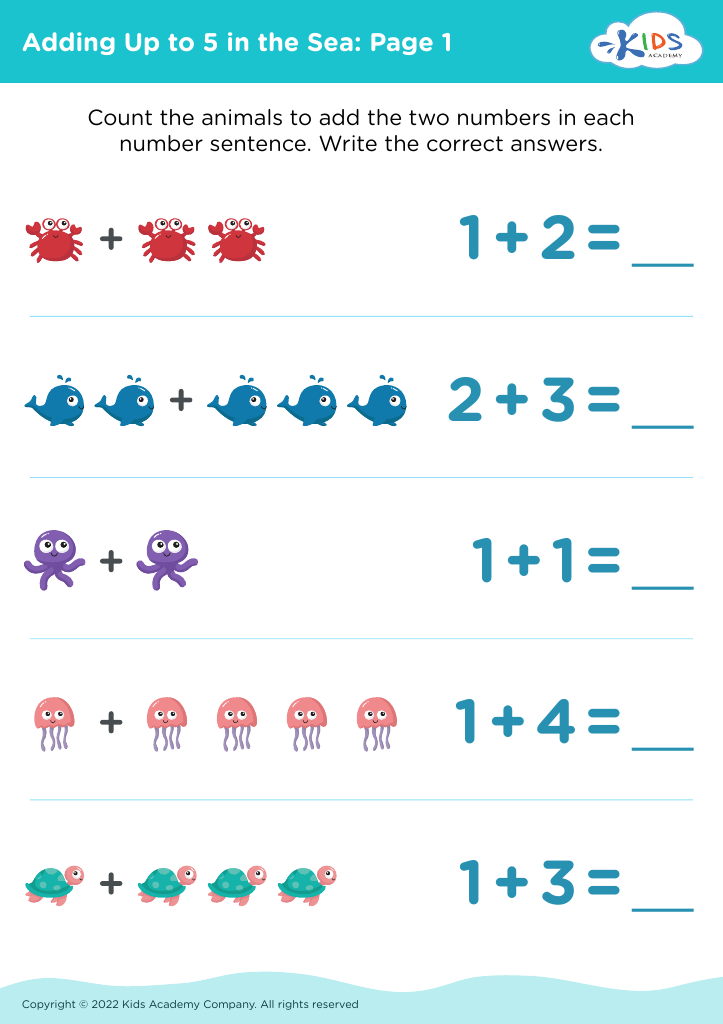
Adding Up to 5 in the Sea: Page 1

Adding Up to 5 in the Sea: Page 1

Adding Up to 5 in the Sea: Page 1
Worksheet
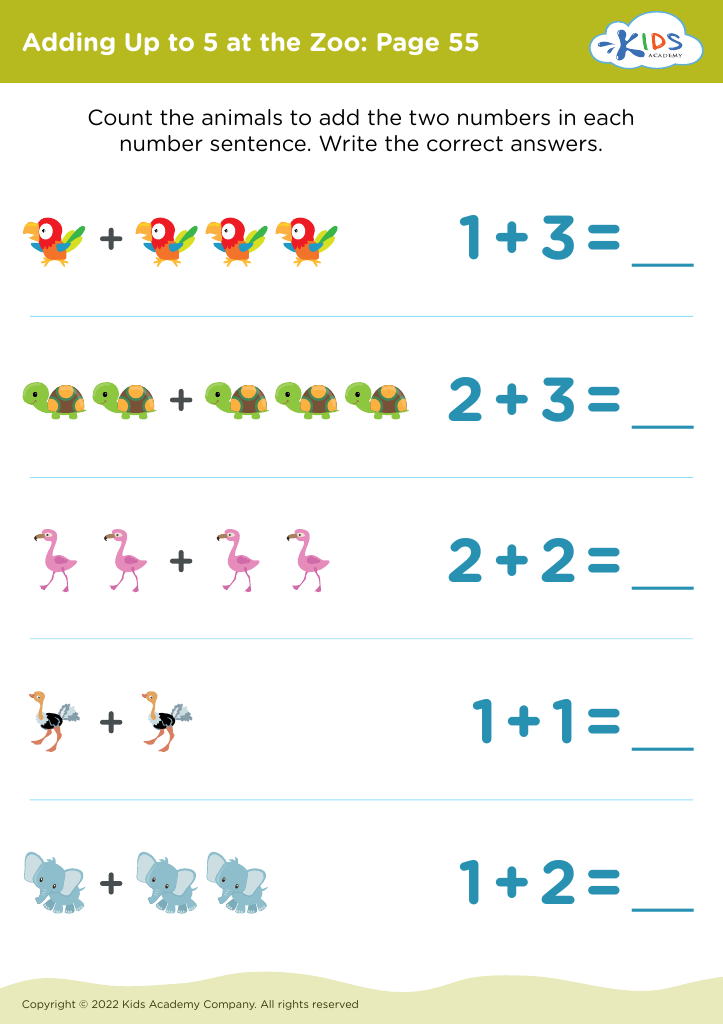
Adding Up to 5 at the Zoo: Page 55
Worksheet
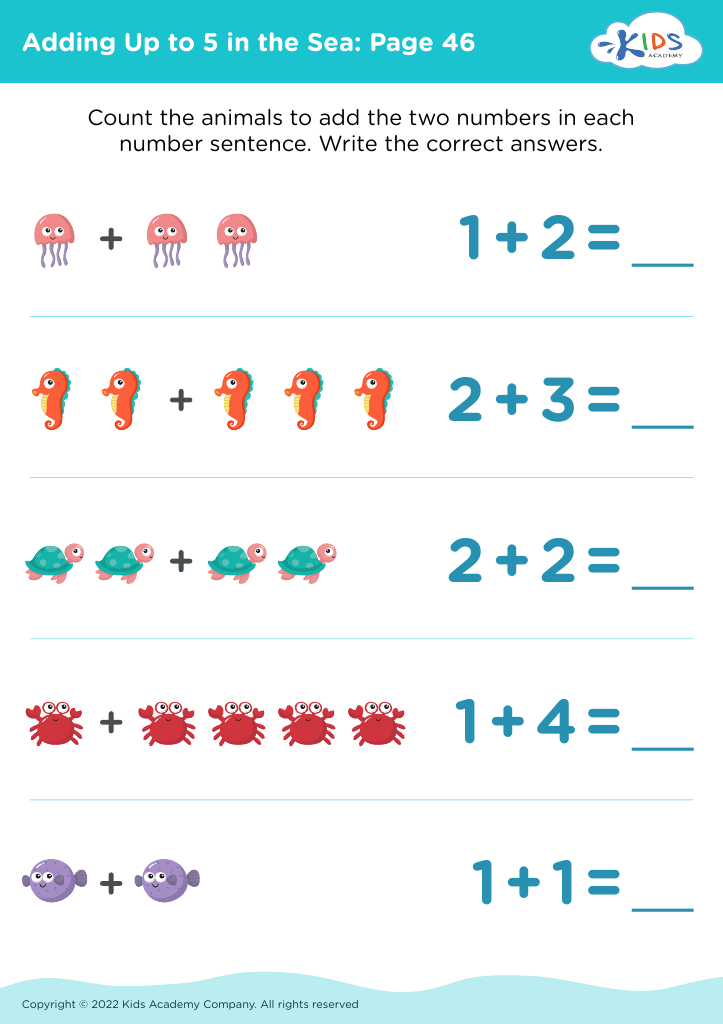
Adding Up to 5 in the Sea: Page 46
Worksheet
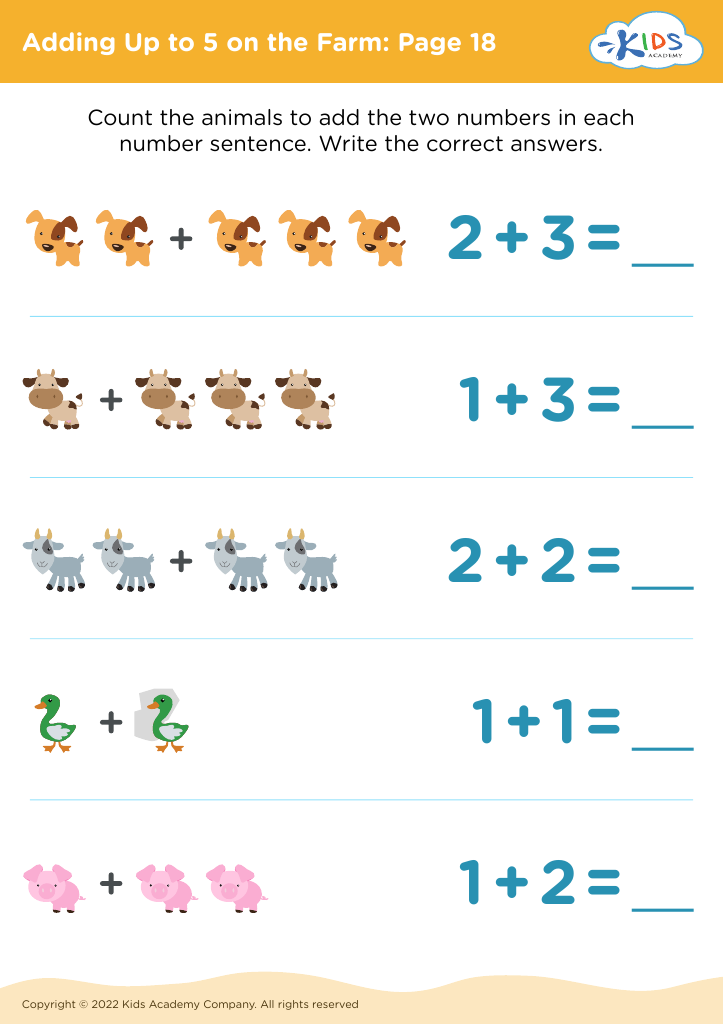
Adding Up to 5 on the Farm: Page 18
Worksheet
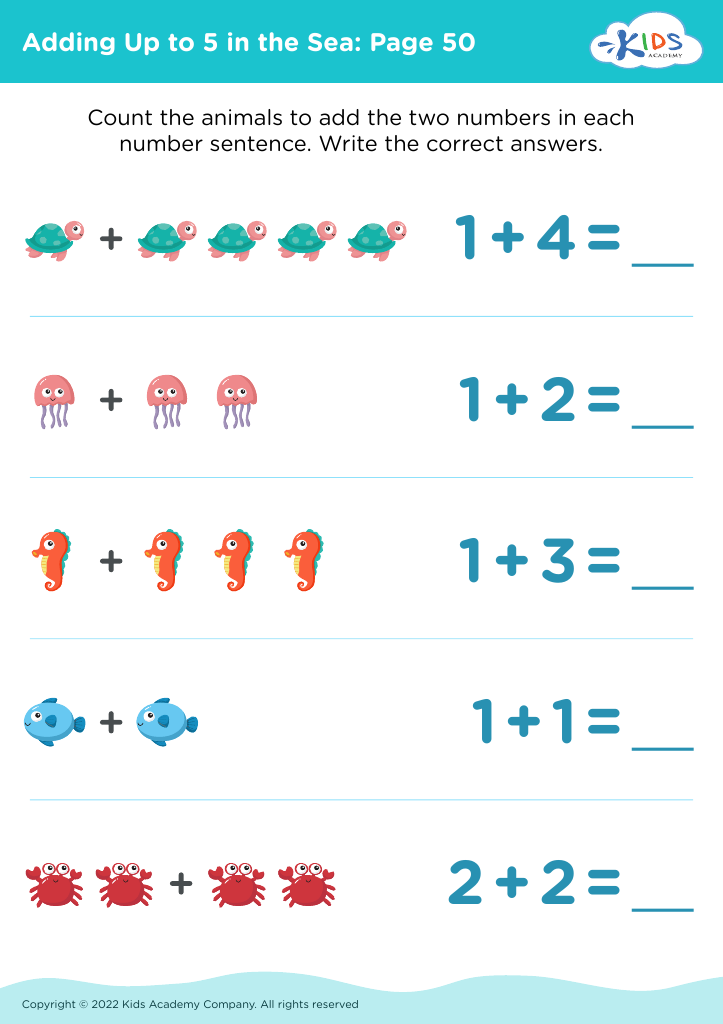
Adding Up to 5 in the Sea: Page 50
Worksheet
Adding Up to 5 with Busy Bugs: Page 71
Worksheet
Adding Up to 5 in the Forest: Page 7
Worksheet
Adding Up to 5 at the Zoo: Page 76
Worksheet
Adding Up to 5 in the Forest: Page 25
Worksheet
Adding Up to 5 at the Zoo: Page 15
Worksheet
Adding Up to 5 in the Sea: Page 32
Worksheet
Adding Up to 5 in the Sea: Page 20
Worksheet
Adding Up to 5 at the Zoo: Page 62
Worksheet
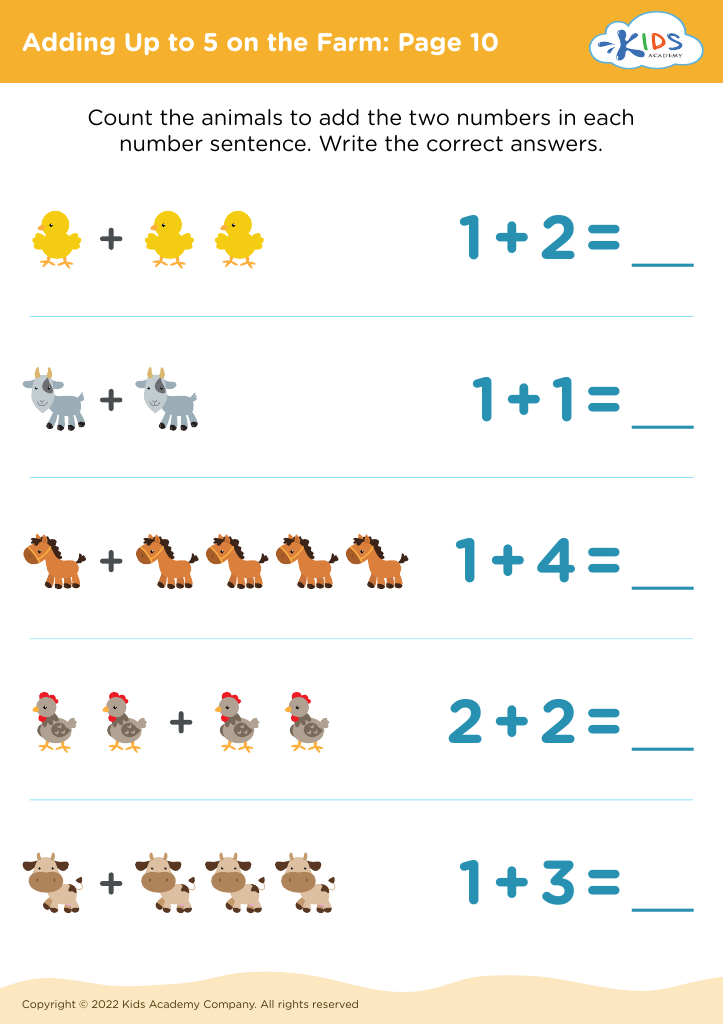
Adding Up to 5 on the Farm: Page 10
Worksheet


Understanding quantities and how they add up to 5 is a foundational math skill crucial for young learners, particularly those aged 4 to 5. At this stage, children are building the basic number sense required for more complex mathematical concepts. Teaching how quantities add up to 5 helps them grasp fundamental principles of addition and subtraction, forming a solid base for future arithmetic and problem-solving skills.

When children understand that different combinations of smaller numbers can total 5, they develop flexible thinking in mathematics. This skill encourages them to see numbers not just as static symbols but as dynamic elements that can be grouped and regrouped, facilitating mental maths.

Parents and teachers play a vital role in nurturing this understanding through hands-on, playful activities. Simple exercises like visual aids (e.g., fingers, blocks, or drawings) not only make learning interactive but also help children internalize these concepts in a manner consistent with their developmental stage.

Moreover, gaining proficiency in early math skills boosts a child’s confidence and enthusiasm for learning. Positive early experiences with maths build a foundation for a positive mindset, preventing math anxiety in later years. Thus, ensuring a firm grasp of how quantities add up to 5 bridges the gap to higher numerical concepts and fosters overall cognitive development during crucial formative years.