Basic Addition Skills Adding with Busy Bugs Worksheets for Ages 4-5 - Page 2
34 filtered results
-
From - To
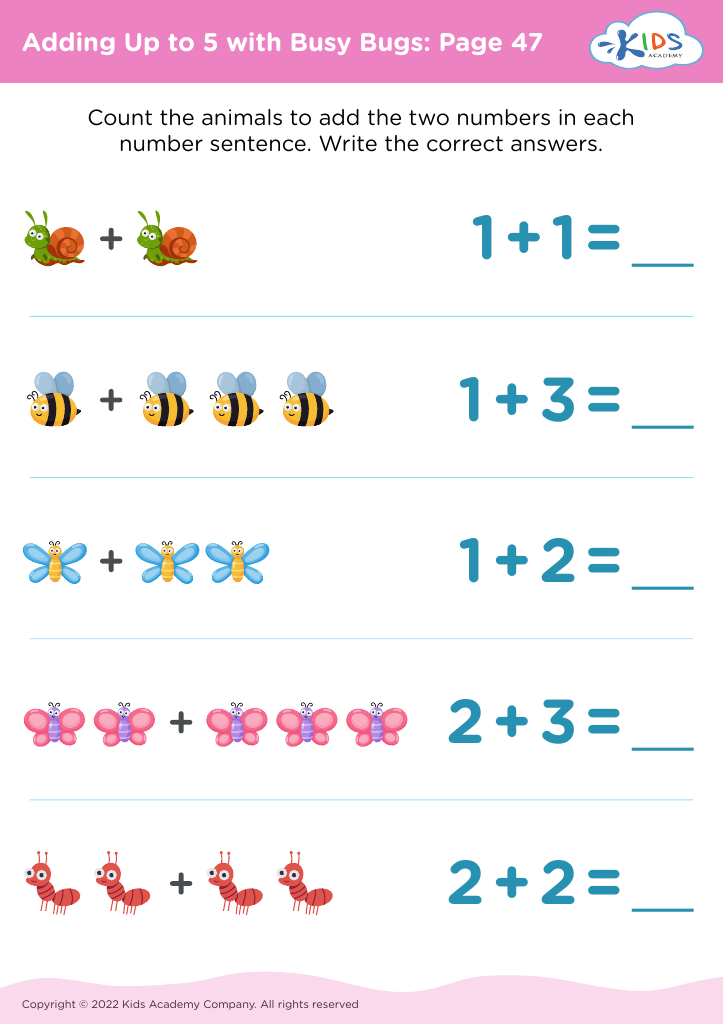
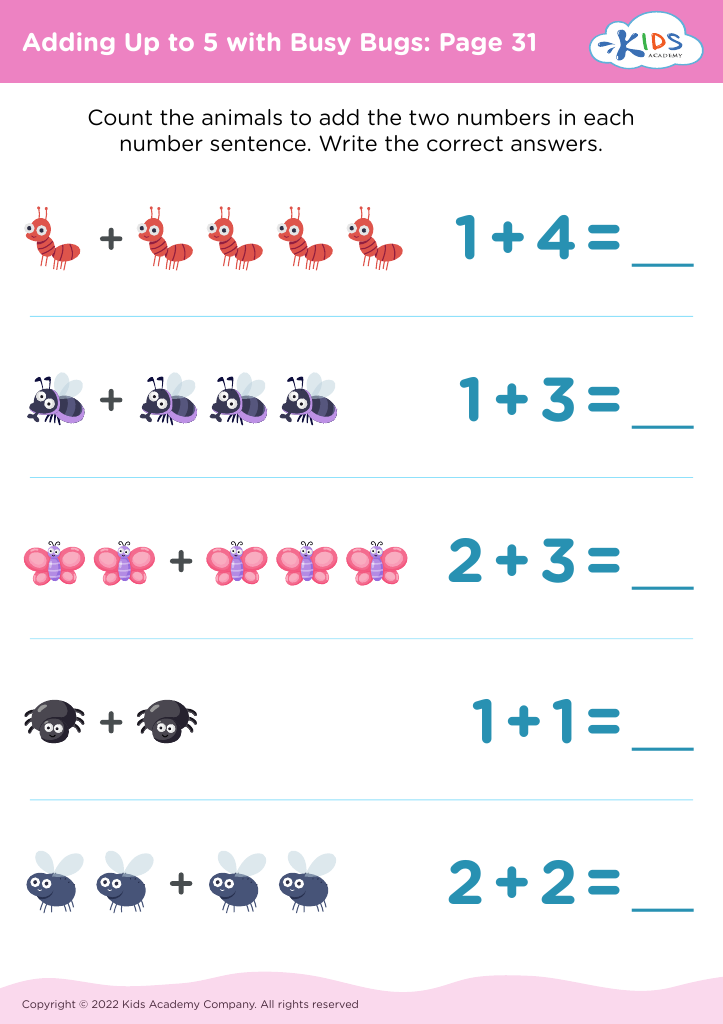
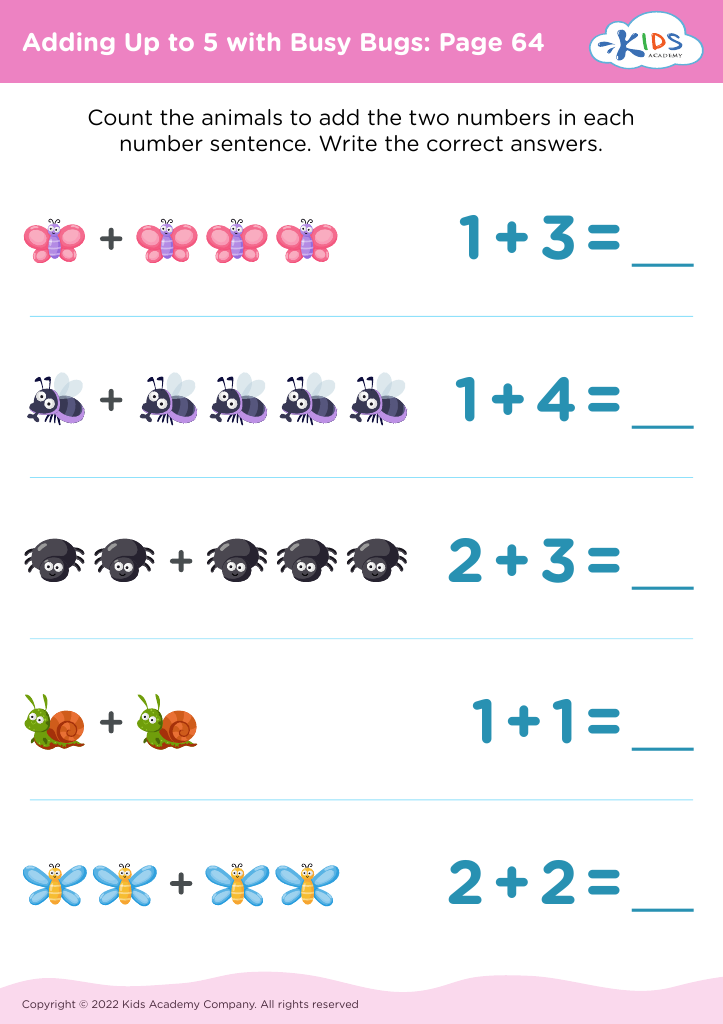
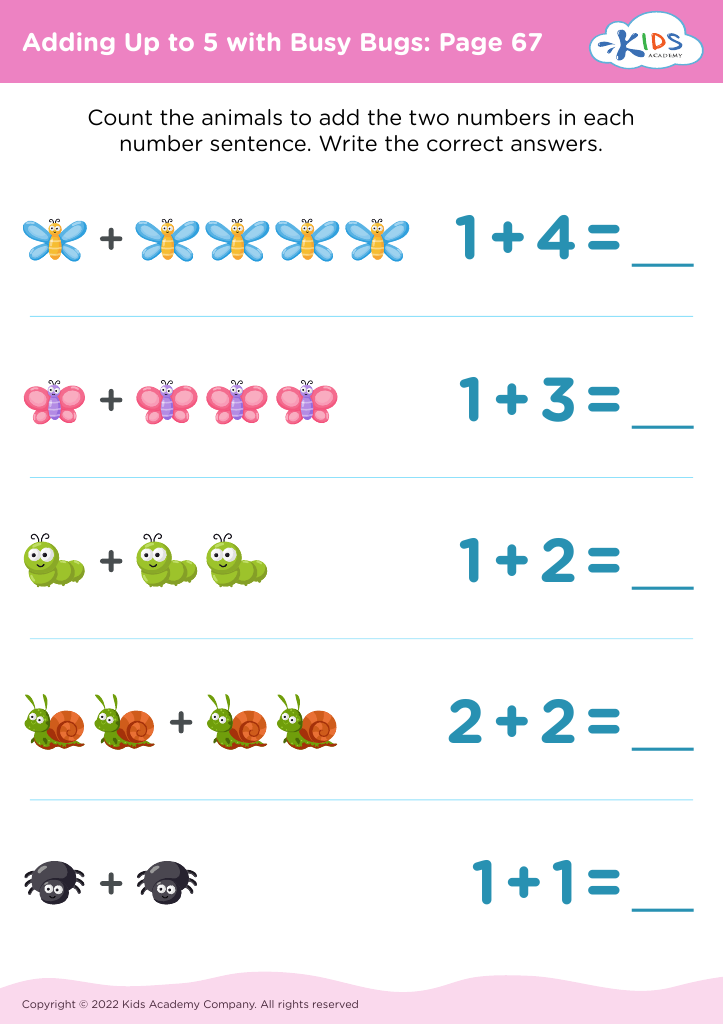
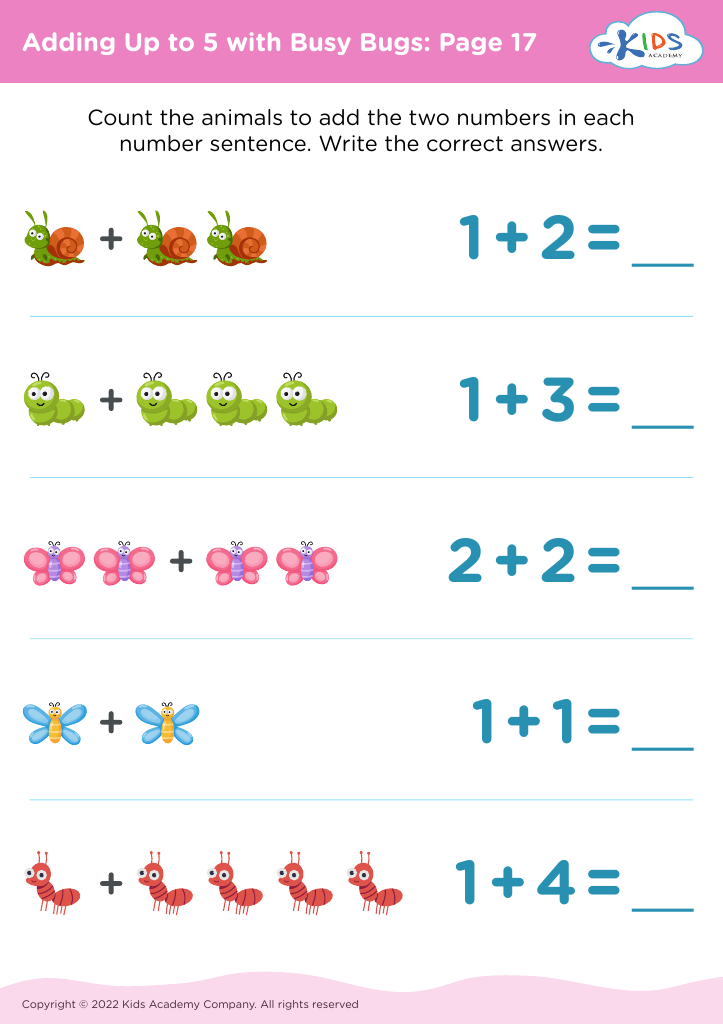
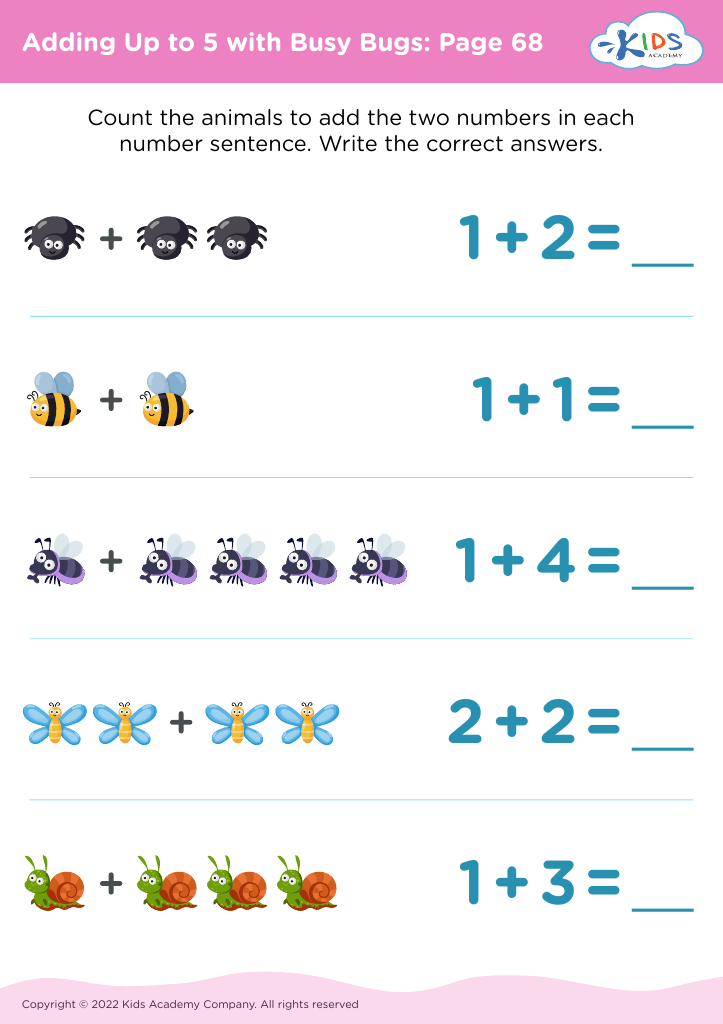
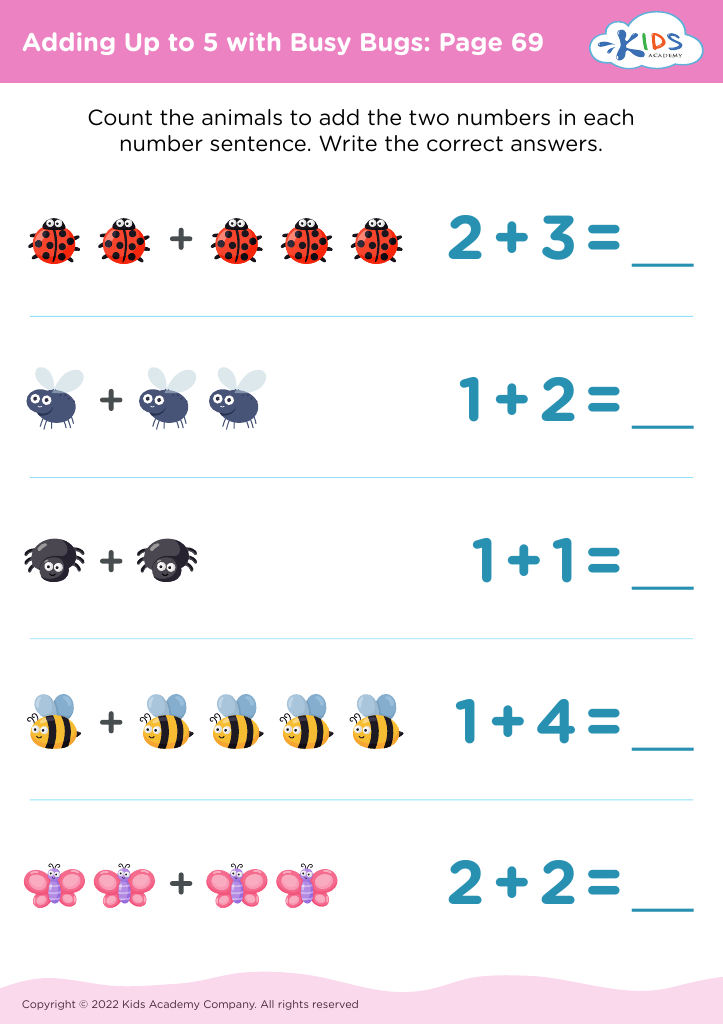
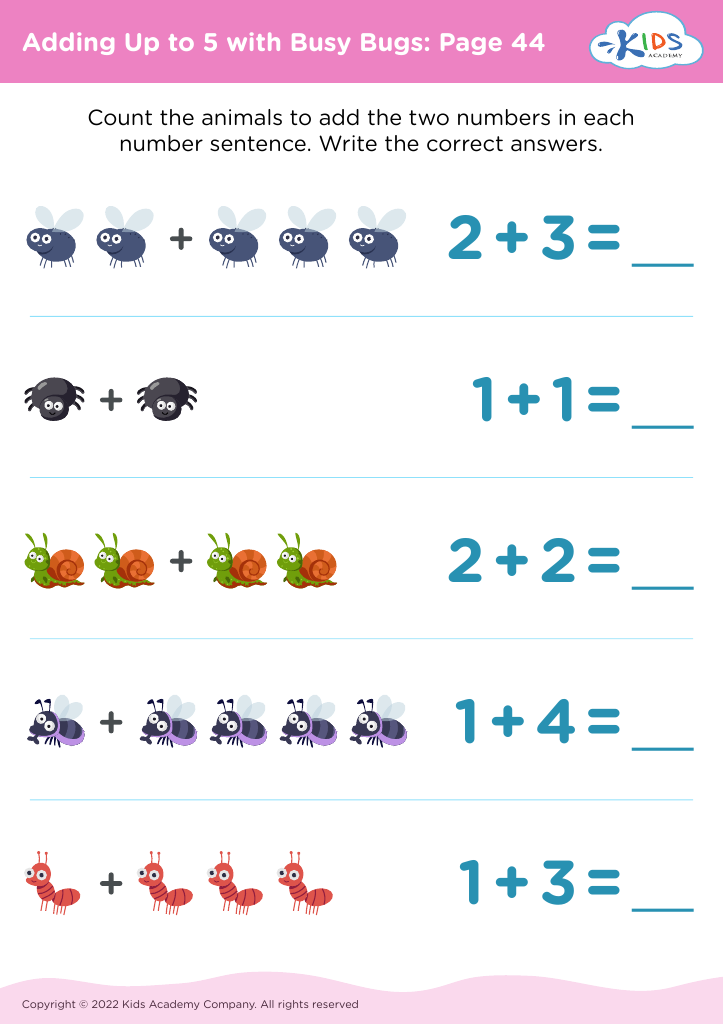
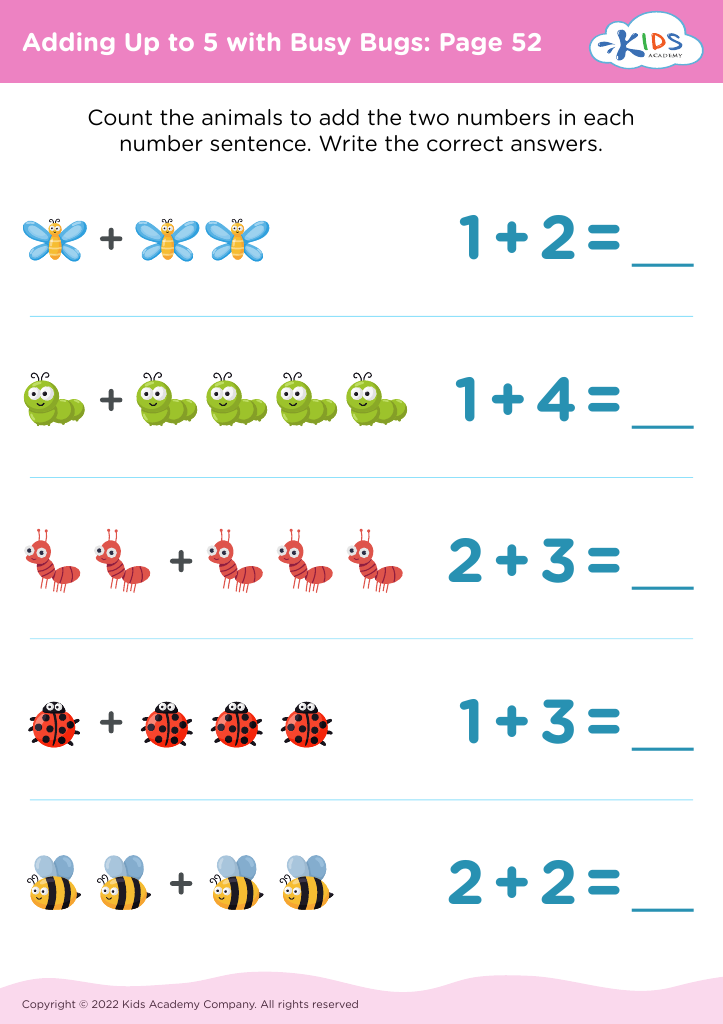
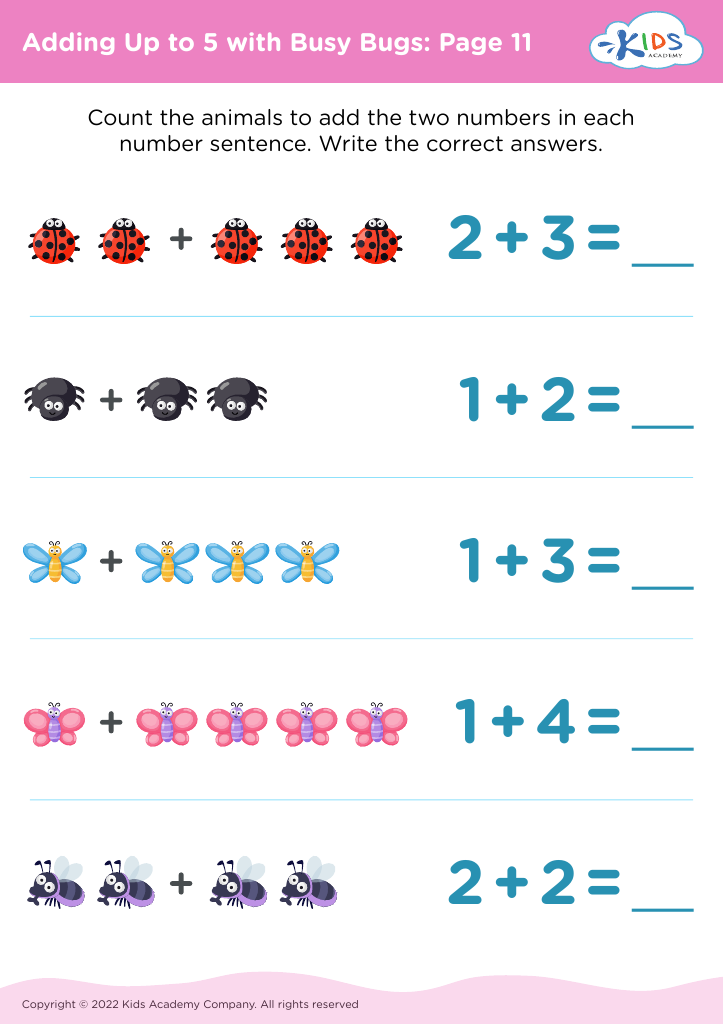



Parents and teachers should prioritize basic addition skills, such as those learned through programs like "Adding with Busy Bugs" for ages 4-5, because these foundational math skills are critical for a child’s overall academic development. At this age, children are curious learners, and engaging them through fun and interactive methods can significantly enhance their understanding of numbers and concepts. "Busy Bugs" incorporates bright visuals and playful themes, making learning enjoyable and effective.
Developing basic addition skills fosters cognitive growth, critical thinking, and problem-solving abilities, all of which are crucial as children progress into more complex mathematical concepts in later grades. Mastering addition also helps build confidence; when children understand and can perform simple math, they’re more likely to participate actively in classroom activities and discussions.
Additionally, having a solid grasp of basic math lays the groundwork for future learning. Parents and teachers play an essential role in nurturing these skills, and by choosing engaging methods like "Adding with Busy Bugs," they can create a positive learning environment. This not only supports academic success but also establishes a lifelong love for learning. Ultimately, investing time in addition skills can have lasting benefits for children as they grow and learn beyond early education.