Filters

88 filtered results

Clear all filters
Favorites
With answer key
Interactive

88 filtered results

Difficulty Level

Grade


Check out this FREE Trial Lesson on Addition & Subtraction for age 4-5!

Drawing for Addition

Favorites
With answer key
Interactive
  • 4-5
  • Addition Practice
  • Addition & Subtraction
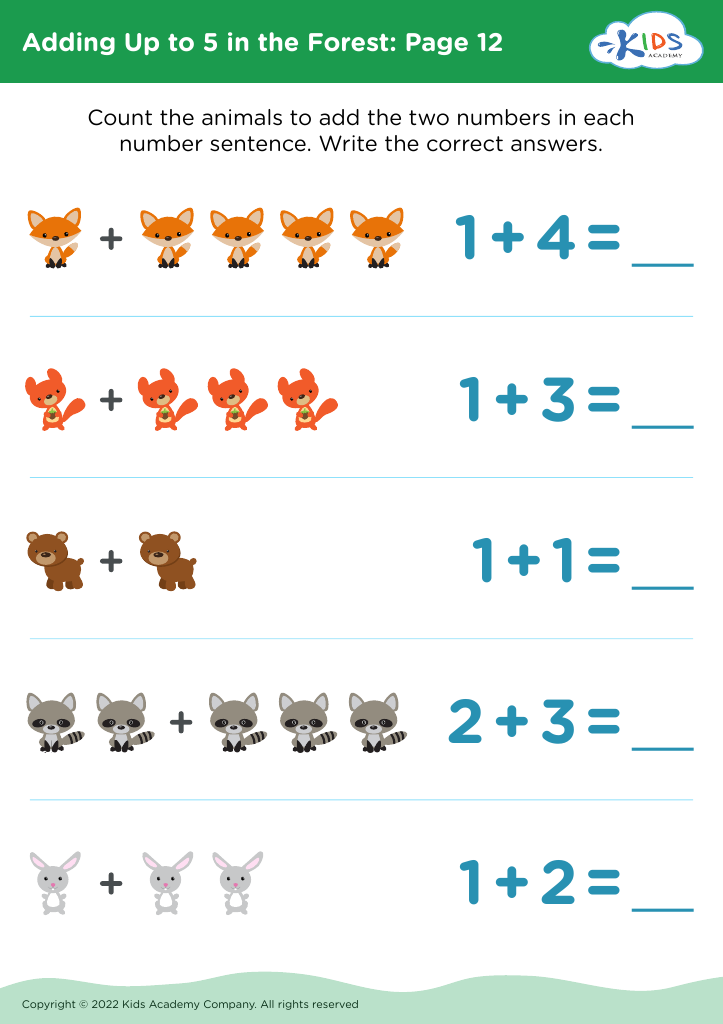
Adding Up to 5 in the Forest: Page 12
Worksheet
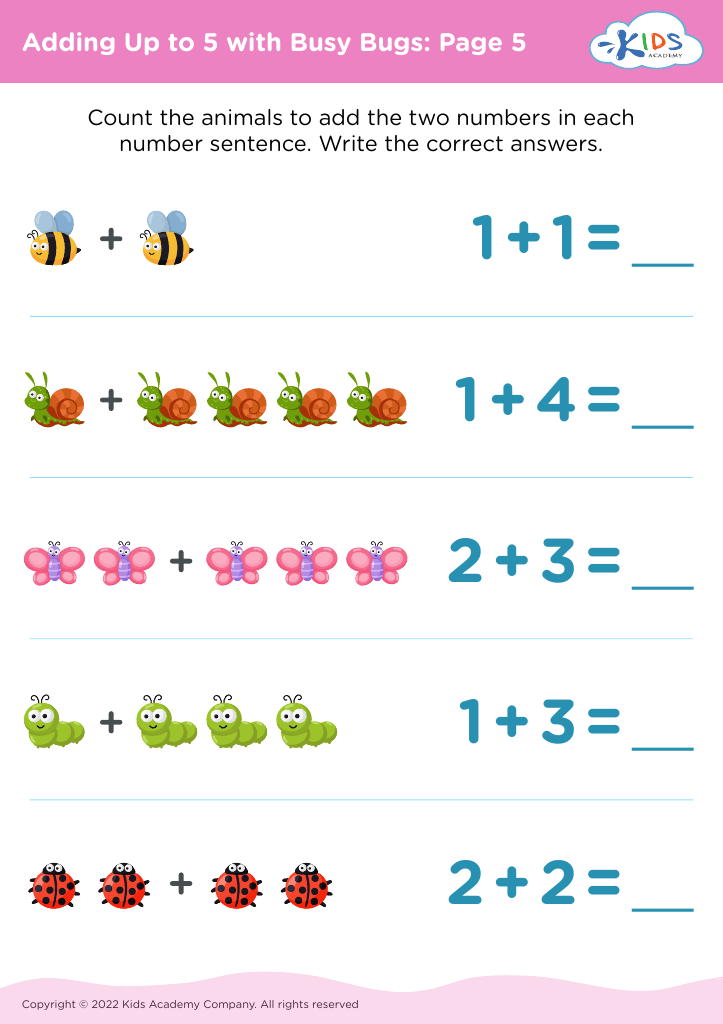
Adding Up to 5 with Busy Bugs: Page 5
Worksheet
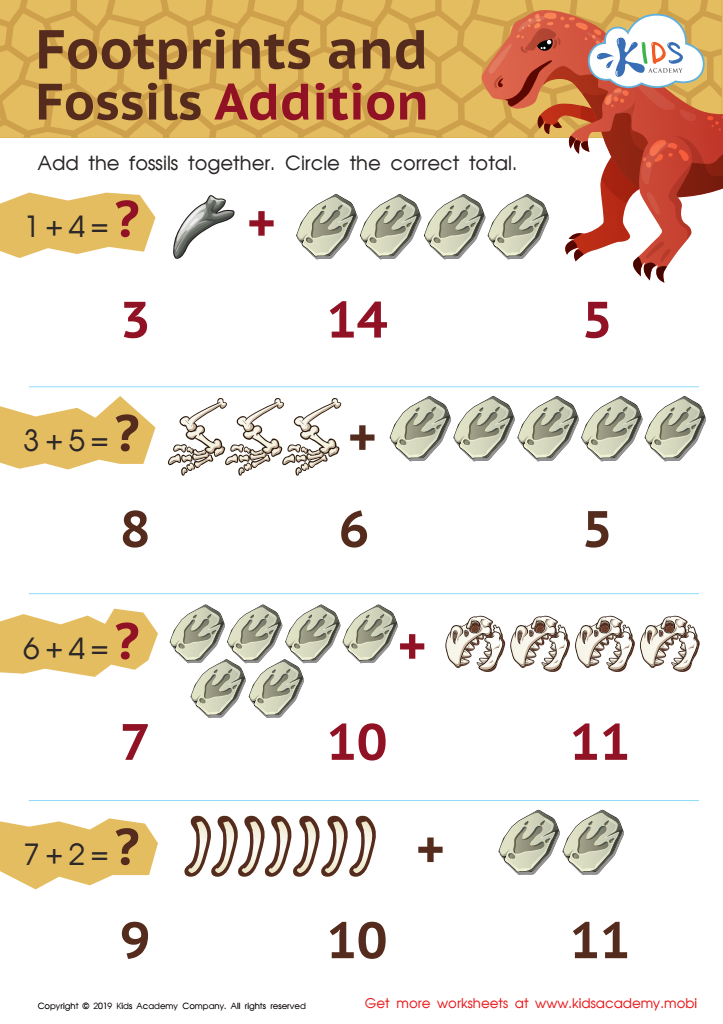
Footprints and Fossils Addition Worksheet

Footprints and Fossils Addition Worksheet

Show your students that addition and subtraction is easy with the right guidance and exercises. Use this worksheet to help them practice by adding fossils and circling the correct total of each equation. Your students will soon see that addition and subtraction is not so intimidating after all.
Footprints and Fossils Addition Worksheet
Worksheet
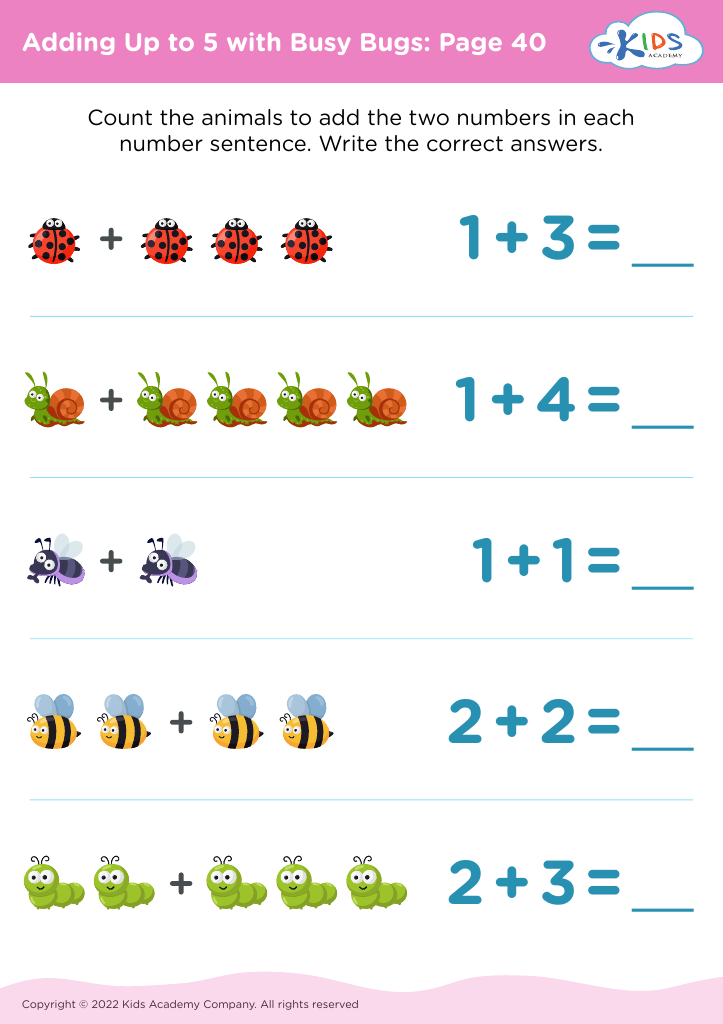
Adding Up to 5 with Busy Bugs: Page 40
Worksheet
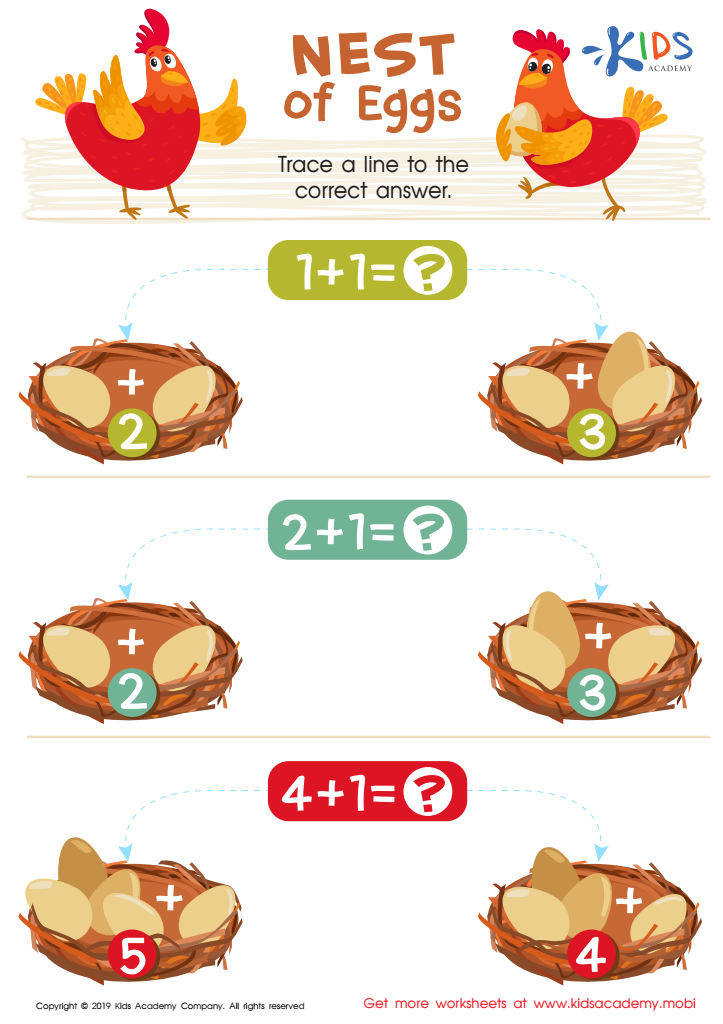
Nest of Eggs Worksheet

Nest of Eggs Worksheet

Help your kids learn math with this worksheet. First discuss the picture with them and then work through the three equations. Encourage them to trace the correct answer afterwards. With your assistance, they'll soon be able to confidently add numbers.
Nest of Eggs Worksheet
Worksheet
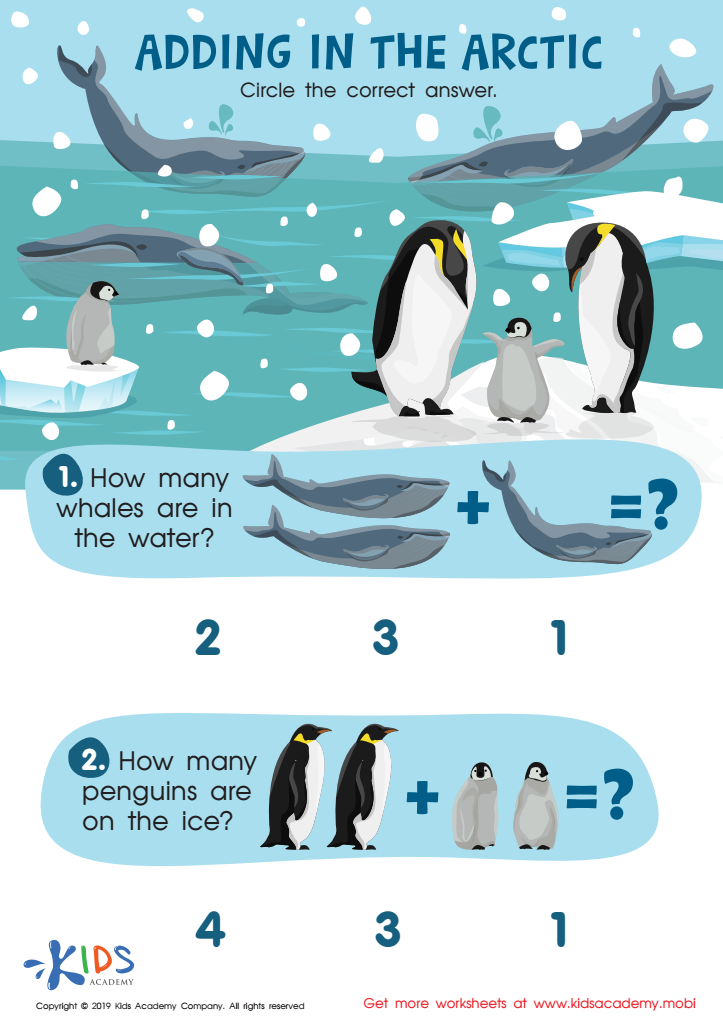
Adding in the Arctic Worksheet
Adding in the Arctic Worksheet
Introduce your kids to the Arctic with this worksheet. Let them look at the pictures, teach them the name of the animals, and help them add up the correct number. Ask your kids to tell you some of the animals found there and what the weather is like. It's a fun and educational way to learn more about the Arctic.
Adding in the Arctic Worksheet
Worksheet
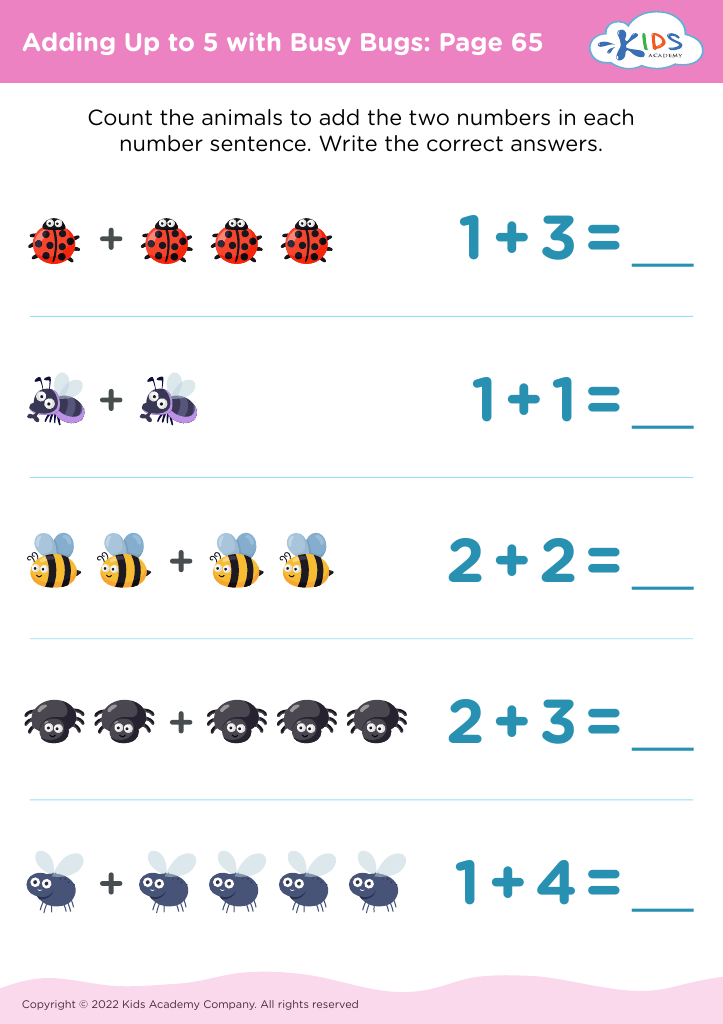
Adding Up to 5 with Busy Bugs: Page 65
Worksheet
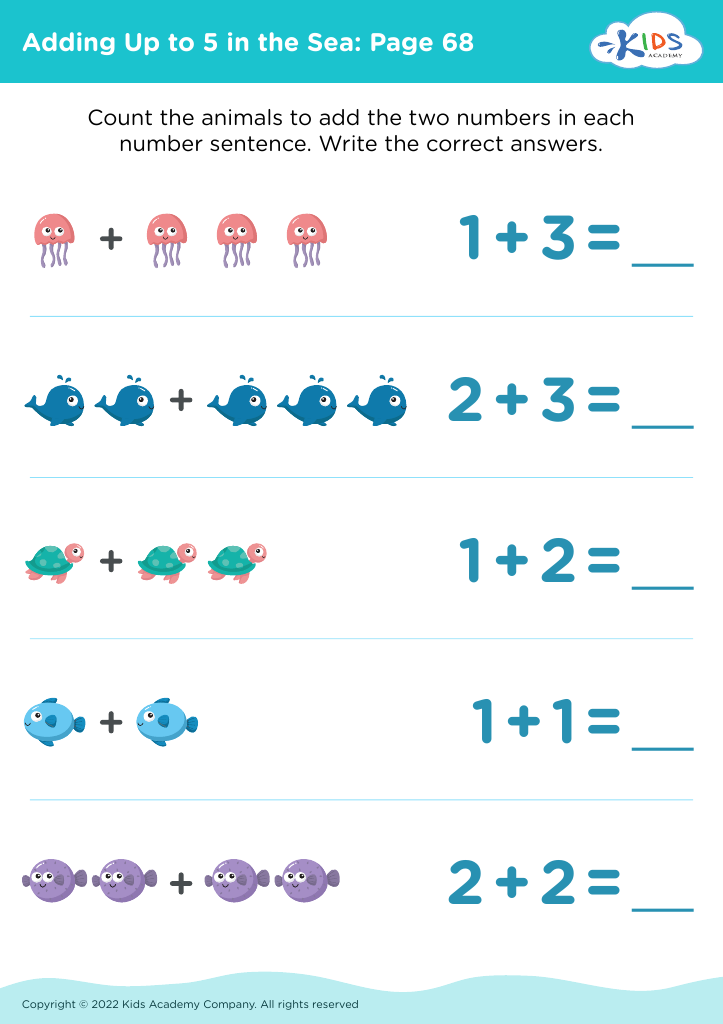
Adding Up to 5 in the Sea: Page 68
Worksheet
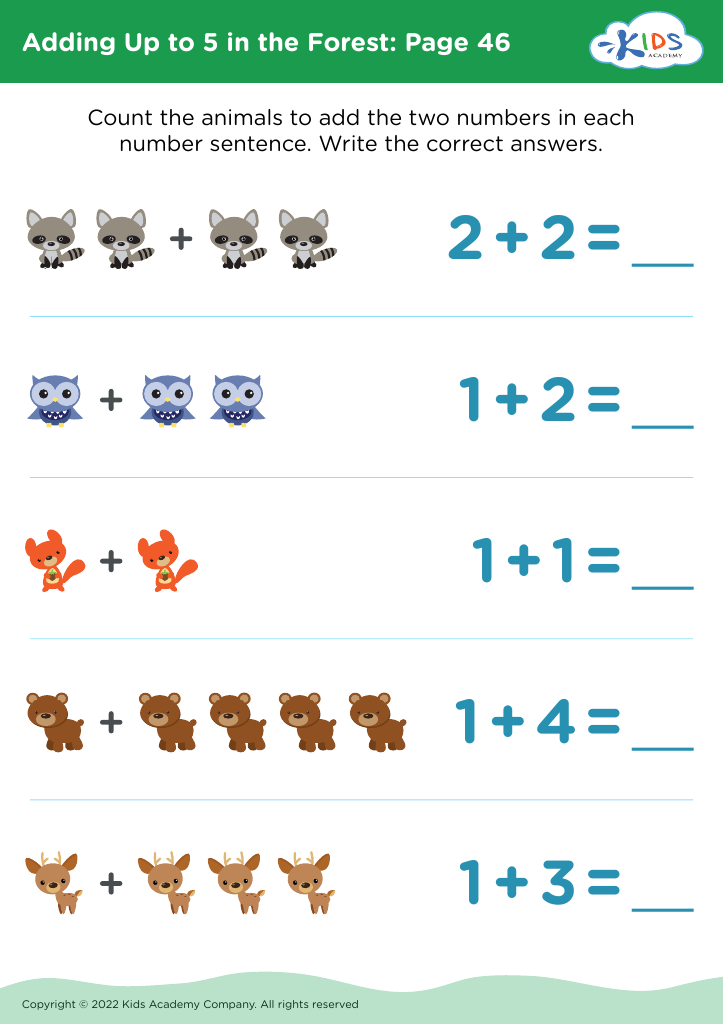
Adding Up to 5 in the Forest: Page 46
Worksheet
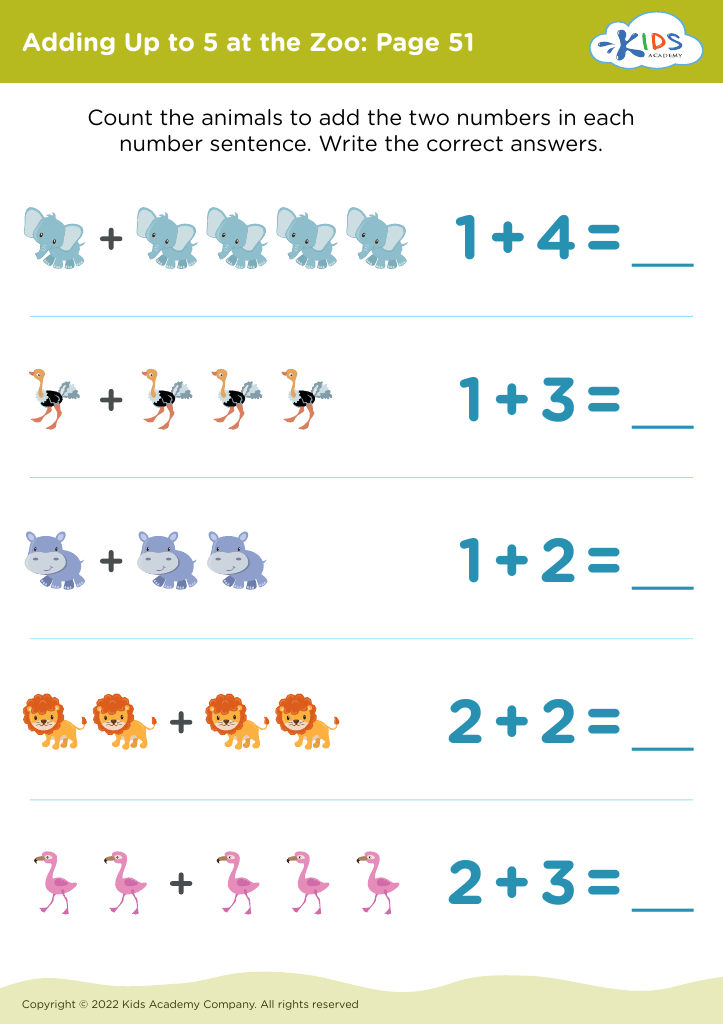
Adding Up to 5 at the Zoo: Page 51
Worksheet
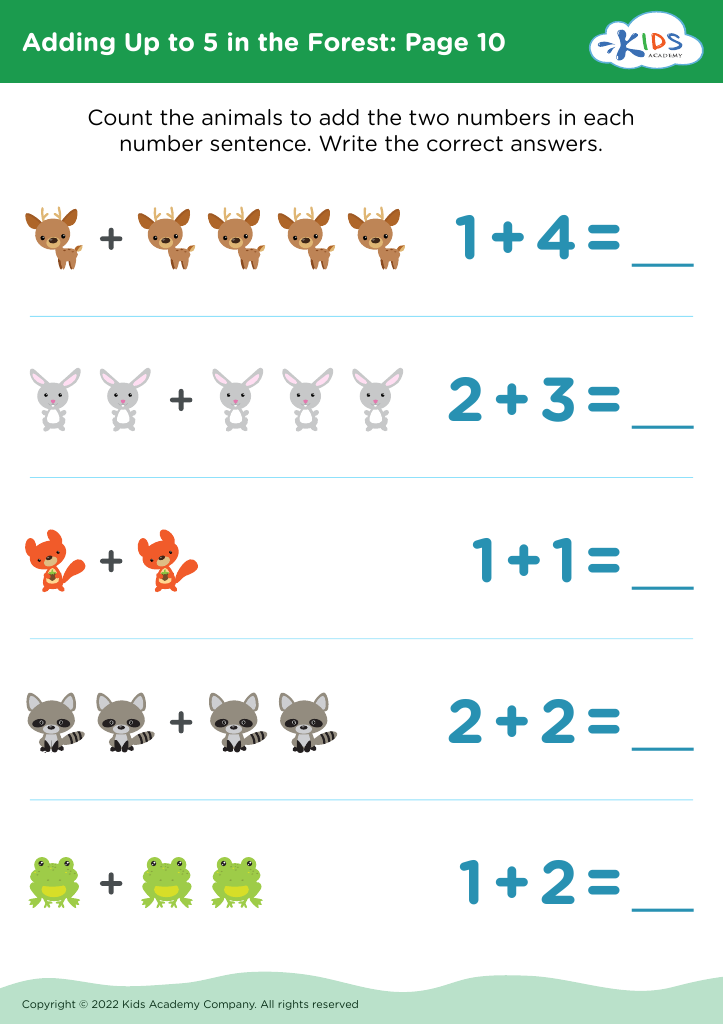
Adding Up to 5 in the Forest: Page 10
Worksheet
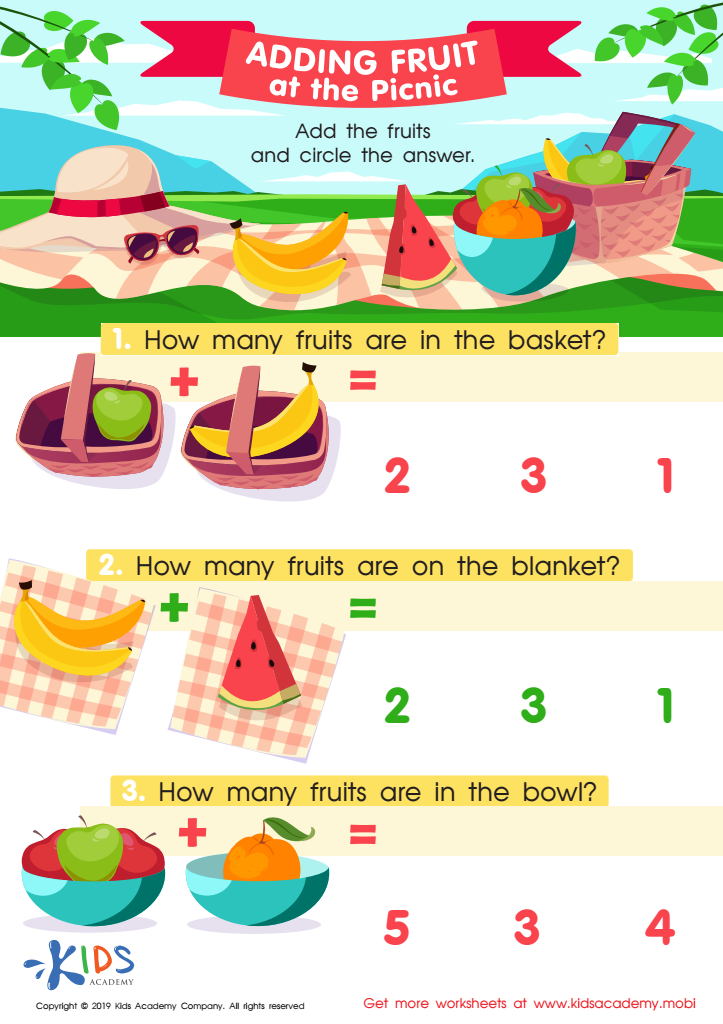
Adding Fruit at the Picnic Worksheet
Adding Fruit at the Picnic Worksheet

Picnics are a great way for the family to enjoy a fun day in the sun! Get your kids involved by having them help load the picnic basket and do this worksheet to practice their math skills while they get ready. Identify the fruits in the picture, add them up, and circle the correct answer.
Adding Fruit at the Picnic Worksheet
Worksheet
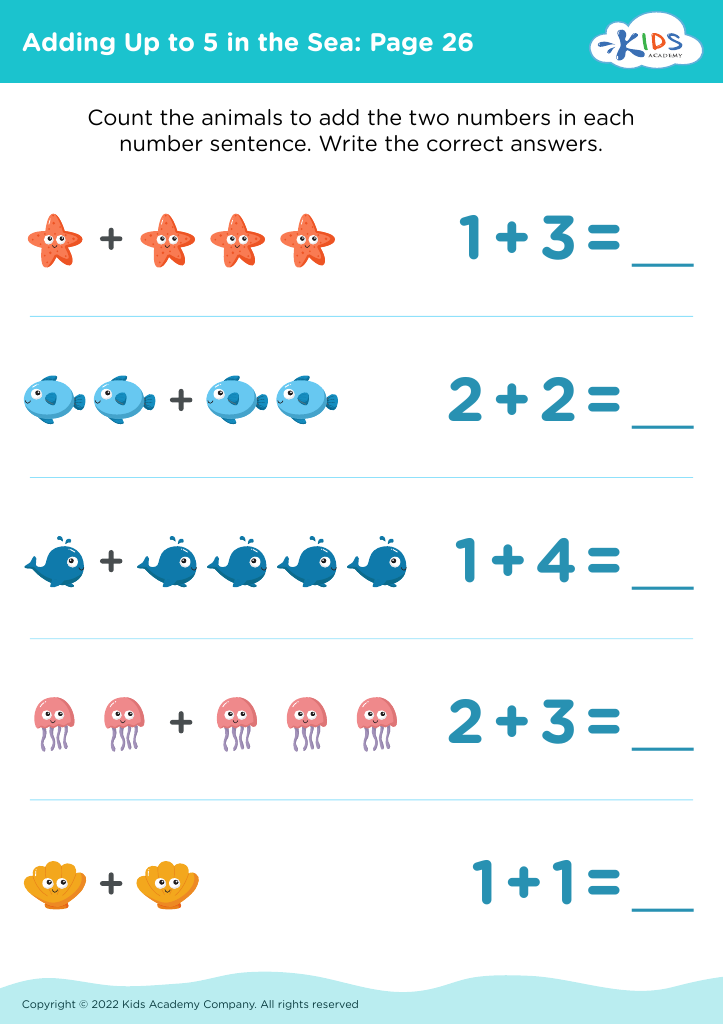
Adding Up to 5 in the Sea: Page 26
Worksheet
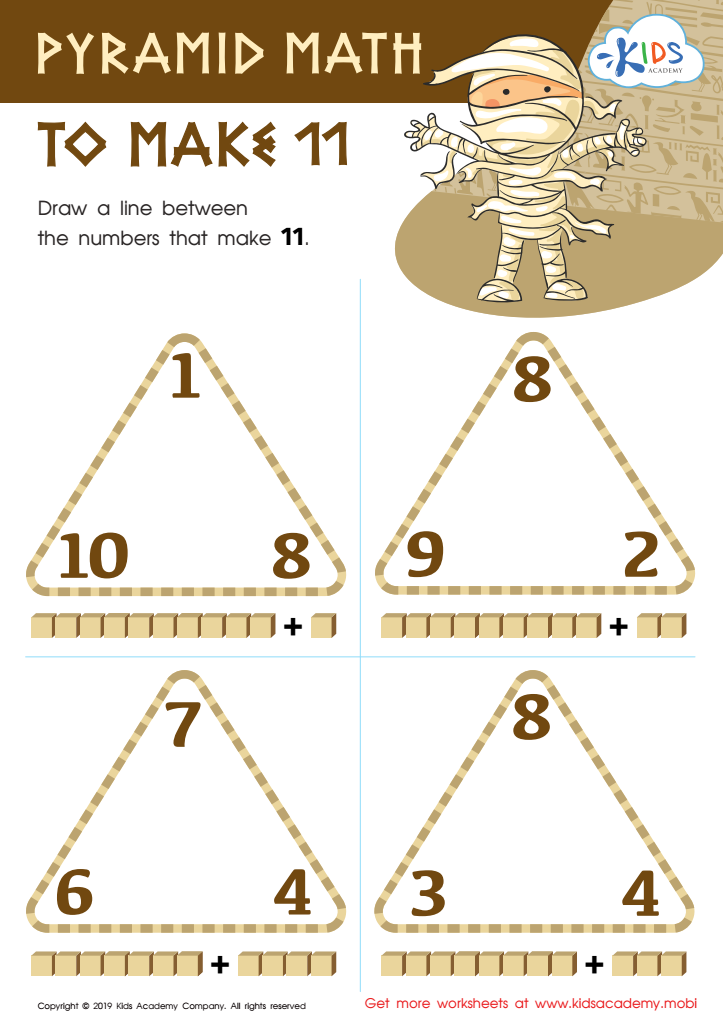
Pyramid Math to Make 11 Worksheet
Pyramid Math to Make 11 Worksheet

Have your kids look at the picture of the Egyptian pyramids and tell you what they see. Then, help them do simple math by adding up the numbers in the pyramids and connecting those that make 11. This worksheet is perfect for teaching your kids about history, mathematics, and problem-solving.
Pyramid Math to Make 11 Worksheet

Worksheet
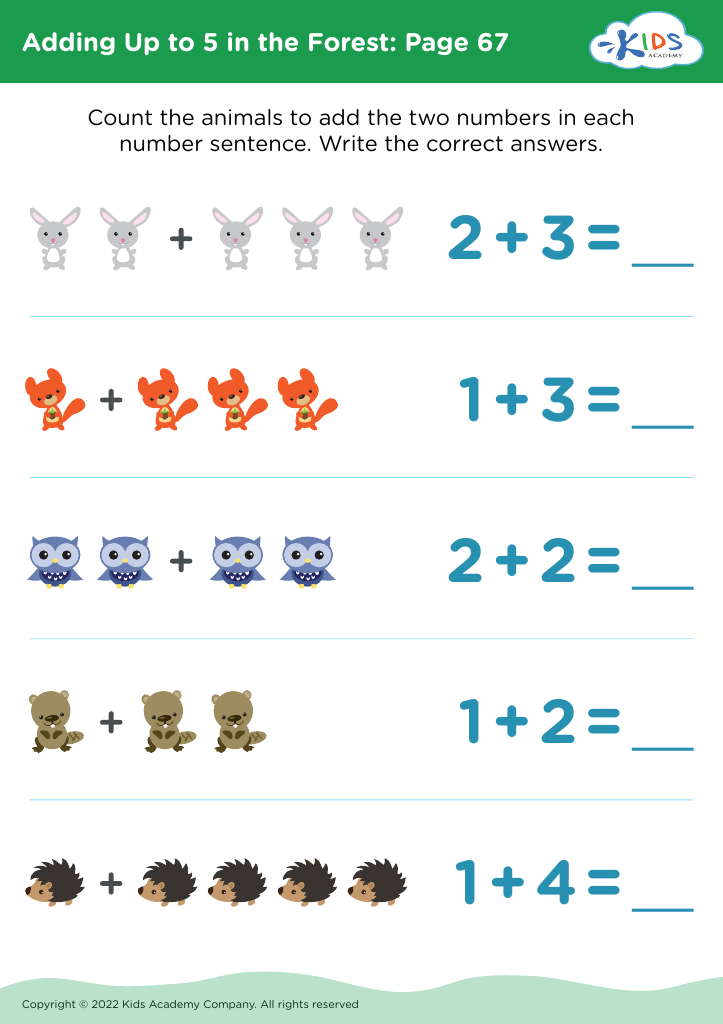
Adding Up to 5 in the Forest: Page 67
Worksheet
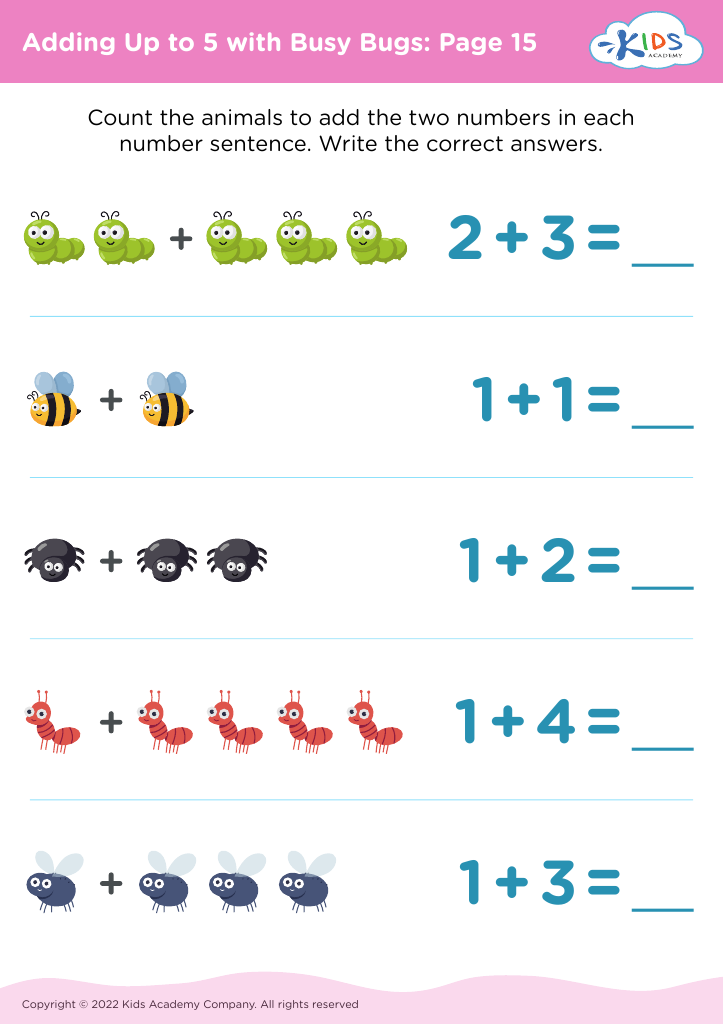
Adding Up to 5 with Busy Bugs: Page 15
Worksheet


... 3 4

Parents and teachers play crucial roles in fostering foundational skills in young children, and engaging in addition and subtraction practice at ages 4-5 is particularly important. At this developmental stage, children’s brains are incredibly receptive to learning new concepts, especially through playful, hands-on activities. Introducing basic addition and subtraction helps them understand number sense, measurement, patterns, and the concept of quantity, which are fundamental to understanding more complex mathematical ideas later on.

Moreover, these early math experiences contribute significantly to cognitive development. Engaging with numbers enhances problem-solving skills, logical thinking, and the ability to understand relationships between different concepts. Practicing math also builds children’s confidence and fosters a positive attitude toward learning, making them more likely to succeed in future academic endeavors.

Additionally, developing early math skills prepares children for standardized education curriculums that they will encounter in kindergarten and beyond. It equips them with the tools to thrive in more structured learning environments. Early exposure to math through supportive and engaging activities ensures that children do not fall behind, which can have lasting impacts on their intellectual growth and academic self-esteem. Thus, parents and teachers nurturing these skills through addition and subtraction practice is instrumental for lifelong educational success.