Addition up to 5 Addition & Subtraction Worksheets for Ages 4-5
4 filtered results
-
From - To
Discover our engaging "Addition up to 5 Worksheets" designed specifically for children ages 4-5. These interactive resources help young learners grasp the fundamentals of addition and subtraction through fun, colorful activities. With a focus on using numbers up to 5, our worksheets promote hands-on learning and enhance early math skills. Each worksheet is tailored to build confidence and foster a love for mathematics, making learning enjoyable. Perfect for both classroom and home use, these worksheets encourage children to explore mathematical concepts while developing problem-solving abilities. Download now and support your child's educational journey in a fun and effective way!
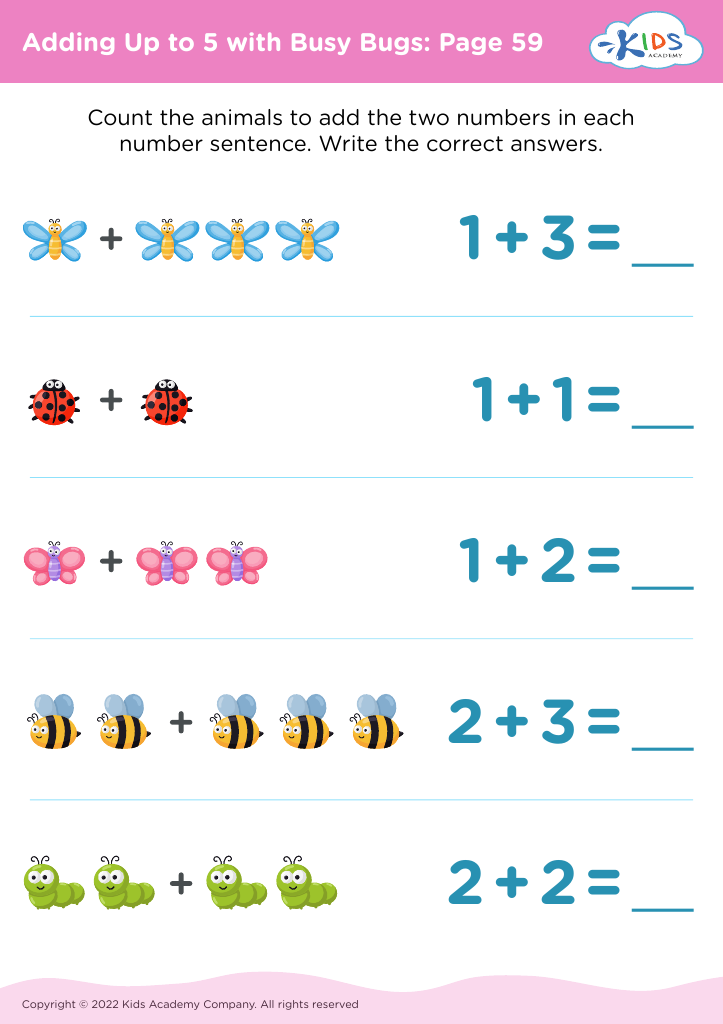
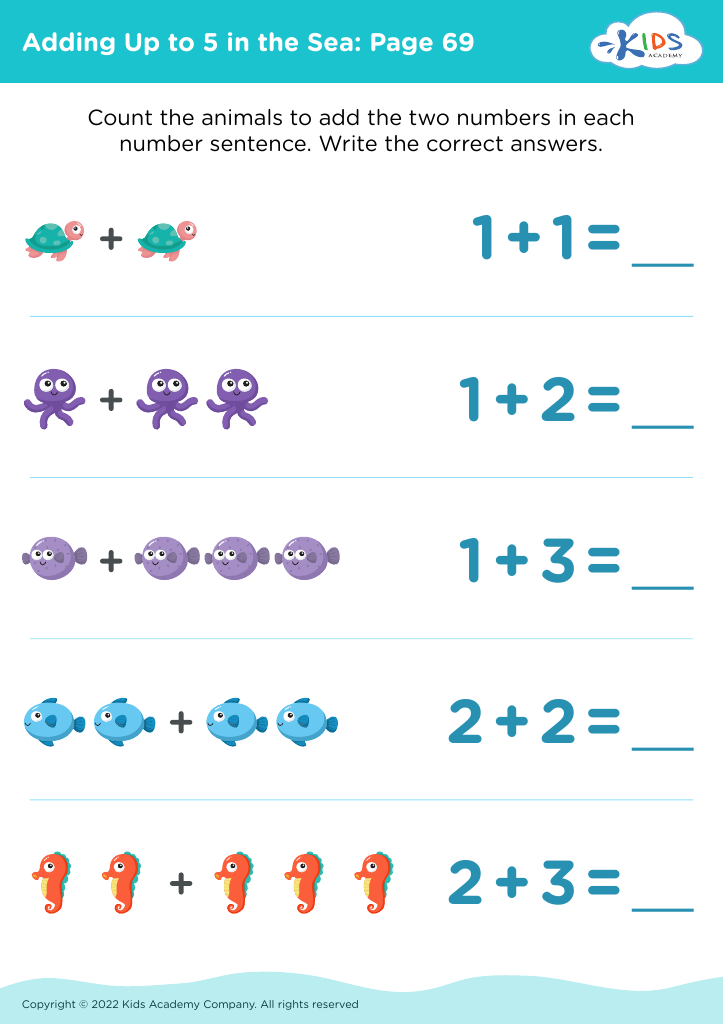
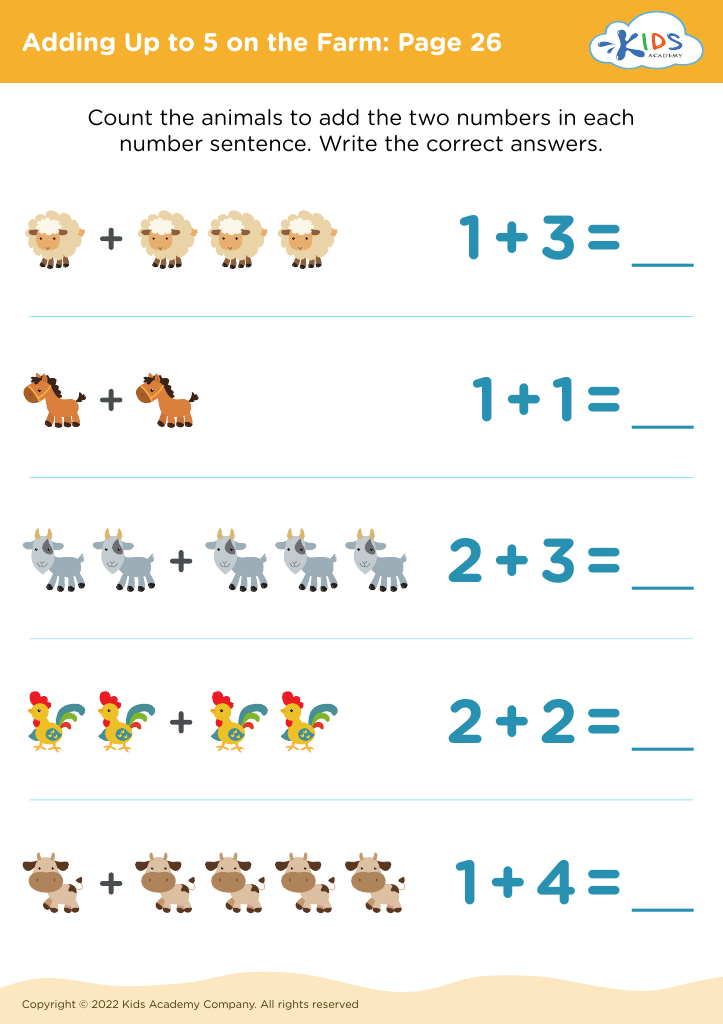
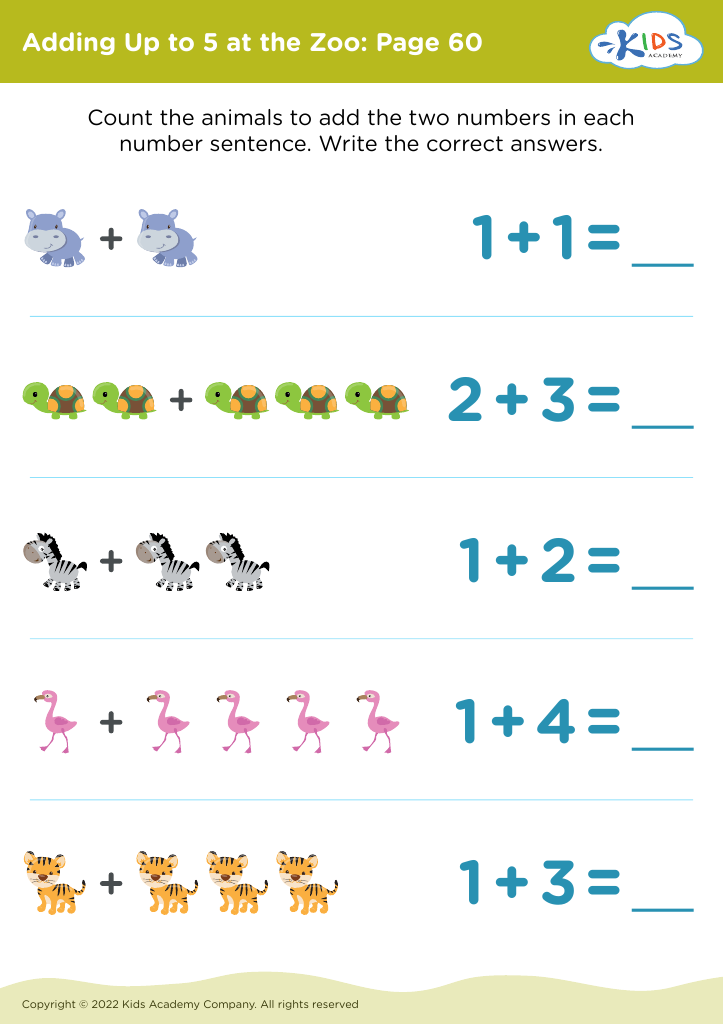








Teaching addition and subtraction up to 5 for children ages 4-5 is crucial for several reasons. First, these foundational skills build early numeracy, which is essential for academic success in mathematics later on. Understanding small numbers helps children develop their cognitive abilities, such as problem-solving and critical thinking, as they learn to make connections between quantities.
Moreover, mastering these basic operations enhances children's confidence and encourages a positive attitude toward math. Engaging in these early math activities fosters curiosity and interest in learning, making children more likely to embrace complex concepts in later grades. Activities that involve addition and subtraction, such as counting objects or playing simple math games, can also promote social interaction and cooperative learning among peers.
Parents and teachers play a crucial role in creating a supportive learning environment. By integrating these skills into daily routines and using relatable examples, they can help children see relevance in what they learn. This approach not only solidifies their understanding of basic math but also lays the groundwork for more advanced concepts in the future. In essence, fostering early addition and subtraction skills is key to developing both academic competence and a love for learning.








