Basic counting skills Addition & Subtraction Worksheets for Ages 4-5
3 filtered results
-
From - To
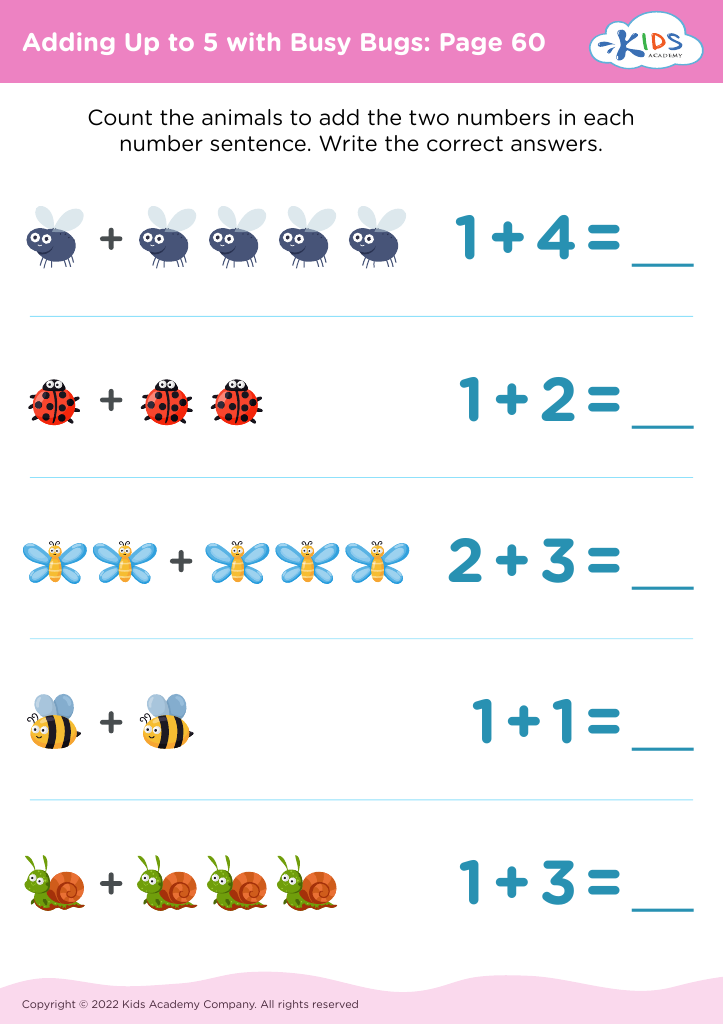
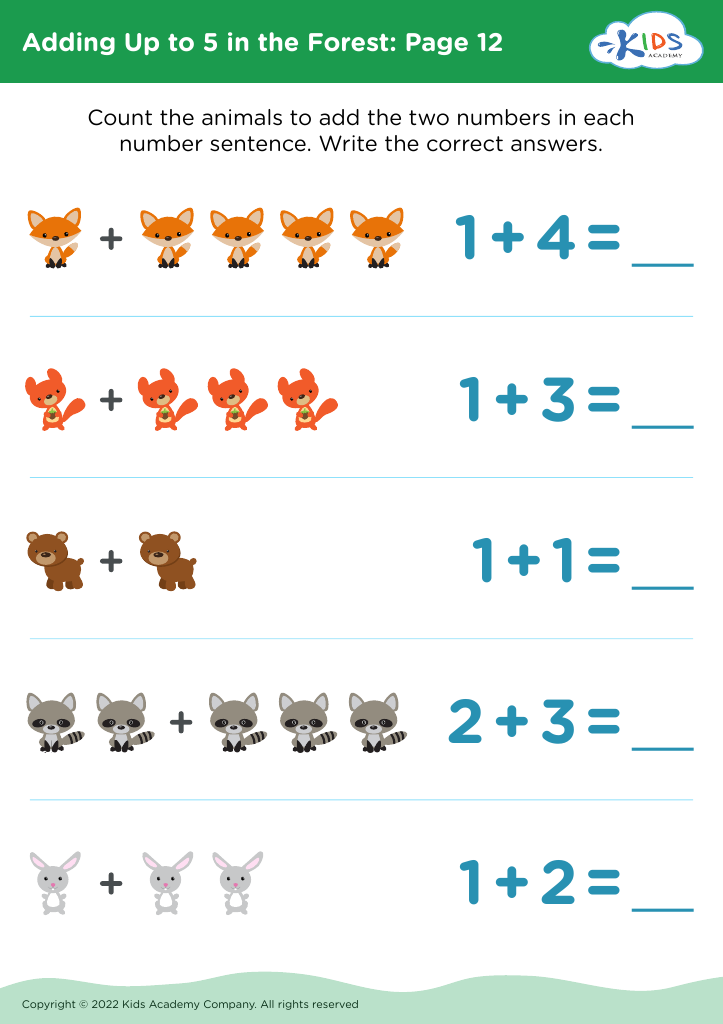
Enhance your child's foundational math skills with our engaging Basic Counting Skills Addition & Subtraction Worksheets, specially designed for ages 4-5. These worksheets make learning fun and interactive, helping young learners grasp essential concepts in addition and subtraction. Through colorful illustrations and simple exercises, children will develop counting proficiency, leading to a greater understanding of basic math operations. Each worksheet focuses on building confidence and encouraging problem-solving skills, preparing them for future math success. Perfect for parents and educators, these resources provide a valuable way to enrich your child's learning experience at home or in the classroom. Download and watch your child thrive!
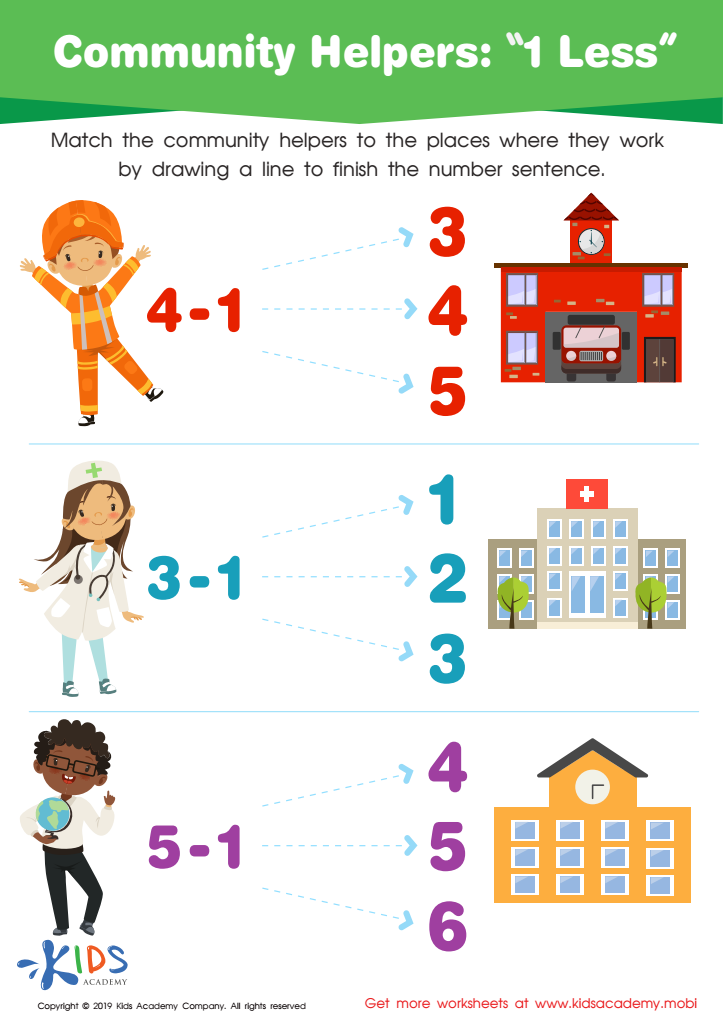
Community Helpers: 1 less Worksheet
 Assign to My Students








Basic counting skills, including addition and subtraction, are foundational for children aged 4-5, and parents or teachers should prioritize their development for several reasons.
First, these skills aid cognitive development. Understanding numbers and relationships between them fosters critical thinking and problem-solving abilities. As children learn to add and subtract, they develop logical reasoning, which is essential for academic success in subjects beyond math, such as science and reading comprehension.
Second, basic counting and arithmetic skills promote lifelong learning. Early mastery sets a strong foundation for more complex math concepts encountered later in school. When children grasp these skills early, they experience increased confidence, making them more likely to engage actively in class and enjoy learning.
Moreover, addition and subtraction skills have practical implications in daily life. Helping children understand how to use numbers in real-world situations—like sharing toys or counting snacks—instills a sense of independence and prepares them for everyday challenges.
Finally, these skills encourage social interaction. Group activities that involve counting or simple math problems stimulate communication and collaboration among peers, fostering a sense of community and teamwork.
In essence, reinforcing basic counting skills in young children is crucial for their overall development, confidence, and success in school and life.








