Basic Math Skills Addition & Subtraction Worksheets for Ages 4-5 - Page 2
39 filtered results
-
From - To
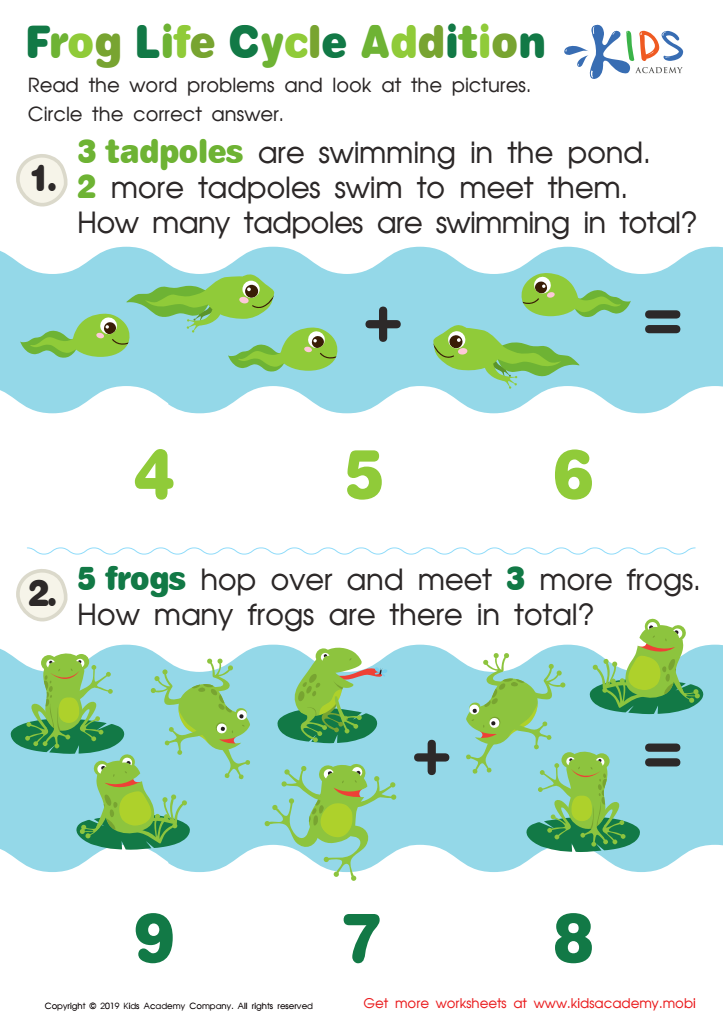
Frog Life Cycle Addition Worksheet
 Assign to My Students
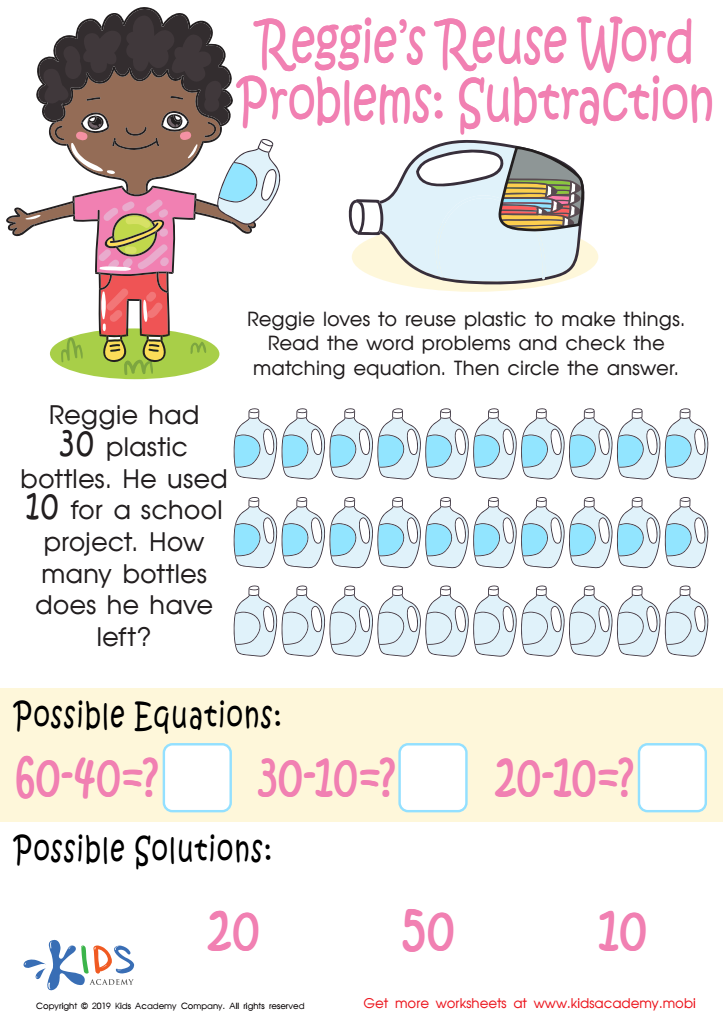
Reggie's Reuse Word Problems: Subtraction Worksheet
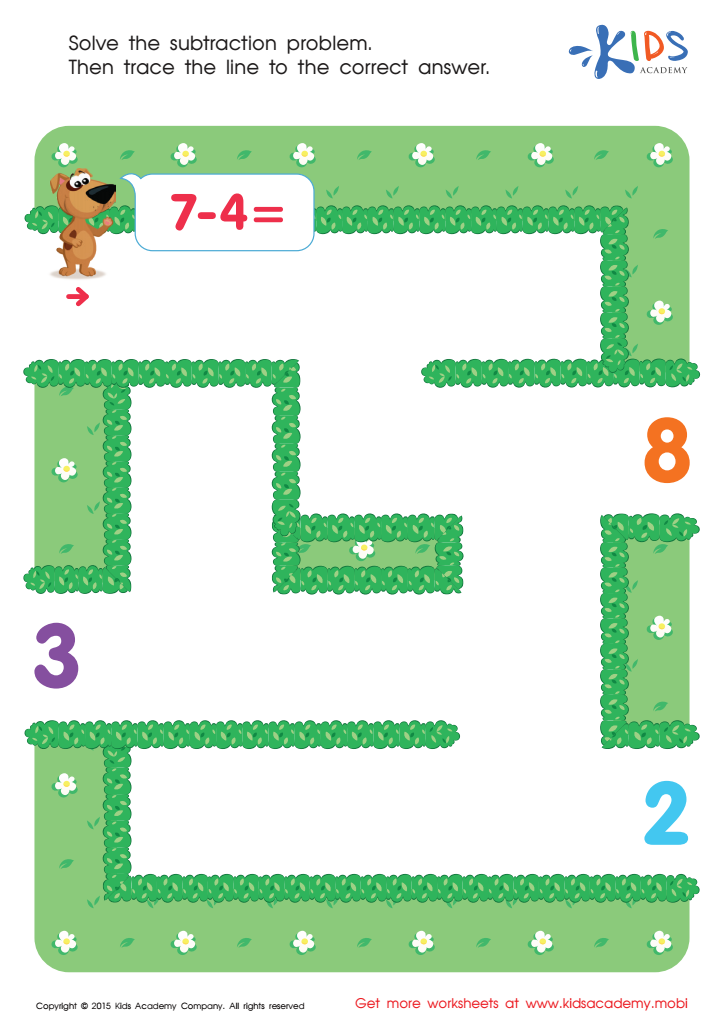
Subtraction Seven Minus Four Worksheet
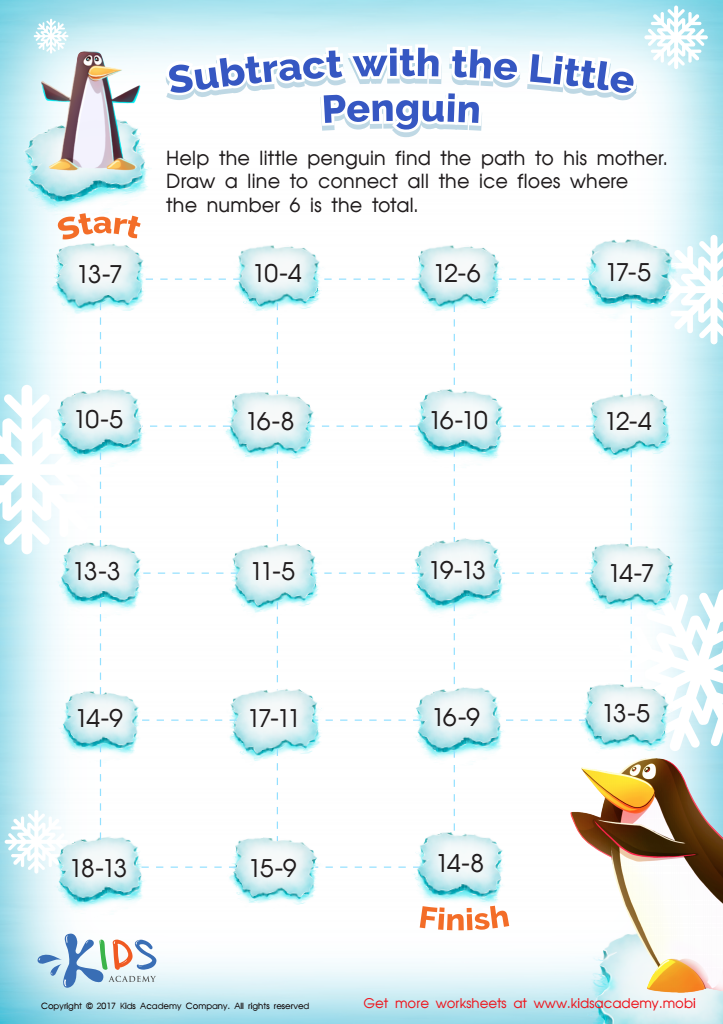
Subtract With The Little Penguin Substraction Worksheet
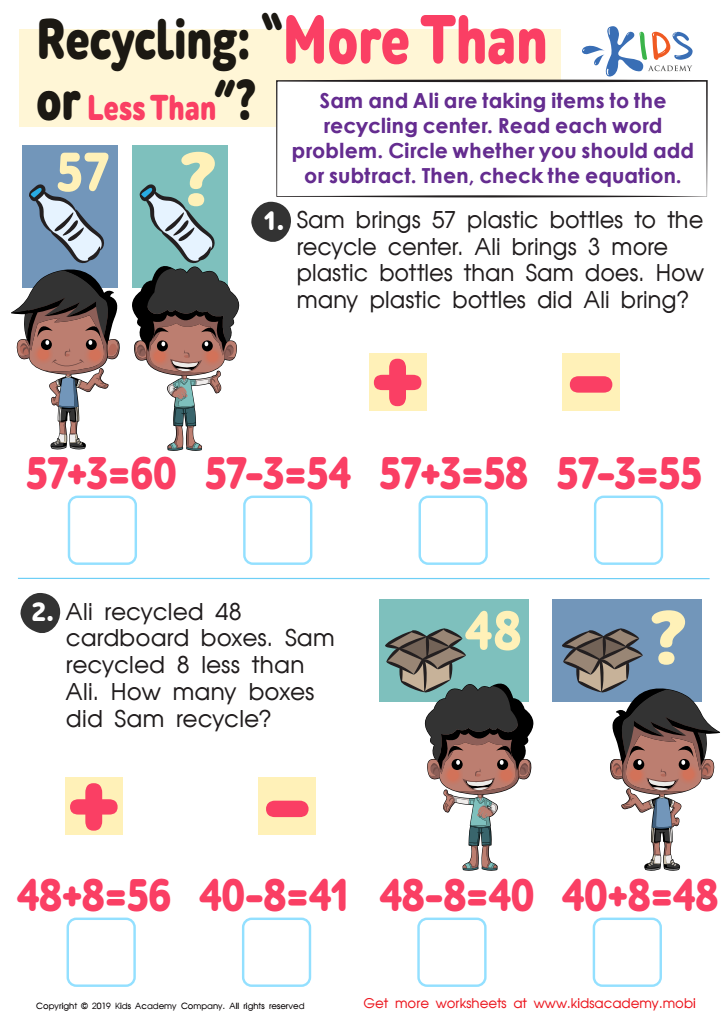
Recycling - More or Less Worksheet







Parents and teachers should prioritize basic math skills in addition and subtraction for children ages 4-5, as these foundational skills are crucial for overall cognitive development and future academic success. At this early stage, children are developing their number sense and understanding of quantities, which form the backbone of more complex mathematical concepts later on.
Interacting with addition and subtraction helps young learners develop problem-solving skills, critical thinking, and perseverance. These skills are not just beneficial for math; they play a vital role in everyday scenarios, such as sharing snacks or counting toys, fostering a sense of independence and confidence in their abilities.
Moreover, early exposure to math through playful activities and engaging games can ignite a child's interest in learning, creating a positive attitude toward education. Research shows that a solid grasp of basic math can predict later success in higher-level math, affecting overall academic performance.
Encouraging these skills through fun and interactive methods, such as using manipulatives or storytelling that involves numbers, can make learning joyful. By focusing on addition and subtraction, parents and teachers can lay a groundwork for numeracy that supports lifelong learning and nurtures empowered, enthusiastic learners.








