Filters

248 filtered results

Clear all filters
Favorites
With answer key
Interactive

248 filtered results

Difficulty Level

Grade


Check out this FREE Trial Lesson on Addition & Subtraction for age 4-5!

H

Favorites
With answer key
Interactive
  • 4-5
  • Counting practice
  • Addition & Subtraction
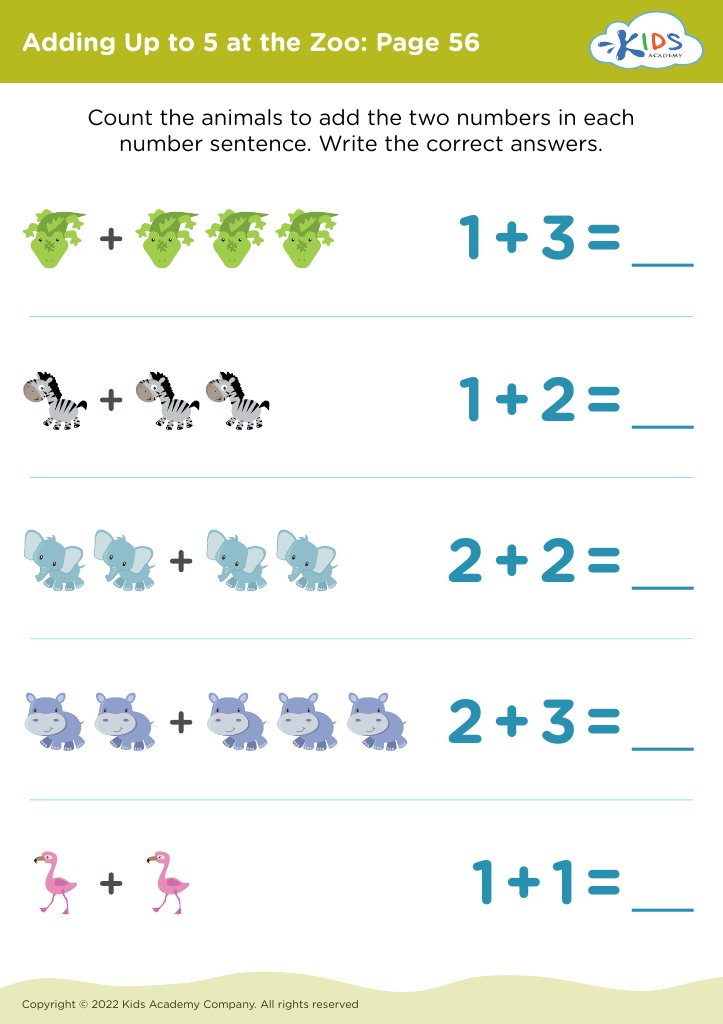
Adding Up to 5 at the Zoo: Page 56
Worksheet
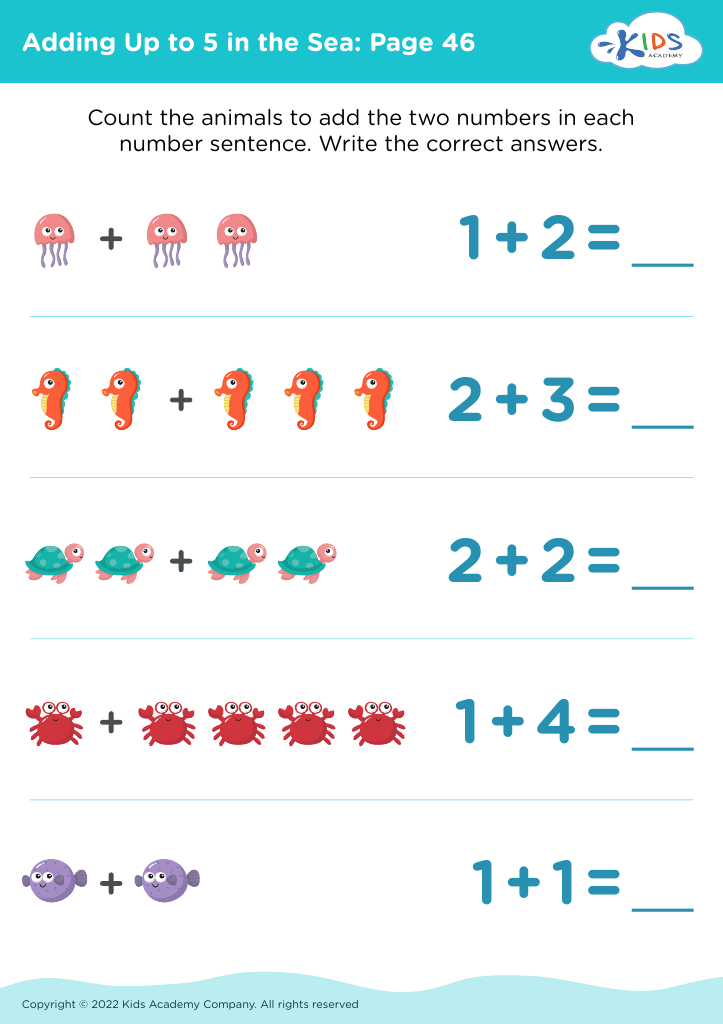
Adding Up to 5 in the Sea: Page 46
Worksheet
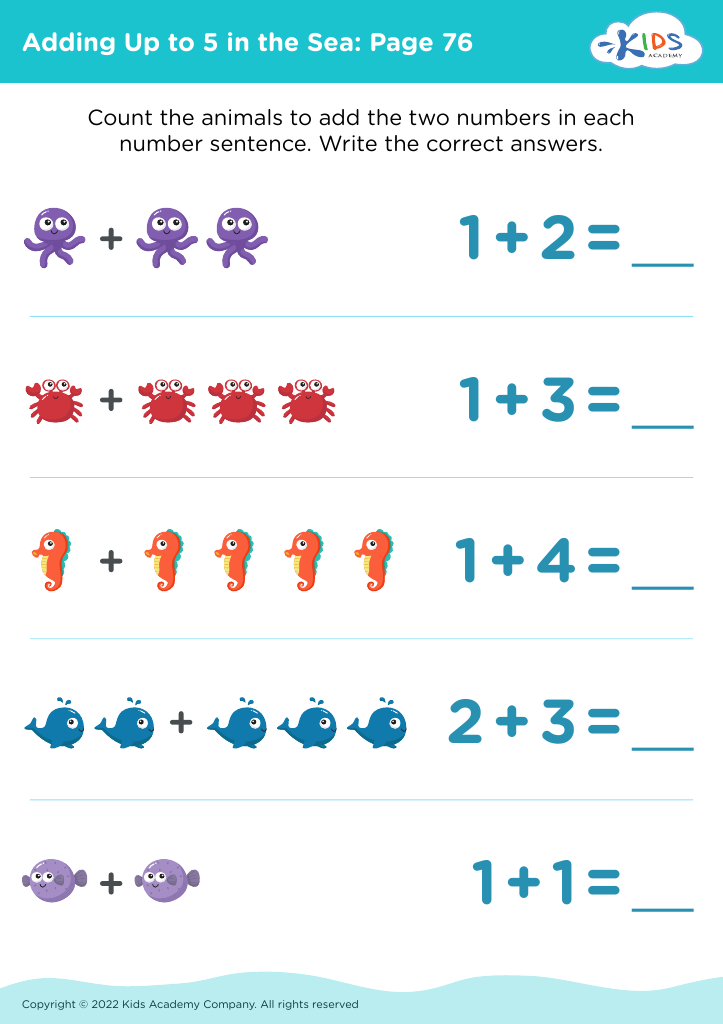
Adding Up to 5 in the Sea: Page 76
Worksheet
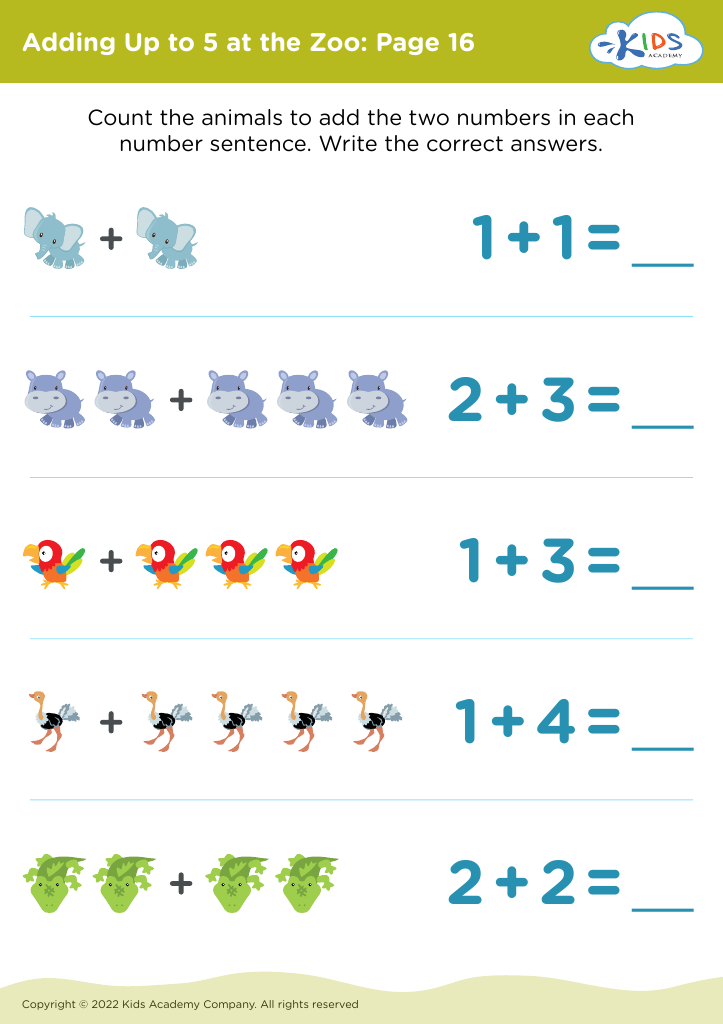
Adding Up to 5 at the Zoo: Page 16
Worksheet
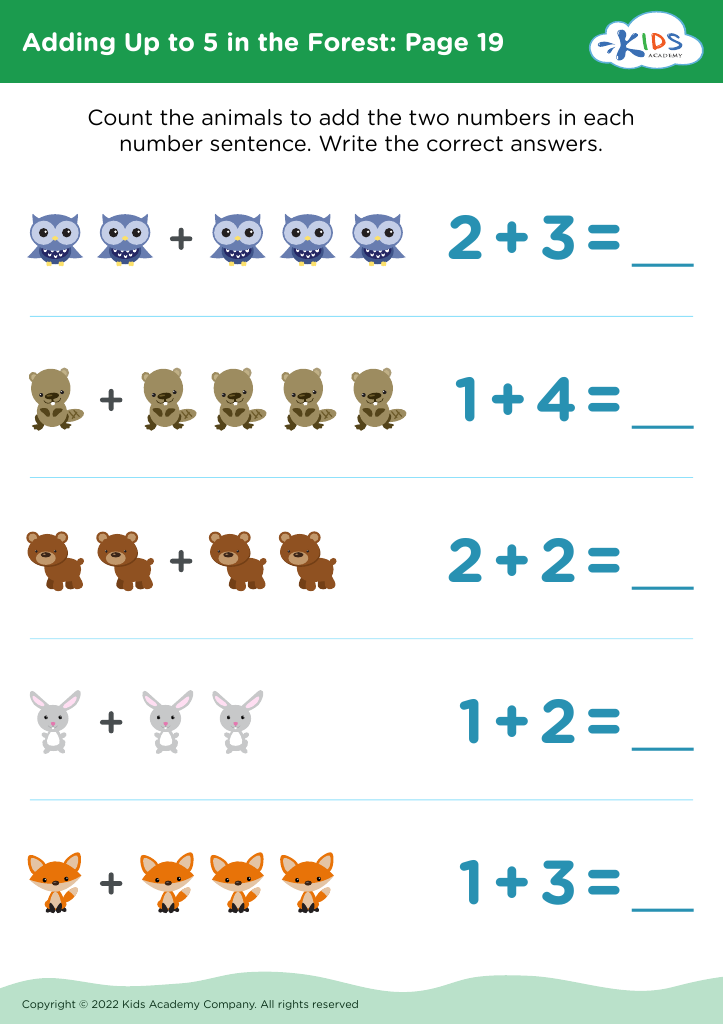
Adding Up to 5 in the Forest: Page 19
Worksheet
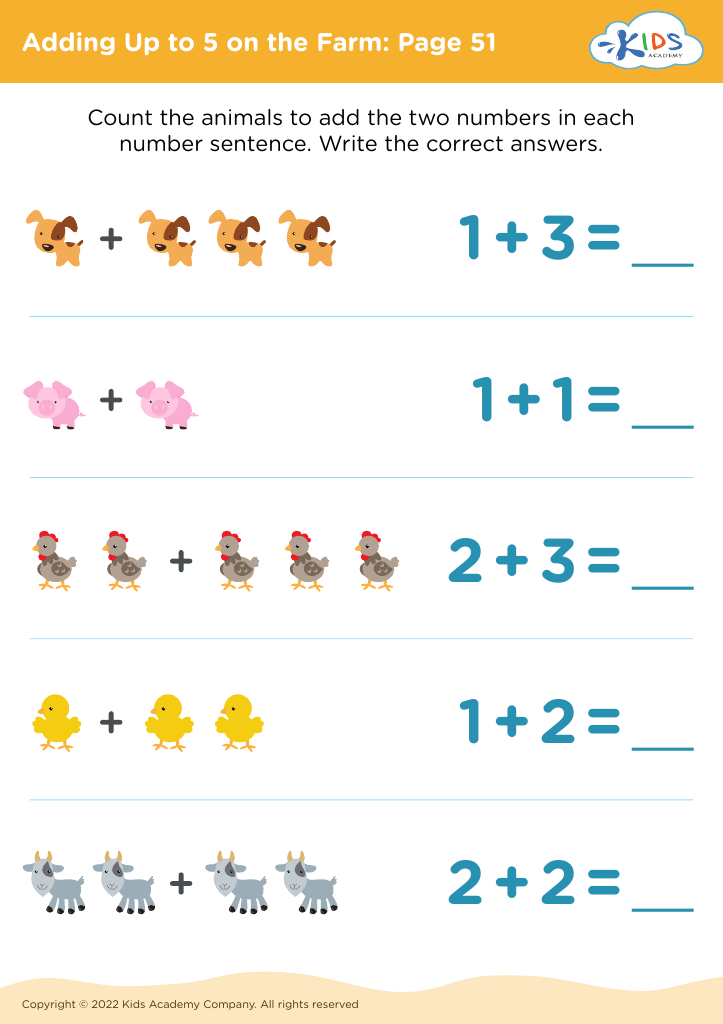
Adding Up to 5 on the Farm: Page 51
Worksheet
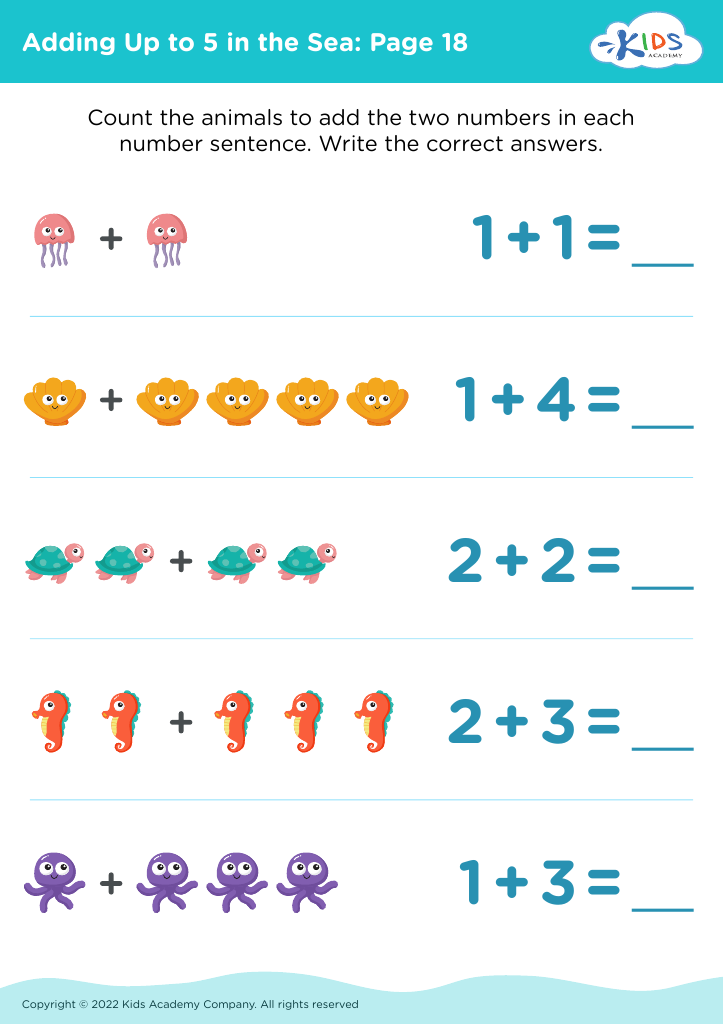
Adding Up to 5 in the Sea: Page 18
Worksheet
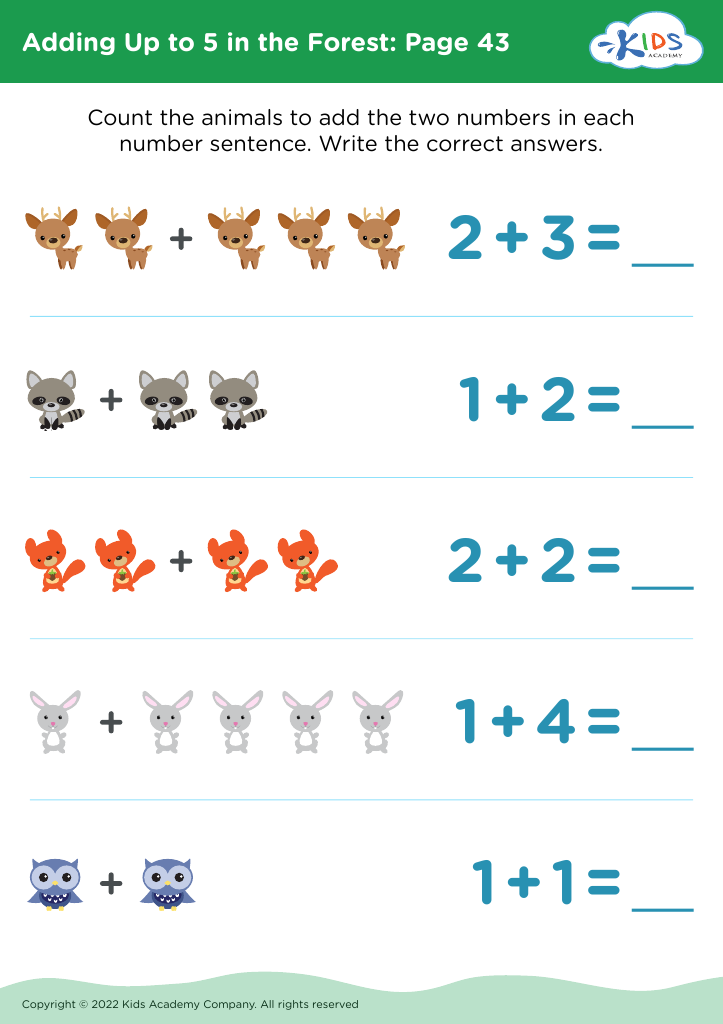
Adding Up to 5 in the Forest: Page 43
Worksheet
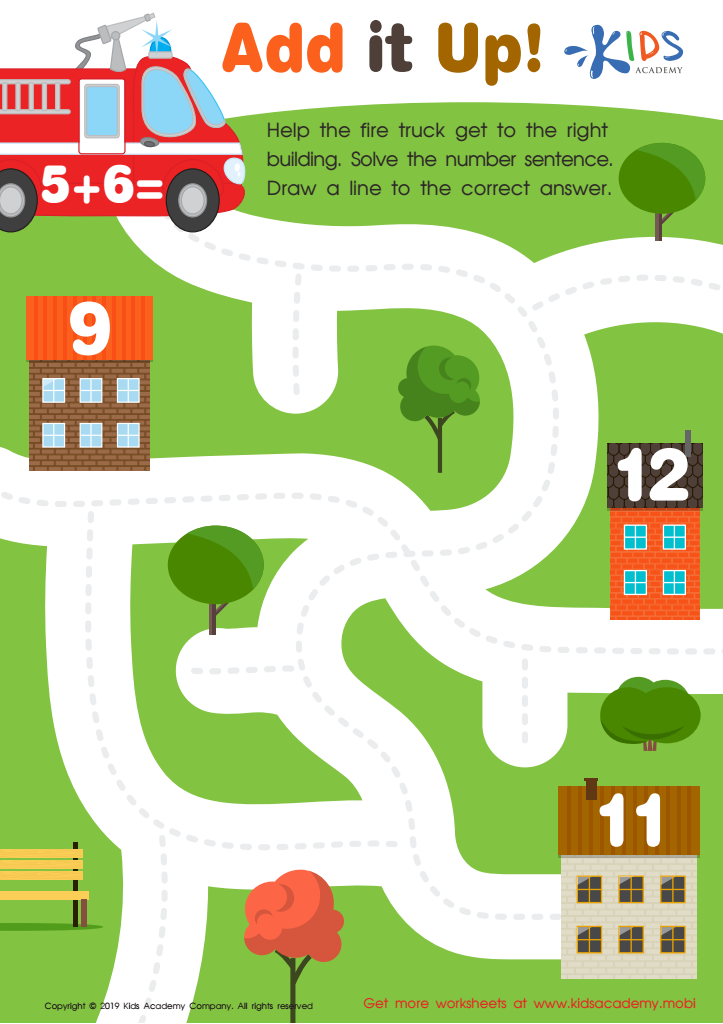
Add it Up Worksheet
Add it Up Worksheet

Add it Up Worksheet

The fire service is the right number to call in case of a fire. Test your children's safety knowledge by asking them other emergency numbers. Have them identify the fire truck in the worksheet and solve the number sentences. Guide them in drawing a line to the right answer.
Add it Up Worksheet
Worksheet
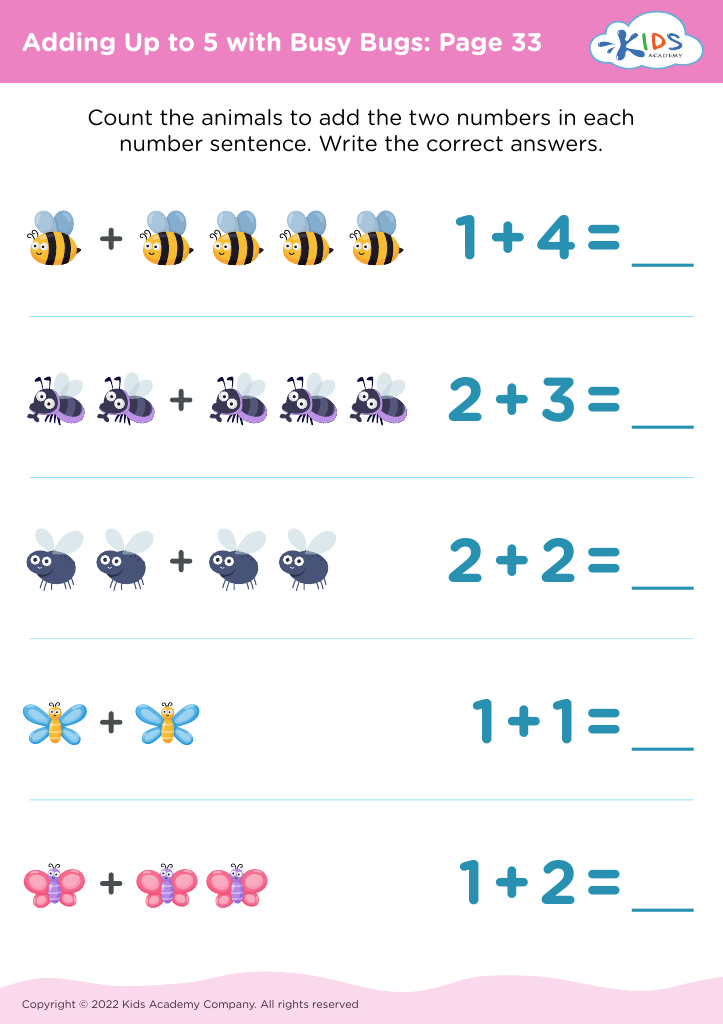
Adding Up to 5 with Busy Bugs: Page 33
Worksheet
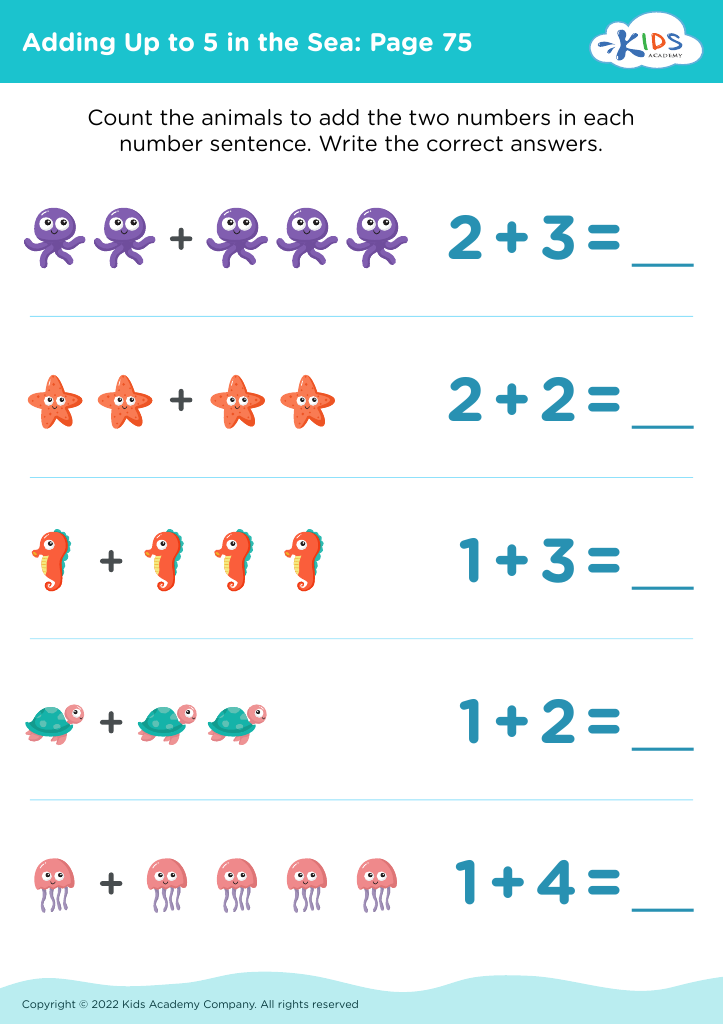
Adding Up to 5 in the Sea: Page 75
Worksheet
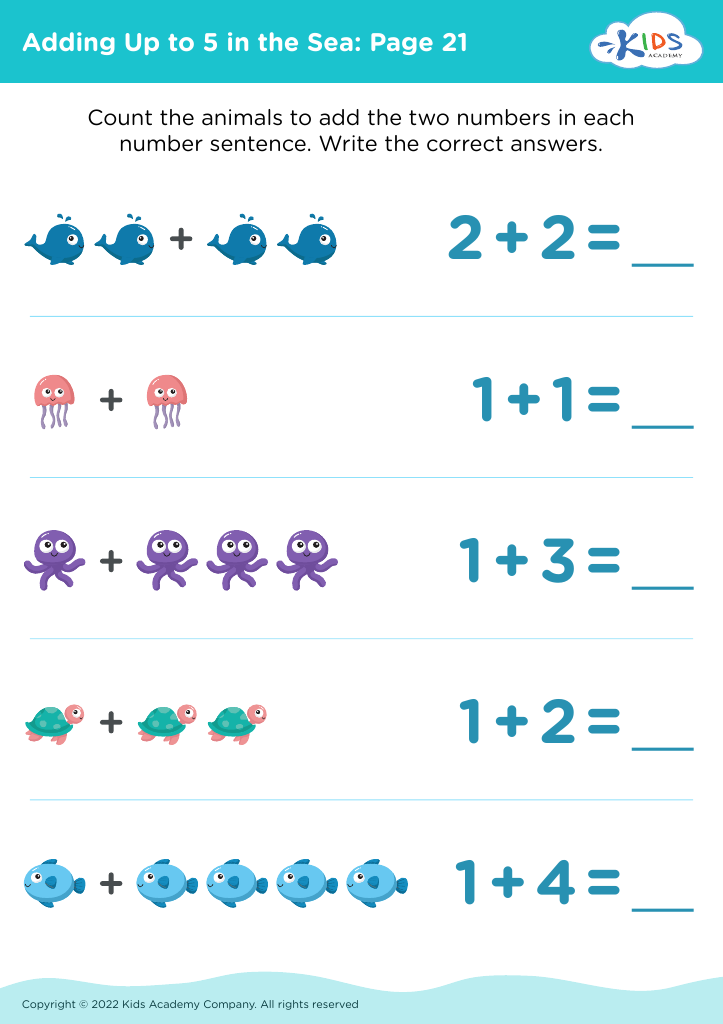
Adding Up to 5 in the Sea: Page 21
Worksheet
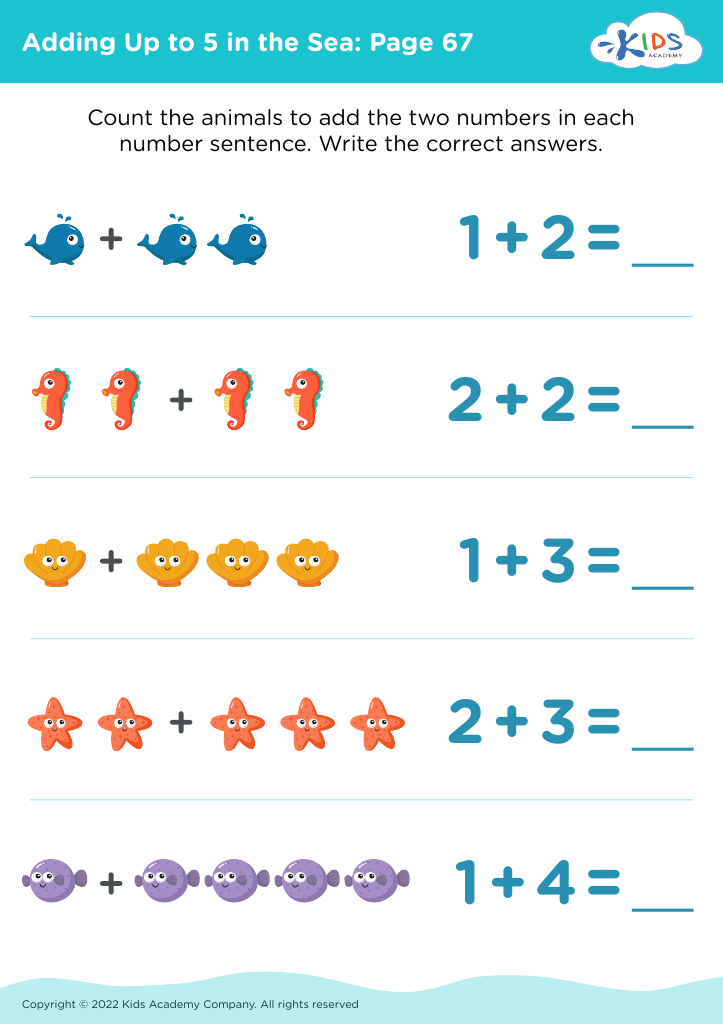
Adding Up to 5 in the Sea: Page 67
Worksheet
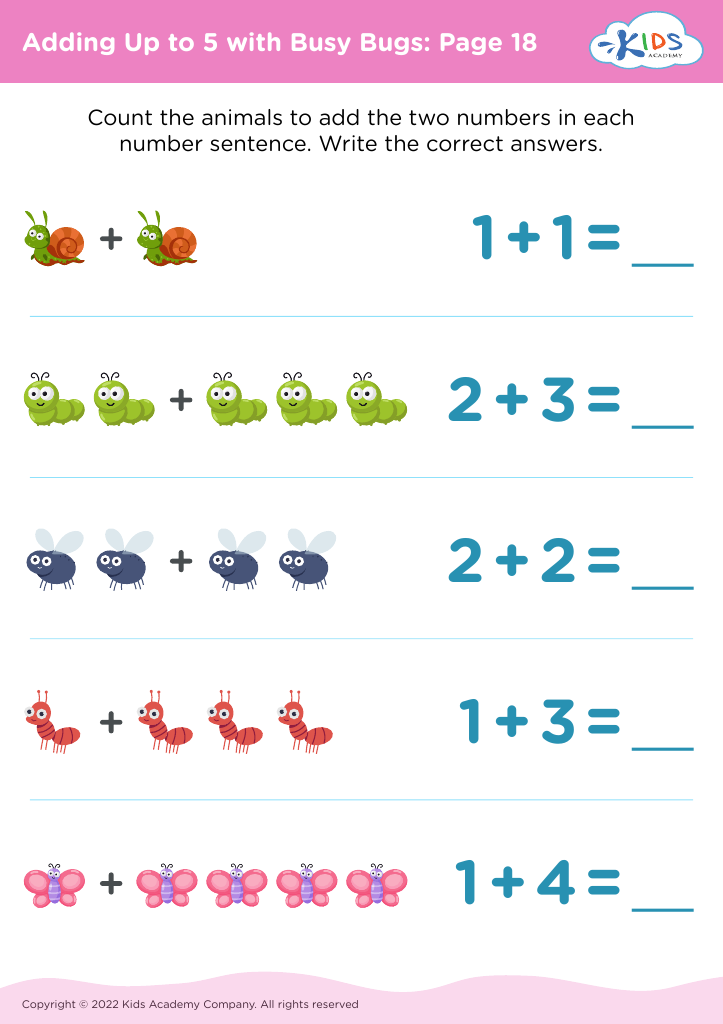
Adding Up to 5 with Busy Bugs: Page 18
Worksheet
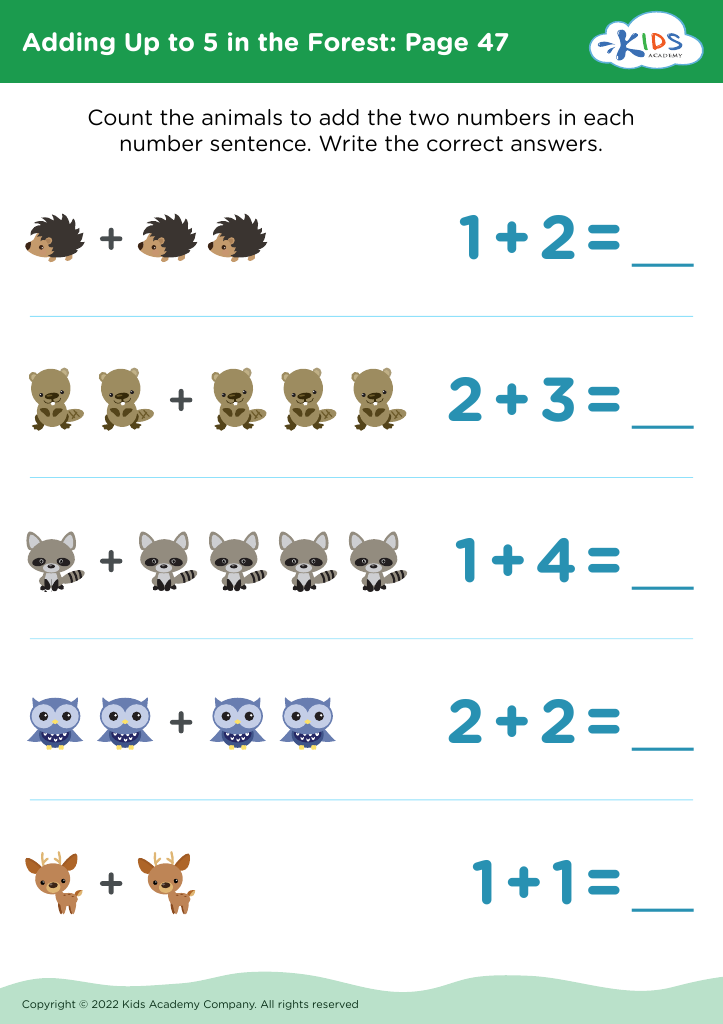
Adding Up to 5 in the Forest: Page 47
Worksheet
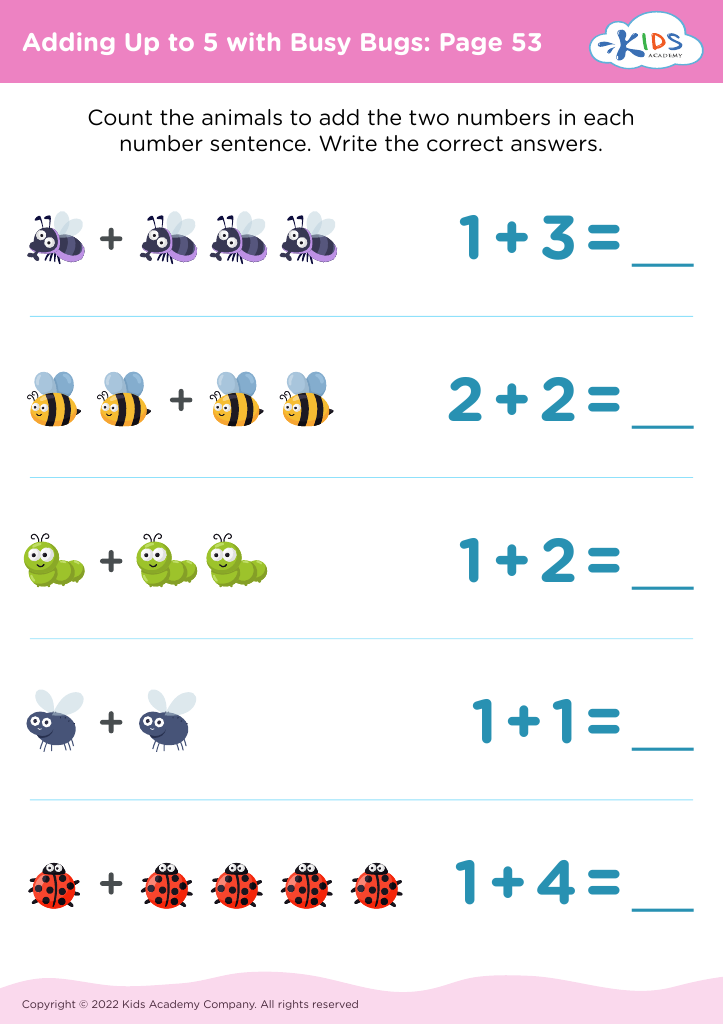
Adding Up to 5 with Busy Bugs: Page 53
Worksheet
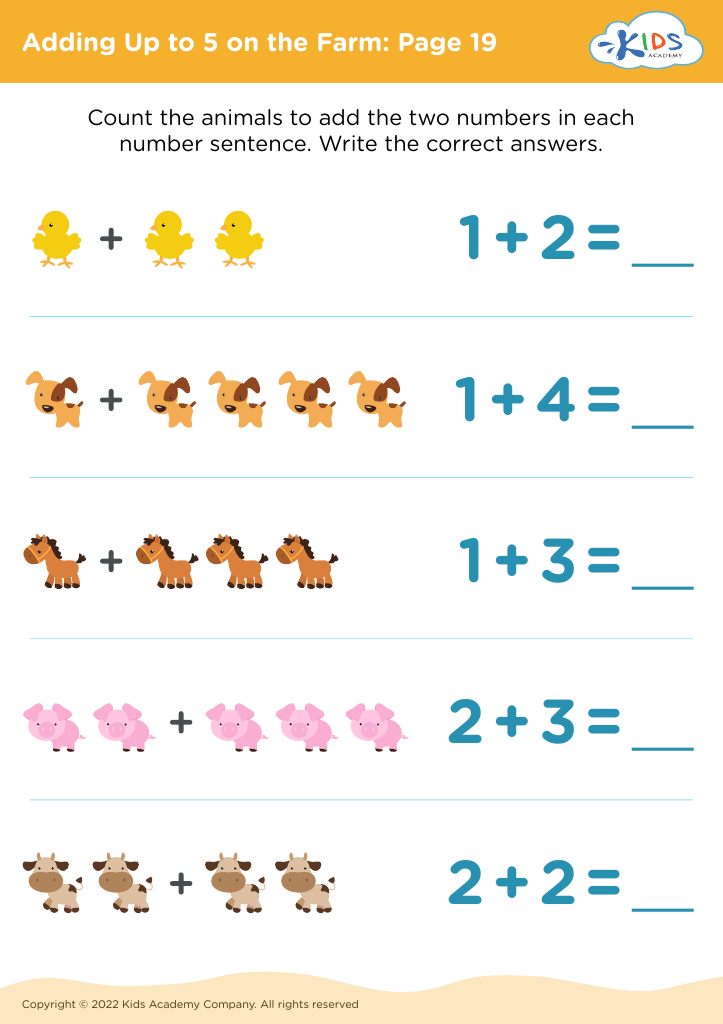
Adding Up to 5 on the Farm: Page 19
Worksheet
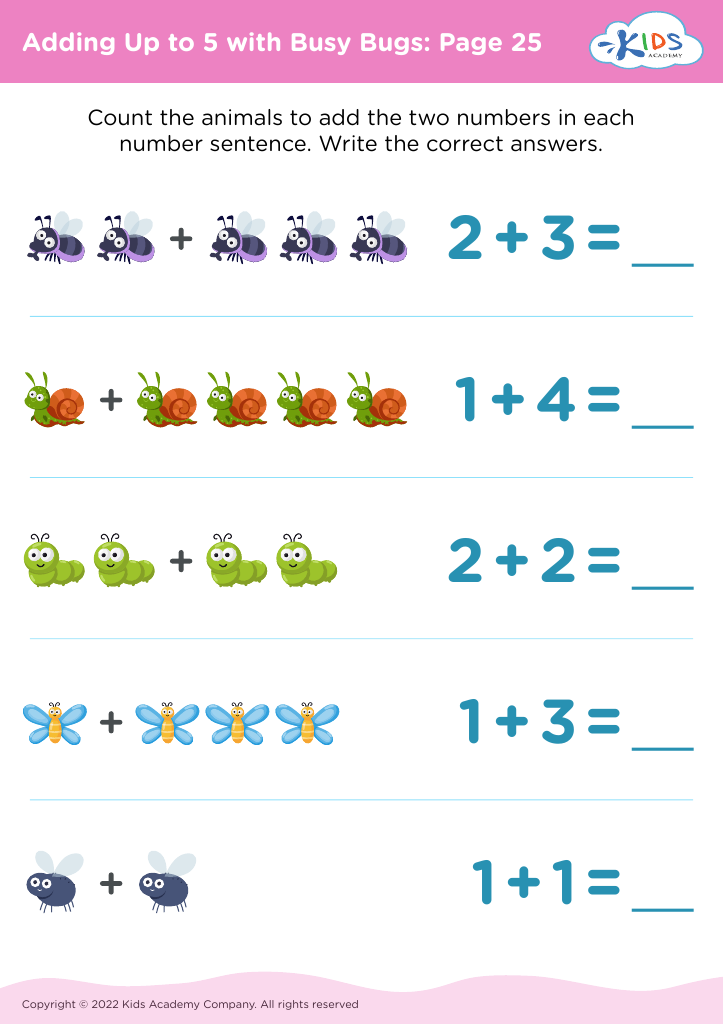
Adding Up to 5 with Busy Bugs: Page 25
Worksheet
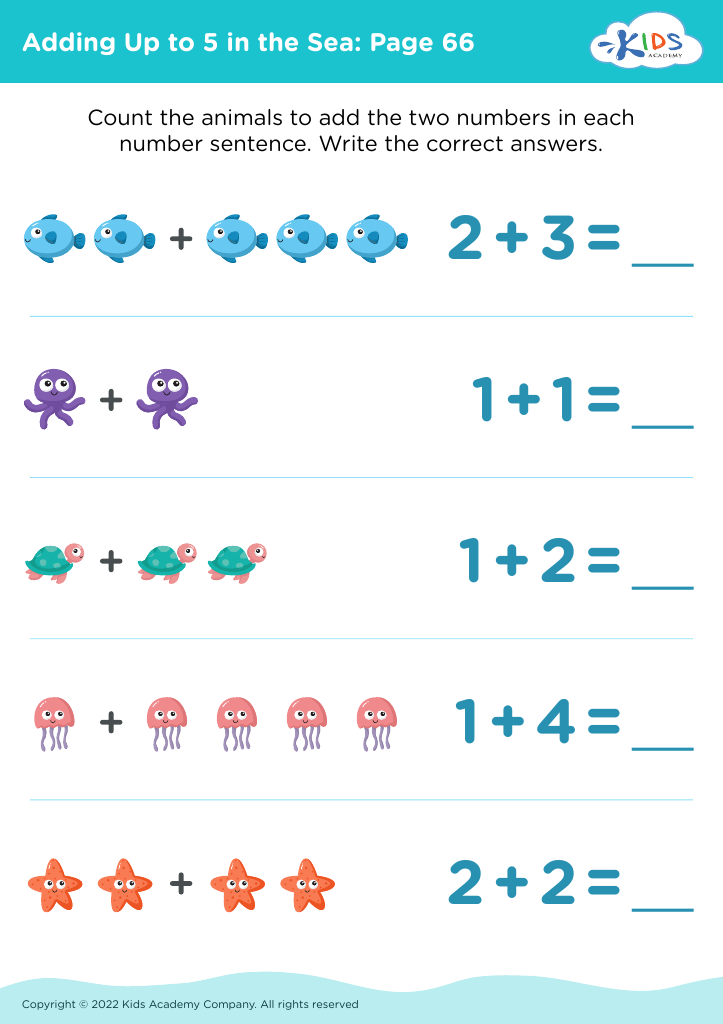
Adding Up to 5 in the Sea: Page 66
Worksheet
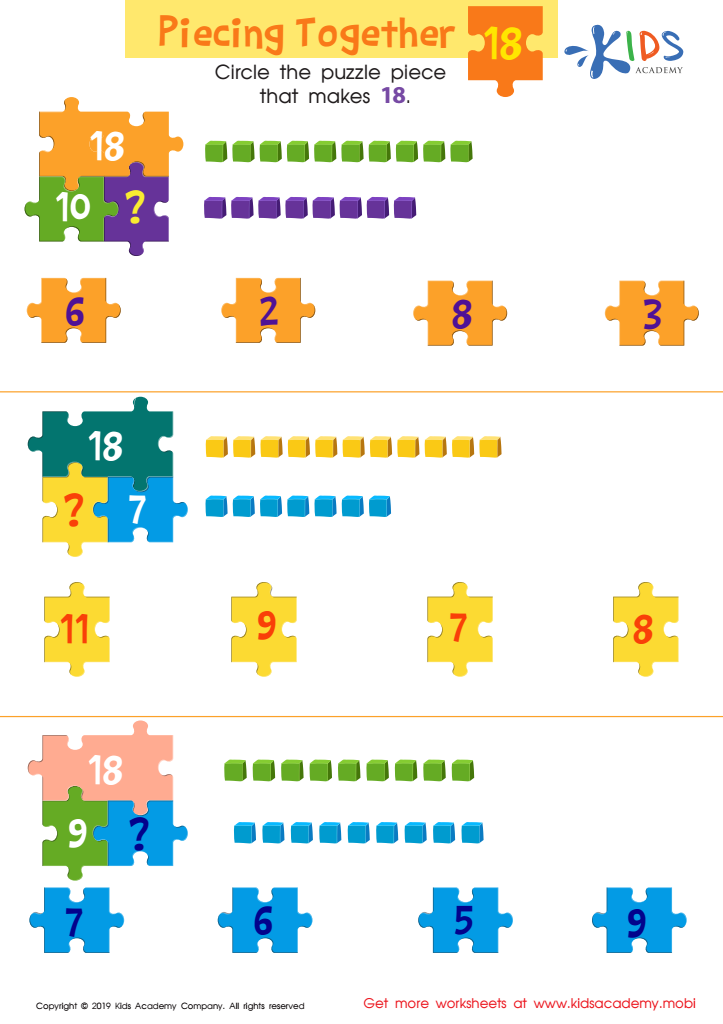
Piecing Together 18 Worksheet
Piecing Together 18 Worksheet
Let your preschoolers learn and have fun with this colorful worksheet. Look at the picture with them and ask what they see. Help them solve the equations missing on each puzzle piece and then circle the one that will make the bottom puzzle piece numbers equal 16. Puzzles and bright colors make learning easy and enjoyable!
Piecing Together 18 Worksheet
Worksheet
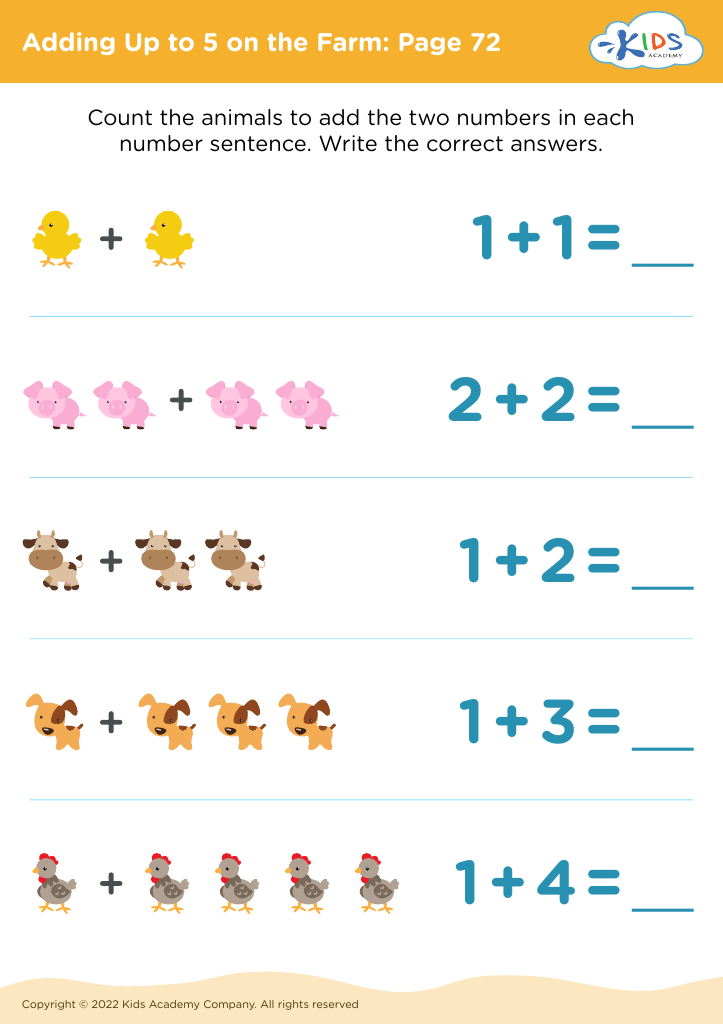
Adding Up to 5 on the Farm: Page 72
Worksheet
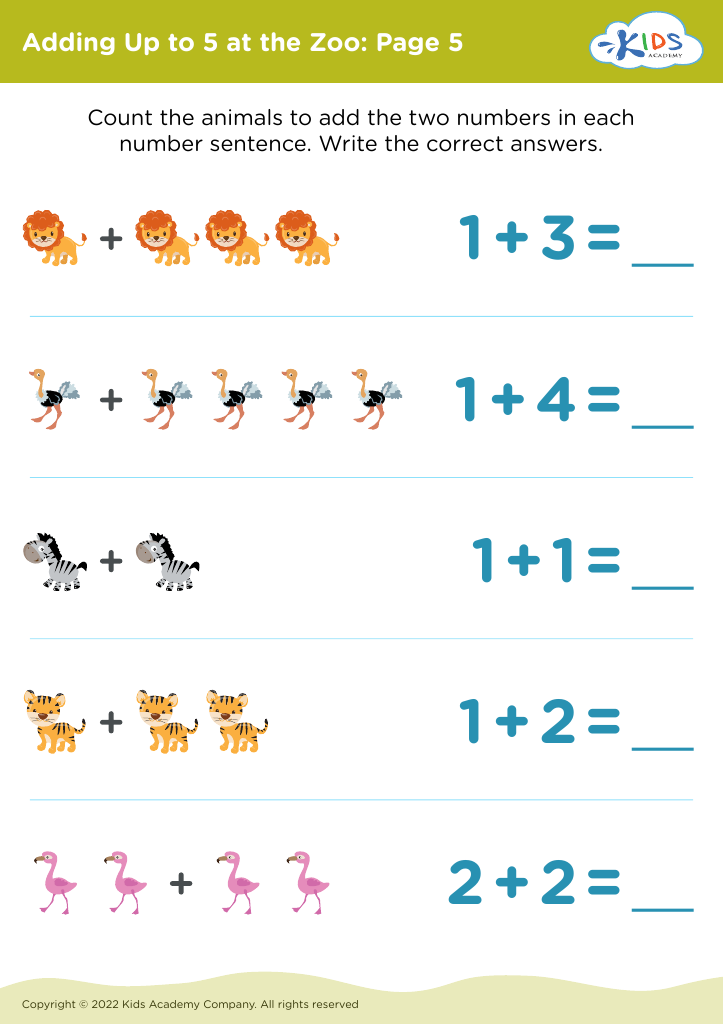
Adding Up to 5 at the Zoo: Page 5

Adding Up to 5 at the Zoo: Page 5

Adding Up to 5 at the Zoo: Page 5
Worksheet
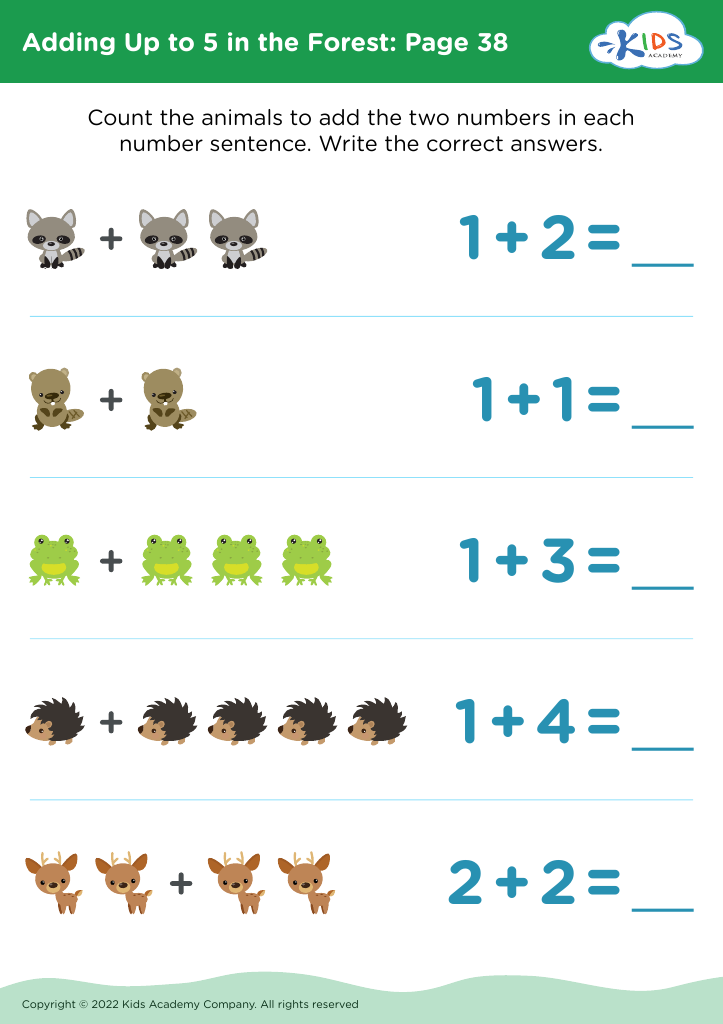
Adding Up to 5 in the Forest: Page 38
Worksheet
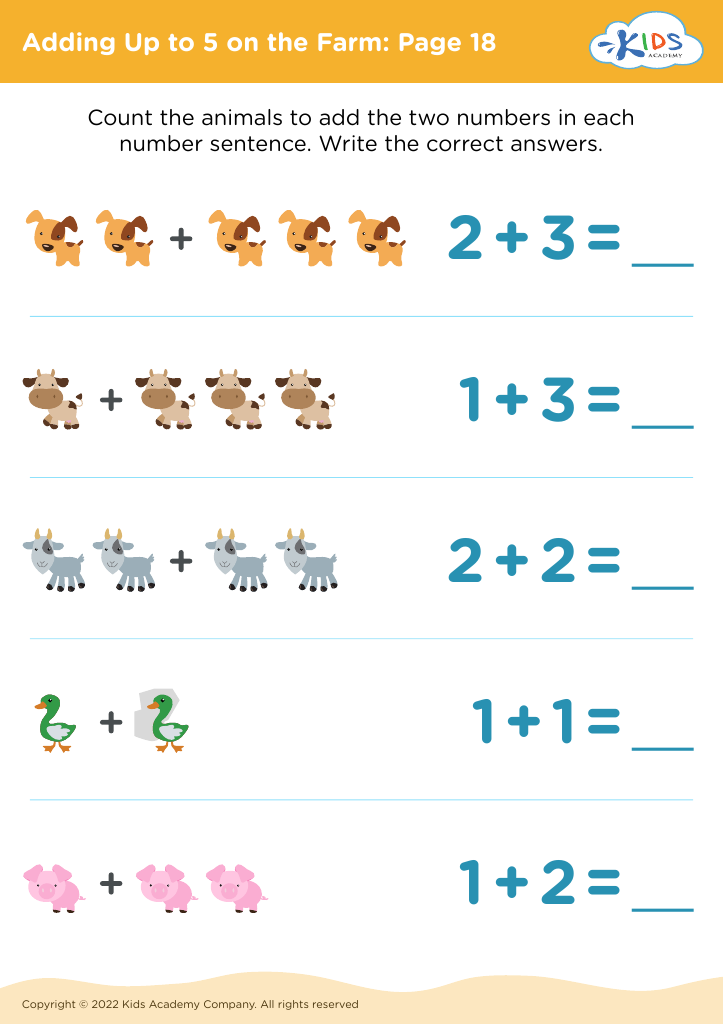
Adding Up to 5 on the Farm: Page 18
Worksheet


Counting practice, alongside addition and subtraction, is crucial for children ages 4-5 as it establishes the foundation for their future mathematical understanding. At this early stage, children are developing cognitive skills and learning to communicate their thoughts. Engaging in counting activities enhances their number sense, which is essential for grasping basic math concepts.

Parents and teachers should recognize that learning addition and subtraction at this age fosters critical thinking skills. When children practice these operations, they learn to solve problems, recognize patterns, and make connections between numbers. This cognitive engagement boosts their confidence and encourages a positive attitude toward math, an essential skill in today’s world.

Moreover, counting and basic arithmetic form a vital part of everyday life. By practicing these skills, children gain practical abilities, such as understanding time, managing money, or even basic cooking measurements. Encouraging counting games and interactive activities can make learning enjoyable, turning what might seem like a chore into a fun and memorable experience.

In summary, prioritizing counting practice, addition, and subtraction for young learners is pivotal for their long-term academic success, essential life skills, and fostering a love for learning.