Filters

248 filtered results

Clear all filters
Favorites
With answer key
Interactive

248 filtered results

Difficulty Level

Grade


Check out this FREE Trial Lesson on Addition & Subtraction for age 4-5!

Exactly the Same, or Not

Favorites
With answer key
Interactive
  • 4-5
  • Counting practice
  • Addition & Subtraction
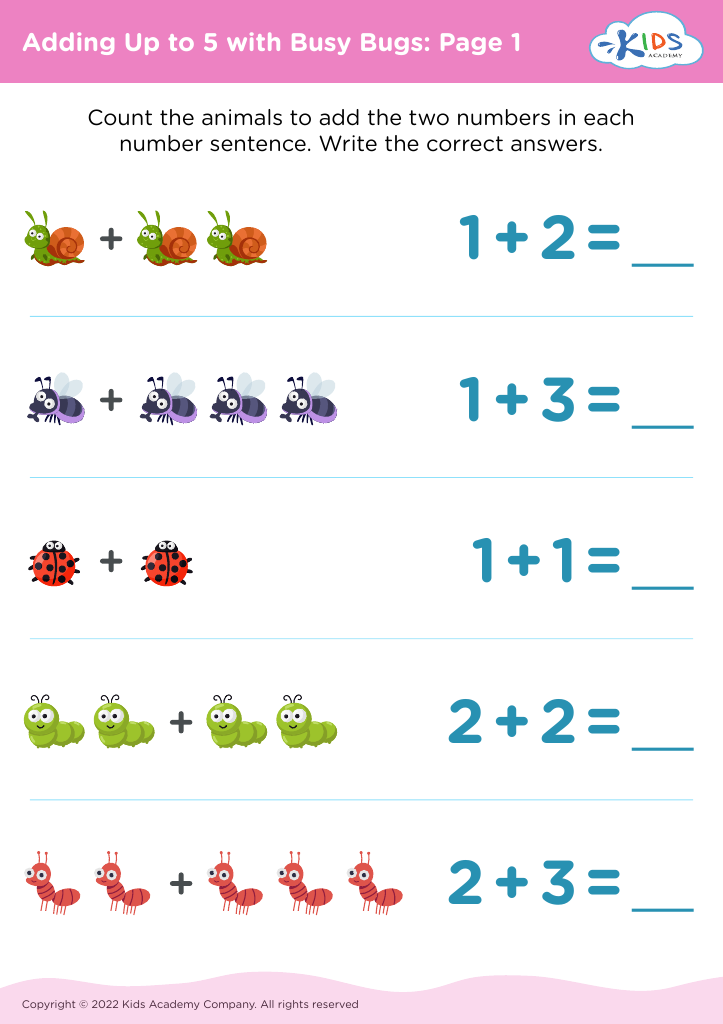
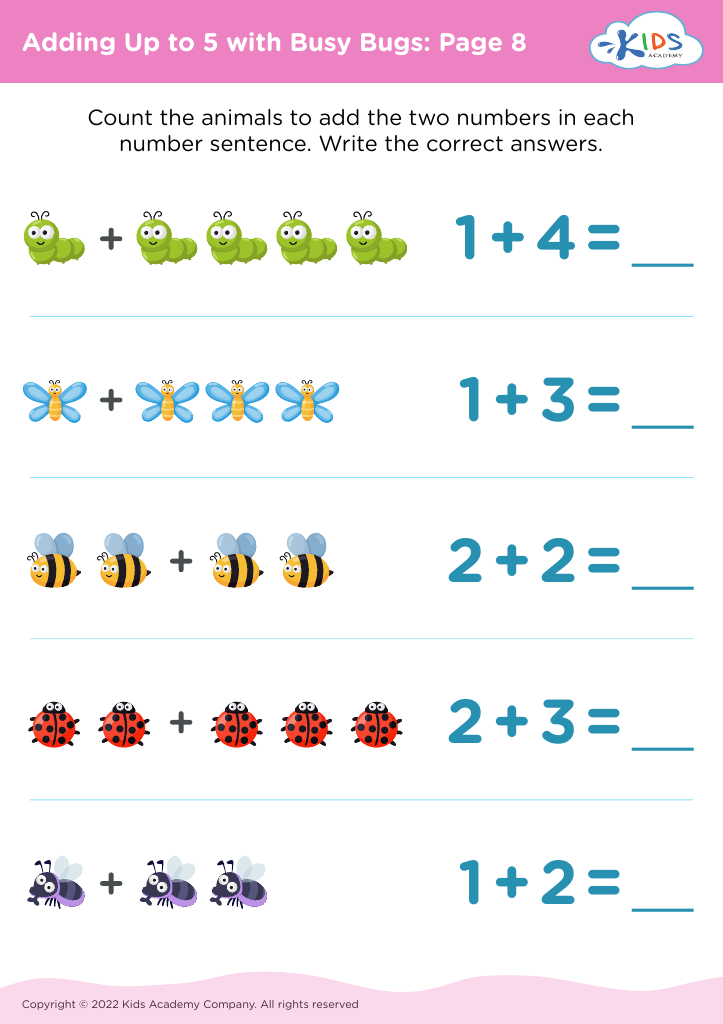
Adding Up to 5 with Busy Bugs: Page 1
Worksheet
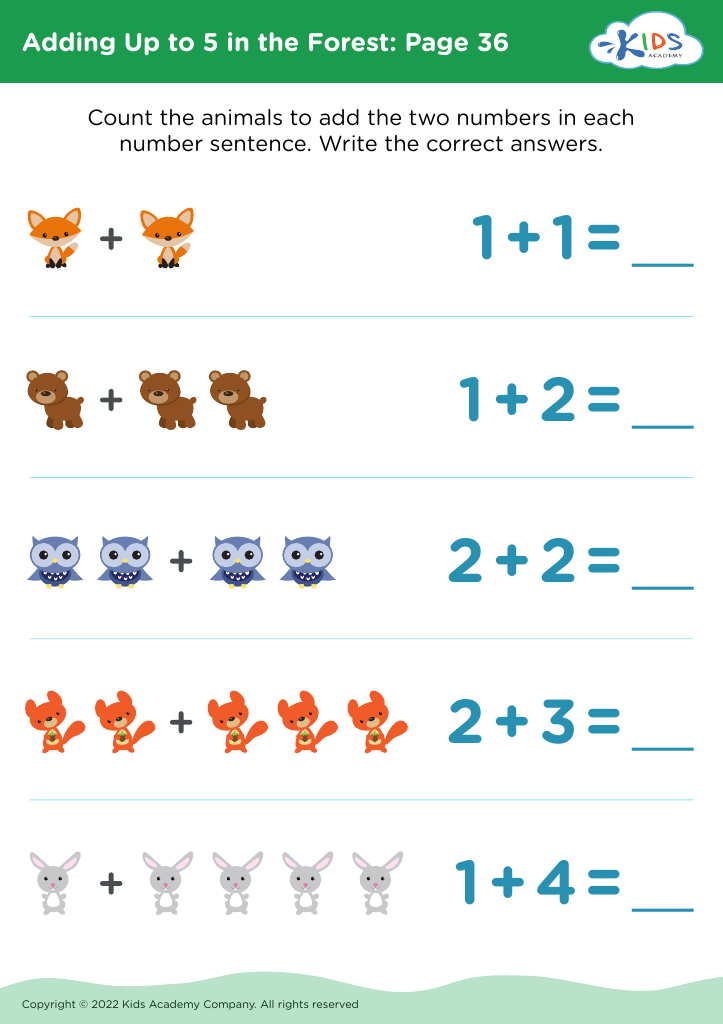
Adding Up to 5 in the Forest: Page 36
Worksheet
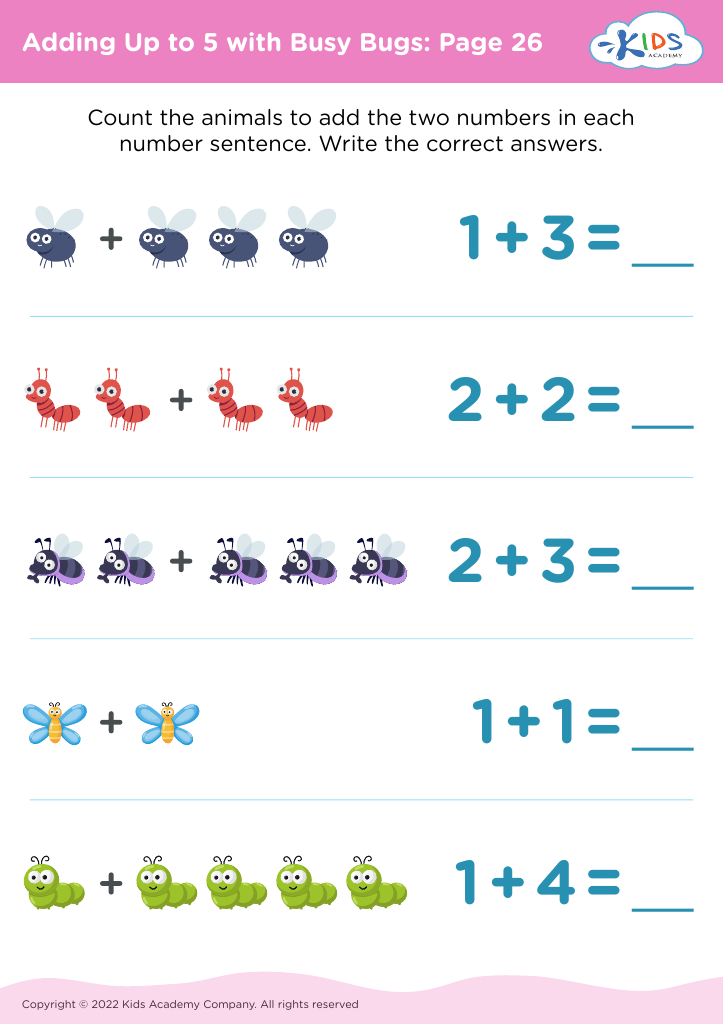
Adding Up to 5 with Busy Bugs: Page 26
Worksheet
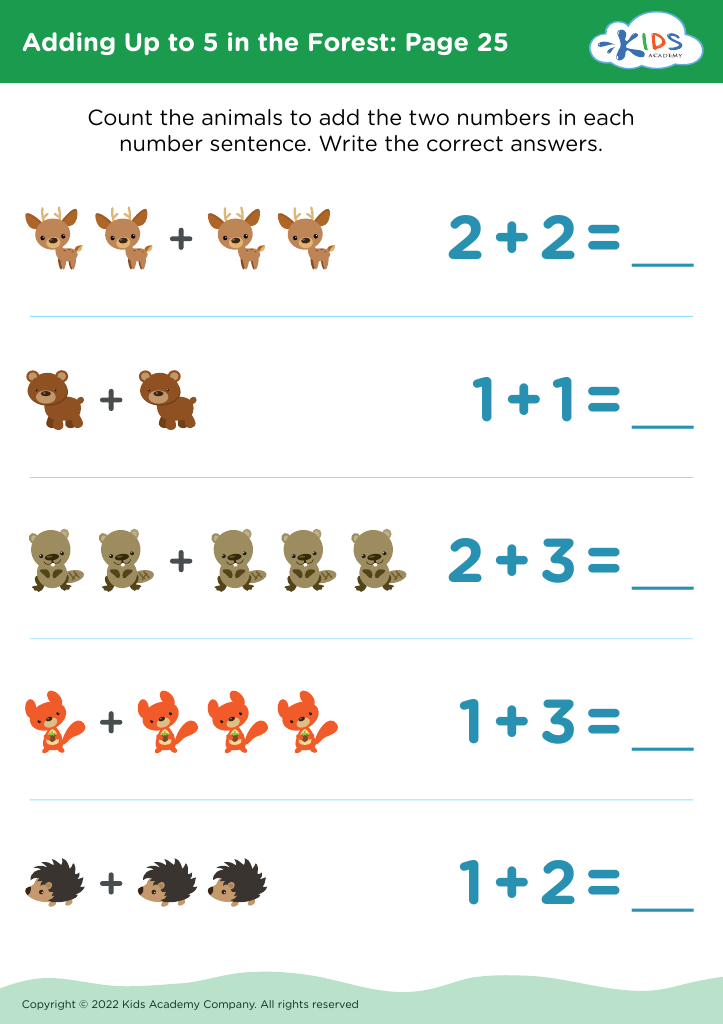
Adding Up to 5 in the Forest: Page 25
Worksheet
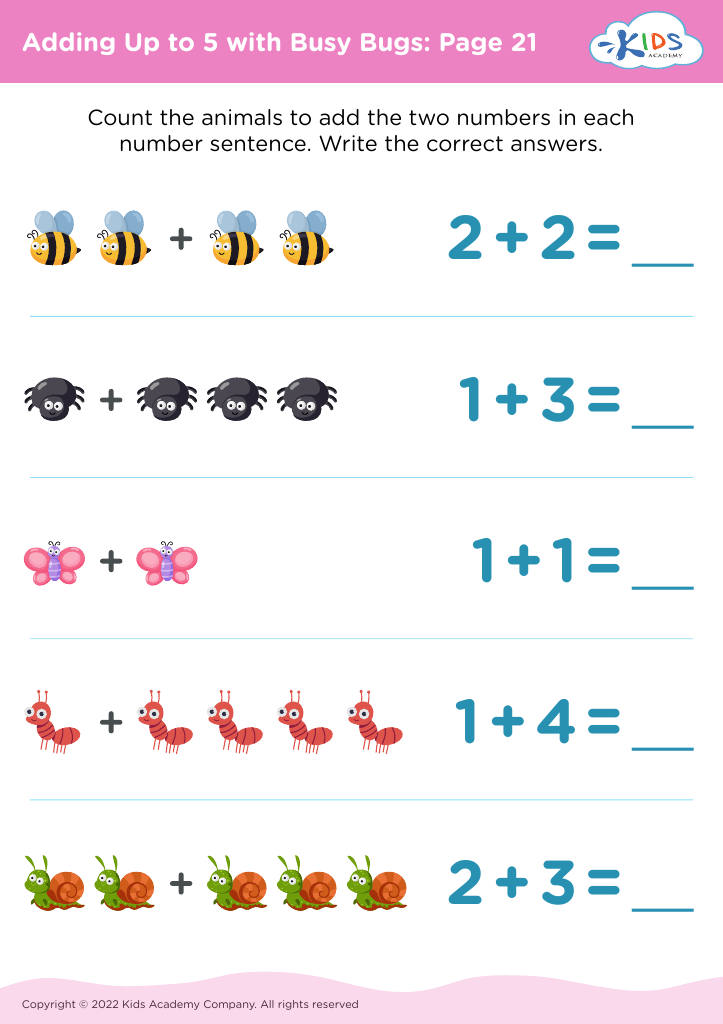
Adding Up to 5 with Busy Bugs: Page 21
Worksheet
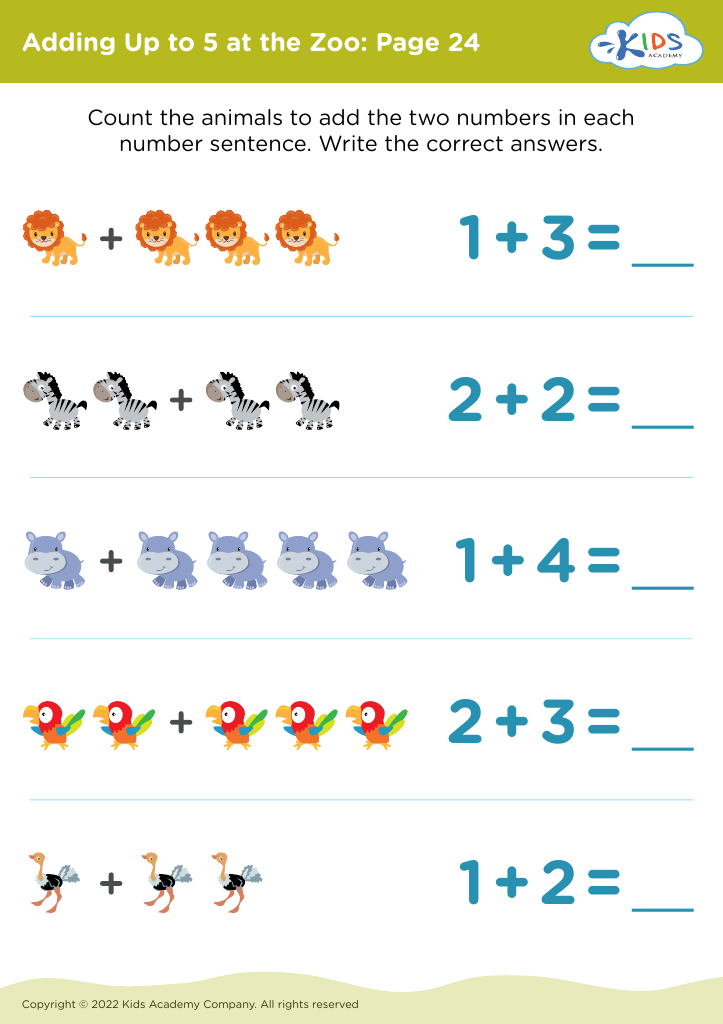
Adding Up to 5 at the Zoo: Page 24
Worksheet
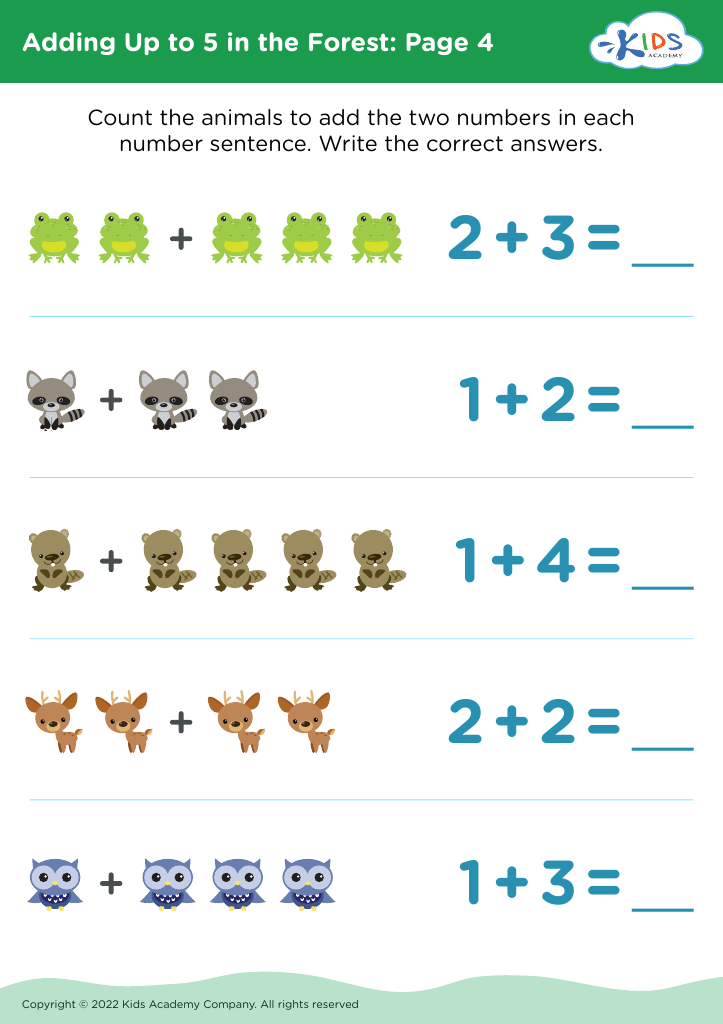
Adding Up to 5 in the Forest: Page 4
Worksheet
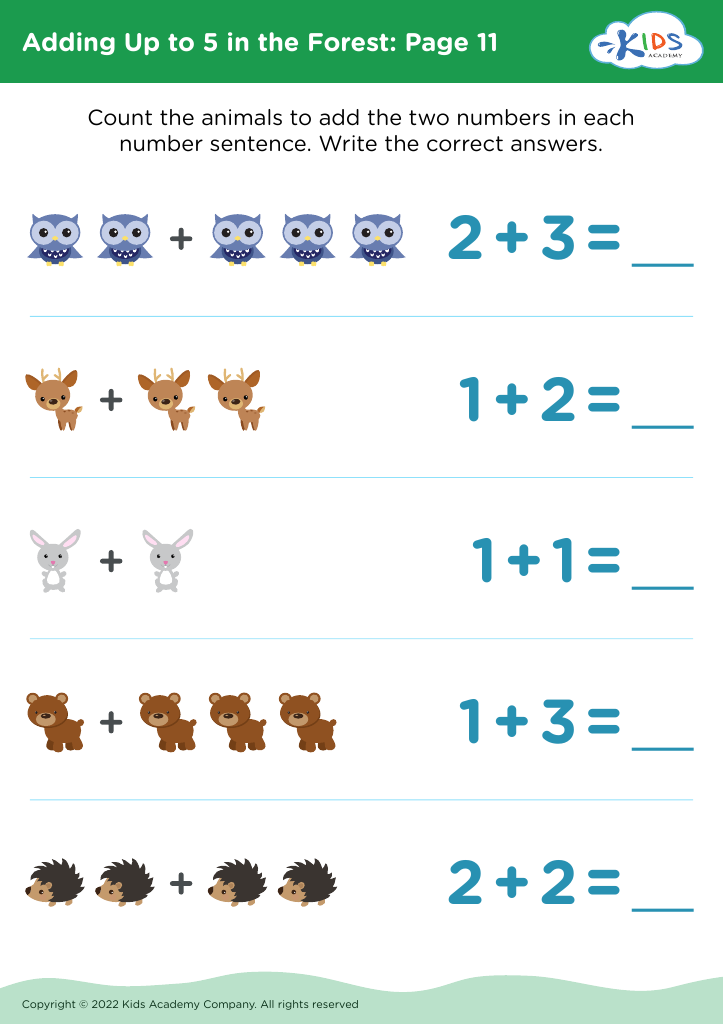
Adding Up to 5 in the Forest: Page 11
Worksheet
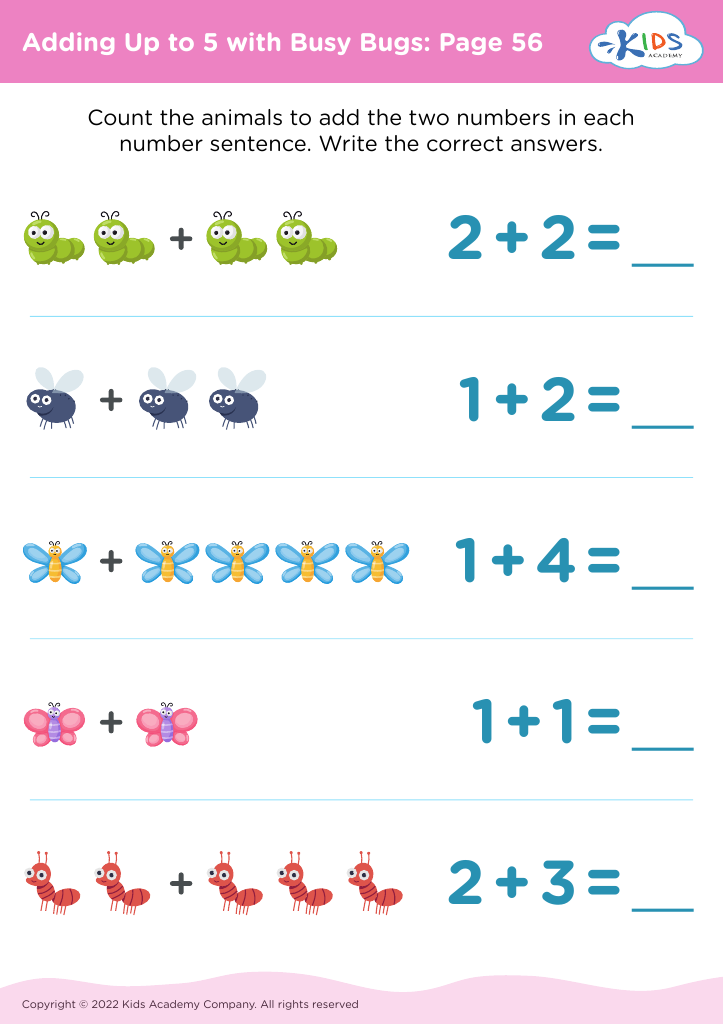
Adding Up to 5 with Busy Bugs: Page 56
Worksheet
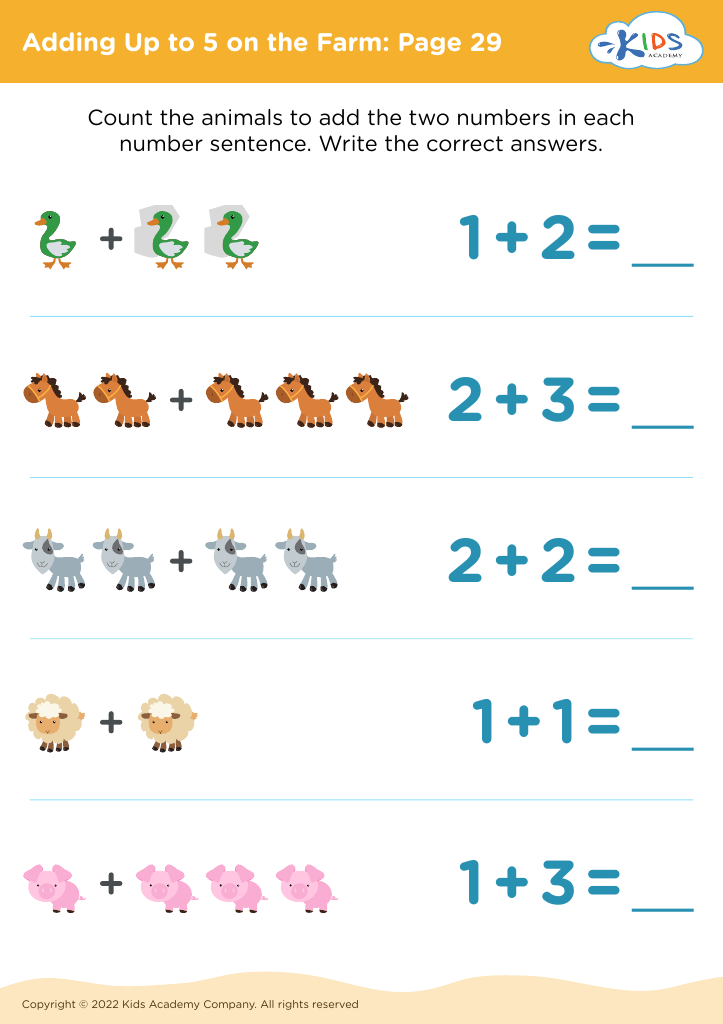
Adding Up to 5 on the Farm: Page 29
Worksheet
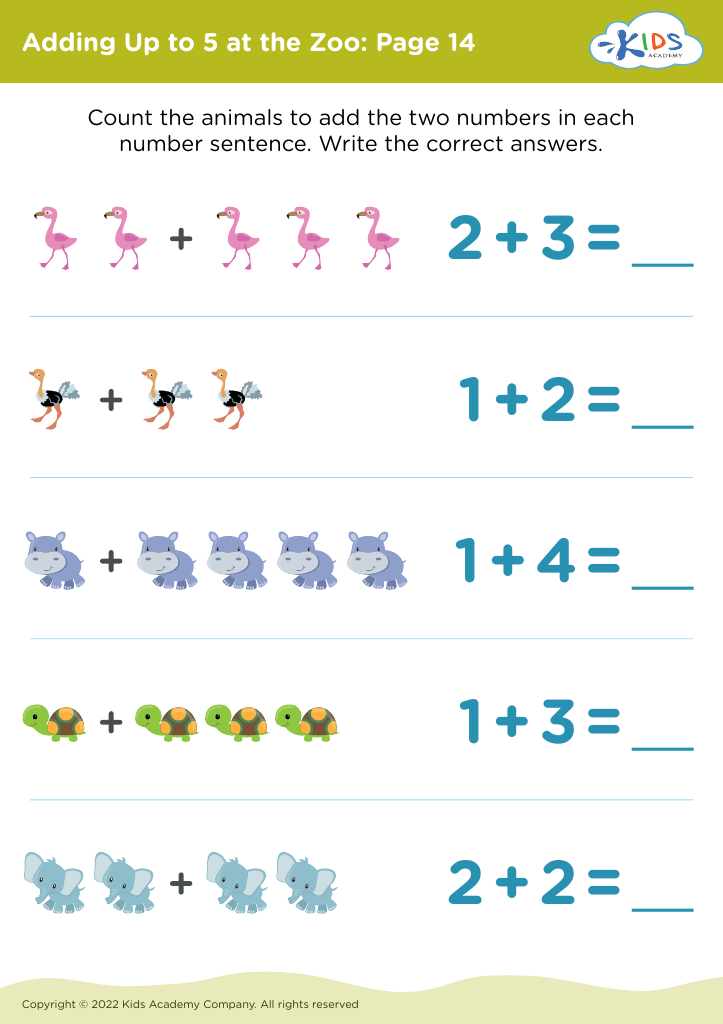
Adding Up to 5 at the Zoo: Page 14
Worksheet
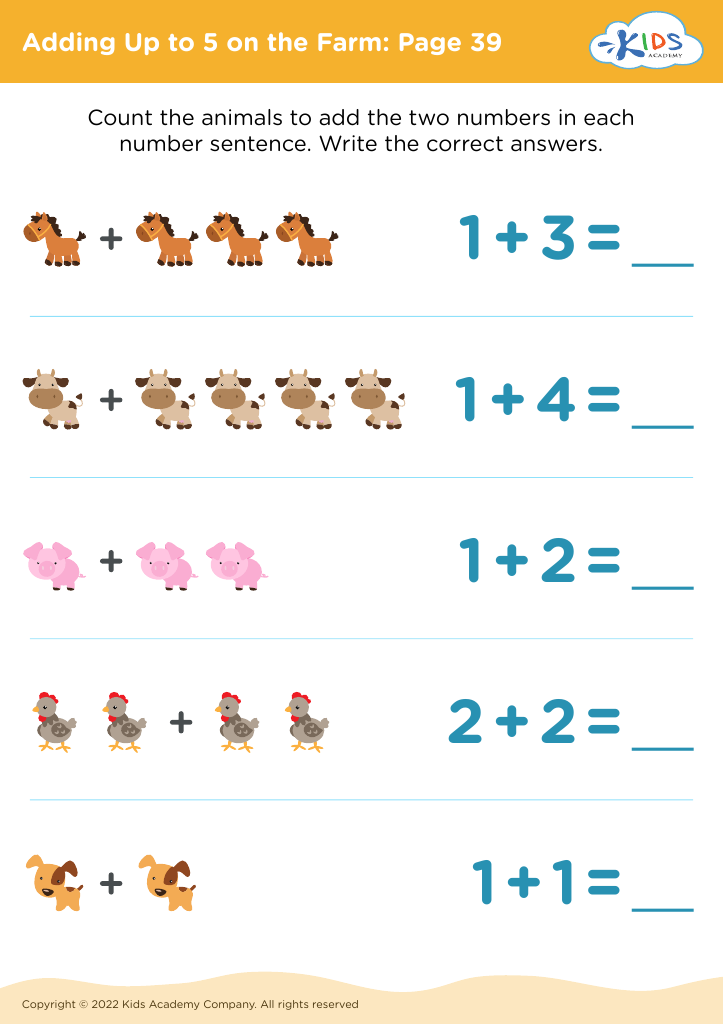
Adding Up to 5 on the Farm: Page 39
Worksheet
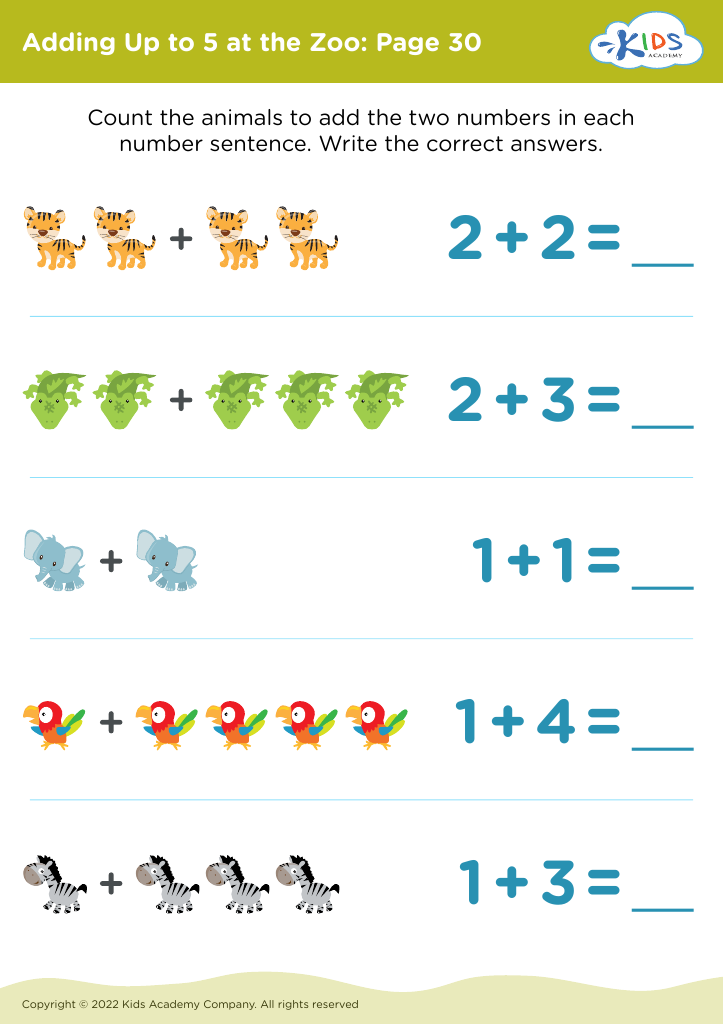
Adding Up to 5 at the Zoo: Page 30
Worksheet
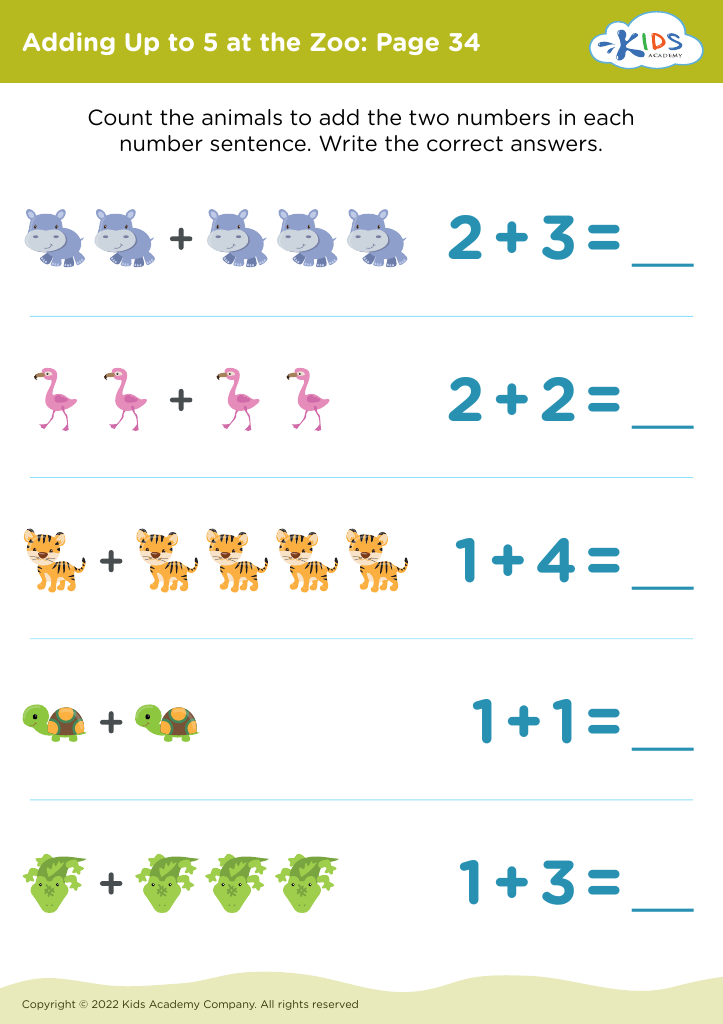
Adding Up to 5 at the Zoo: Page 34
Worksheet
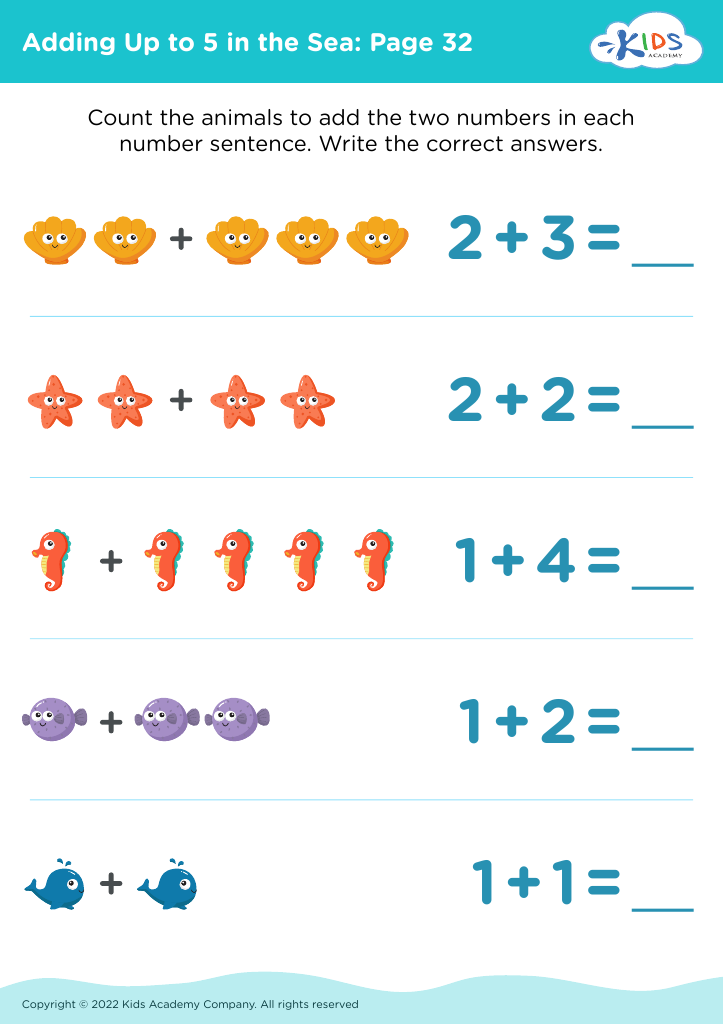
Adding Up to 5 in the Sea: Page 32
Worksheet
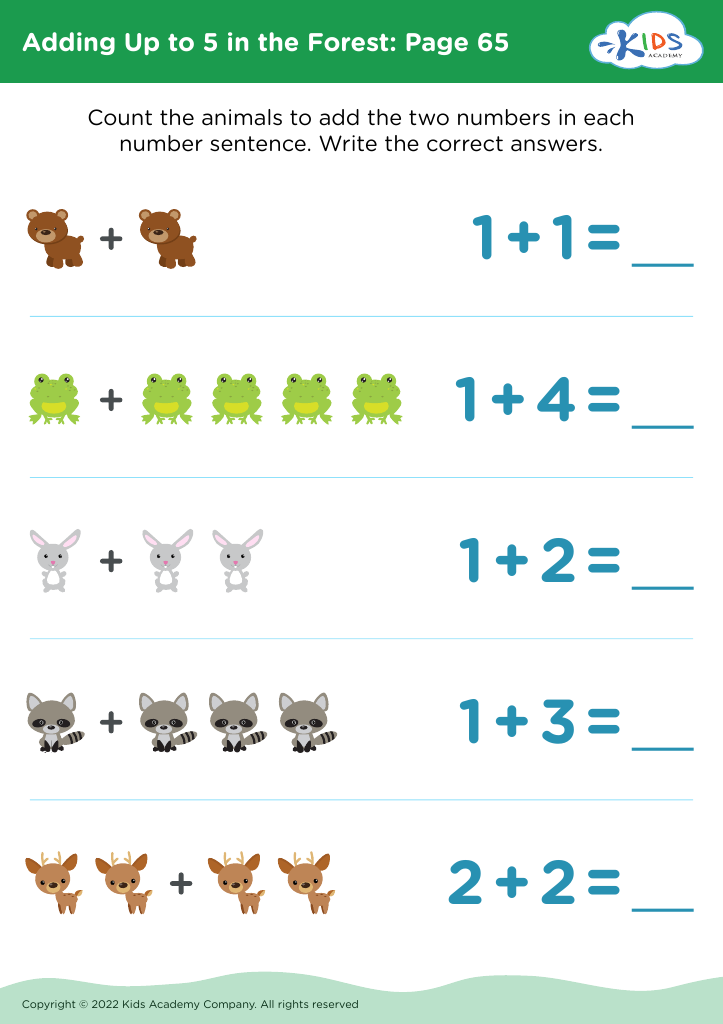
Adding Up to 5 in the Forest: Page 65
Worksheet
Adding Up to 5 with Busy Bugs: Page 8
Worksheet
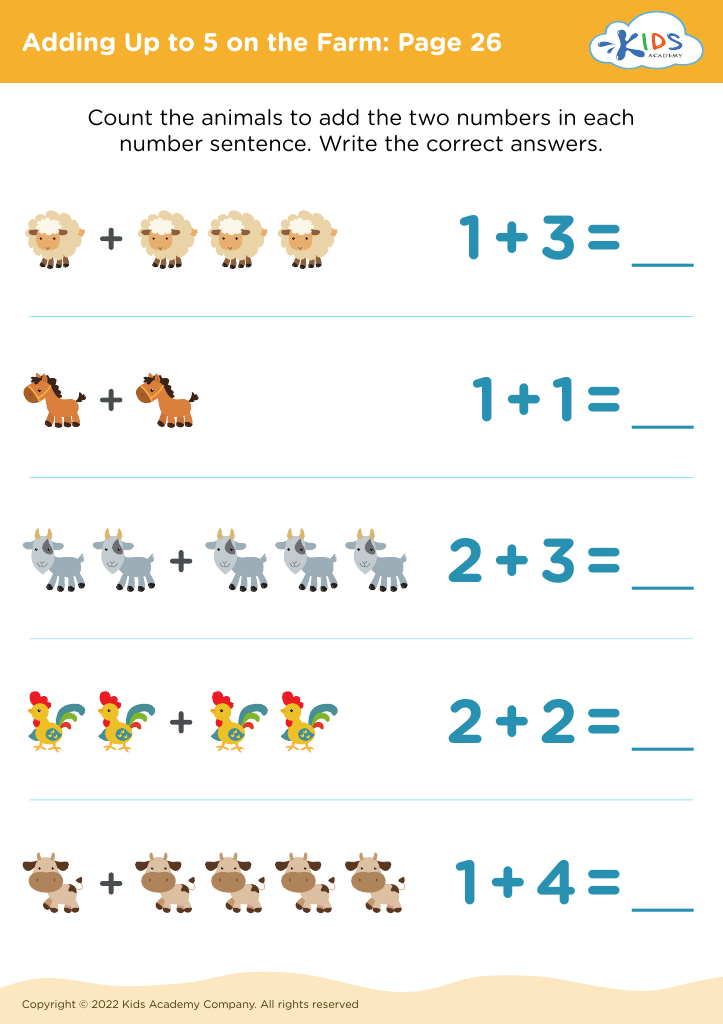
Adding Up to 5 on the Farm: Page 26
Worksheet
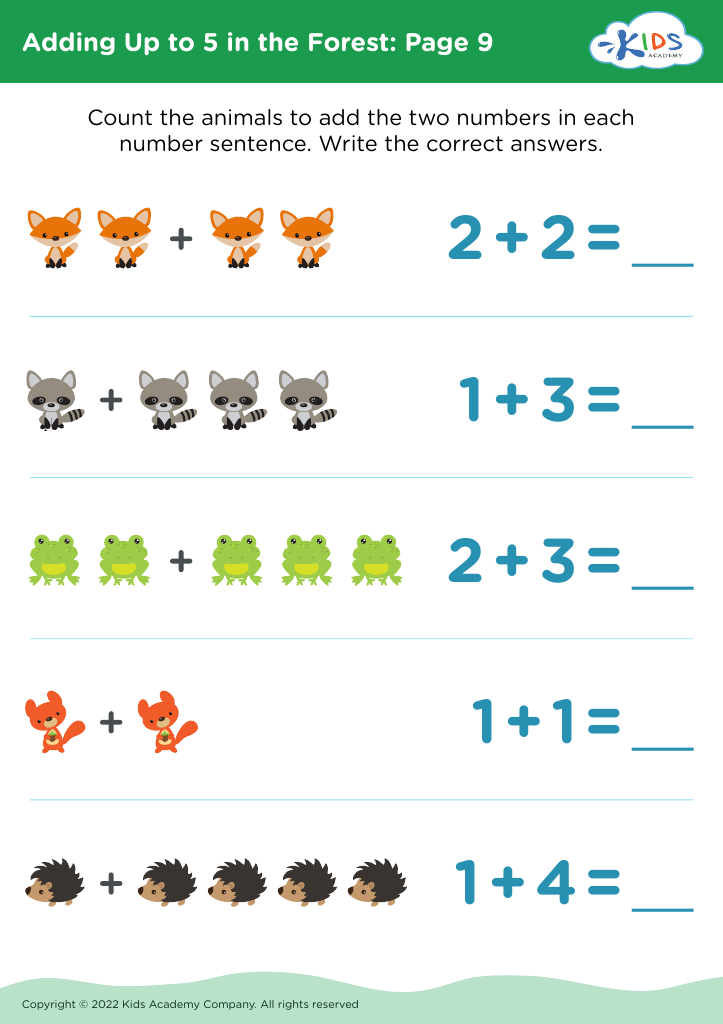
Adding Up to 5 in the Forest: Page 9
Worksheet
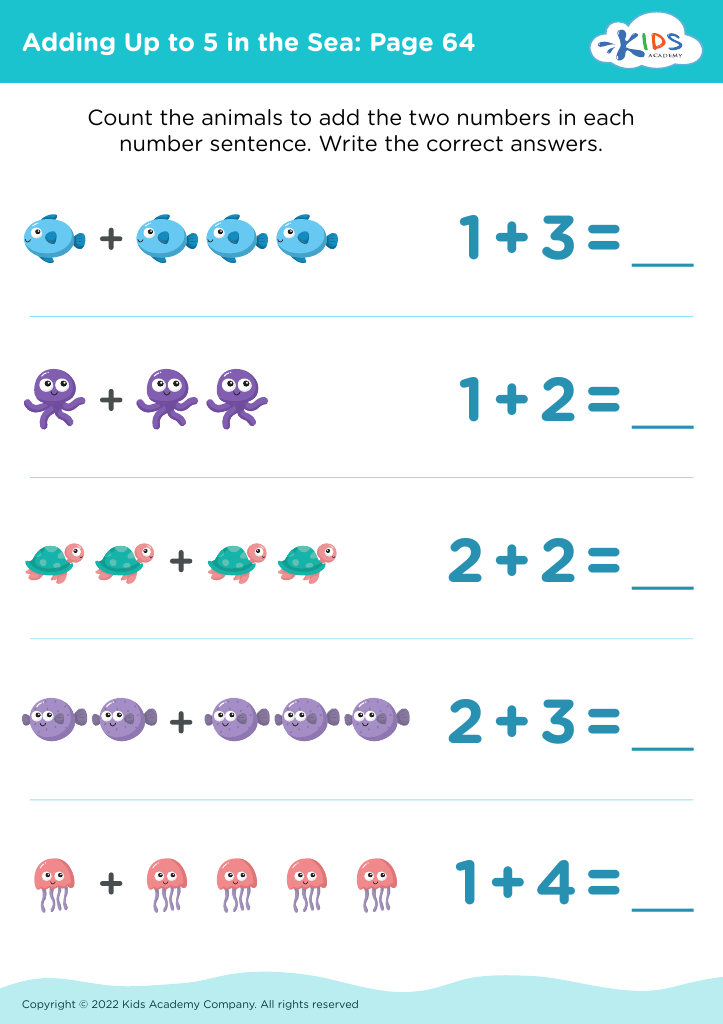
Adding Up to 5 in the Sea: Page 64
Worksheet
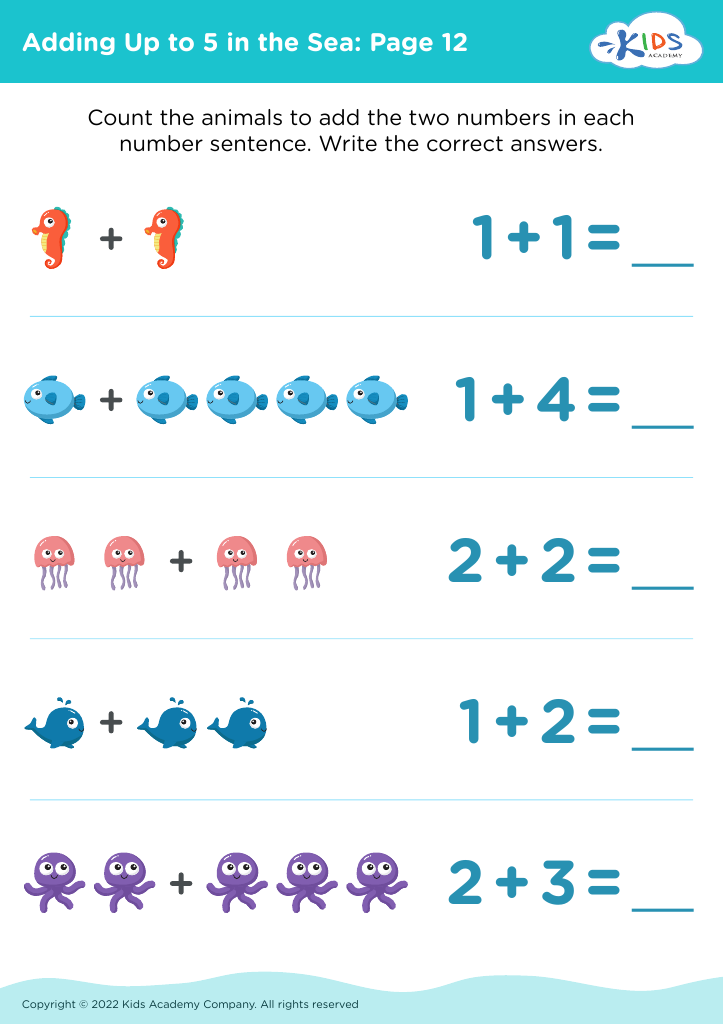
Adding Up to 5 in the Sea: Page 12
Worksheet
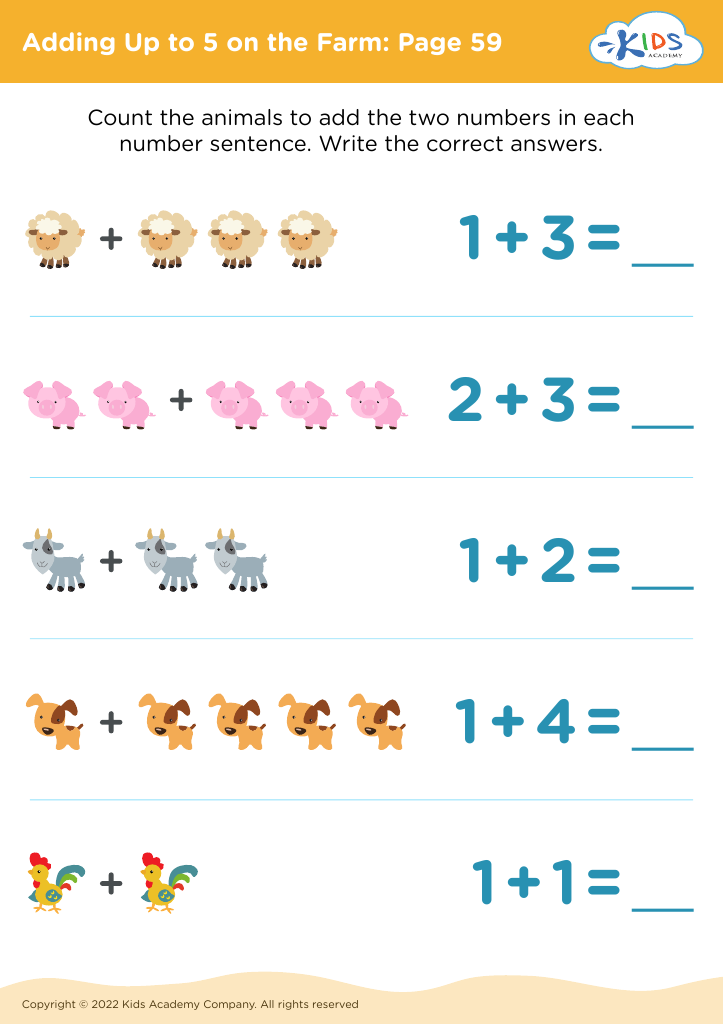
Adding Up to 5 on the Farm: Page 59
Worksheet
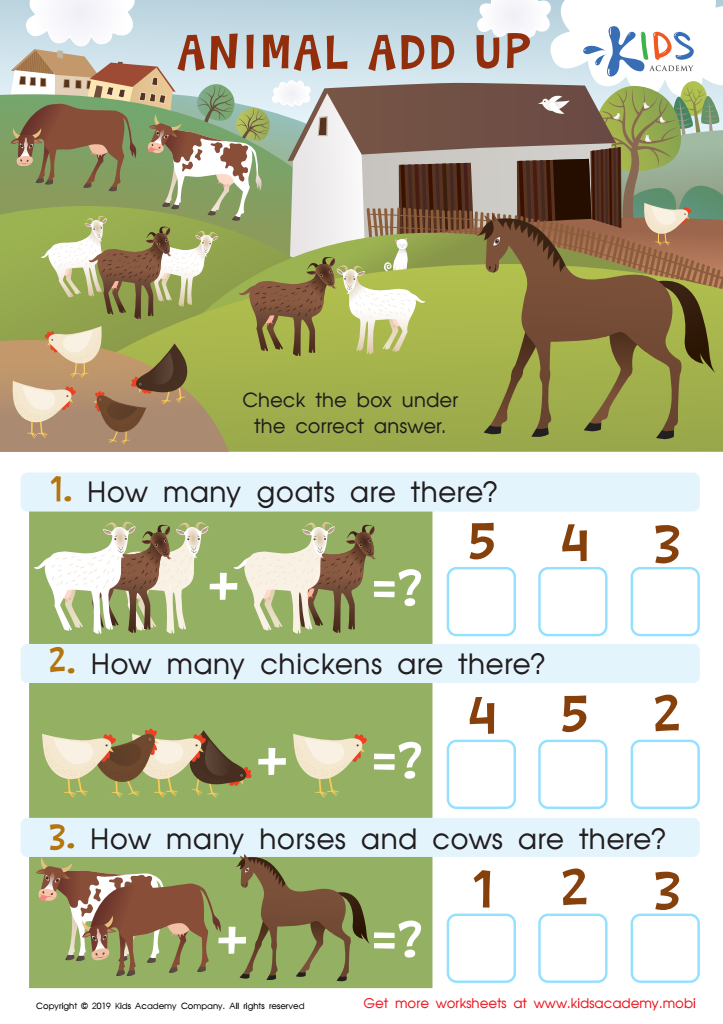
Animal Add Up Worksheet

Animal Add Up Worksheet

Animals are fun to observe and interact with. They can be seen at the zoo, parks, farms and in homes with pets. This worksheet helps kids identify animals, and build addition skills. Look at the picture with them and help name each animal. After that, add the animals up and check the box for the correct answer. 80 words.
Animal Add Up Worksheet
Worksheet
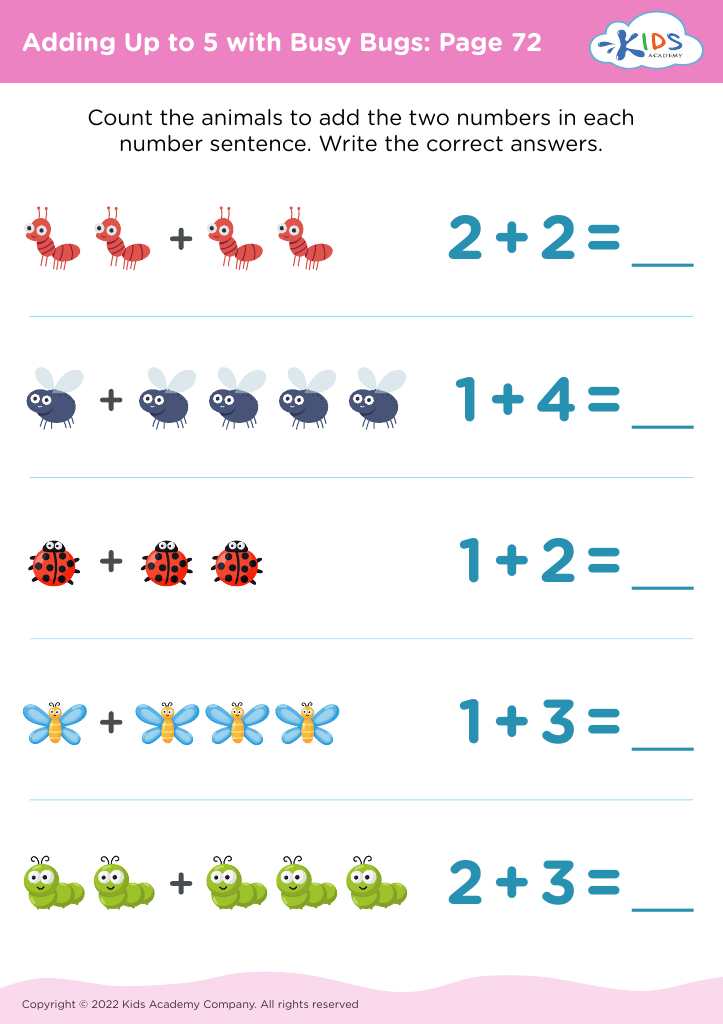
Adding Up to 5 with Busy Bugs: Page 72
Worksheet


Counting practice, alongside addition and subtraction, is crucial for children ages 4-5 as it establishes the foundation for their future mathematical understanding. At this early stage, children are developing cognitive skills and learning to communicate their thoughts. Engaging in counting activities enhances their number sense, which is essential for grasping basic math concepts.

Parents and teachers should recognize that learning addition and subtraction at this age fosters critical thinking skills. When children practice these operations, they learn to solve problems, recognize patterns, and make connections between numbers. This cognitive engagement boosts their confidence and encourages a positive attitude toward math, an essential skill in today’s world.

Moreover, counting and basic arithmetic form a vital part of everyday life. By practicing these skills, children gain practical abilities, such as understanding time, managing money, or even basic cooking measurements. Encouraging counting games and interactive activities can make learning enjoyable, turning what might seem like a chore into a fun and memorable experience.

In summary, prioritizing counting practice, addition, and subtraction for young learners is pivotal for their long-term academic success, essential life skills, and fostering a love for learning.