Numeracy development Addition & Subtraction Worksheets for Ages 4-5
3 filtered results
-
From - To
Enhance your child's numeracy skills with our engaging Addition and Subtraction Worksheets designed specifically for ages 4-5. These thoughtfully crafted activities foster early mathematical understanding through playful exercises that make learning fun. Each worksheet encourages children to dive into basic addition and subtraction, building a solid foundation in numeracy. The colorful designs and interactive challenges keep young learners engaged, making math accessible and enjoyable. Perfect for both home and classroom use, these worksheets support early learners in developing critical thinking and problem-solving skills. Start your child's math journey today and watch their confidence and abilities grow!
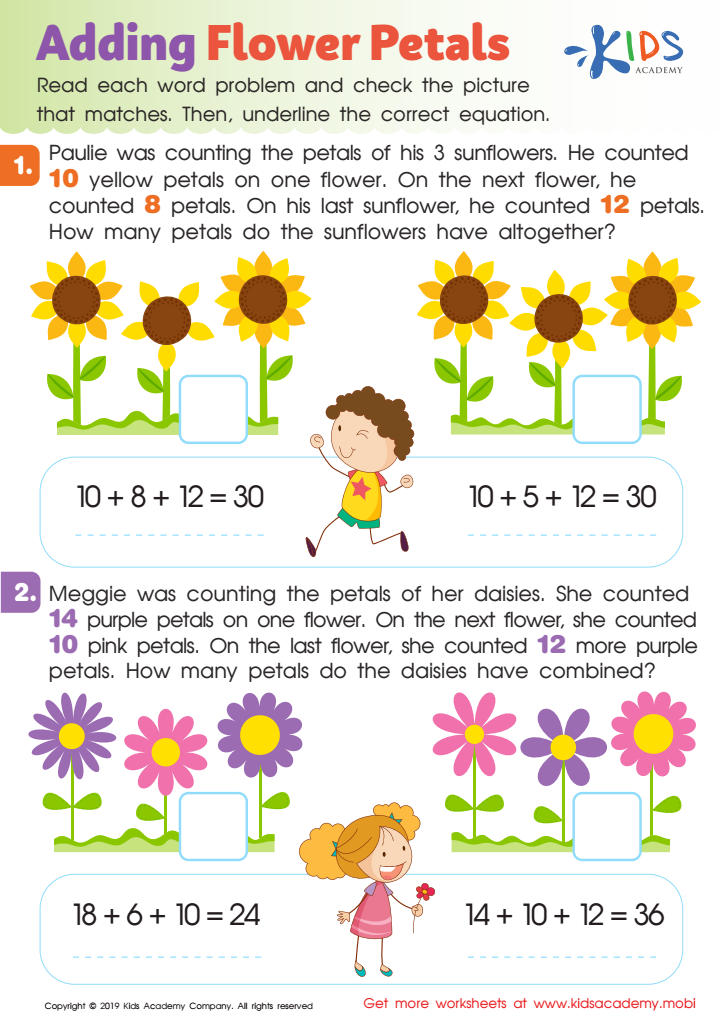
Adding Flower Petals Worksheet
 Assign to My Students
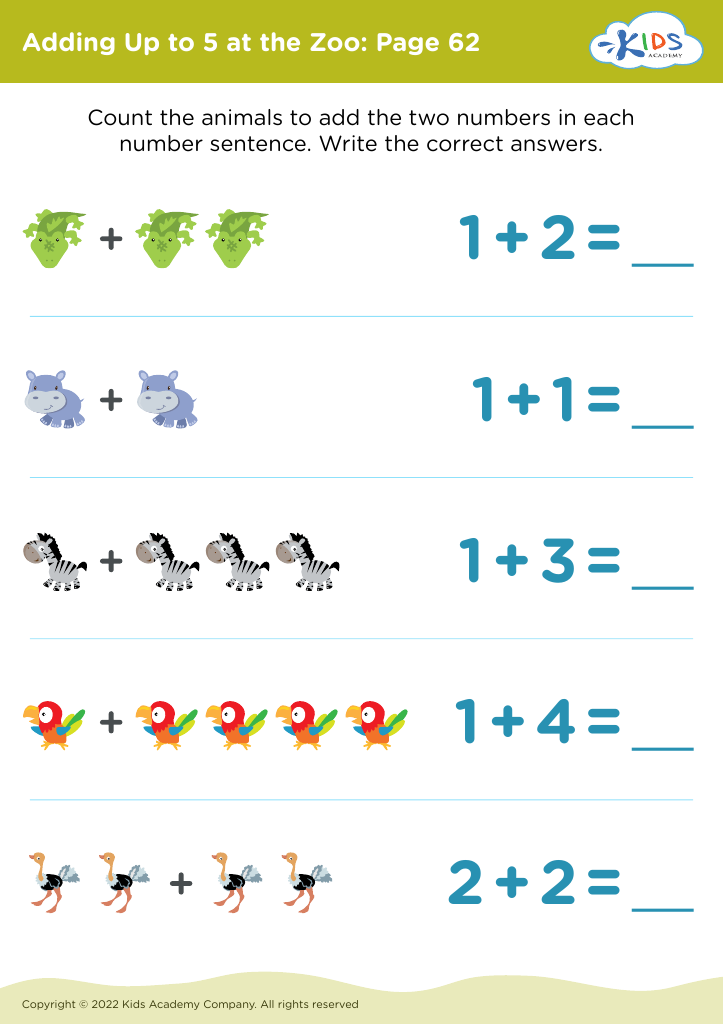
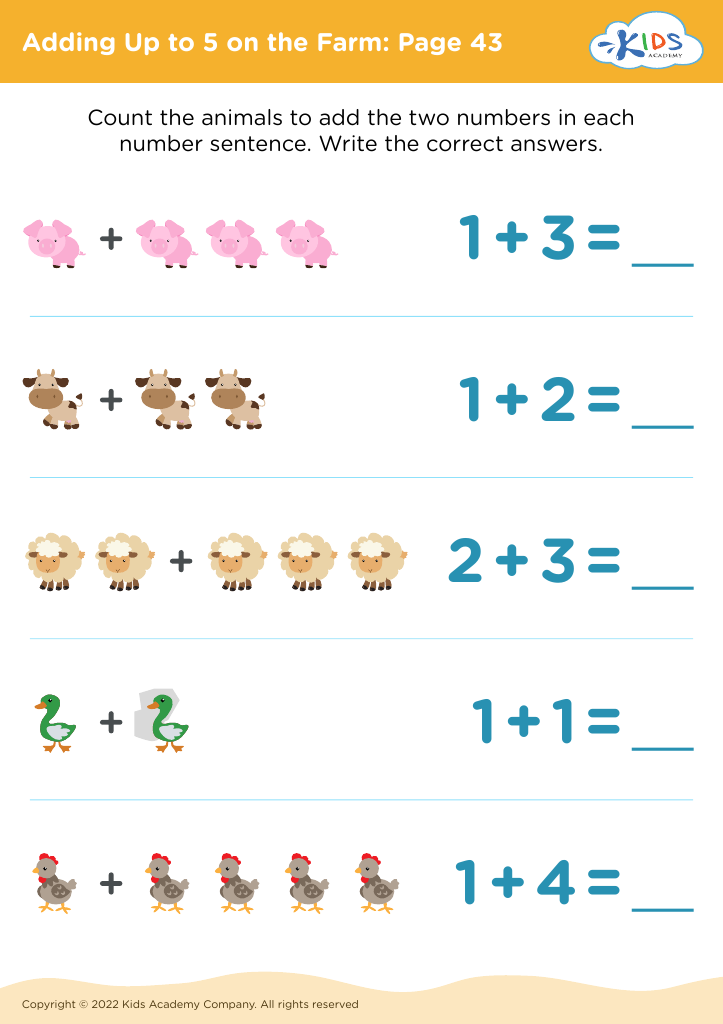








Numeracy development in children aged 4-5 is crucial for laying the foundation of their mathematical understandings, particularly in addition and subtraction. At this age, children are naturally curious and eager to explore, making it an opportune time for parents and teachers to introduce these basic concepts through engaging activities.
Understanding addition and subtraction fosters essential problem-solving skills and cognitive development. As children learn to combine (add) and separate (subtract) quantities, they begin to comprehend value and relationships between numbers. This knowledge promotes critical thinking and reasoning skills that are foundational for later arithmetic studies and real-life applications.
Moreover, numeracy skills are integral to everyday experiences. By grasping these concepts, children can navigate simple tasks, such as sharing snacks, counting toys, or tracking how many days until a special event, which makes learning meaningful and relatable. Furthermore, early numeracy competency has been linked to later academic success in mathematics.
Encouraging an environment rich in mathematical language and experiences fosters a child’s positive attitude toward math, diminishing anxiety and building confidence. Thus, active involvement in their numeracy development is vital for parents and teachers alike to ensure a well-rounded educational foundation.








