
Observational skills Addition & Subtraction Worksheets for Ages 4-5
3 filtered results
Difficulty Level
Grade
Age
-
From - To
Subject
Activity
Standards
Enhance your child's learning with our "Observational Skills Addition & Subtraction Worksheets" designed specifically for ages 4-5. These engaging, age-appropriate worksheets promote foundational math skills while fostering critical observational abilities. Kids will solve addition and subtraction problems through engaging visuals that encourage them to think critically and improve attention to detail. Each worksheet is crafted to stimulate curiosity and support diverse learning styles. Ideal for home or classroom use, these activities are perfect for young learners eager to build confidence in math. Discover the joy of learning as your child develops essential skills while having fun! Grab your printable worksheets today!
Favorites
With answer key
Interactive
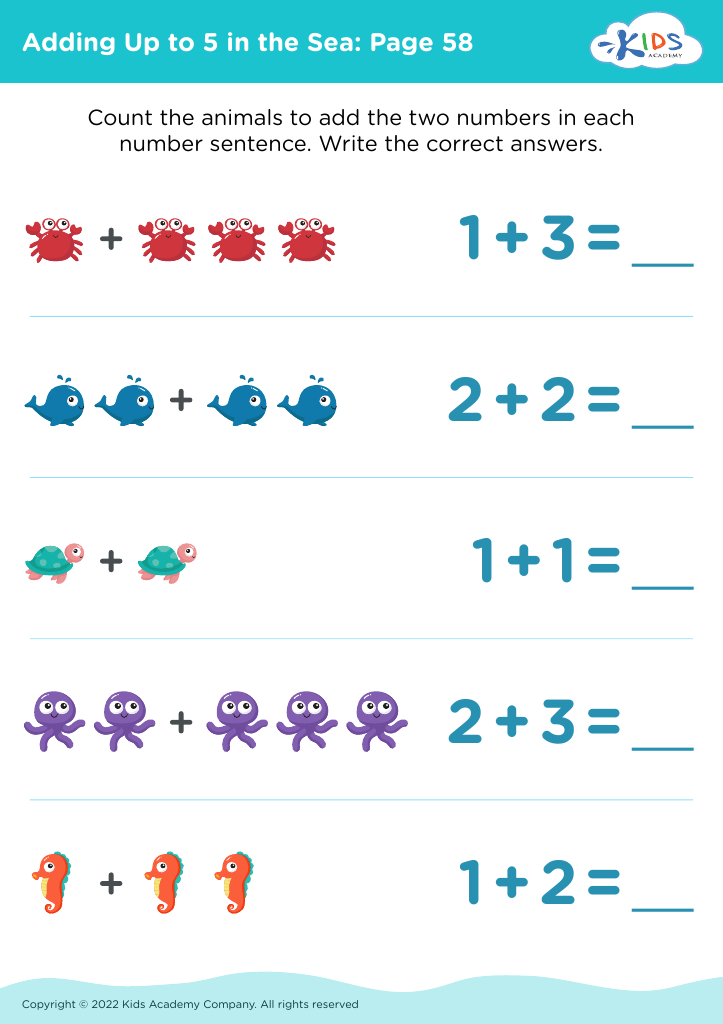
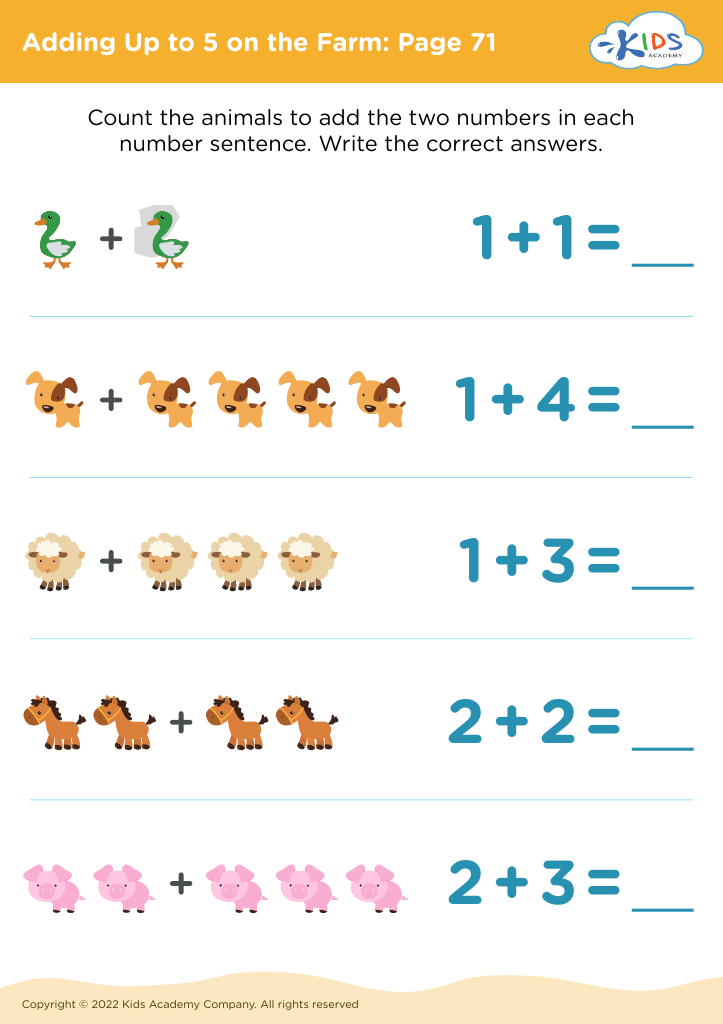
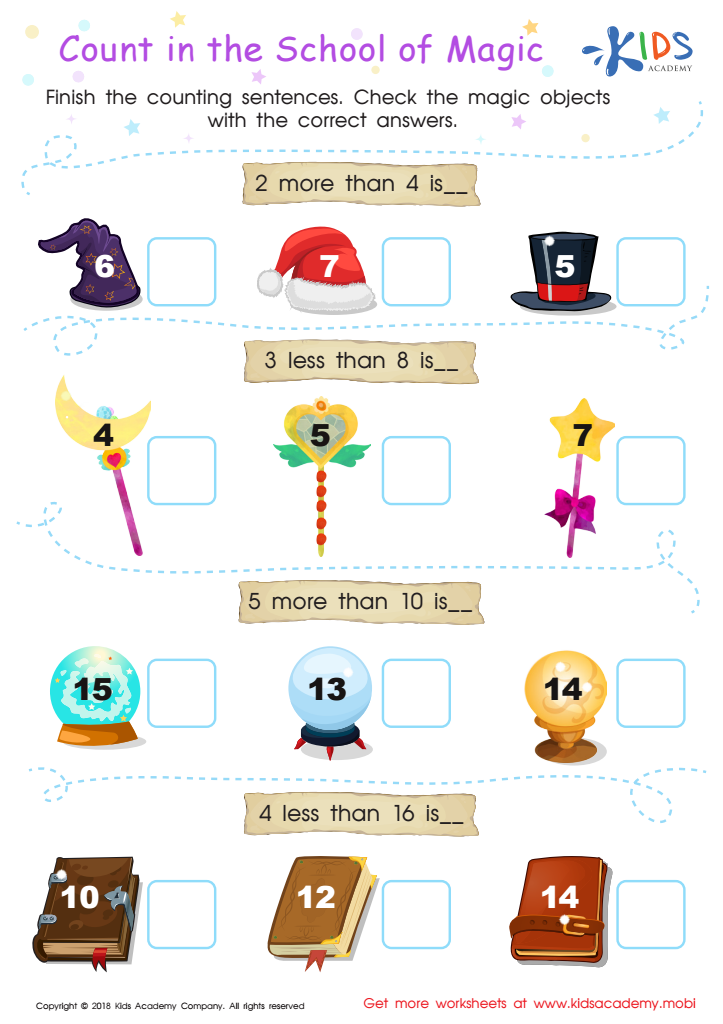
Count in the School of Magic Worksheet
Your math learners can explore the School of Magic with this worksheet. They'll read equations with addition and subtraction numbers under 20, count back and forth to find the answer, then complete the counting sentences. Fun pictures and easy accuracy make it an enjoyable and successful learning experience.
 Assign to My Students
Count in the School of Magic Worksheet
Worksheet
Join Kids Academy for Free
Who is primarily going to use this learning content?








Observational skills are essential for children ages 4-5 as they serve as the foundation for mathematical understanding, particularly in addition and subtraction. At this developmental stage, children are naturally curious and eager to explore their environment. By enhancing their observational skills, parents and teachers can help children identify and analyze patterns, quantities, and relationships in their surroundings. This awareness is key to developing basic arithmetic concepts.
When children learn to observe and interact with their world—such as counting objects or comparing sizes—they build the cognitive frameworks necessary for addition and subtraction. For instance, noticing that two apples and three apples make five apples encourages an understanding of how numbers combine and separate.
Moreover, fostering observational skills enriches a child's overall learning experience, making math real and relatable. It reinforces critical thinking and problem-solving abilities, empowering children to ask questions and discover answers independently. Engaging in contextual learning through play-based activities can enhance motivation and enjoyment in math, laying a solid groundwork for future academic success. Ultimately, when parents and teachers nurture these skills, they help create confident, capable learners who see math as an enjoyable part of their everyday life.








