Understanding patterns Addition & Subtraction Worksheets for Ages 4-5
4 filtered results
-
From - To
Explore our engaging "Understanding Patterns: Addition & Subtraction Worksheets" designed specifically for children aged 4-5. These worksheets aim to foster early math skills by introducing young learners to the concept of patterns in a fun and interactive manner. With colorful illustrations and intuitive exercises, children will practice addition and subtraction, recognizing sequences and relationships between numbers. Our user-friendly format encourages independent learning, helping kids build confidence in their mathematical abilities. Perfect for both classroom and home environments, these worksheets will ignite your child's love for math while laying a strong foundation for future learning. Get started today!
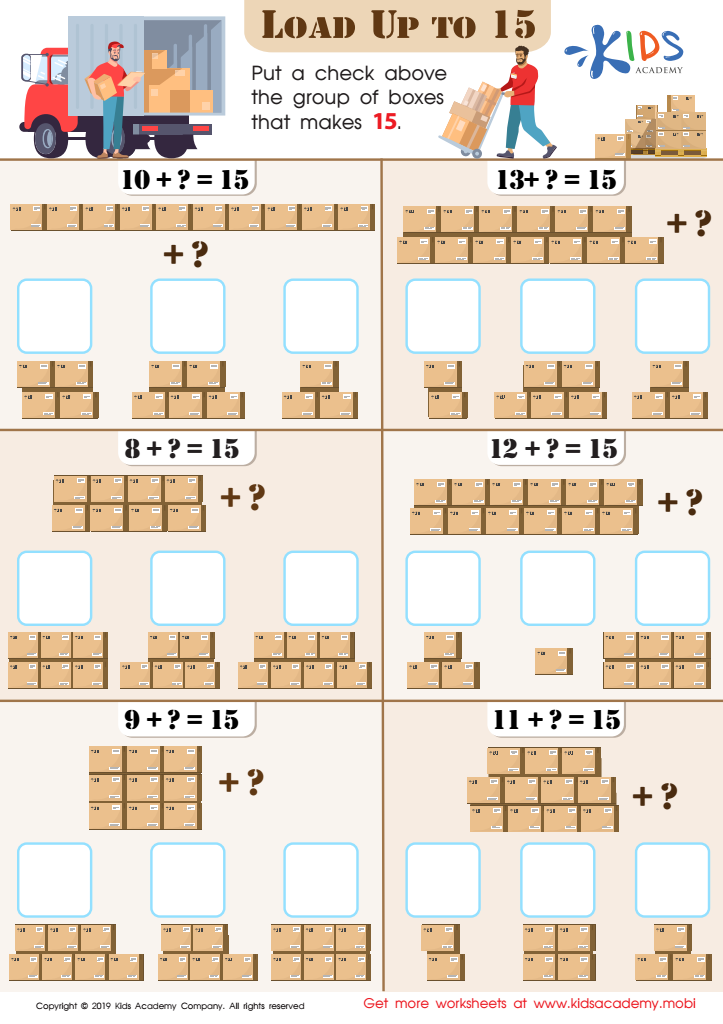
Load up to 15 Worksheet
 Assign to My Students
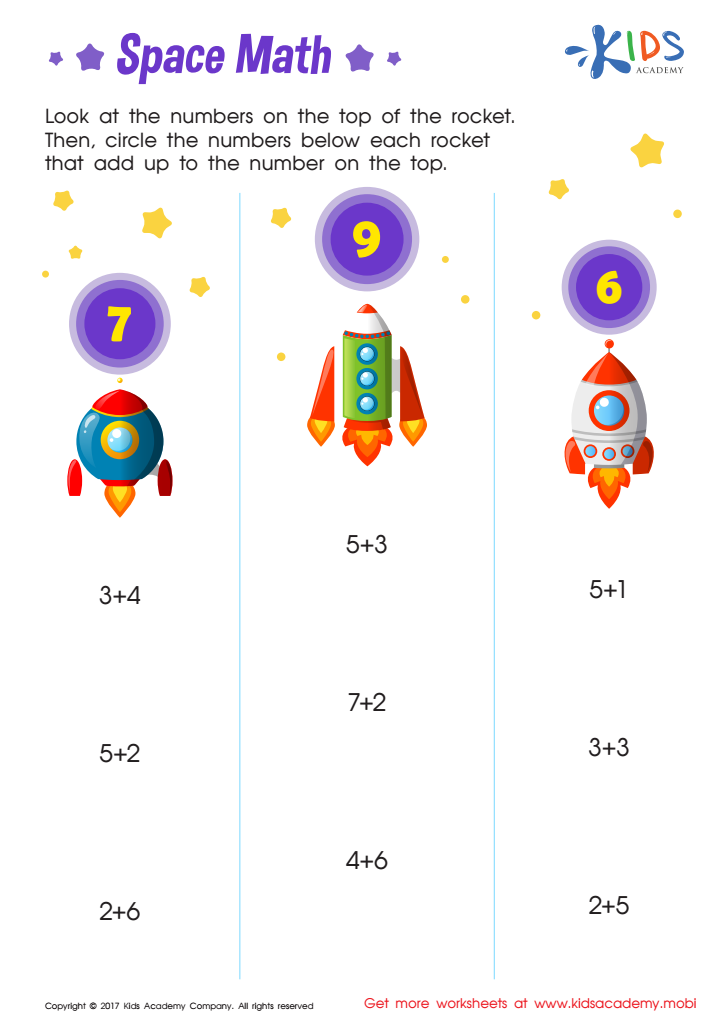
Addition: Space Math Worksheet
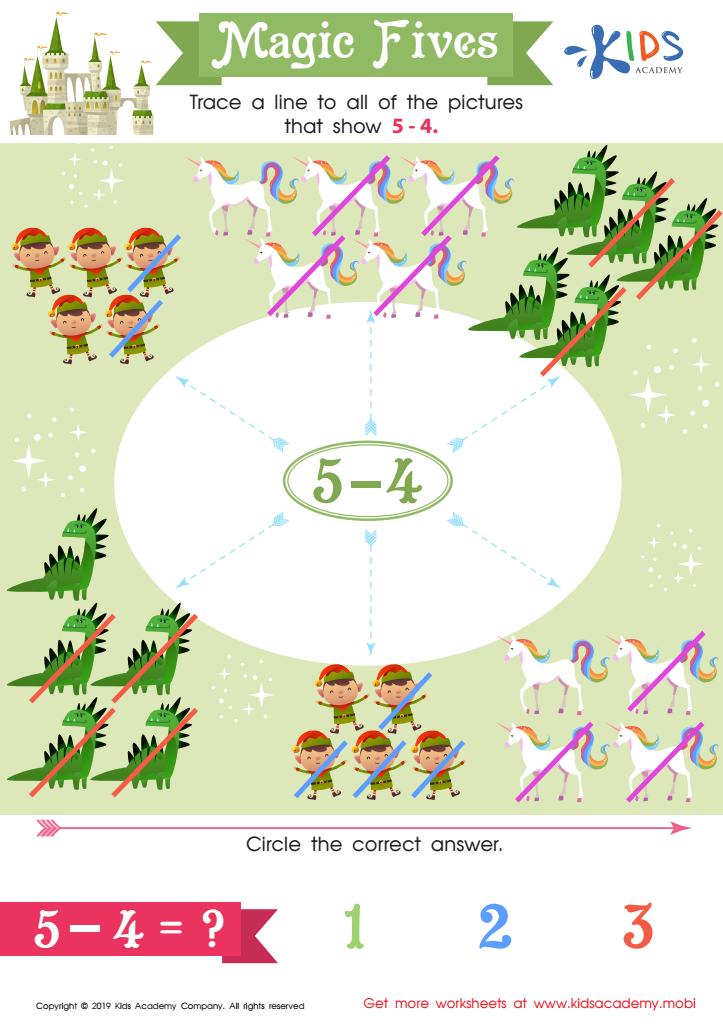
Magic Fives Worksheet
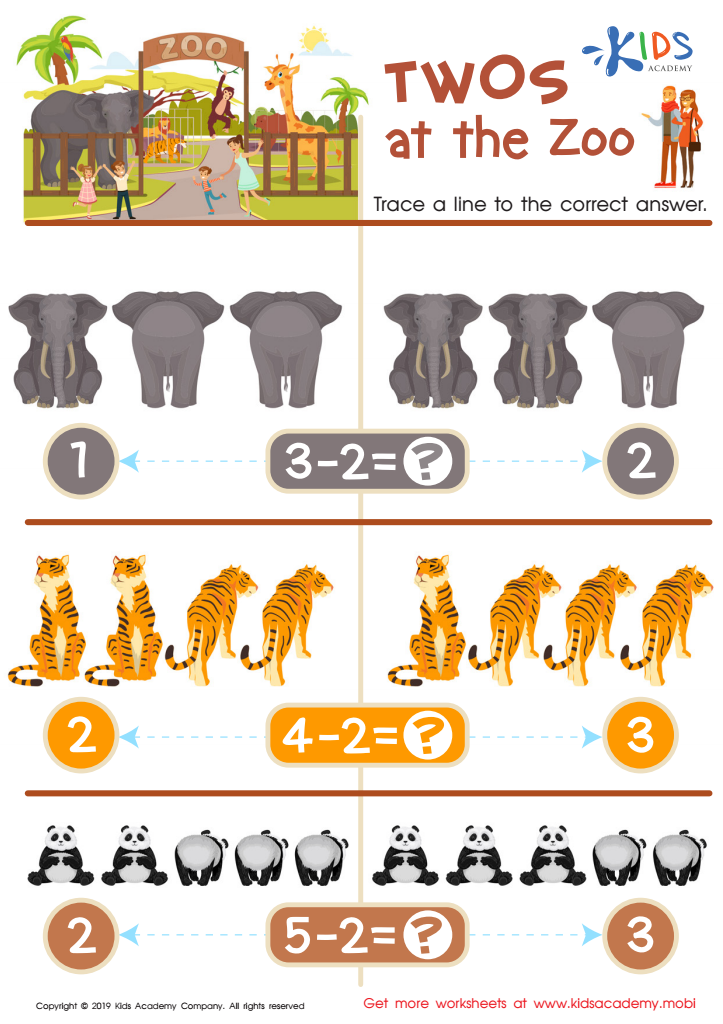
Twos at the Zoo Worksheet








Understanding patterns in addition and subtraction is crucial for young learners aged 4-5 as it lays a foundation for future mathematical skills. At this developmental stage, children are naturally curious and engage with the world around them through patterns, whether in nature, art, or everyday activities. Recognizing patterns helps children make sense of numbers and their relationships, enhancing their problem-solving abilities.
By exploring patterns in addition and subtraction, children can develop a stronger number sense, which is essential for early mathematical learning. It allows them to predict outcomes and recognize sequences, making calculations more intuitive and less intimidating. For instance, when they see a consistent increase in a set of numbers, they start to grasp the concept of addition.
Moreover, these foundational skills advance cognitive development by fostering logical reasoning and critical thinking. Parents and teachers play a vital role in nurturing this understanding through engaging activities like counting games, pattern-building exercises, or simple puzzles. By prioritizing pattern recognition in early arithmetic, adults can help young learners build confidence, motivation, and a love for mathematics that will serve them well throughout their educational journey. This supportive environment ultimately leads to improved performance in more complex mathematical concepts later on.








