Underwater animal identification Addition & Subtraction Worksheets for Ages 4-5
3 filtered results
-
From - To
Dive into fun and learning with our Underwater Animal Identification Addition & Subtraction Worksheets, specially designed for ages 4-5! These engaging worksheets blend math and nature by helping young learners identify various underwater animals while practicing essential addition and subtraction skills. Each colorful activity encourages children to count, add, and subtract cute sea creatures, enhancing their number recognition and problem-solving abilities. Perfect for preschoolers and kindergarteners, these worksheets make math enjoyable and interactive. Foster a love for learning with our exciting ocean-themed resources that boost cognitive development while sparking curiosity about marine life. Get ready for an educational adventure beneath the waves!
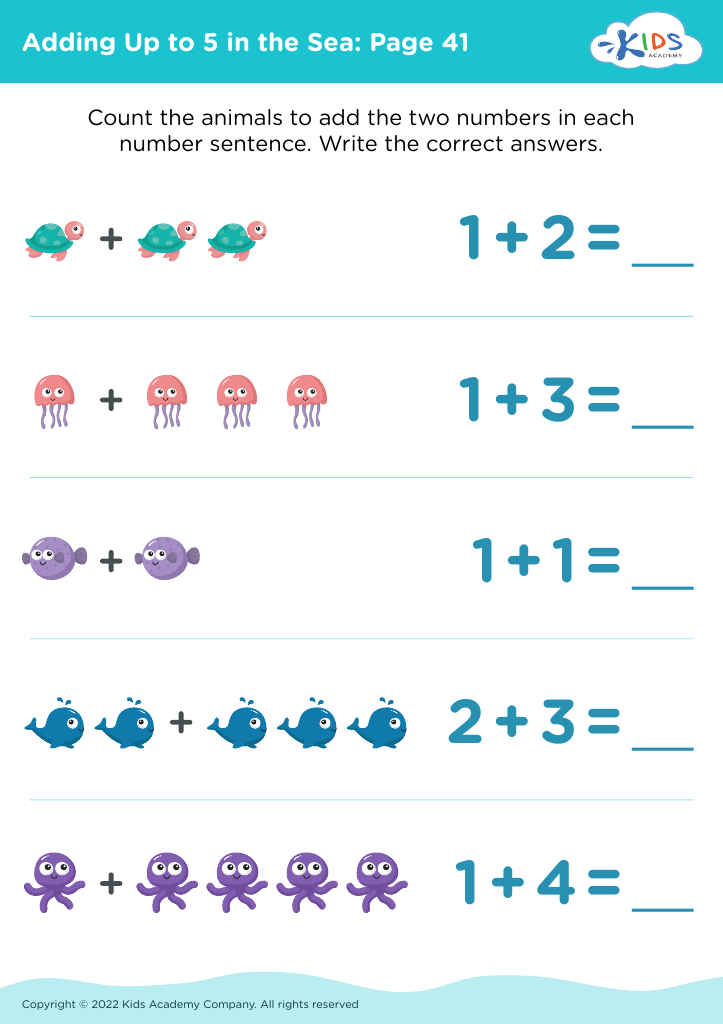
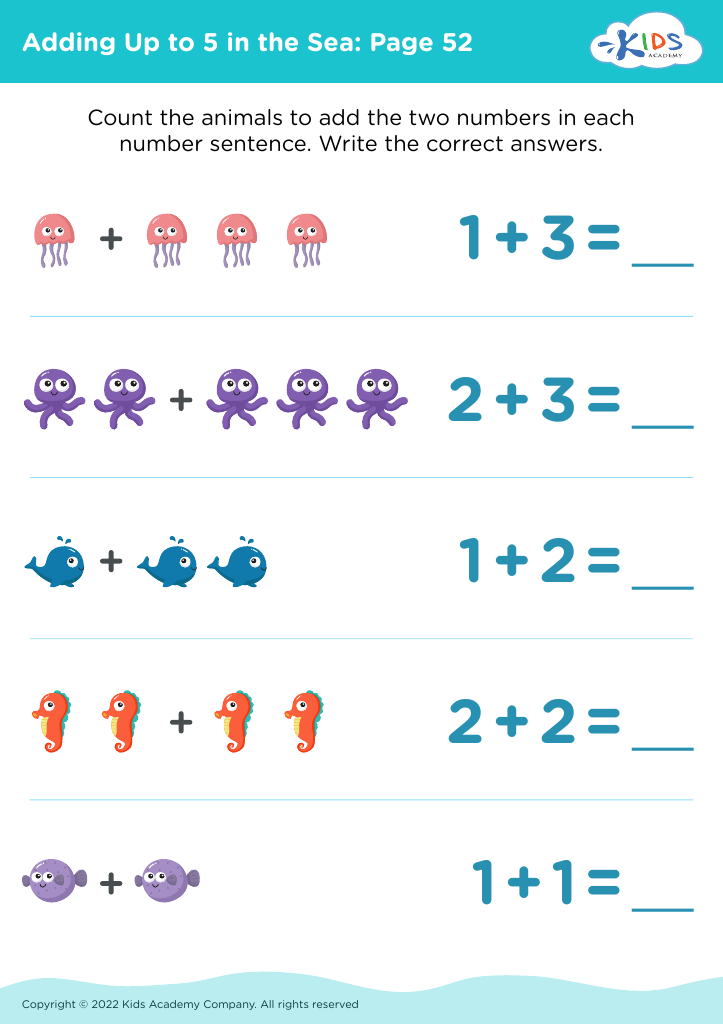
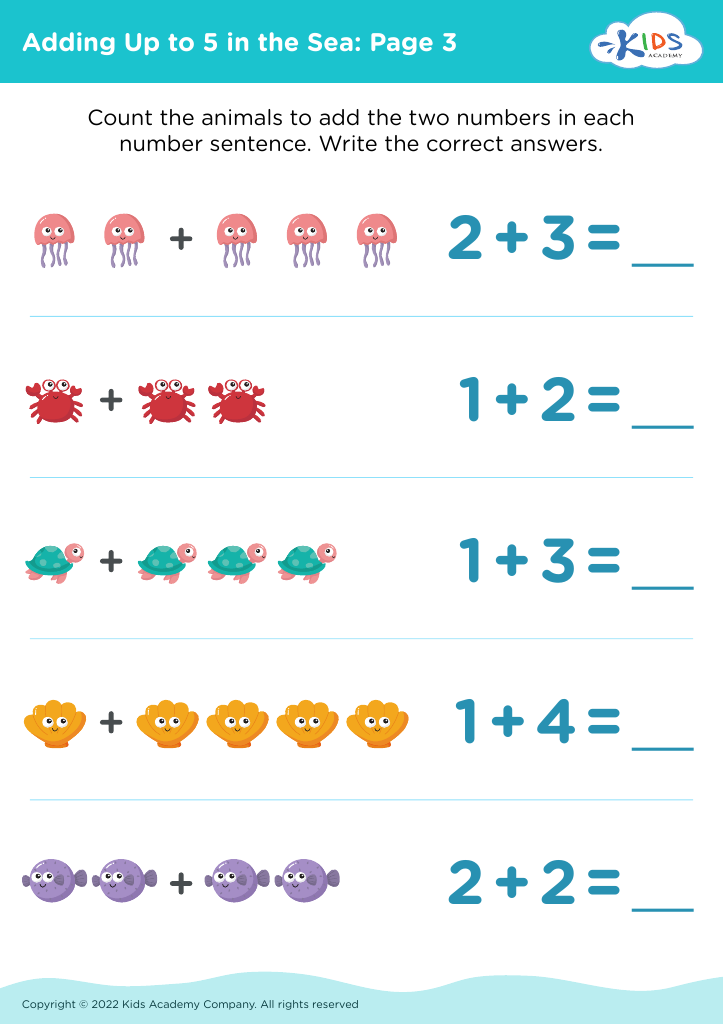








Teaching underwater animal identification alongside addition and subtraction skills for children aged 4-5 is essential for several reasons. First, this approach engages young learners with fascinating visuals and intriguing facts about marine life, sparking their curiosity and making learning more enjoyable. When children relate mathematical concepts to something they find exciting, they develop a positive attitude towards learning.
Moreover, integrating animal identification with math promotes a deeper understanding of both subjects. For instance, counting the number of sea turtles or jellyfish reinforces number recognition and aids in mastering basic addition and subtraction. It allows children to see math in a real-world context, enhancing their cognitive connections and facilitating retention.
Additionally, introducing environmental themes fosters awareness and compassion for marine ecosystems, teaching children the importance of biodiversity. This engagement can lead to ongoing conversations about conservation and respect for nature.
Early math skills are crucial for future academic success, and combining them with engaging topics like underwater animals creates a holistic learning experience. By supporting these lessons, parents and teachers can nurture essential skills while instilling a love for learning and an appreciation for the natural world.








