Basic arithmetic practice Addition Worksheets for Ages 4-5
10 filtered results
-
From - To
Enhance your child's early math skills with our Basic Arithmetic Practice Addition Worksheets for ages 4-5! Designed to make learning fun and engaging, these printable worksheets introduce young learners to the fundamentals of addition through visually appealing illustrations and interactive activities. Each worksheet encourages children to practice essential counting and number recognition in a playful manner, fostering a positive attitude towards math. With clear instructions and a variety of exercises, these worksheets help build confidence while laying a strong foundation for future math success. Perfect for parents and educators alike, start your child's mathematical journey today!
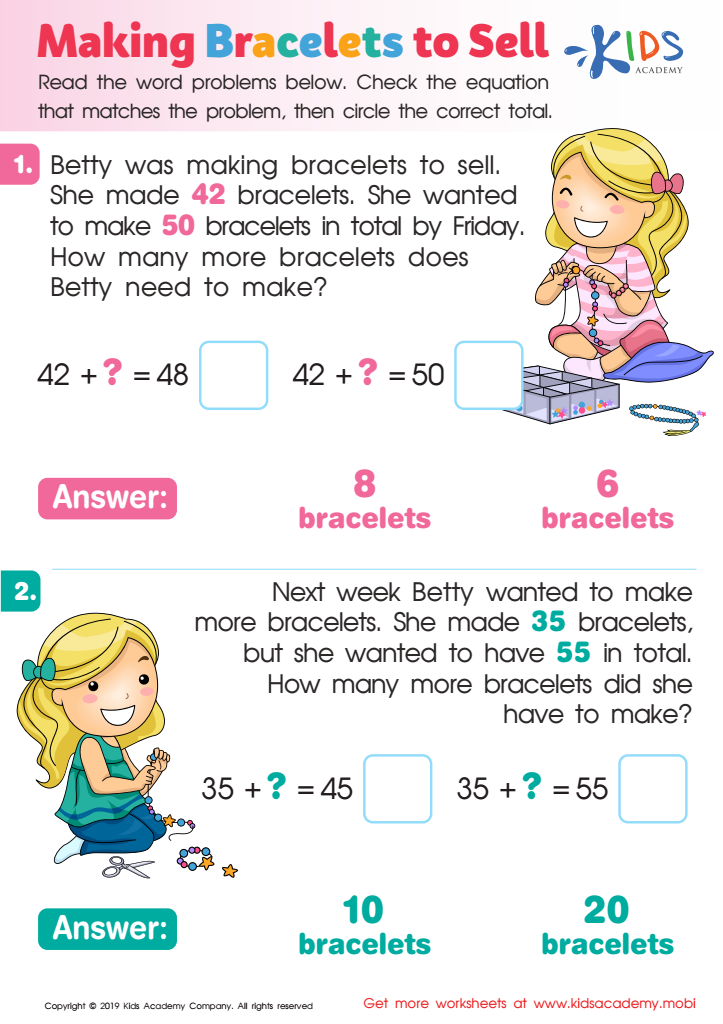
Making Bracelets to Sell Worksheet
 Assign to My Students
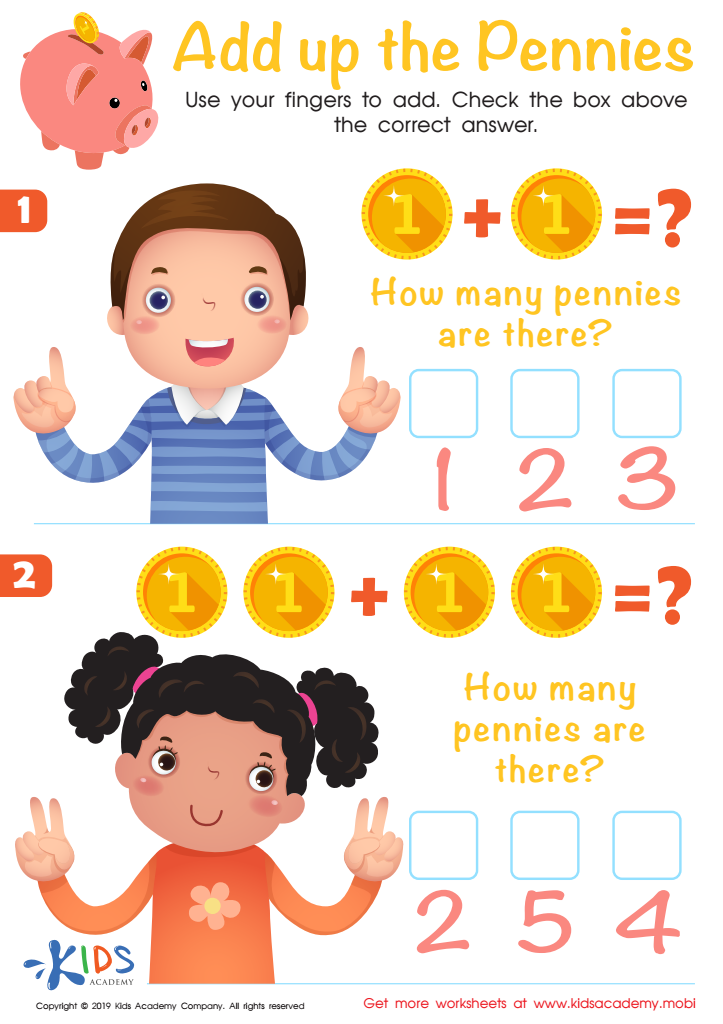
Add up the Pennies Worksheet
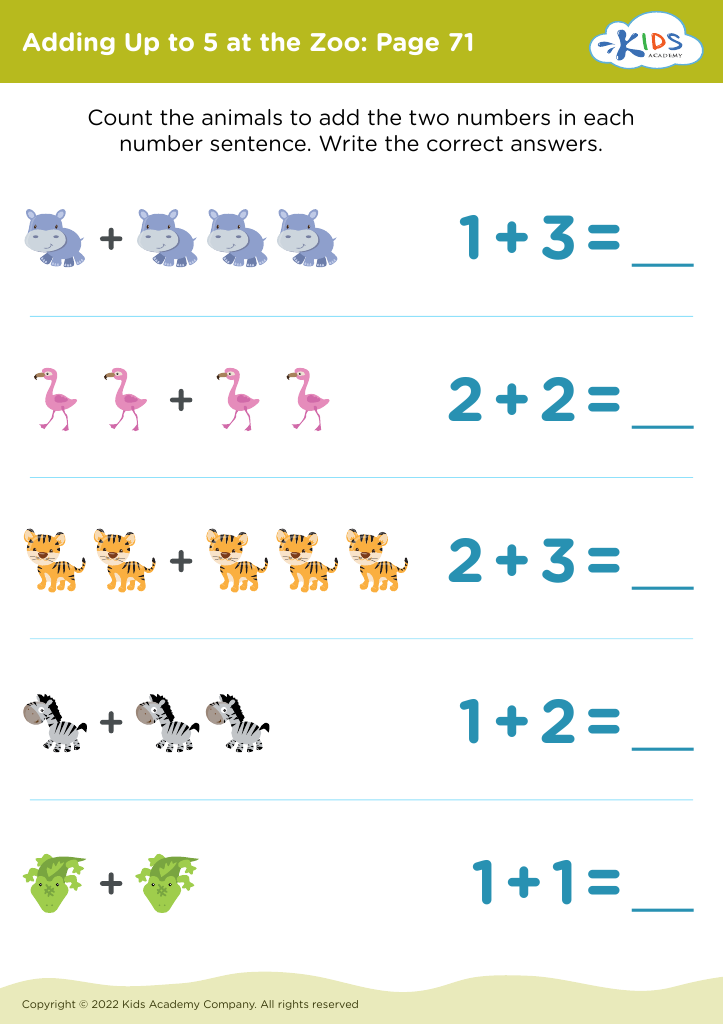
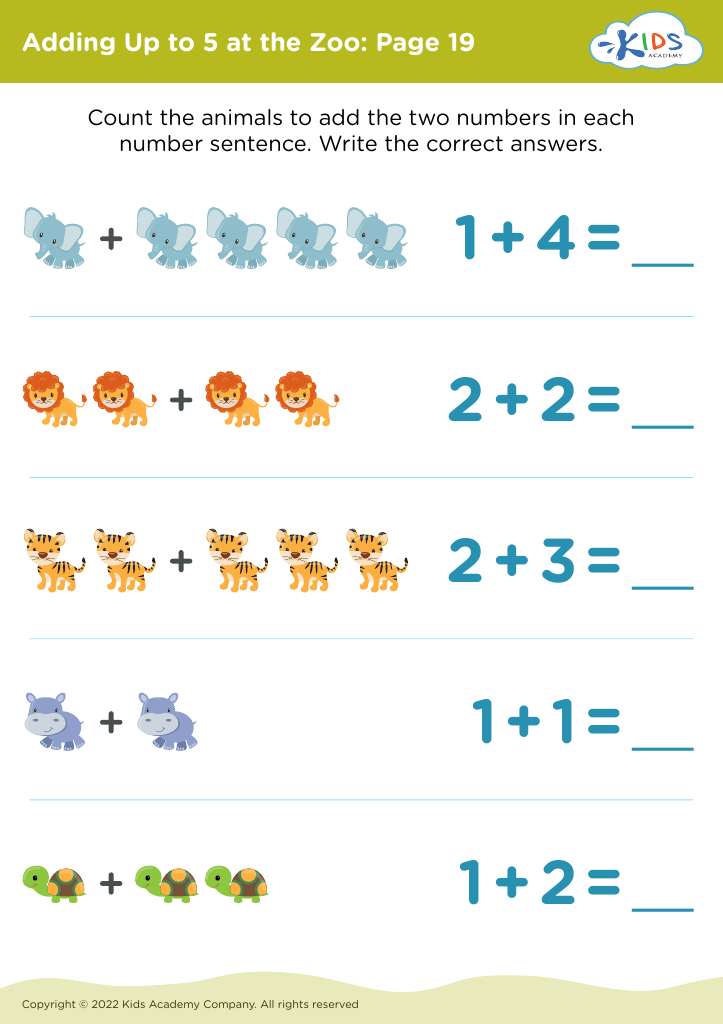
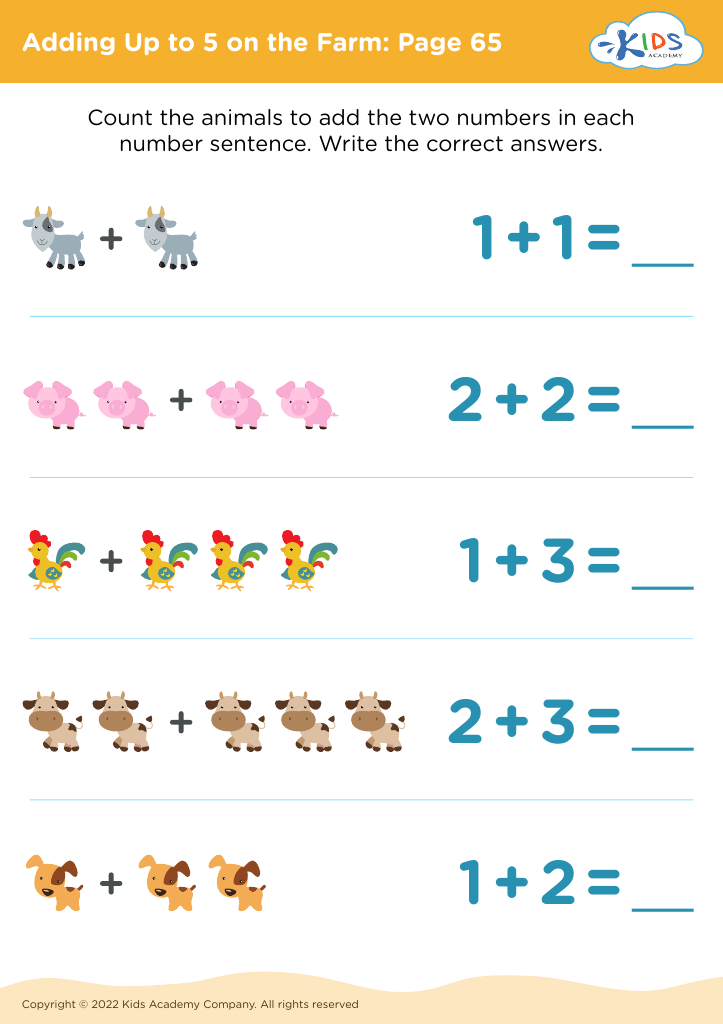
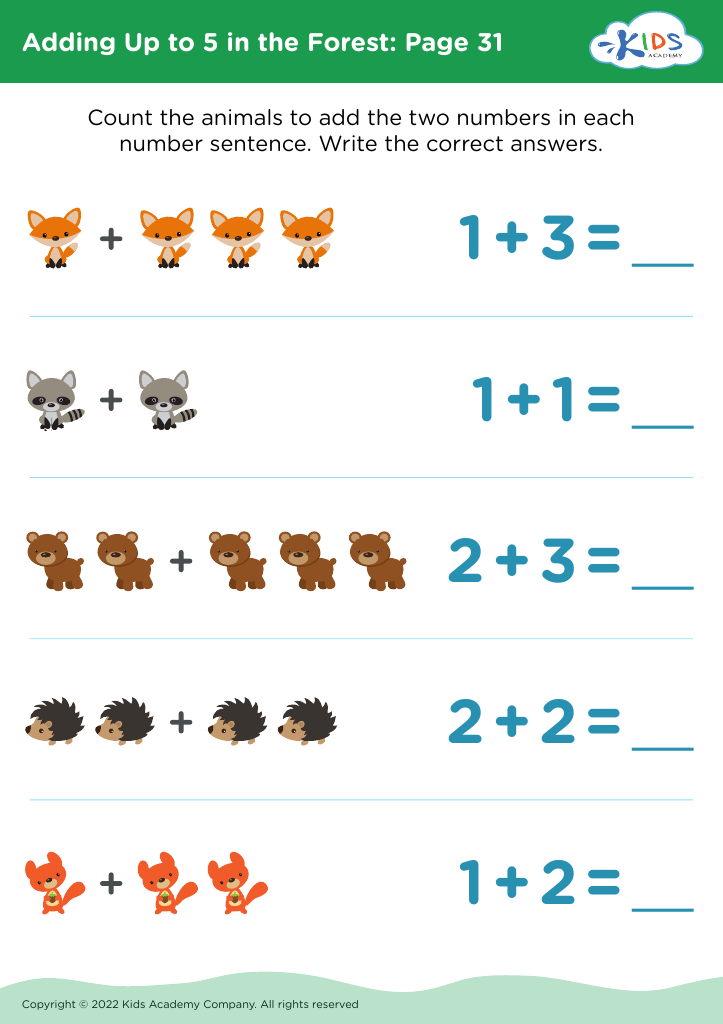
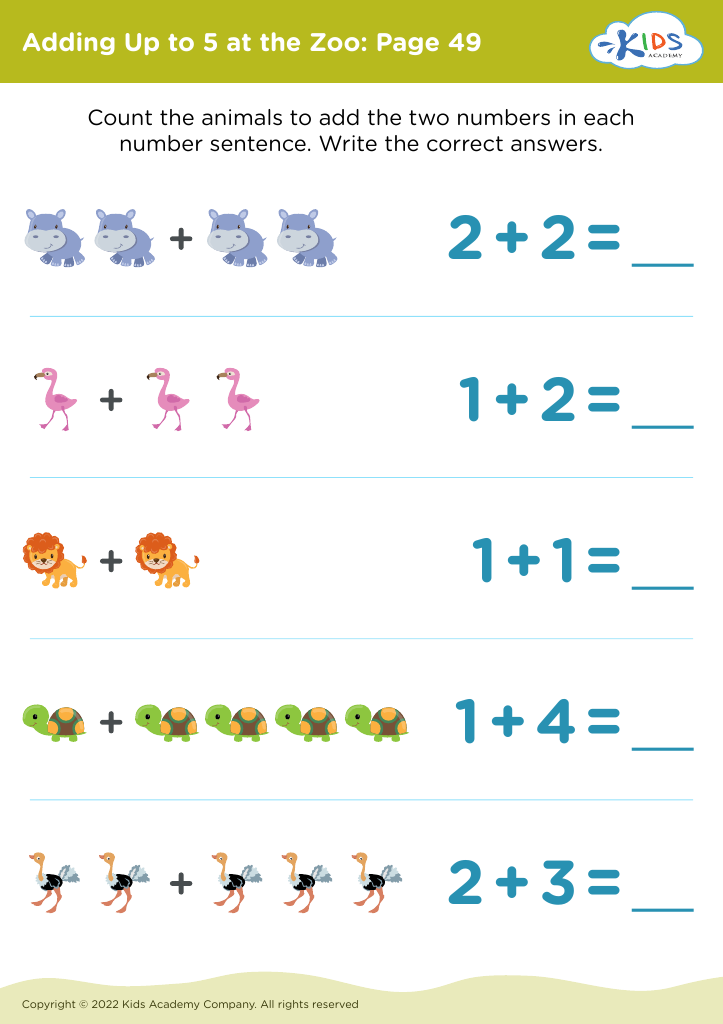
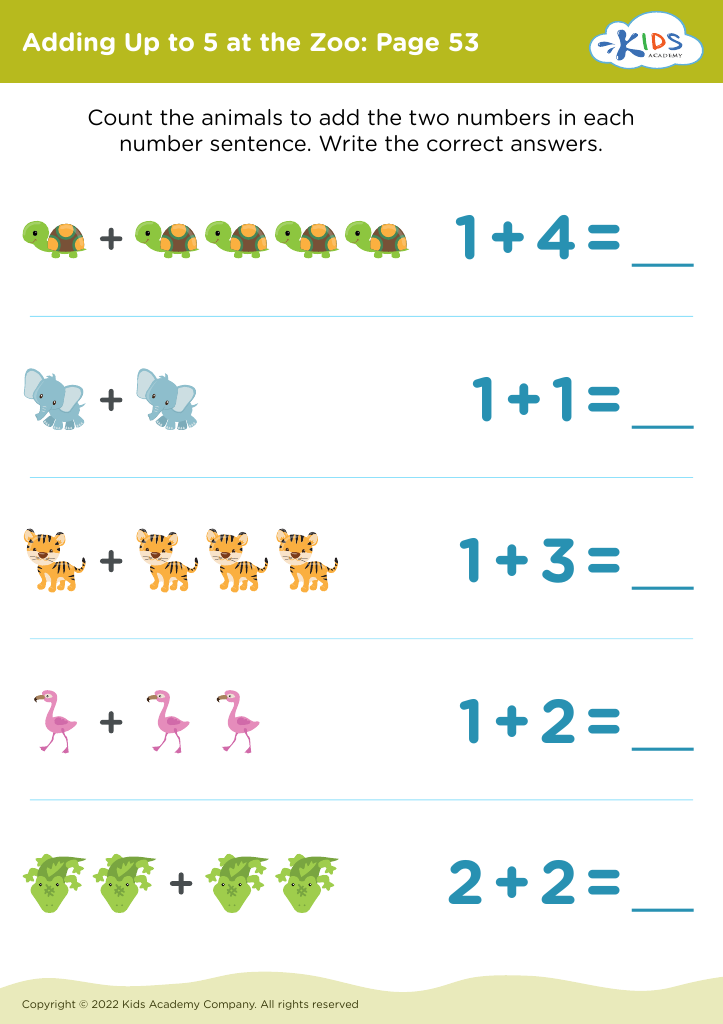








Basic arithmetic practice, particularly addition, is crucial for children aged 4-5 as it lays the foundation for essential mathematical skills. At this age, children are naturally curious and eager to learn, making it an ideal time to introduce concepts like numbers and simple addition. Early exposure to addition helps children develop number sense, which is key for understanding more complex math later on.
Practicing addition through engaging activities can enhance critical cognitive skills such as problem-solving, logical thinking, and spatial awareness. It also encourages a positive attitude towards mathematics, which can influence their academic journeys positively. Additionally, mastering basic addition fosters confidence in young learners; when children successfully solve simple problems, they experience a sense of achievement, motivating them to take on more challenges.
Moreover, regular practice can promote coordination and fine motor skills during hands-on activities with manipulatives such as blocks, counters, or even fingers. This multi-sensory approach solidifies learning and keeps young learners intrigued.
Ultimately, prioritizing addition practice at an early age equips children with the necessary tools for both academic success and life skills. It empowers them to approach math with enthusiasm and resilience, paving the way for continued learning in their educational journey.








