Filters

240 filtered results

Clear all filters
Favorites
With answer key
Interactive

240 filtered results

Difficulty Level

Grade


Check out this FREE Trial Lesson on Addition for age 4-5!

Match Objects that Fit Together

Favorites
With answer key
Interactive
  • 4-5
  • Counting practice
  • Addition
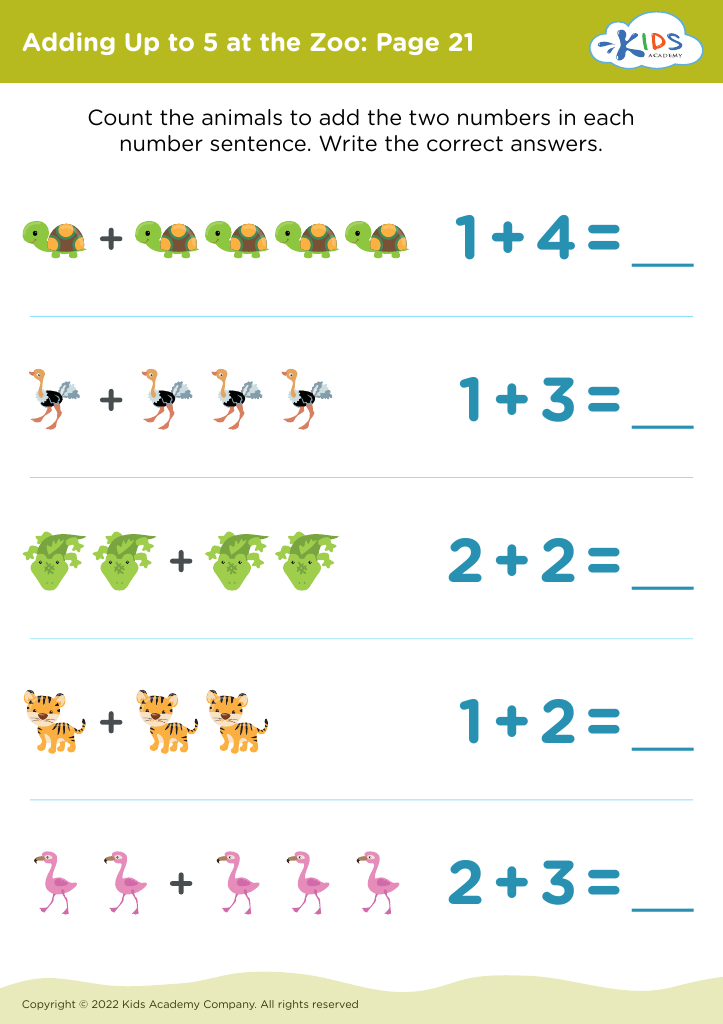
Adding Up to 5 at the Zoo: Page 21
Worksheet
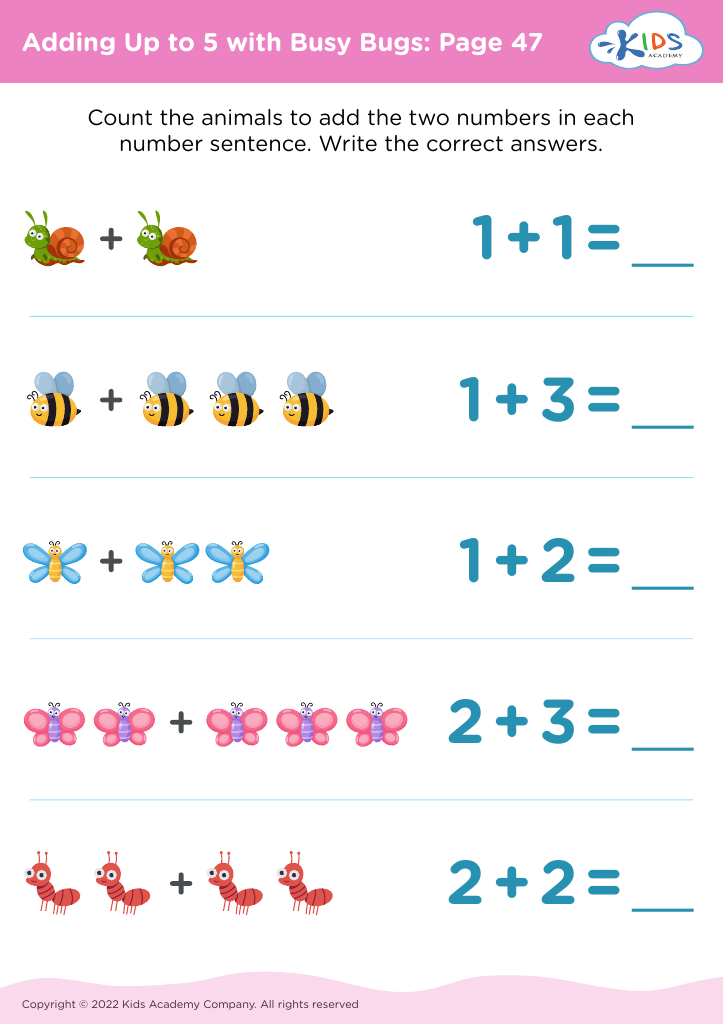
Adding Up to 5 with Busy Bugs: Page 47
Worksheet
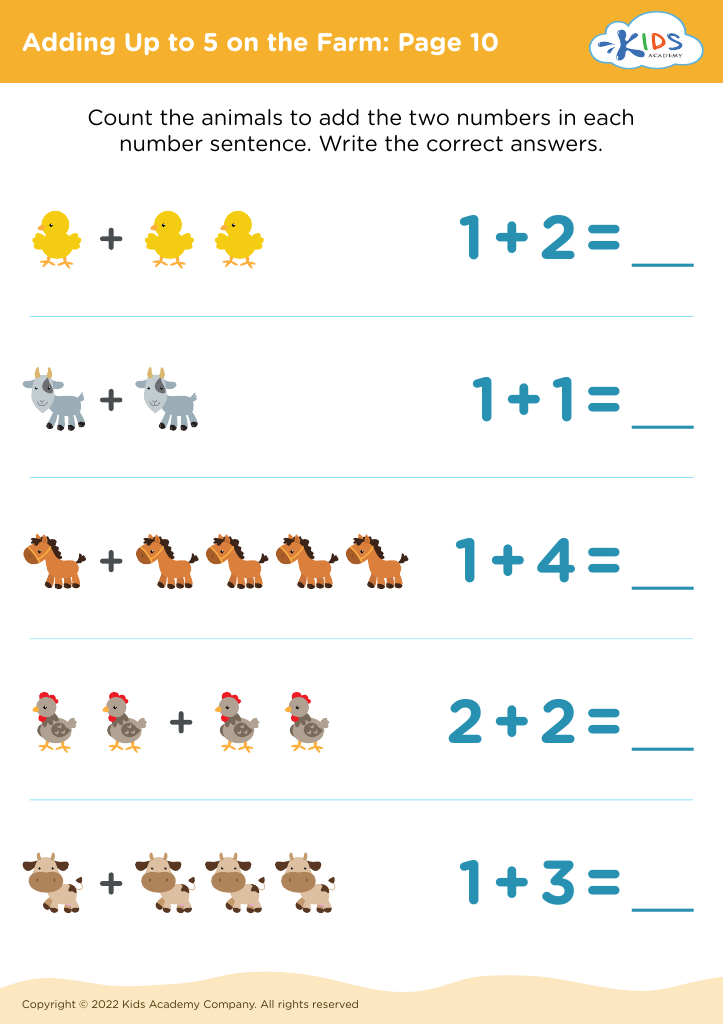
Adding Up to 5 on the Farm: Page 10
Worksheet
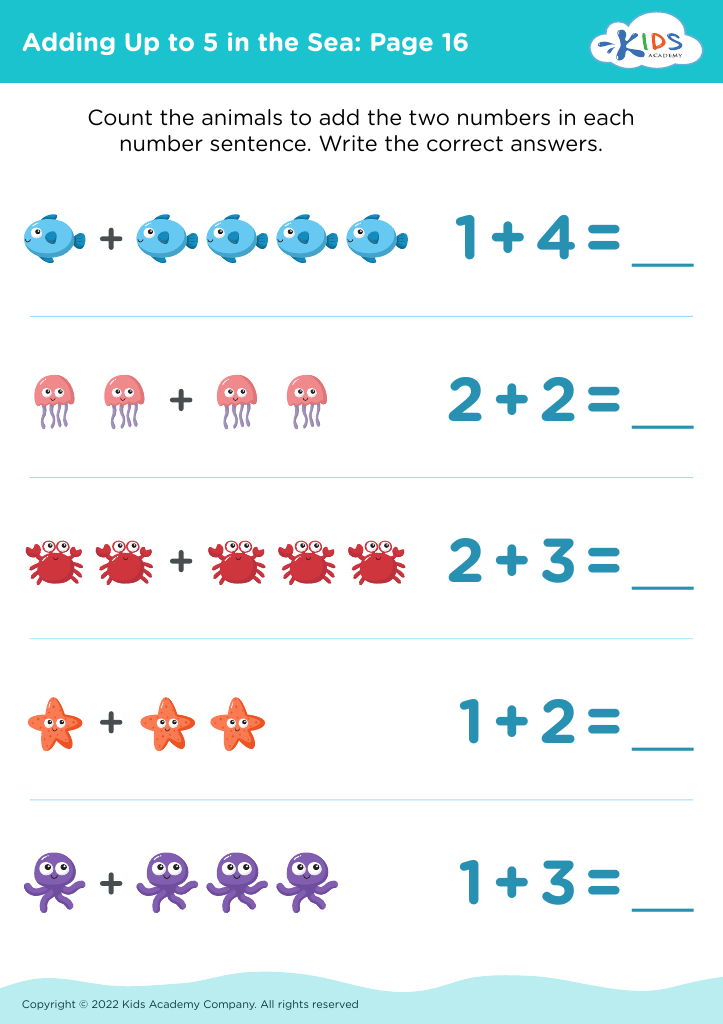
Adding Up to 5 in the Sea: Page 16
Worksheet
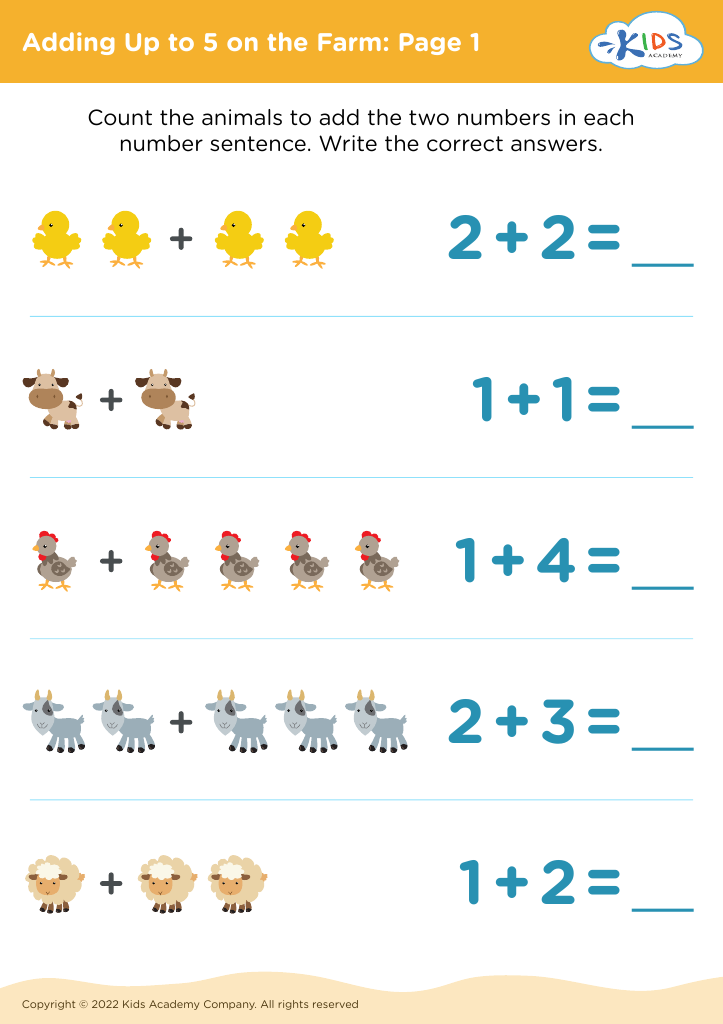
Adding Up to 5 on the Farm: Page 1
Worksheet
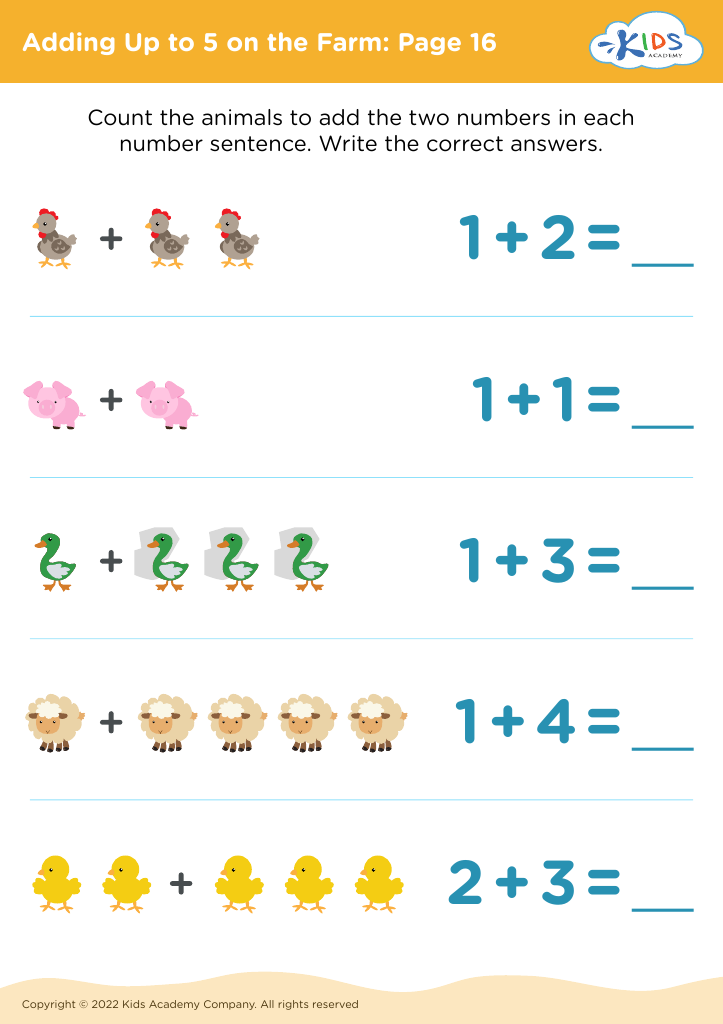
Adding Up to 5 on the Farm: Page 16
Worksheet
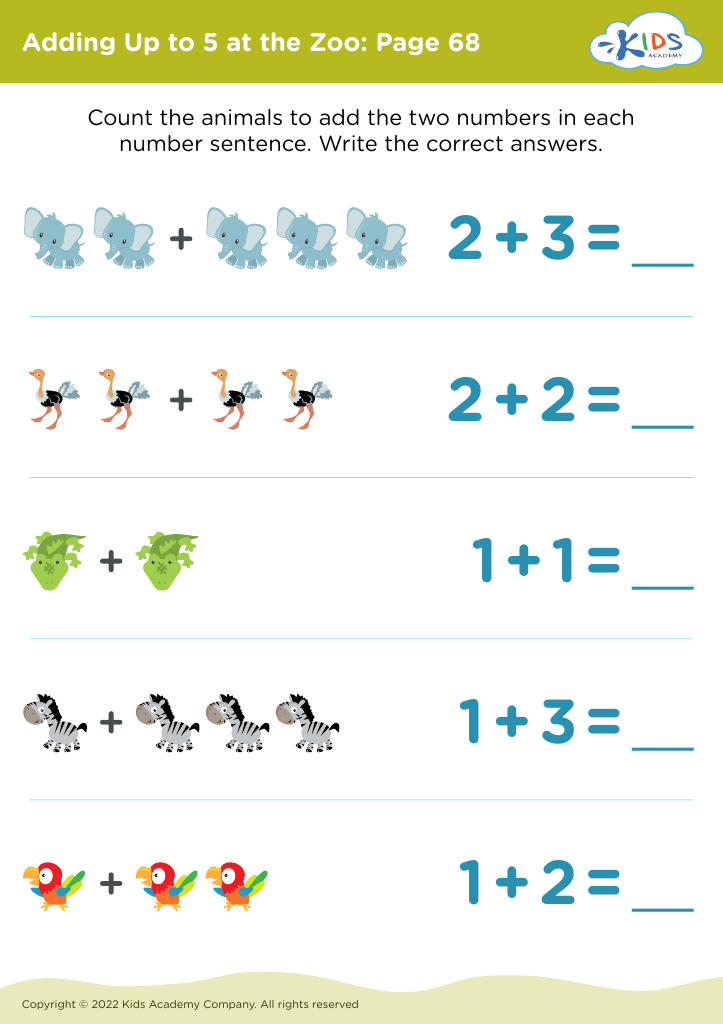
Adding Up to 5 at the Zoo: Page 68
Worksheet
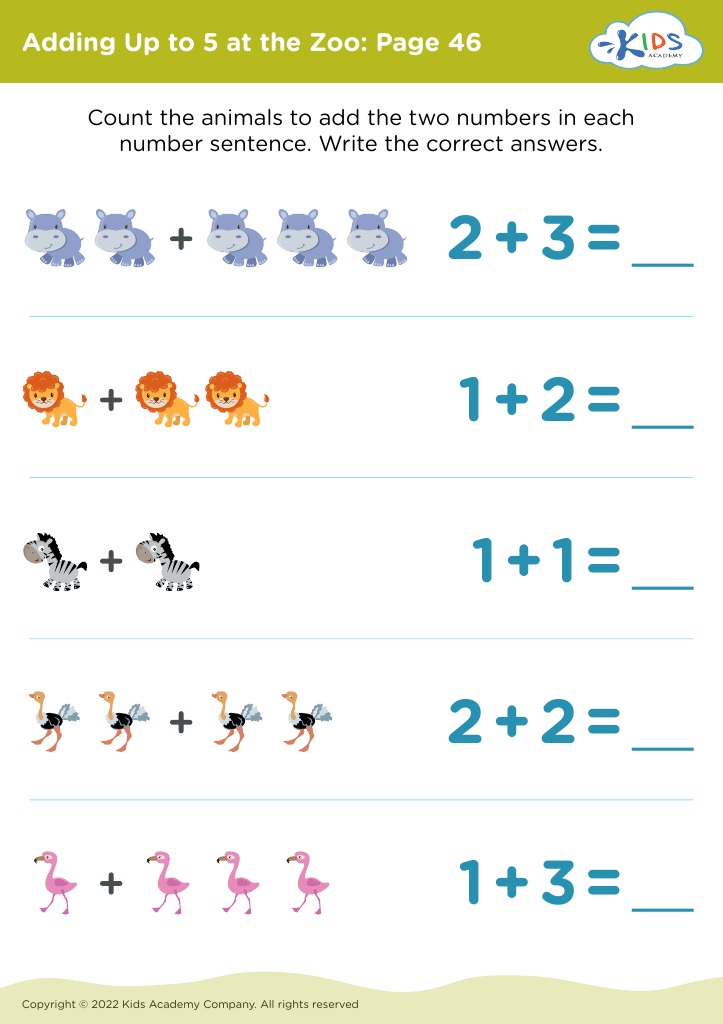
Adding Up to 5 at the Zoo: Page 46
Worksheet
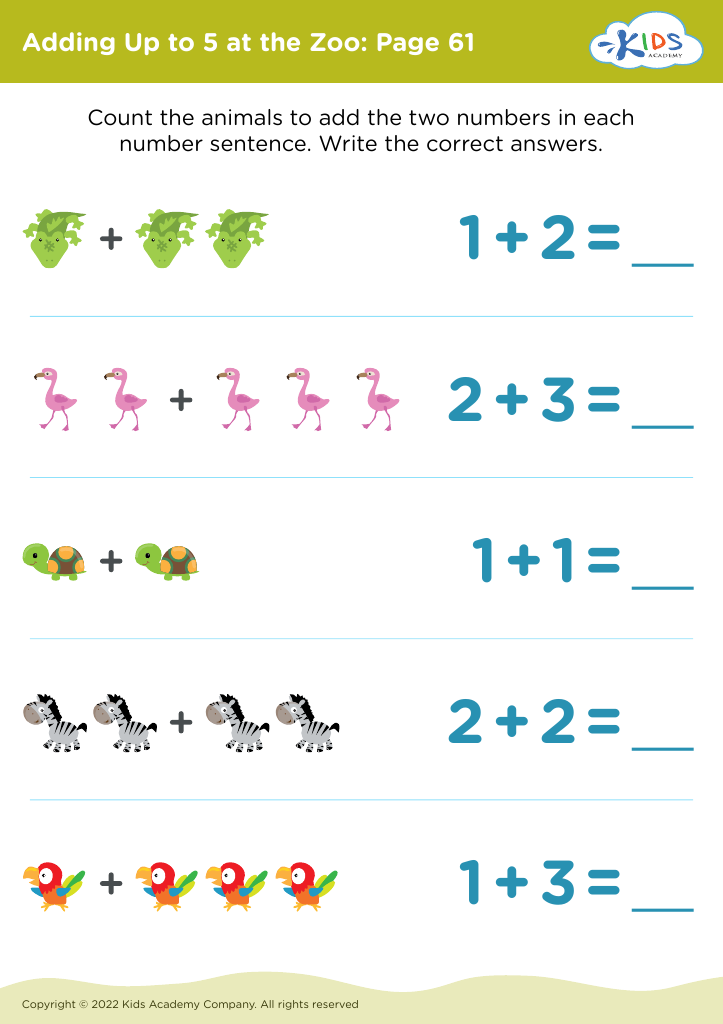
Adding Up to 5 at the Zoo: Page 61
Worksheet
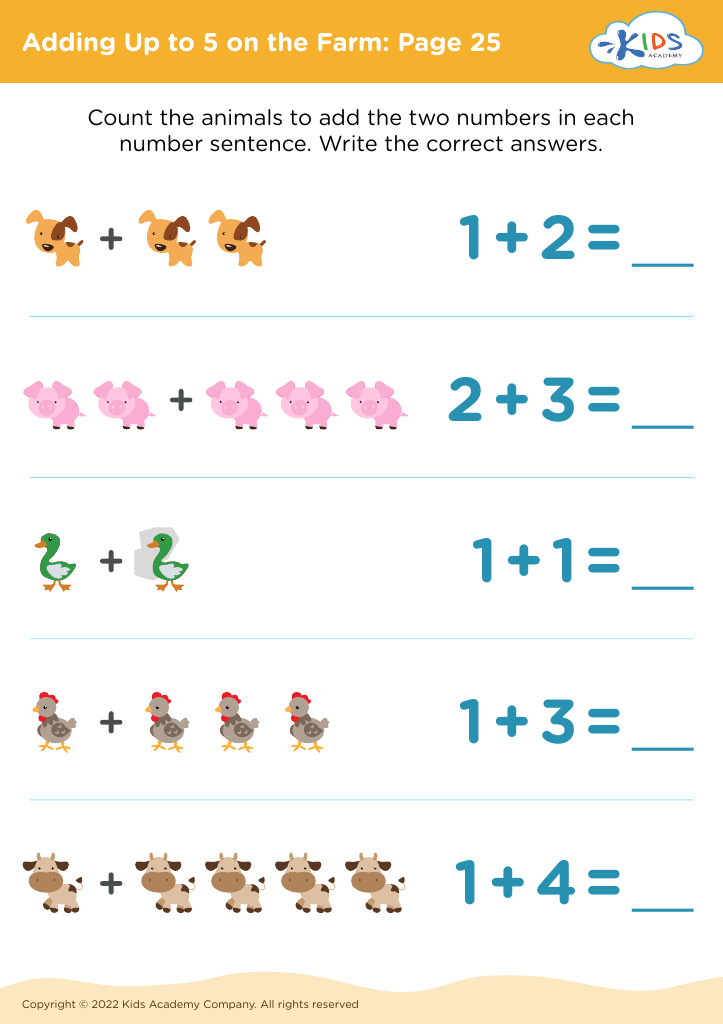
Adding Up to 5 on the Farm: Page 25
Worksheet
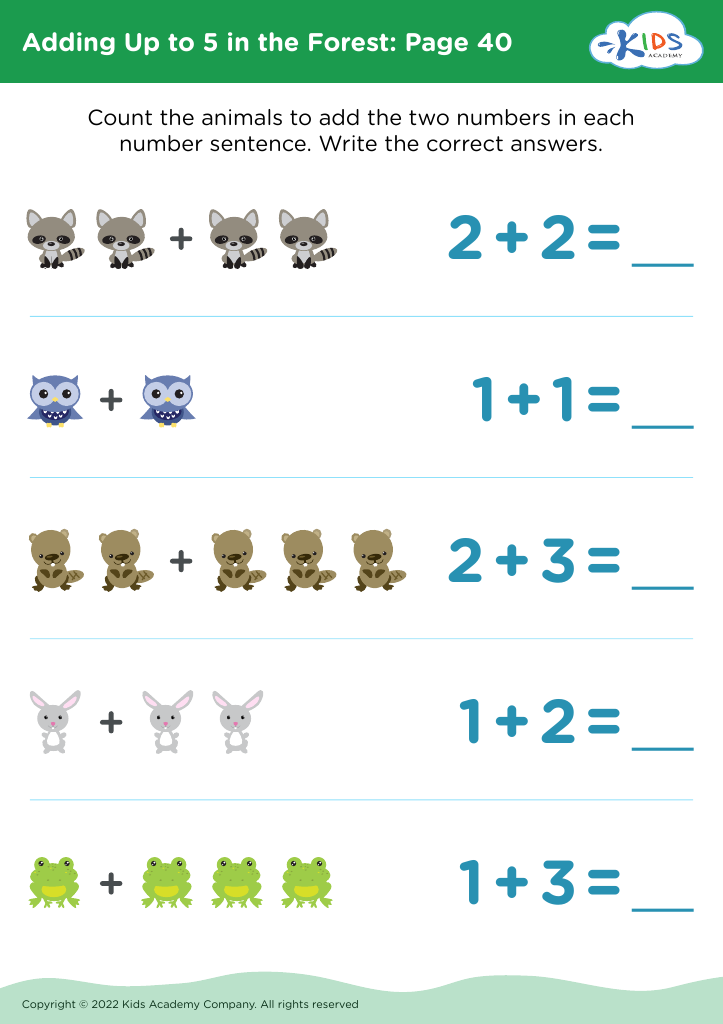
Adding Up to 5 in the Forest: Page 40
Worksheet
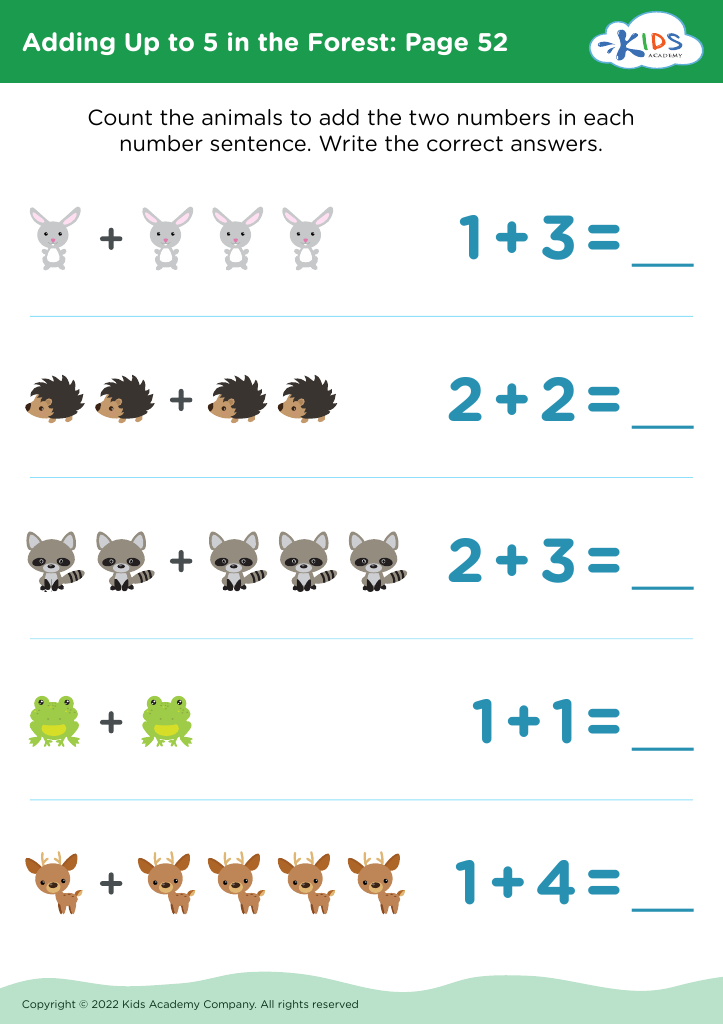
Adding Up to 5 in the Forest: Page 52
Worksheet
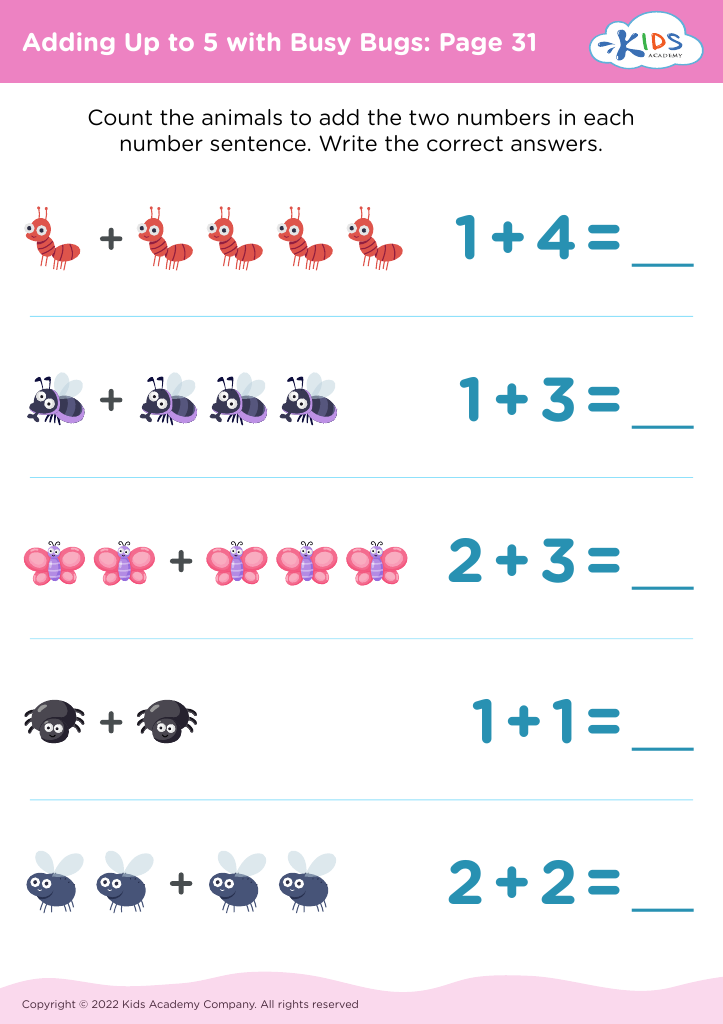
Adding Up to 5 with Busy Bugs: Page 31
Worksheet
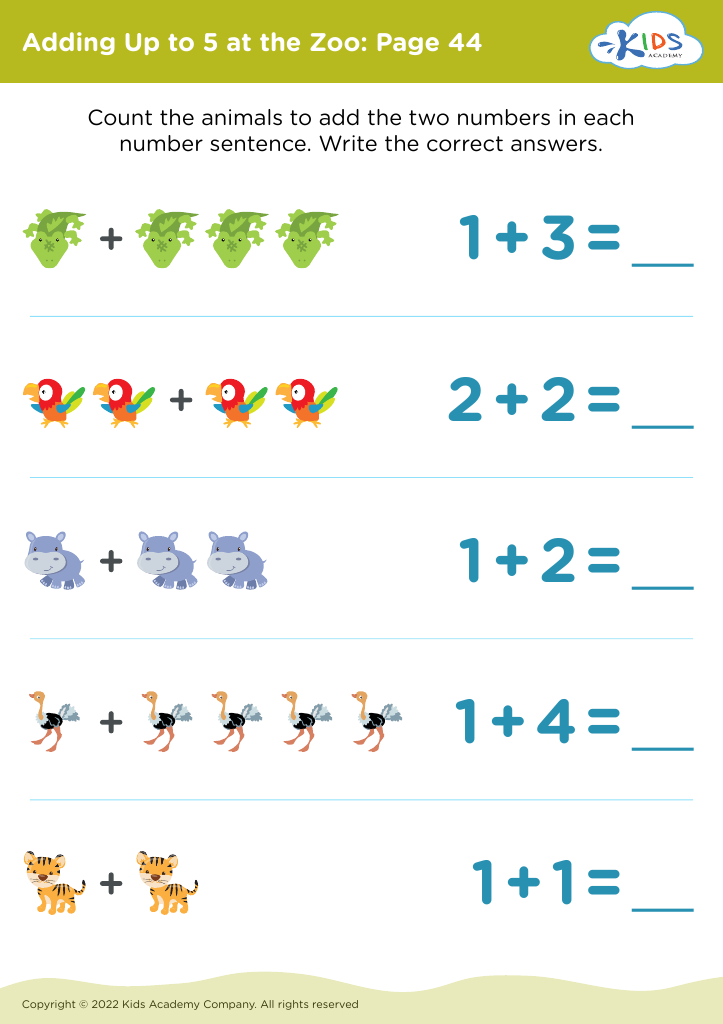
Adding Up to 5 at the Zoo: Page 44
Worksheet
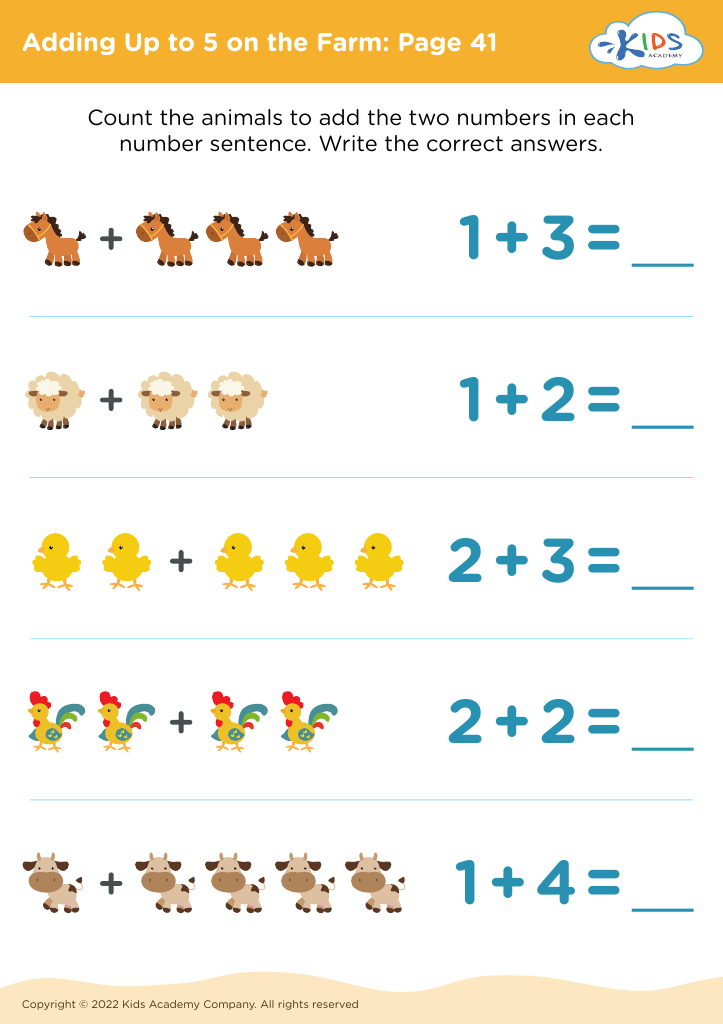
Adding Up to 5 on the Farm: Page 41
Worksheet
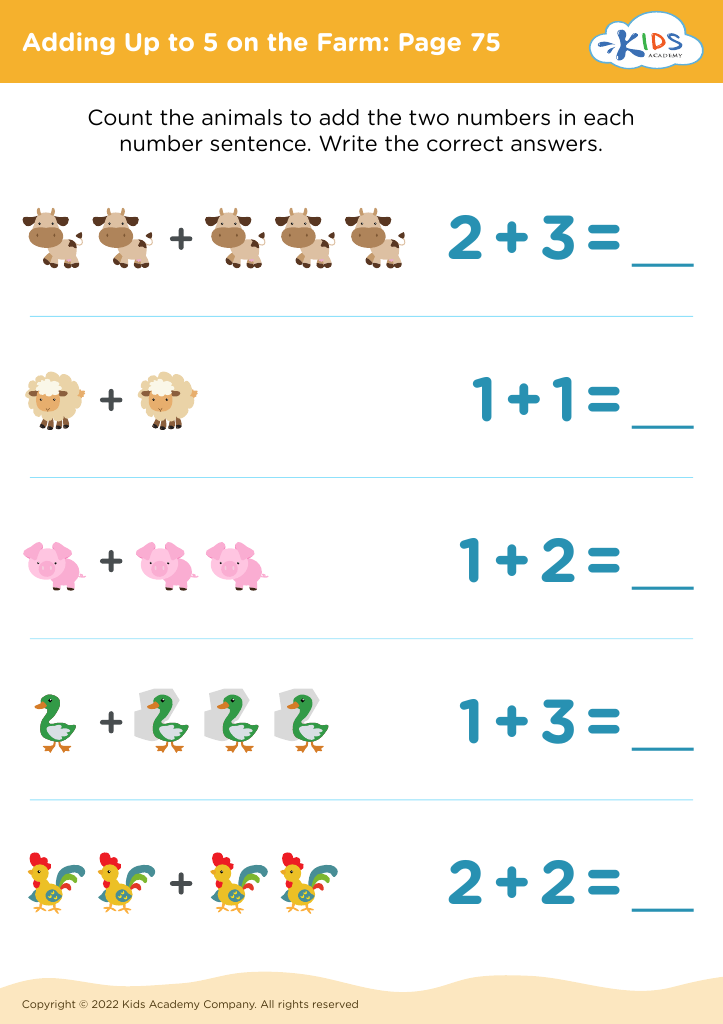
Adding Up to 5 on the Farm: Page 75
Worksheet
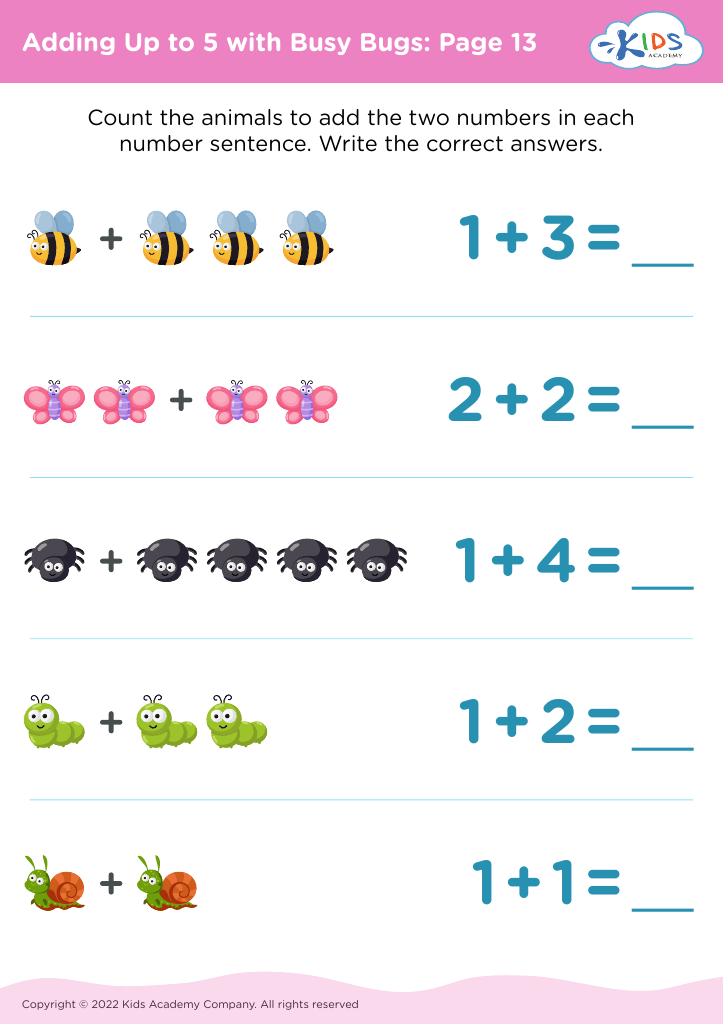
Adding Up to 5 with Busy Bugs: Page 13
Worksheet
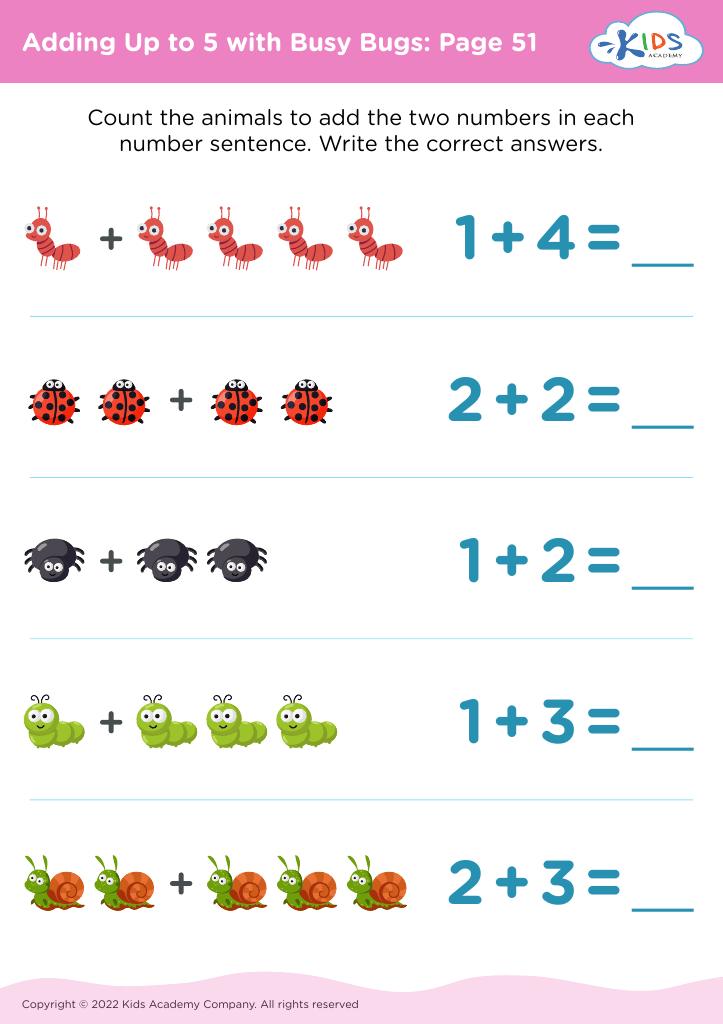
Adding Up to 5 with Busy Bugs: Page 51
Worksheet
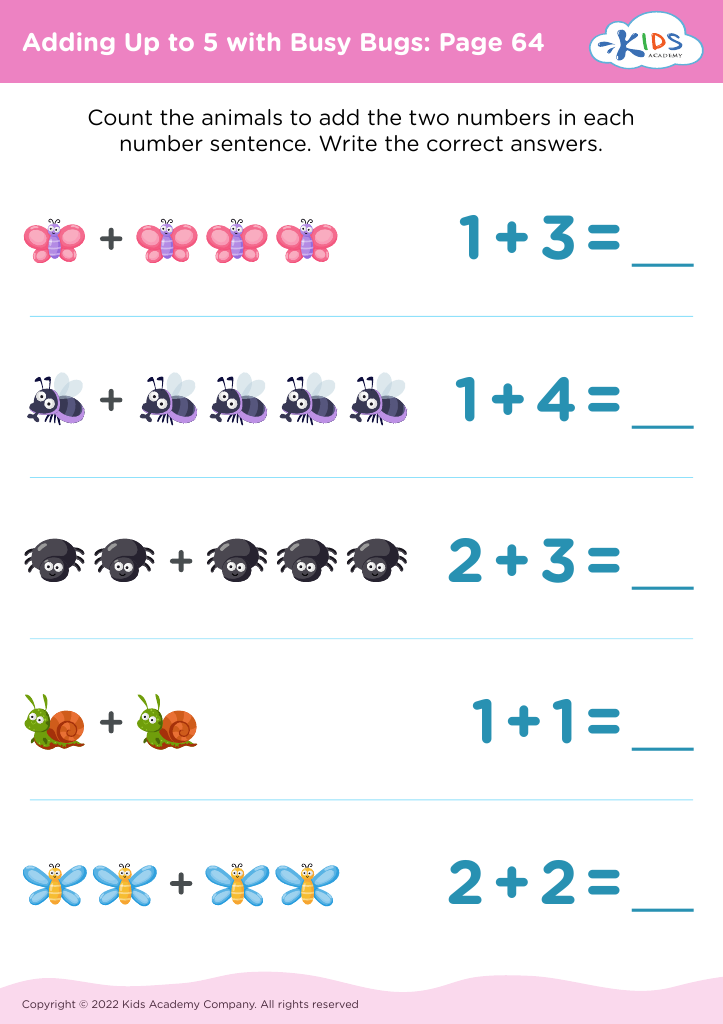
Adding Up to 5 with Busy Bugs: Page 64
Worksheet
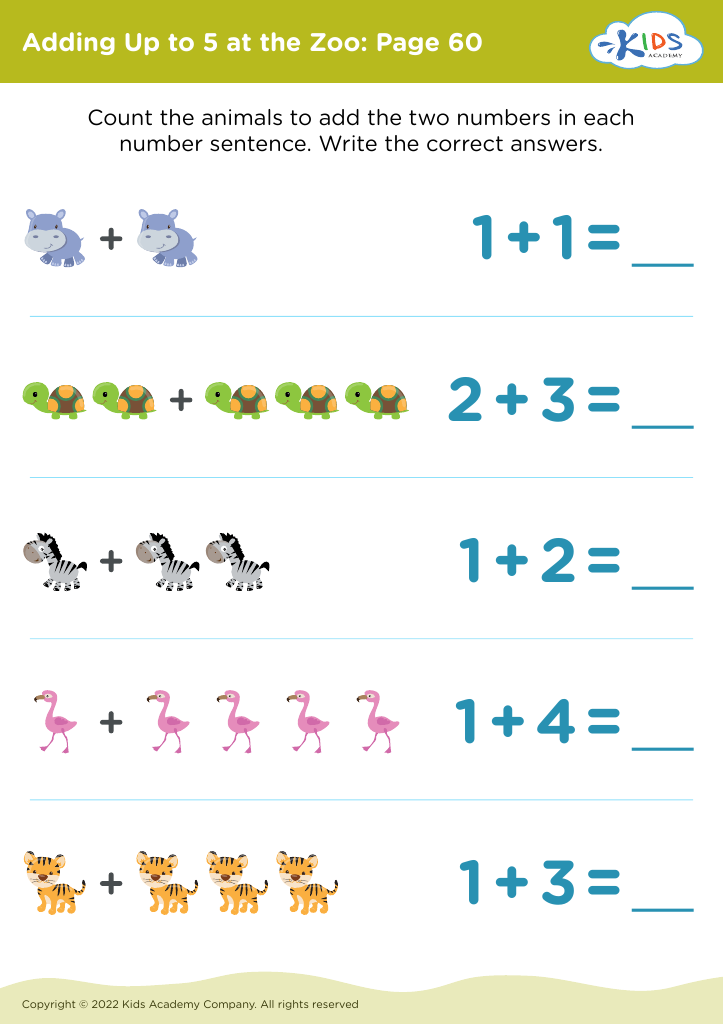
Adding Up to 5 at the Zoo: Page 60
Worksheet
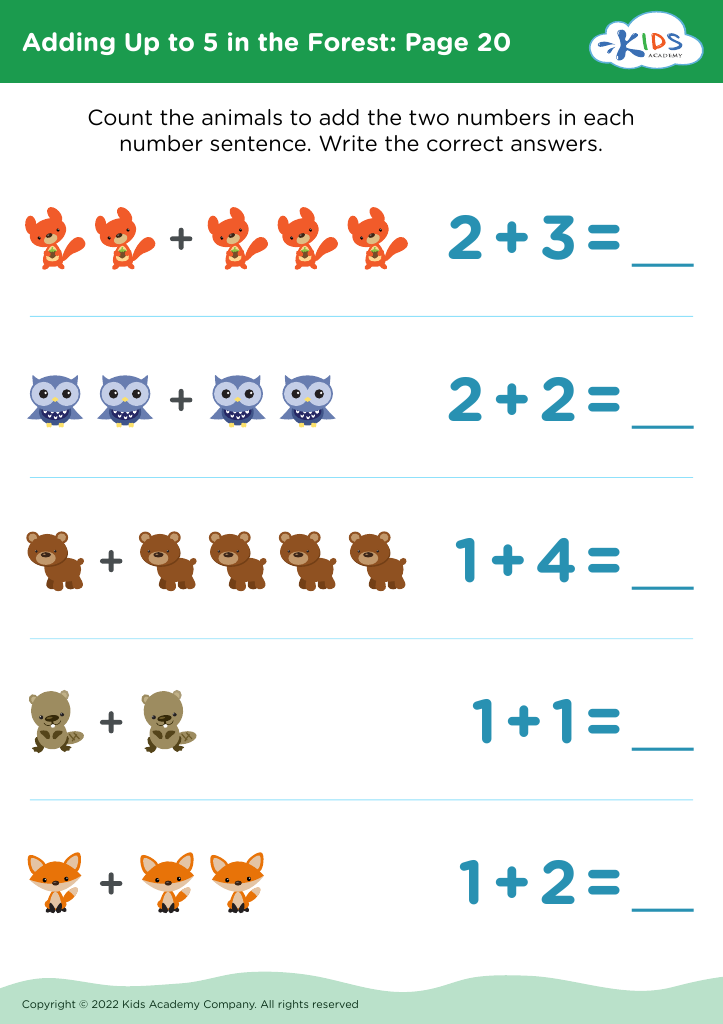
Adding Up to 5 in the Forest: Page 20
Worksheet
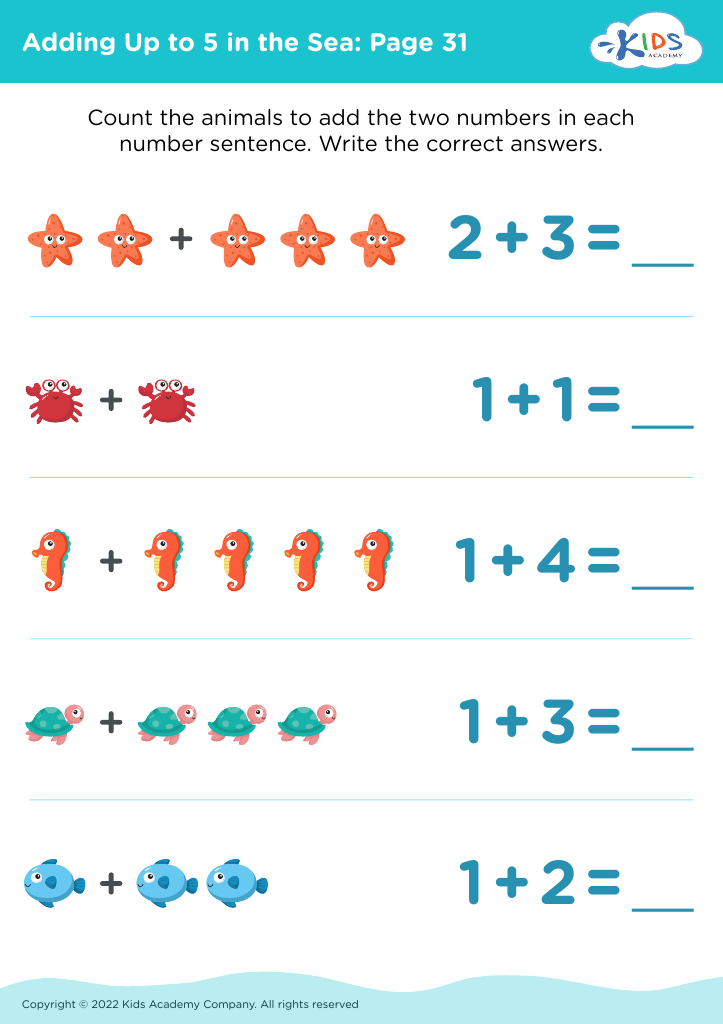
Adding Up to 5 in the Sea: Page 31
Worksheet
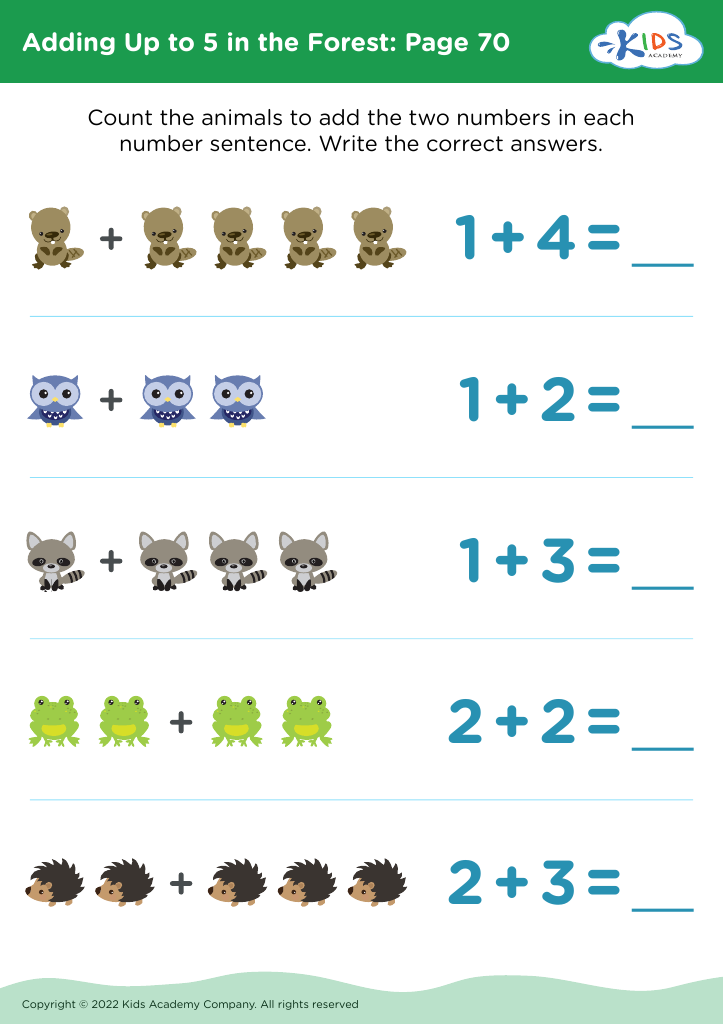
Adding Up to 5 in the Forest: Page 70
Worksheet
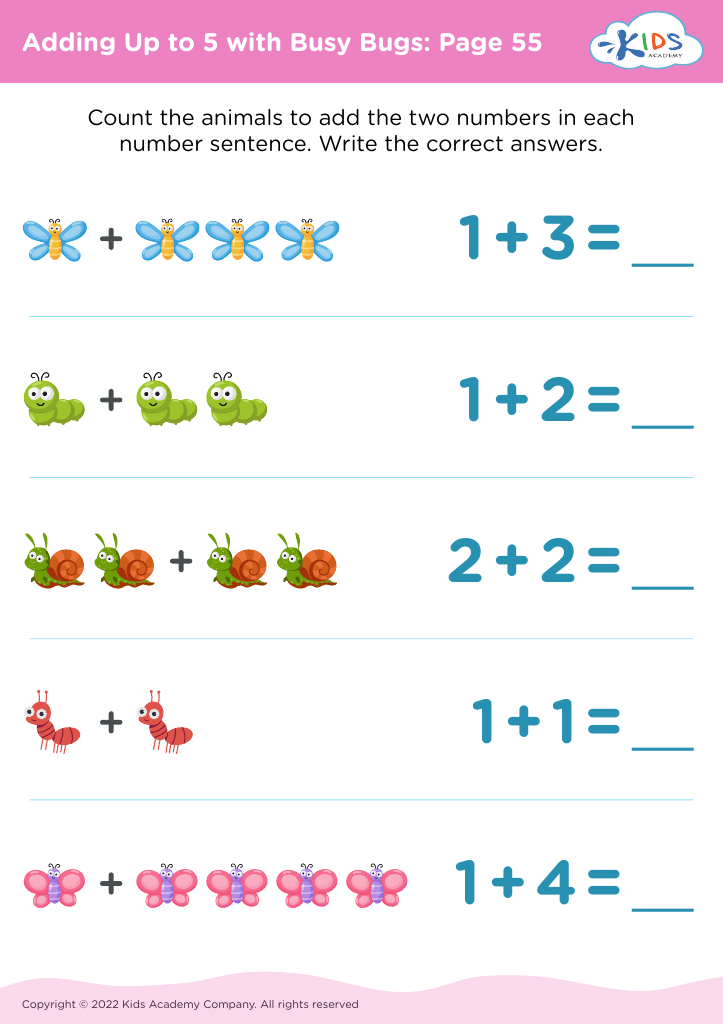
Adding Up to 5 with Busy Bugs: Page 55
Worksheet


Counting practice and addition for children aged 4-5 lay the foundation for essential mathematical skills. At this early age, children are naturally curious and eager to learn, making it an optimal time for introducing basic concepts of numbers, counting, and simple addition. Engaging in these activities helps to enhance cognitive development, critical thinking, and problem-solving skills.

Furthermore, counting and addition promote numerical fluency and are fundamental to future learning in mathematics. By practicing these skills, children gain confidence in their ability to work with numbers, which can positively influence their overall academic success. Activities such as counting objects, using number lines, or engaging in interactive games encourage participation and make learning enjoyable.

Moreover, collaboration between parents and teachers in reinforcing these concepts at home and in school creates a consistent learning environment. This partnership allows children to see practical applications of math in everyday life, fostering a real-world connection to their learning. Ultimately, supporting counting and addition practice at this age is essential not only for academic readiness but also for building a lifetime of positive attitudes towards learning and math.