Counting skills Addition Worksheets for Ages 4-5 - Page 6
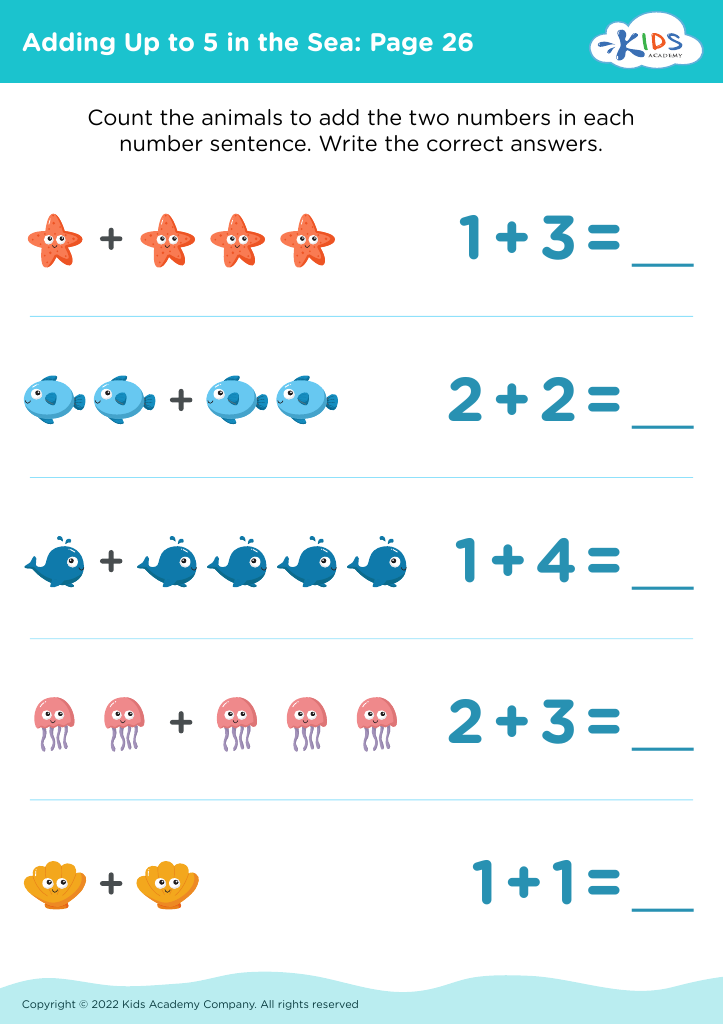
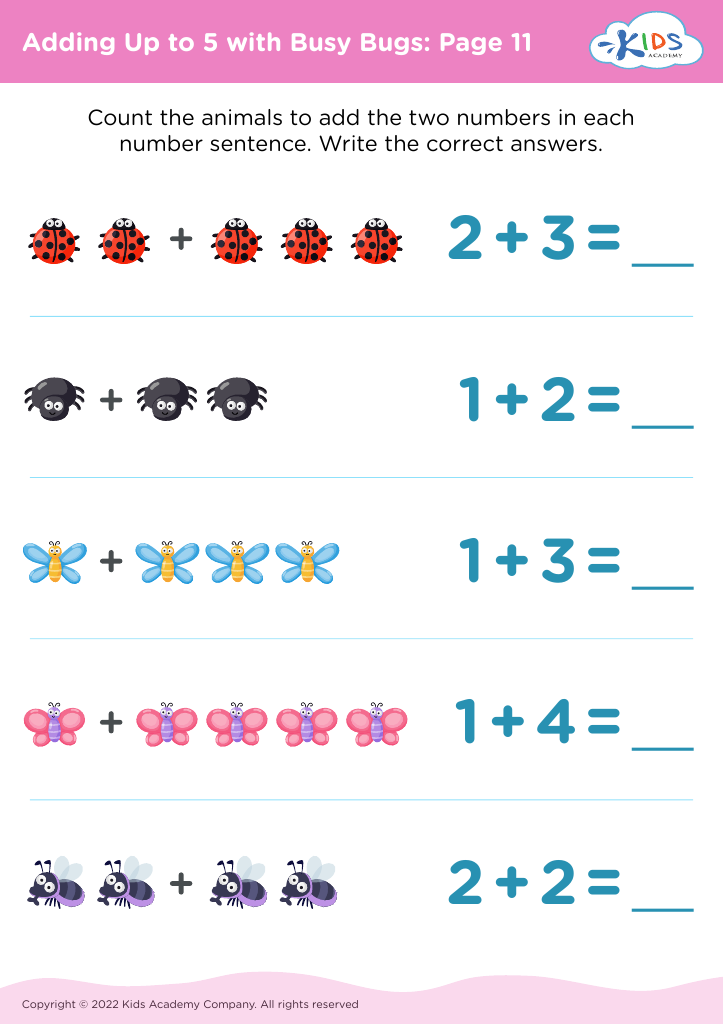
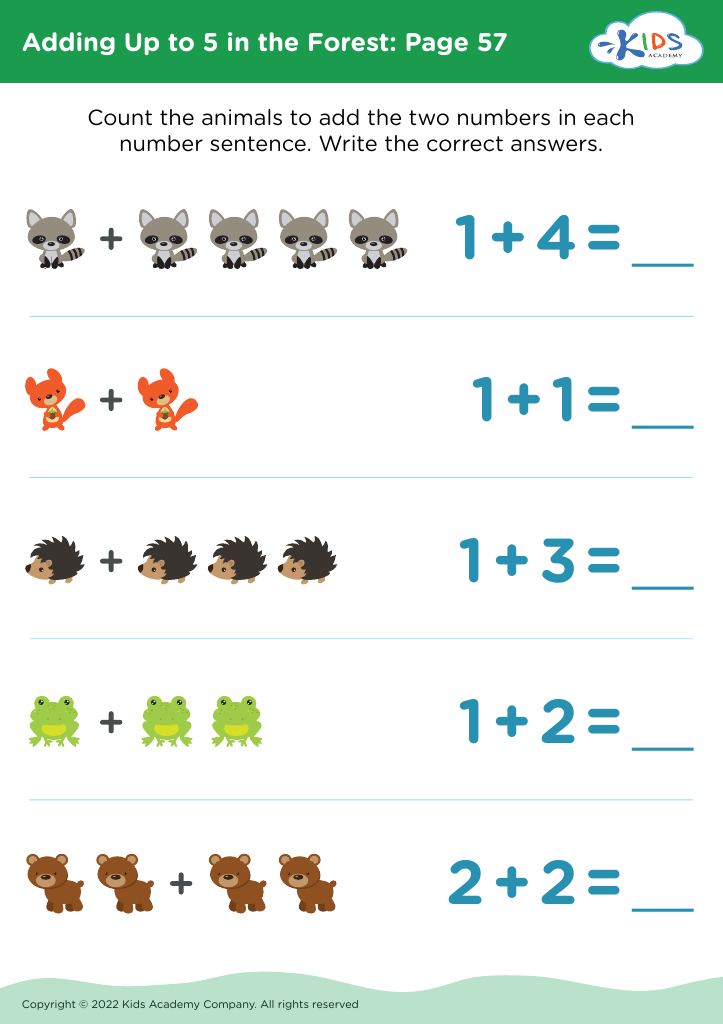
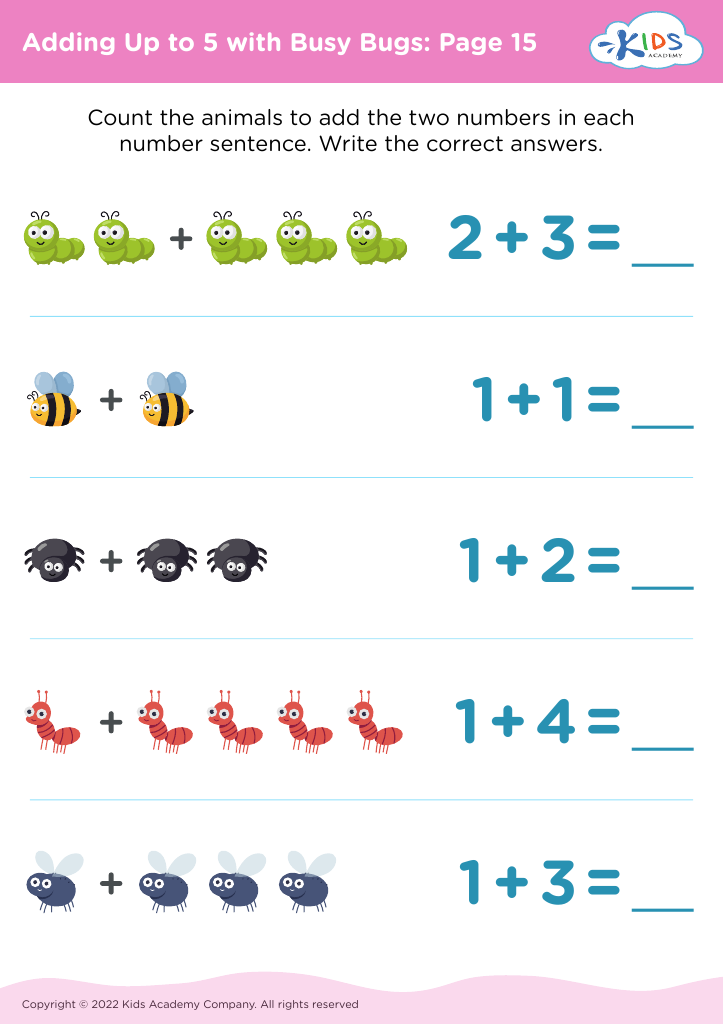








Counting skills and addition are foundational elements of early mathematics that are crucial for children aged 4-5. During this stage, children are developing their cognitive abilities, and introducing them to counting and basic addition sets the groundwork for future math learning. Strong counting skills help children understand the concept of numbers and quantity, which is essential for problem-solving.
Teachers and parents should prioritize these skills because they enhance a child's ability to engage with their environment and build confidence in their abilities. Early experiences with counting and addition not only make math fun but also foster critical thinking and analytical skills that are applicable in other subjects.
Additionally, mastering early addition helps children develop number sense, which is the ability to understand, relate, and connect numbers in meaningful ways. As a result, children are more likely to succeed in more complex mathematical concepts later on. Furthermore, nurturing these skills creates opportunities for parents and teachers to bond through interactive learning activities, making learning enjoyable and ensuring a strong foundation for lifelong learning. Investing in counting and addition skills at this young age supports overall academic success and paves the way for future achievements in school and beyond.








