Fine Motor Skills (coloring) Addition Worksheets for Ages 4-5
3 filtered results
-
From - To
Nurture your child's mathematical and fine motor skills with our engaging Coloring Addition Worksheets designed specifically for ages 4-5. These carefully crafted worksheets combine the excitement of coloring with foundational addition practice, making learning fun and interactive. Enhancing pencil grip, hand-eye coordination, and number recognition, they offer a dual-focused approach to early education. Your young learner will enjoy coloring delightful images while mastering basic math concepts. Perfect for home or classroom, these worksheets are a valuable resource for teachers and parents aiming to support early childhood development in a captivating and educational way. Encourage progress and creativity today!
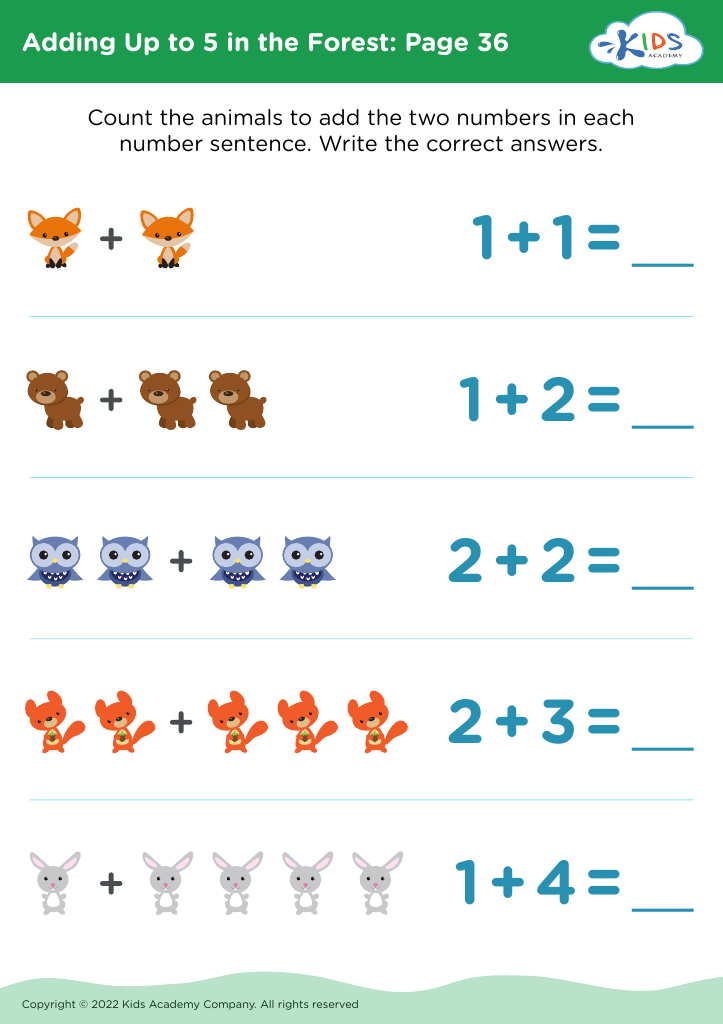
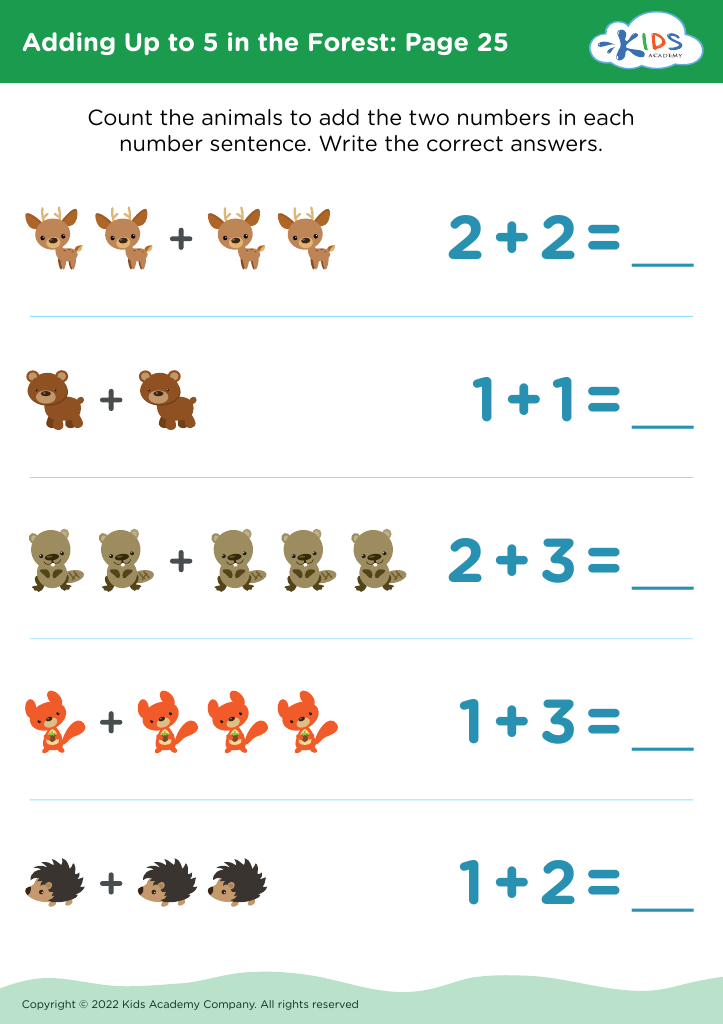
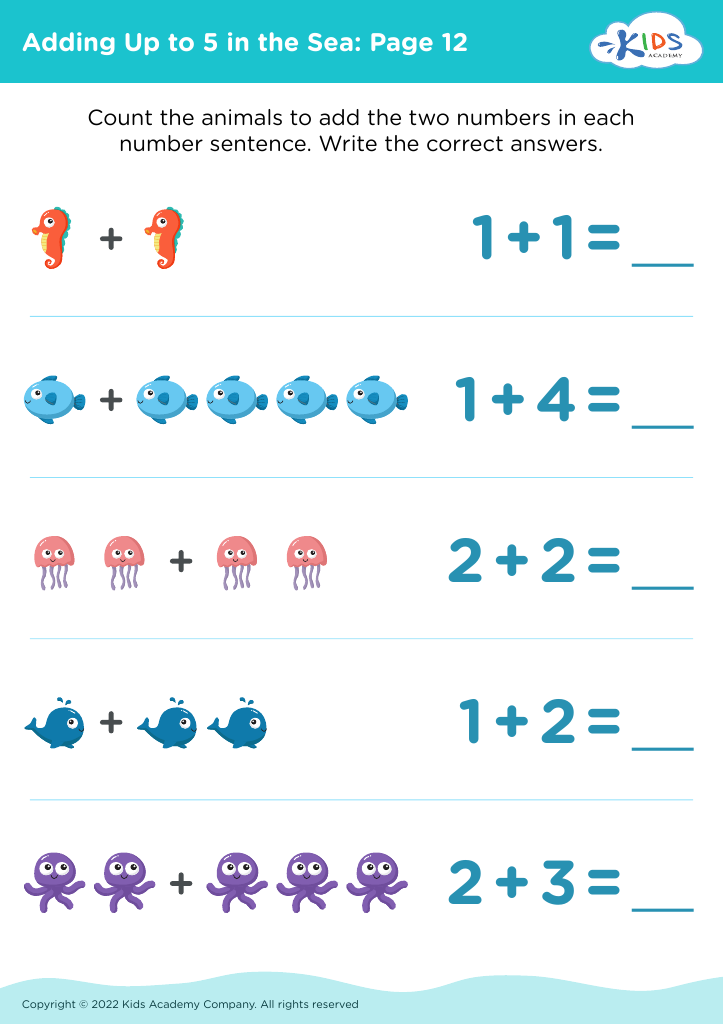








Fine motor skills, particularly those developed through activities like coloring and executing simple addition problems, are essential for children aged 4-5 because they lay the groundwork for future academic and daily life successes. Harnessing fine motor skills facilities better hand-eye coordination, which is crucial for writing, cutting, and other classroom activities. Coloring fosters muscle development in the fingers, hands, and wrists, enabling children to maintain proper pen grip and achieve writing fluency, leading to improved literacy skills.
Engaging in activities that combine fine motor skills with cognitive tasks, such as addition, provides a dual benefit. It reinforces foundational math skills while simultaneously refining young muscles and coordination. Ensuring these skills are developed early effectively equips children with the ability to perform tasks independently, including dressing, feeding, and personal care, thus promoting self-reliance.
For teachers and parents, supporting these developmental milestones builds a child's confidence and enthusiasm for learning. Moreover, early mastery of fine motor tasks has positive implications for cognitive and academic progress, linking physical dexterity with more potent problem-solving abilities and greater overall educational outcomes. In this way, investment in fine motor skill activities is an investment in a child's holistic development.








