Math problem-solving Addition Worksheets for Ages 4-5
4 filtered results
-
From - To
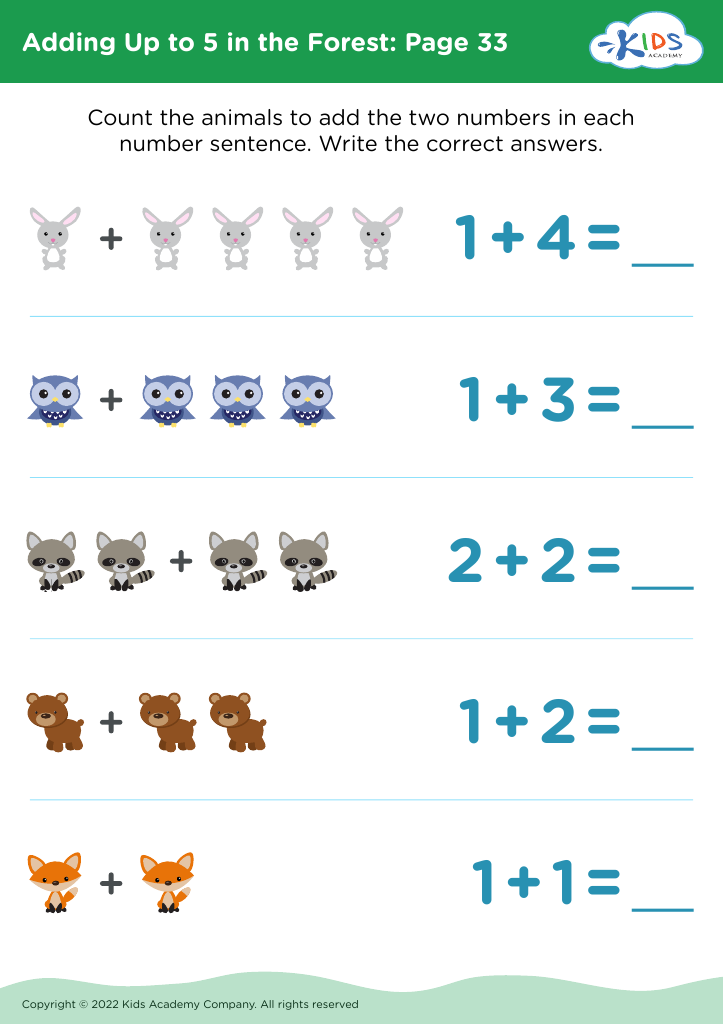
Welcome to our Math Problem-Solving Addition Worksheets for Ages 4-5! Designed to build foundational math skills, these engaging worksheets introduce young learners to the basics of addition through interactive problem-solving activities. Each worksheet encourages critical thinking, helping children develop their ability to analyze and approach math questions creatively. With colorful illustrations and age-appropriate scenarios, kids will enjoy working through addition challenges that enhance their understanding of numbers and simple equations. Perfect for at-home learning or classroom use, these resources foster a love for math while boosting confidence in early problem-solving abilities. Start your child’s math journey today!
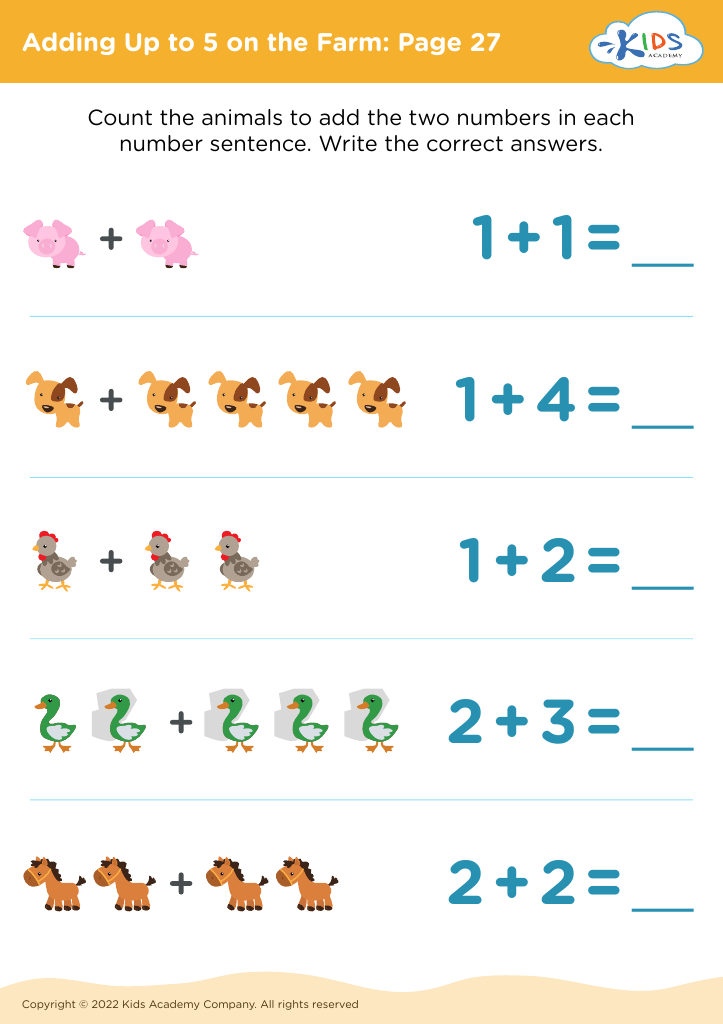
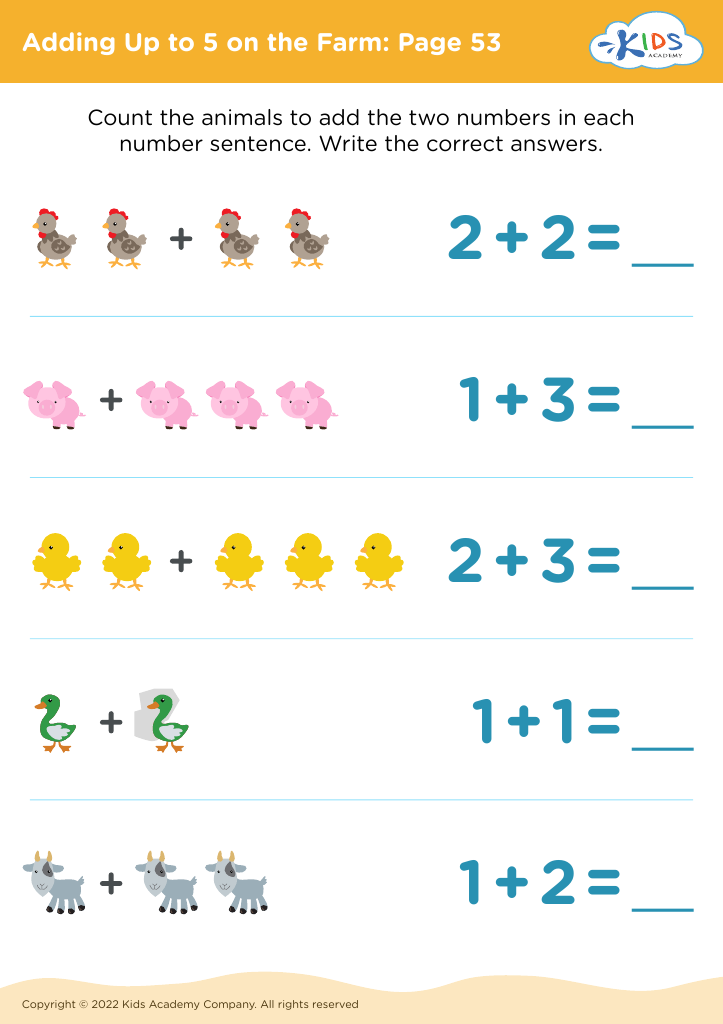
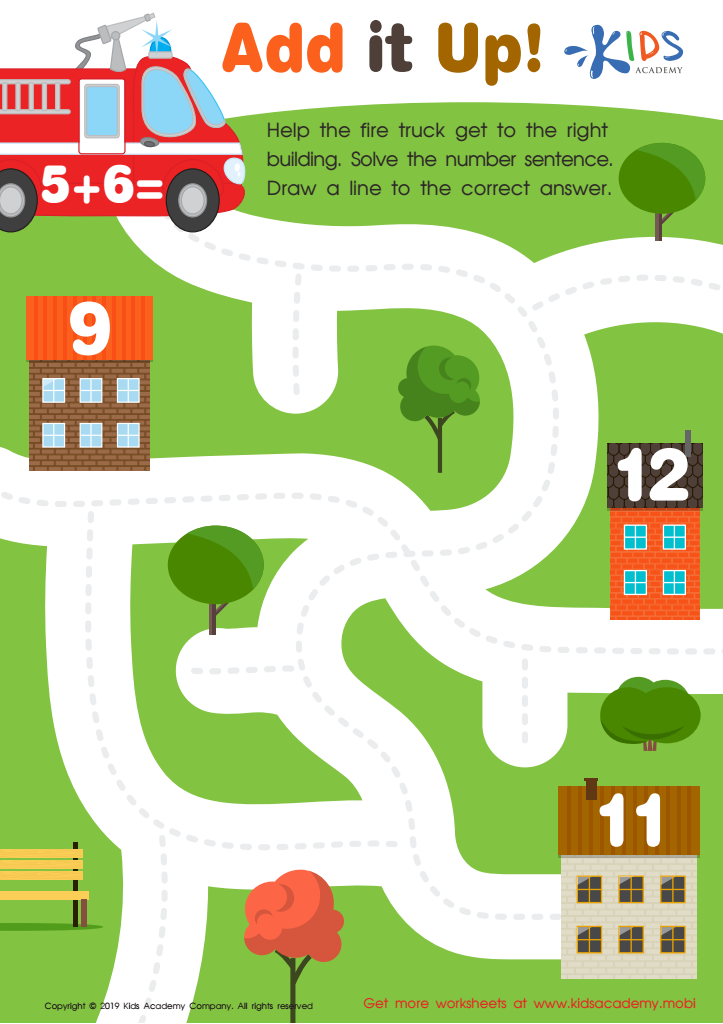
Add it Up Worksheet
 Assign to My Students








Parents and teachers should prioritize math problem-solving, especially addition, for children aged 4-5 because early mathematical understanding lays a foundation for future academic success. At this developmental stage, children are naturally curious and eager to learn, making it an ideal time to introduce basic mathematical concepts like addition.
Engaging in problem-solving activities enhances critical thinking and promotes a deeper understanding of numbers. Children learn to recognize quantities, understand the relationship between numbers, and develop strategies to solve simple addition problems. These foundational skills not only foster cognitive development but also encourage perseverance and resilience when faced with challenges.
Moreover, early exposure to mathematics cultivates a positive attitude toward the subject, helping to combat math anxiety that can develop later. When parents and teachers collaborate to create a supportive and engaging learning environment, children feel empowered to explore and inquire.
Incorporating fun, hands-on activities—like using toys, counting objects, or interactive games—makes learning enjoyable and reinforces concepts. This early investment in math problem-solving not only prepares children for future academic endeavors but also equips them with essential life skills such as logical reasoning and decision-making, ultimately shaping their confidence in learning.








