Problem-solving practice Addition Worksheets for Ages 4-5
3 filtered results
-
From - To
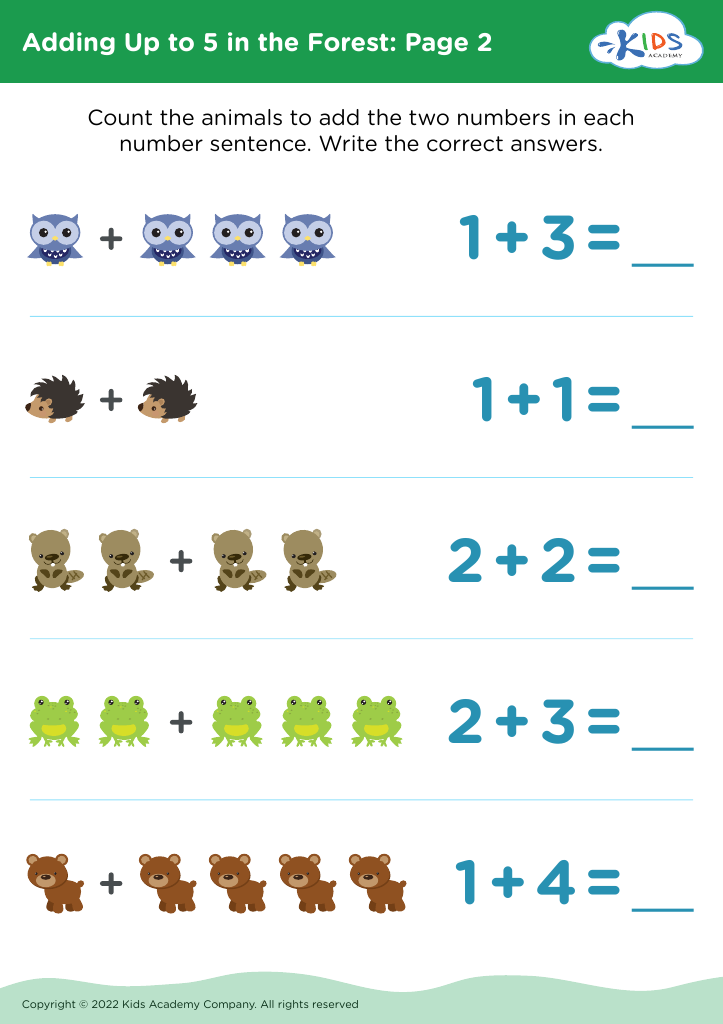
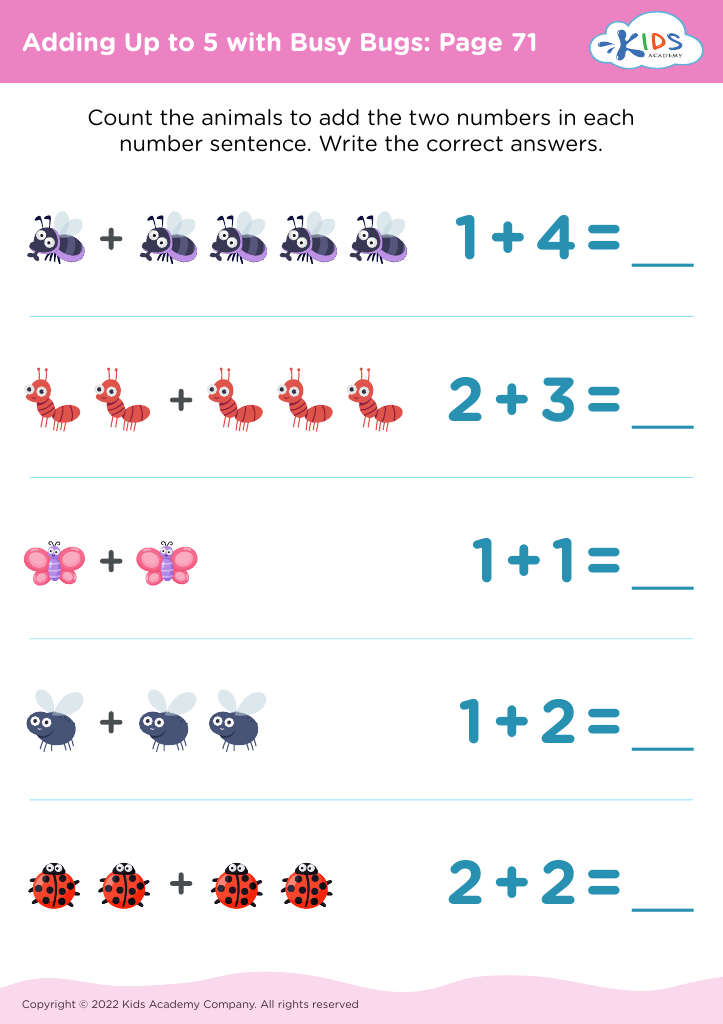
Enhance your child's mathematical skills with our engaging Problem-Solving Practice Addition Worksheets designed specifically for ages 4-5. These worksheets focus on developing problem-solving abilities while introducing basic addition concepts in a fun and interactive manner. Through colorful illustrations, relatable scenarios, and hands-on activities, young learners will gain confidence as they tackle simple addition problems. Our resources not only promote numerical understanding but also encourage critical thinking and reasoning skills. Perfect for enhancing classroom learning or providing supplemental practice at home, these worksheets are essential tools for nurturing a solid mathematical foundation. Start your child's journey to math mastery today!
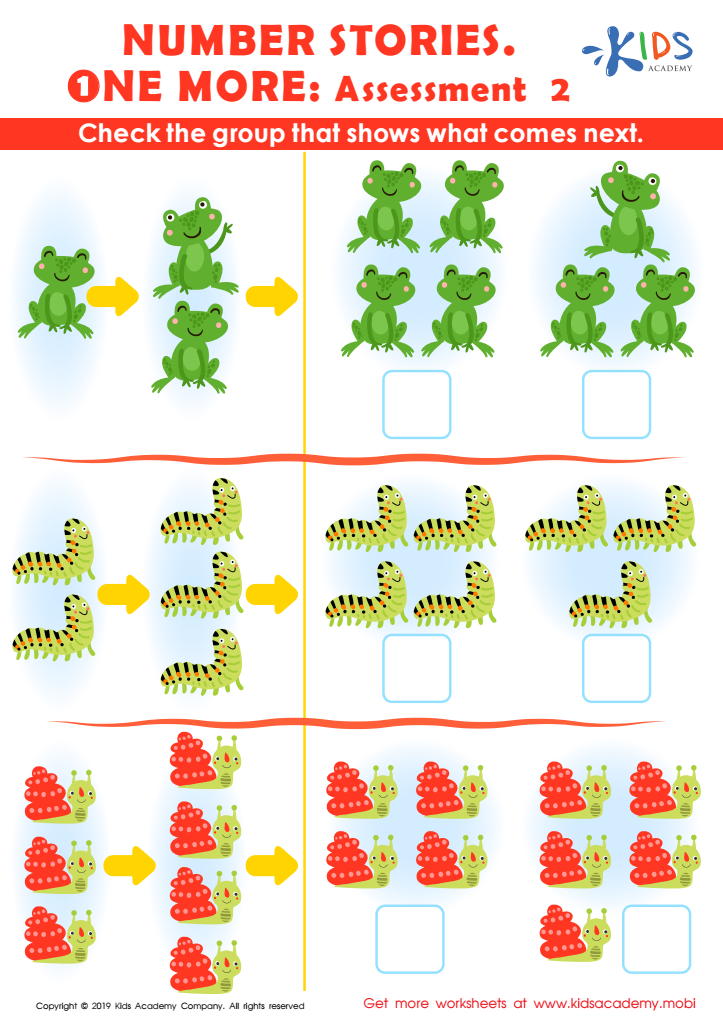
Number Stories One More – Assessment 2 Worksheet
 Assign to My Students





.jpg)


Problem-solving practice in addition for ages 4-5 is crucial for several reasons. Firstly, this stage of development is when children begin to grasp basic mathematical concepts. Engaging young learners in problem-solving activities not only enhances their understanding of addition but also builds a strong foundation for future math skills.
Additionally, problem-solving encourages critical thinking and helps children develop persistence when facing challenges. It's during these formative years that children learn to approach problems systematically, which can translate to improved academic performance across subjects.
Moreover, practicing addition through problem-solving engages children's curiosity and enthusiasm, enabling them to see math as a fun and rewarding experience rather than a chore. This positive attitude toward learning can foster a lifelong love for mathematics.
Furthermore, teamwork and communication skills often develop through group problem-solving sessions, where children discuss strategies and solutions. This social interaction is vital for their emotional and social development.
For parents and teachers, supporting problem-solving practice in addition not only aids cognitive development but also cultivates essential life skills that lay the groundwork for future learning. By investing in this early practice, adults help nurture confident, capable learners ready to tackle increasingly complex challenges in school.








