Problem-Solving Skills Addition Worksheets for Ages 4-5 - Page 3
54 filtered results
-
From - To
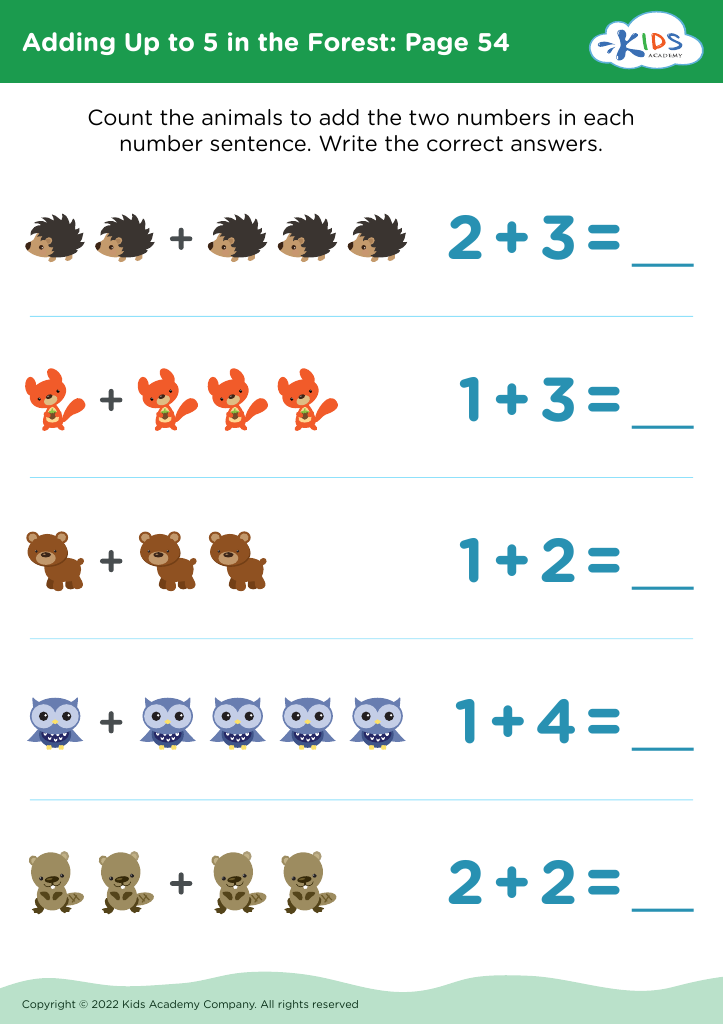
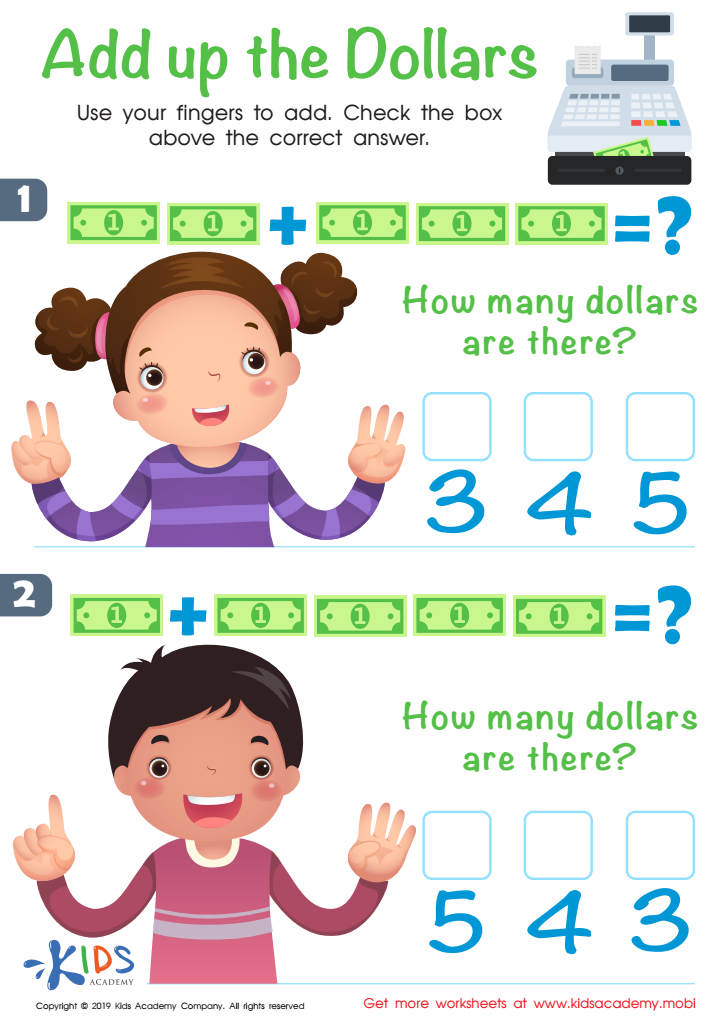
Add up the Dollars Worksheet
 Assign to My Students
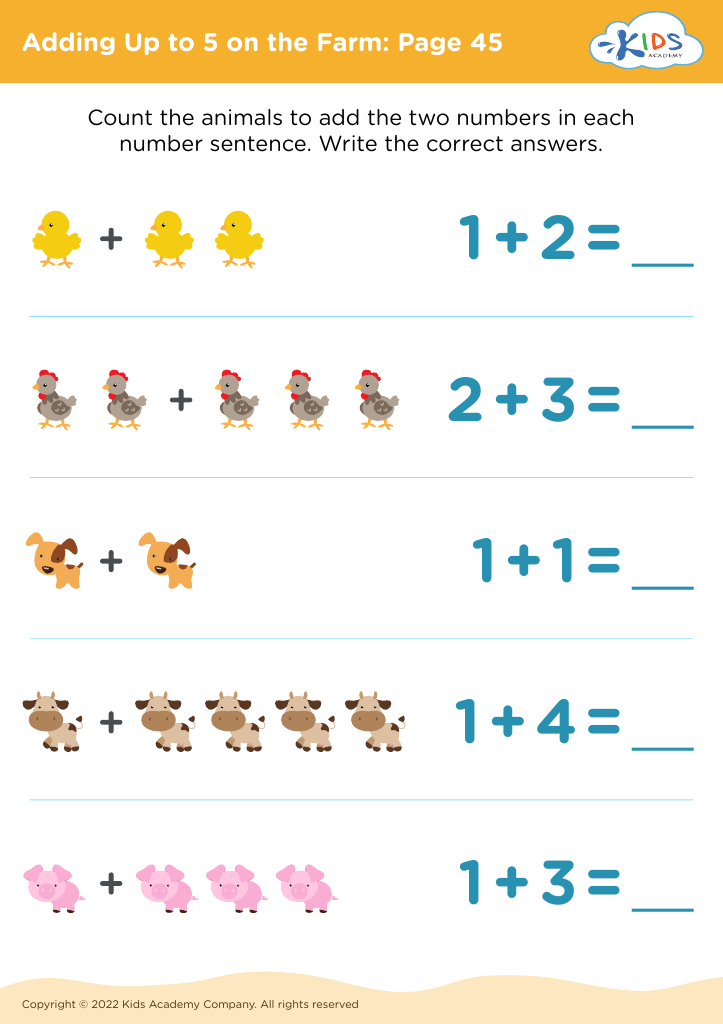
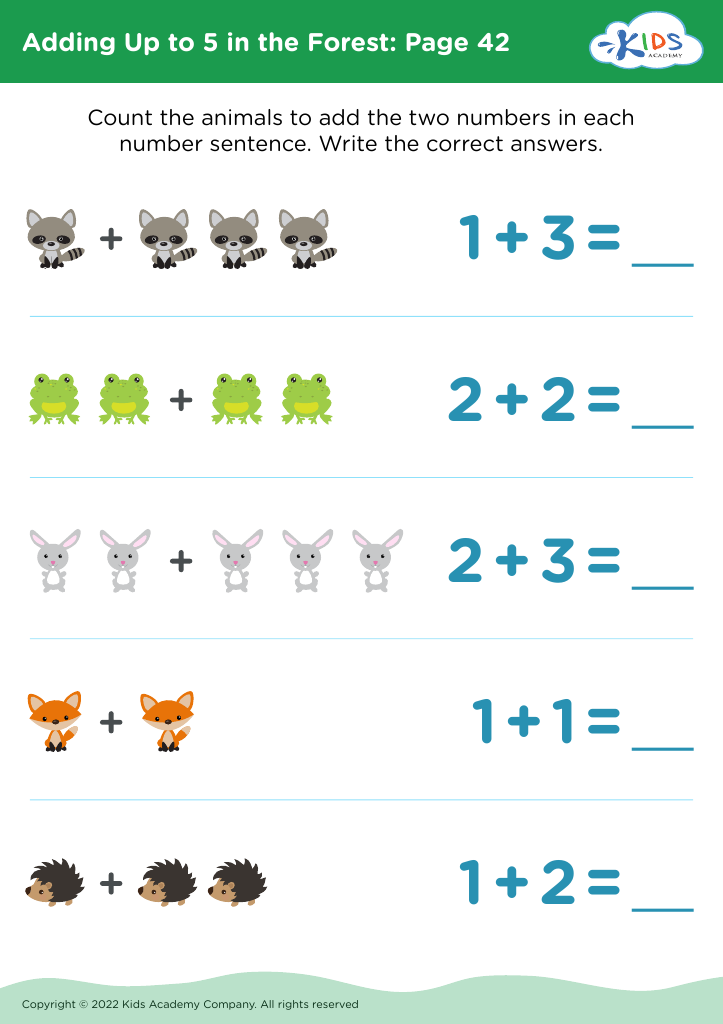
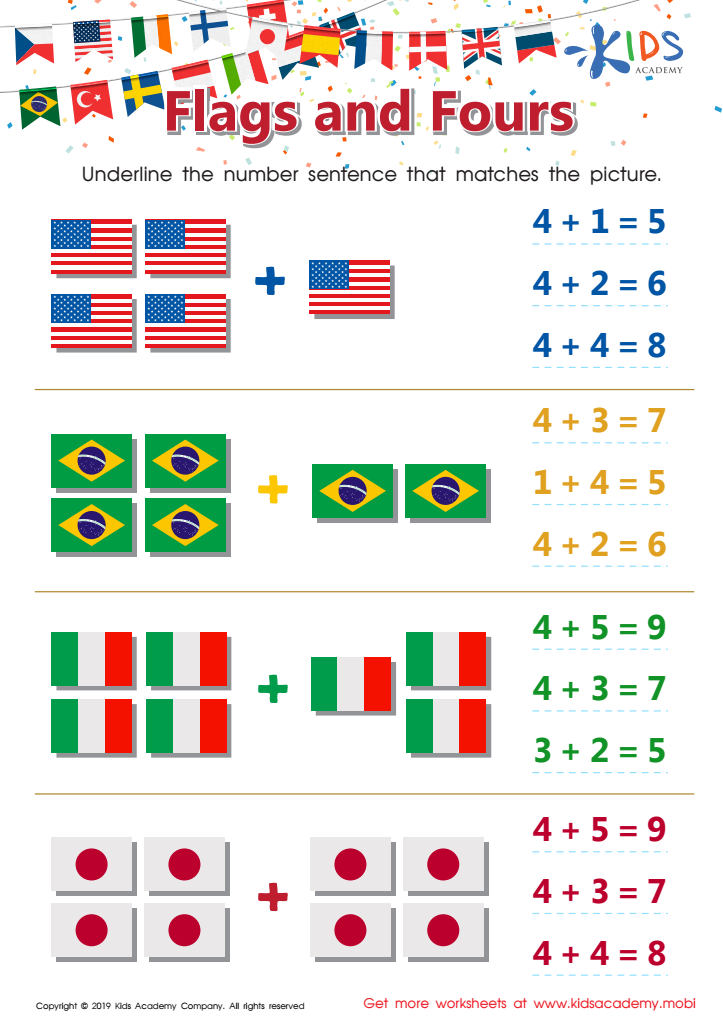
Flags and Fours Worksheet
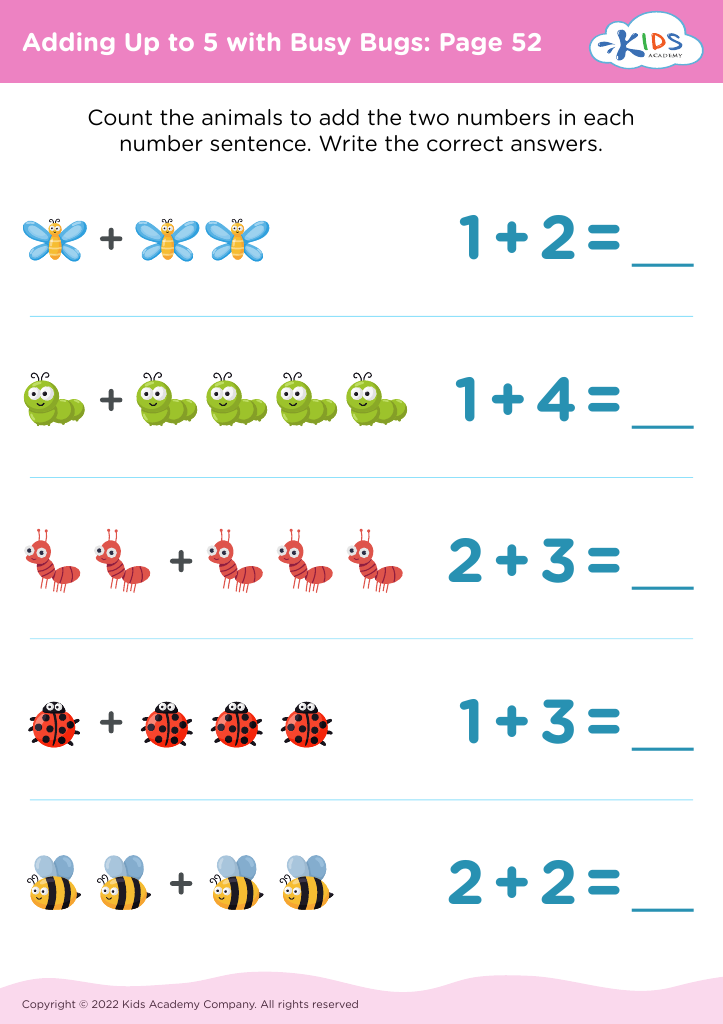








Problem-solving skills are critical for children aged 4-5 as they lay the groundwork for cognitive development and critical thinking. At this age, children are naturally curious, exploring their environment and seeking solutions to various challenges. Encouraging problem-solving skills through addition activities can help them build a strong mathematical foundation and develop logical reasoning.
For parents and teachers, fostering these skills is vital because they support learning in all subjects. When children learn to identify problems, think creatively, and experiment with different solutions, they become more resilient and flexible thinkers. By integrating addition into their problem-solving tasks, such as through games or everyday scenarios, children can see the practical application of math and develop confidence in their abilities.
Moreover, early problem-solving experiences promote collaboration and communication with peers. These social interactions enhance emotional intelligence and cooperation, essential life skills. In a world increasingly driven by technology and innovation, equipping young learners with effective problem-solving abilities will empower them to tackle future challenges, not only in math but across all areas of life. Ultimately, prioritizing these skills ensures a more robust, interactive, and engaging learning environment.








