Visual Perception Skills Addition Worksheets for Ages 4-5
5 filtered results
-
From - To
Enhance your child's early math capabilities with our Visual Perception Skills Addition Worksheets tailored for ages 4-5. These engaging worksheets integrate addition practice with visual perception challenges, fostering critical thinking and fine motor skills. Delightful illustrations captivate young minds while gradual difficulties cultivate confidence and proficiency in foundational math principles. Suitable for at-home enrichment or classroom support, these worksheets provide a delightful learning journey. Give your child a head start on math success with tools designed to make learning intuitive and fun. Explore our comprehensive collection and watch your little one’s skills bloom. Download today and ignite a passion for math!
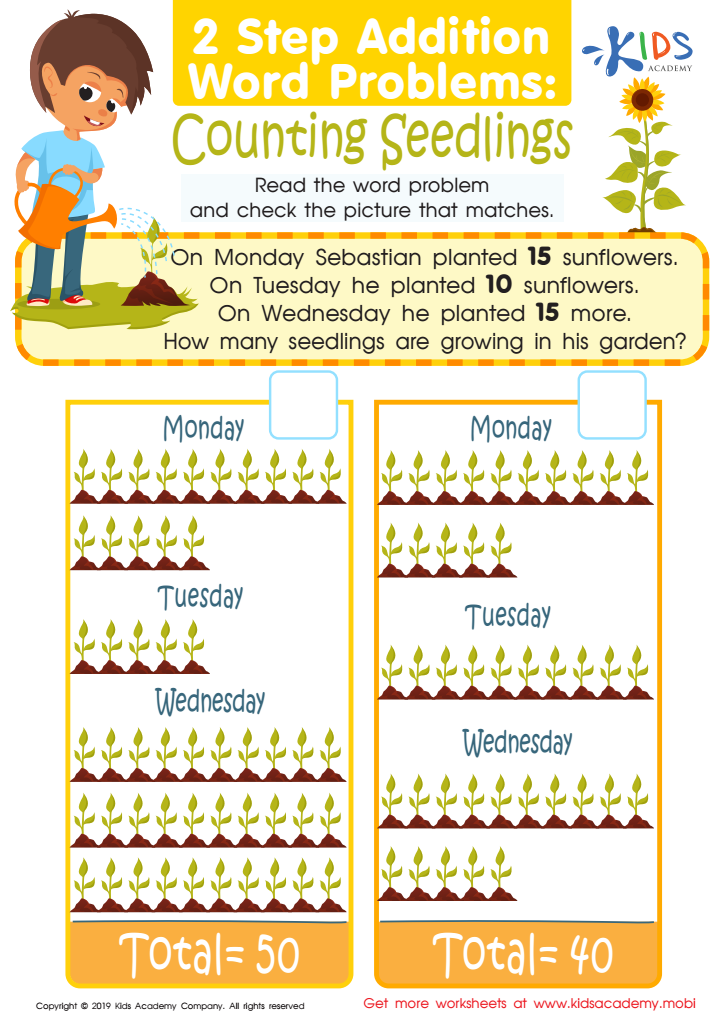
Counting Seedlings Worksheet
 Assign to My Students
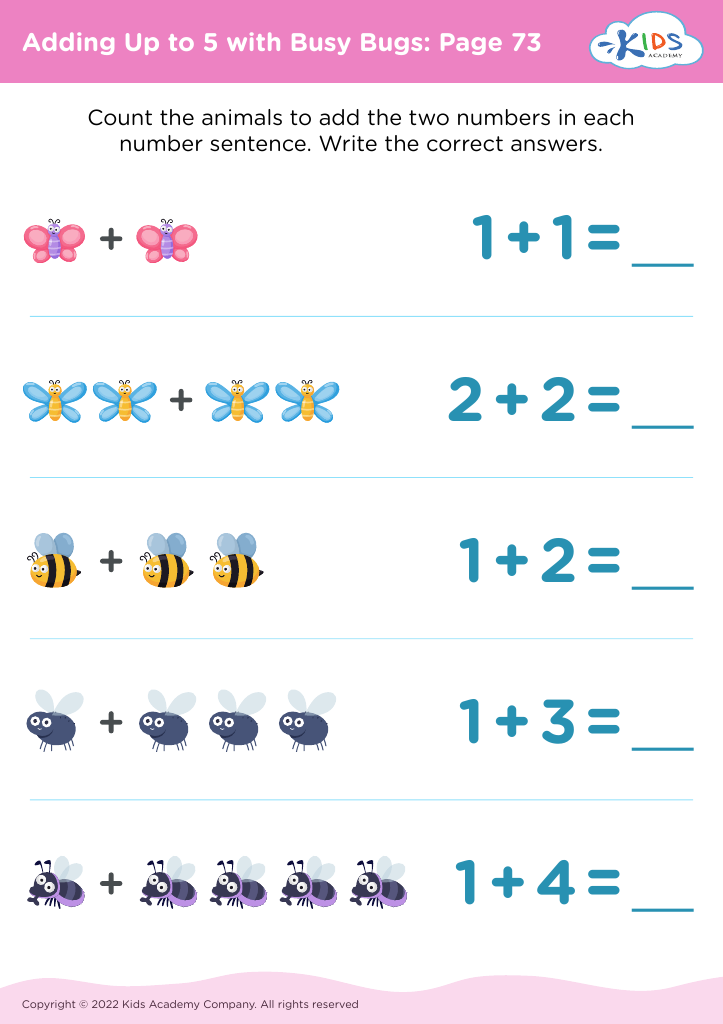
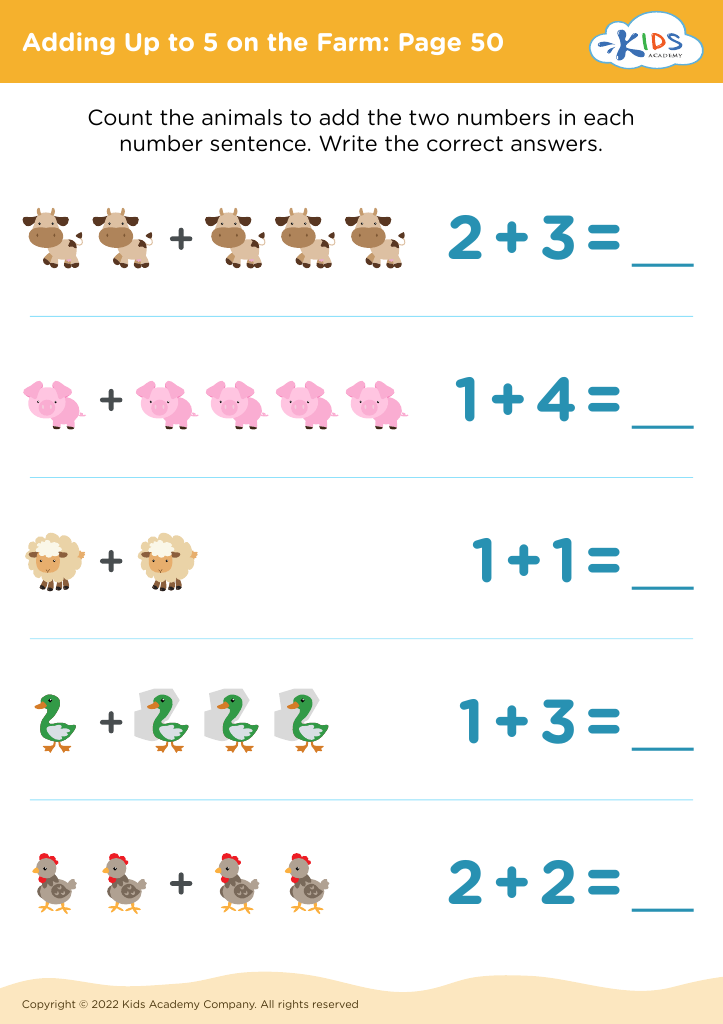
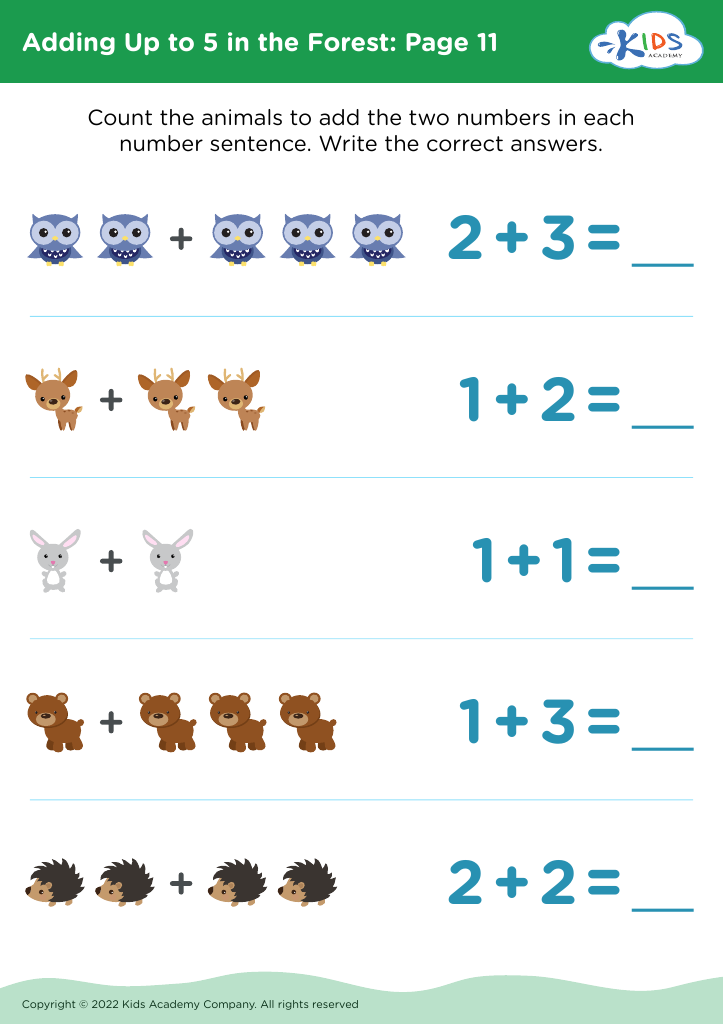
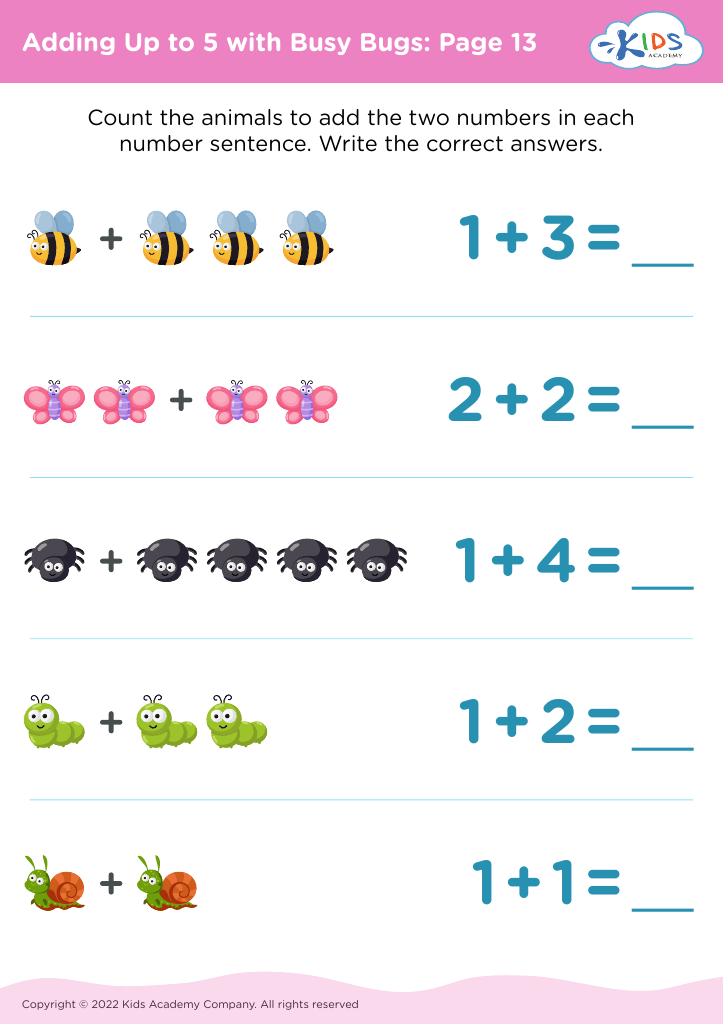








Visual perception skills are vital for young children's overall development, making it crucial for both parents and teachers to pay attention to these abilities in 4- to 5-year-olds. Visual perception is the brain's ability to interpret and make sense of what the eyes see. Key elements of this skill include recognizing shapes, spatial relationships, matching, and differentiating between objects. Developing these skills during early childhood serves as the foundation for essential academic and daily activities.
Strong visual perception skills directly impact a child's readiness for reading, writing, and math. For instance, being able to differentiate between letters and numbers helps with alphabet recognition and numeracy. Moreover, these skills support hand-eye coordination, which is fundamental for tasks such as drawing, cutting with scissors, and eventually writing.
Enhancing visual perception skills also nurtures cognitive development, including attention to detail, memory, and problem-solving abilities. These skills foster independence and confidence, as children are better able to navigate their environments and complete tasks.
For 4- to 5-year-olds, engaging in activities like puzzles, matching games, and drawing can significantly bolster these skills. Thus, incorporating visual perception activities into daily routines, both at home and in the classroom, is essential for cultivating a well-rounded developmental foundation.








