Money recognition Money Worksheets for Ages 4-5
5 filtered results
-
From - To
Discover our engaging Money Recognition Worksheets designed specifically for children aged 4-5! These interactive activities help your little ones learn about different coins and bills while developing essential math skills. Our worksheets feature colorful illustrations and simple exercises that make learning about money fun and enjoyable. Children will practice identifying, comparing, and counting various denominations, laying a strong foundation for financial literacy. Perfect for parents and educators, these resources promote hands-on learning and enhance your child's confidence in handling money. Start your child's financial education journey today with our easy-to-use Money Worksheets tailored for early learners!
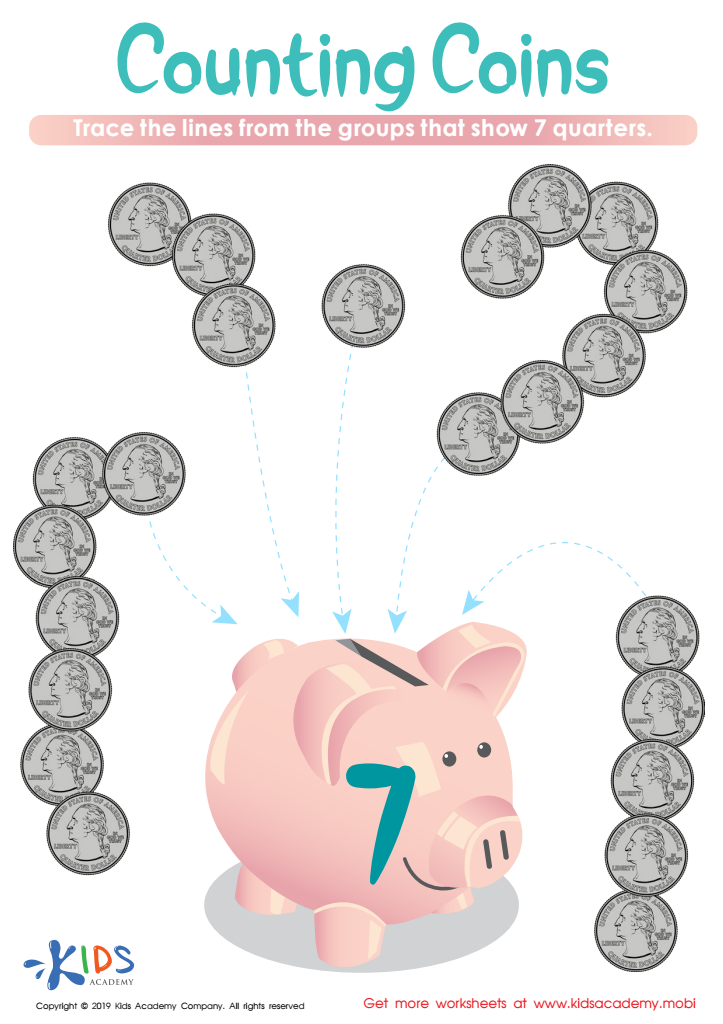
Counting Coins Worksheet
 Assign to My Students
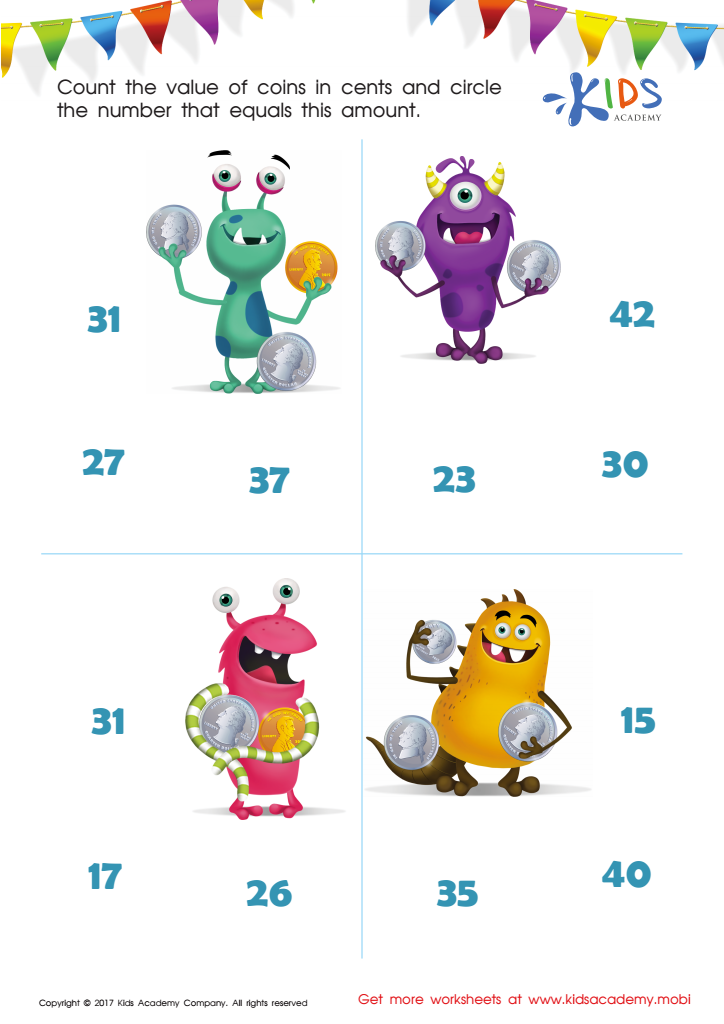
How Many Coins Money Worksheet
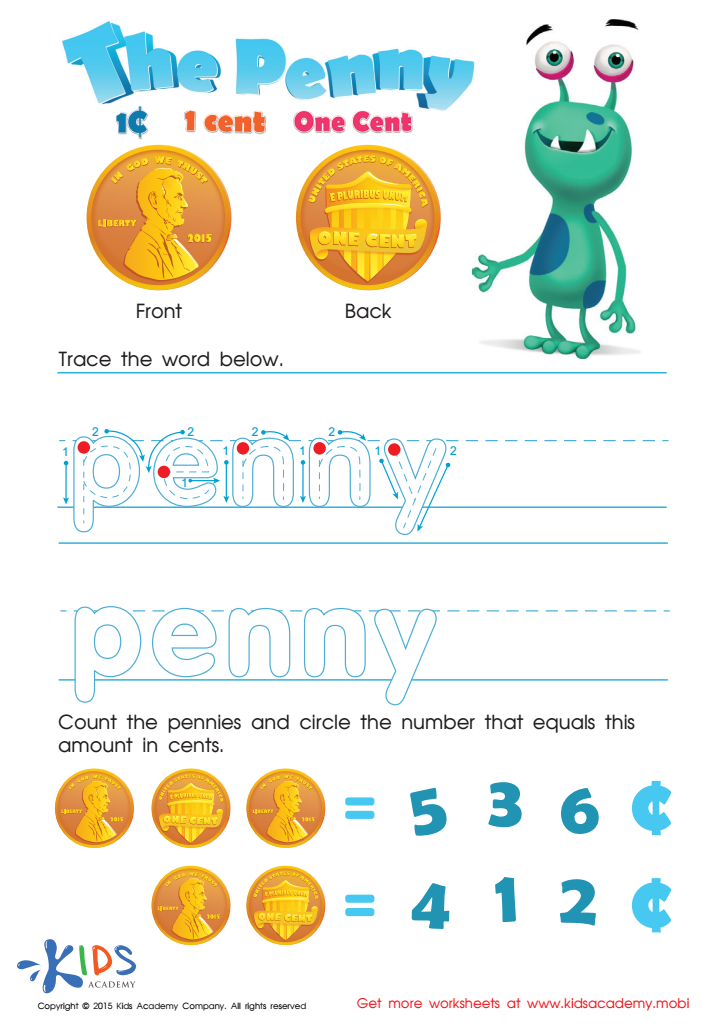
One Cent or the Penny Money Worksheet
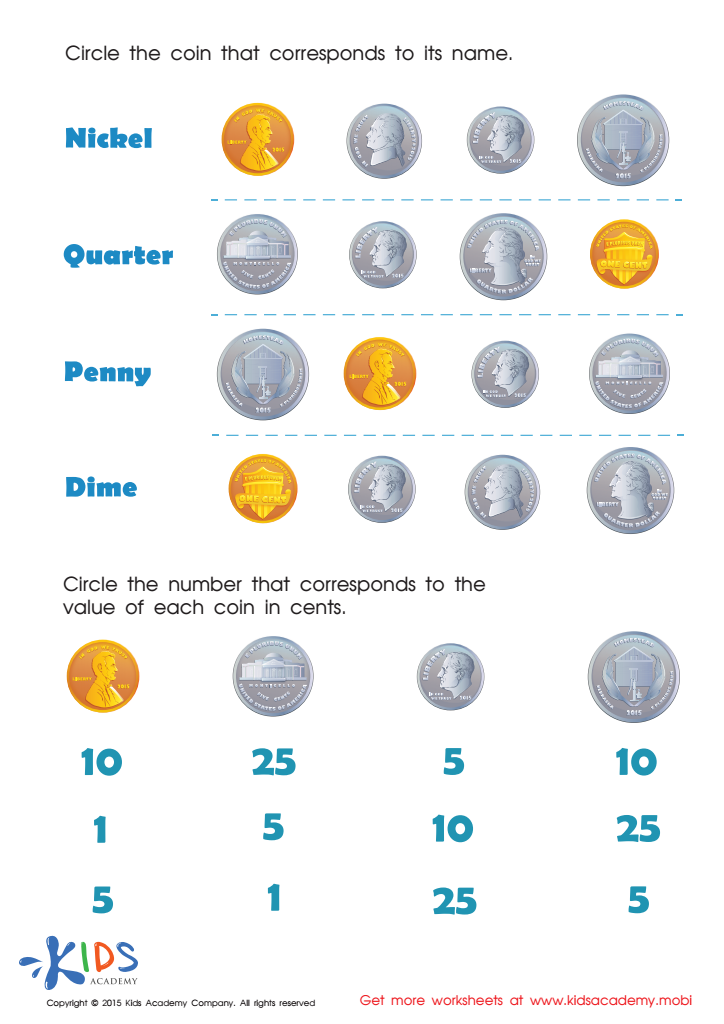
Coin Names and Values Money Worksheet
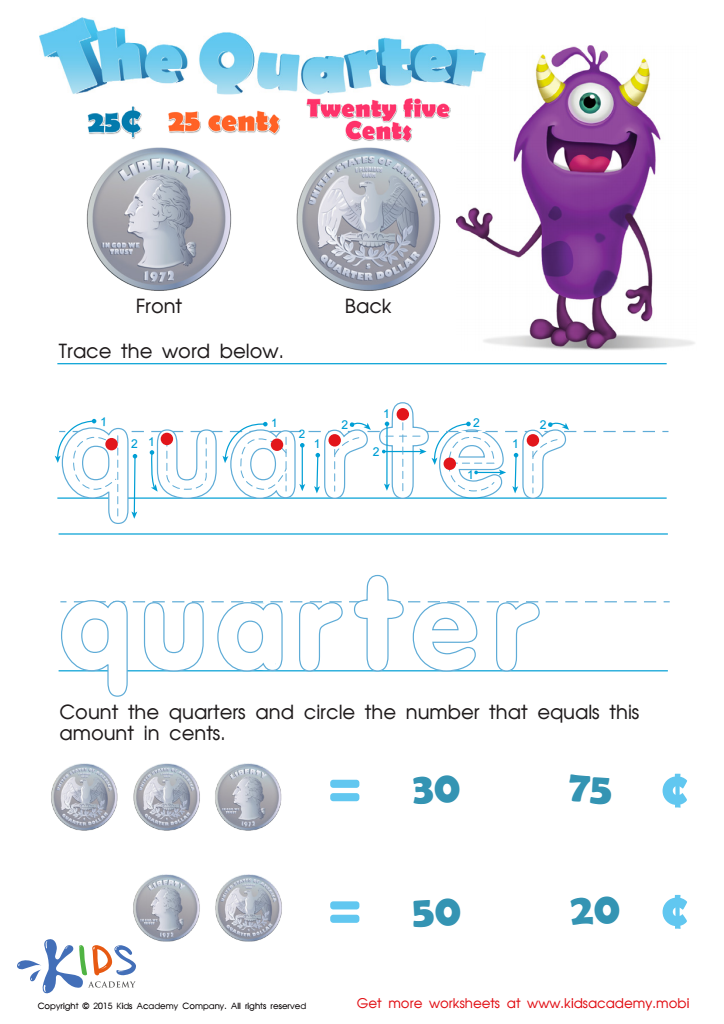
Twenty Five Cents or the Quarter Money Worksheet







Money recognition is a fundamental skill that plays a crucial role in a child's cognitive and social development at ages 4-5. This early exposure equips young learners with essential life skills that go beyond basic financial understanding. Recognizing coins and bills fosters mathematical concepts such as counting, addition, and sorting. As children learn to identify different denominations, they also develop their observational skills and attention to detail.
Furthermore, teaching money recognition encourages responsible decision-making. When children grasp the value of money, they begin to understand the consequences of spending and saving. This awareness helps instill important values such as budgeting and delayed gratification, which are vital for their future financial literacy. Early lessons in money management can also spur discussions about wealth sharing, the value of work, and social responsibility.
For parents and teachers, emphasizing money recognition can be facilitated through engaging activities like play stores or games involving real or play money, making learning enjoyable. By investing time in this crucial skill, caregivers ensure that children not only navigate the practical aspects of money but also build a foundation for lifelong financial understanding, preparing them to make informed choices as they grow older.








