
Basic Math Skills Geometry Worksheets for Ages 4-5
5 filtered results
Difficulty Level
Grade
Age
-
From - To
Subject
Activity
Standards
Unlock your child's potential with our Basic Math Skills Geometry Worksheets designed specifically for ages 4-5. These engaging worksheets introduce foundational geometric concepts through fun activities and vibrant illustrations. Young learners will explore shapes, sizes, and patterns, building the skills necessary for early math success. Each worksheet promotes critical thinking and problem-solving, allowing children to recognize and categorize basic geometry in a playful manner. Easy to print and implement in your home or classroom, these resources are perfect for enhancing your child's understanding of geometry while fostering a love for learning. Start nurturing your child's mathematical journey today!
Favorites
With answer key
Interactive
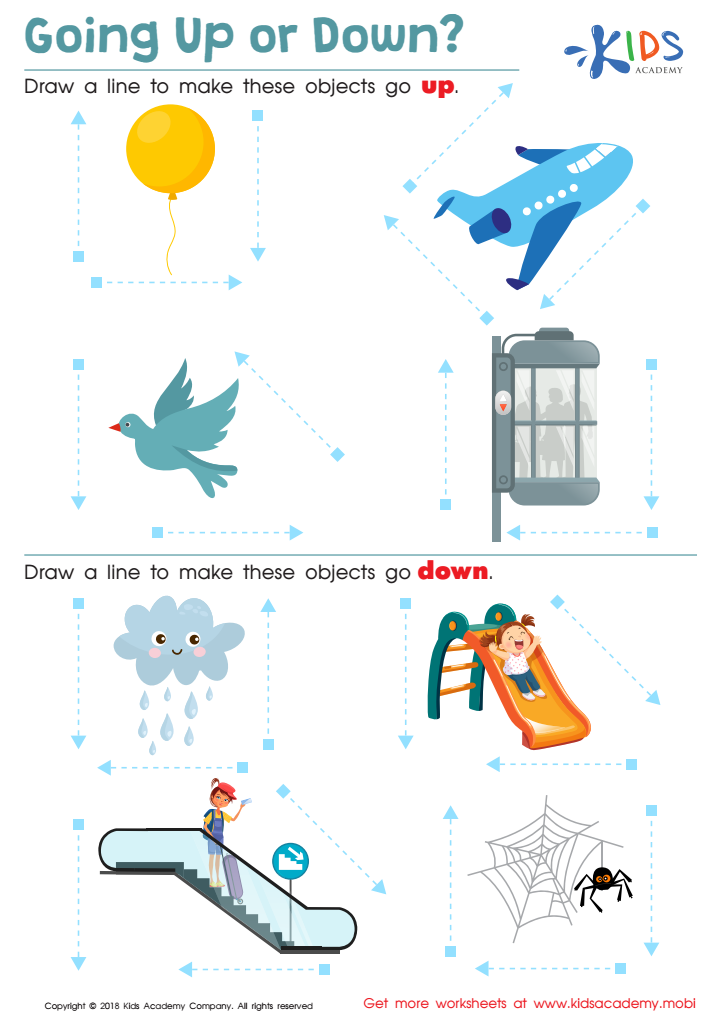
Going up or Down? Worksheet
Young students learn the concept of up and down with this geometry worksheet. They trace lines to identify relative positioning as an object travels. Kids can use position words to describe an object's movement, enhancing their spatial relationship skills - an important geometry foundation.
 Assign to My Students
Going up or Down? Worksheet
Worksheet











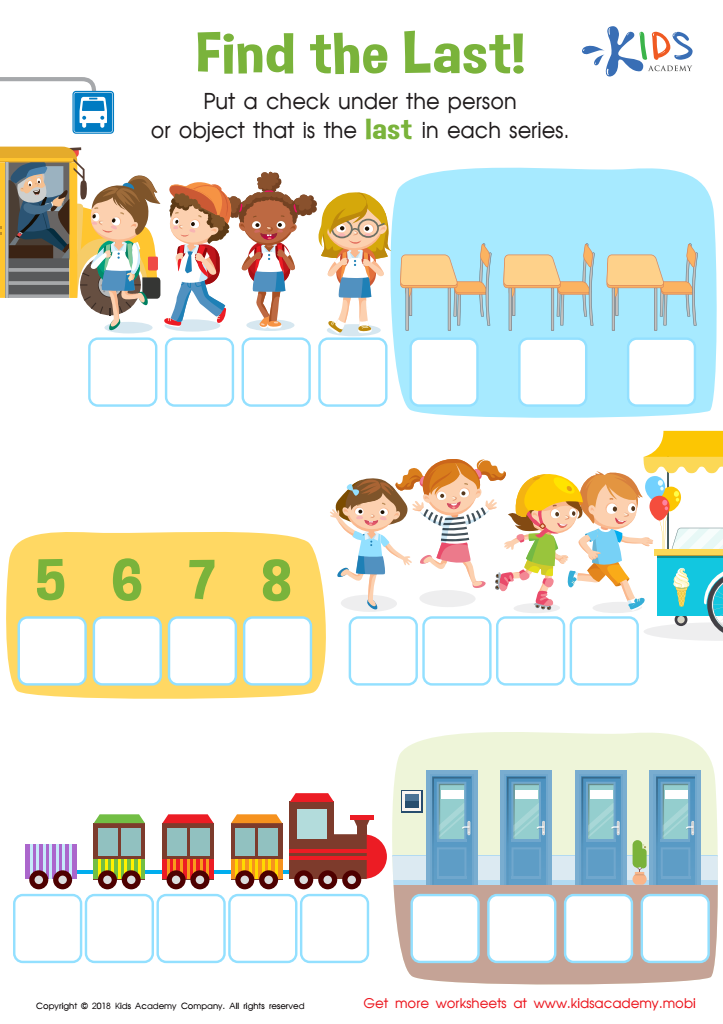
Find the Last! Worksheet
Teach young students about sequence words with this free worksheet. Have them look at sets of people or objects and choose the one that is last. Engage them further by having them describe or act out their day, and what happens last? Enjoy this printout and have fun!
Find the Last! Worksheet
Worksheet
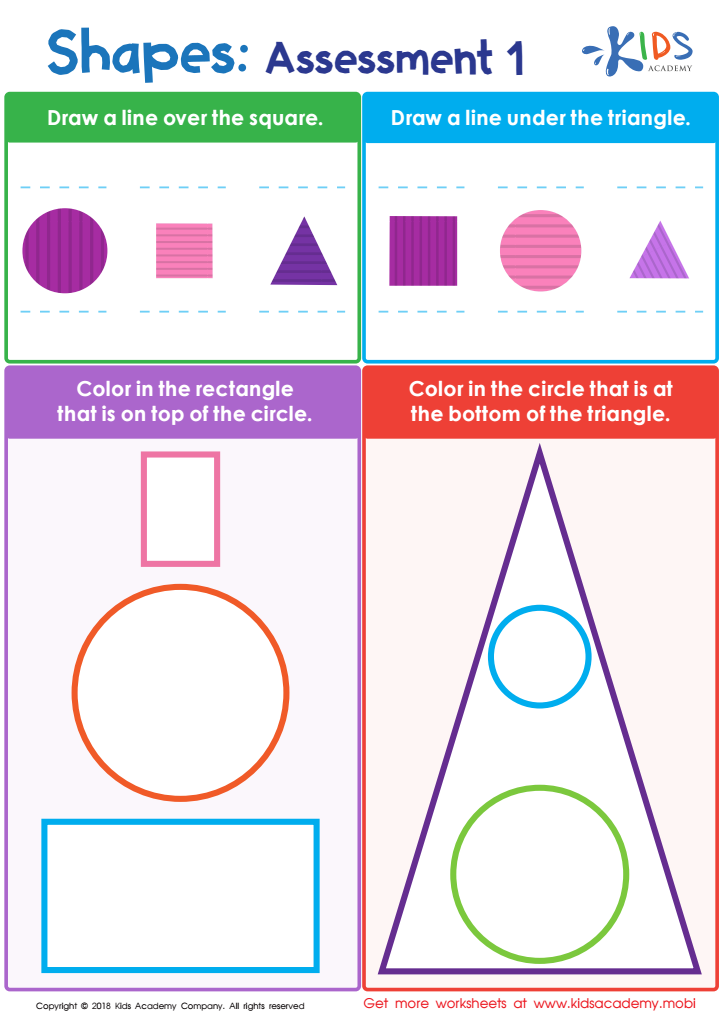
Shapes: Assessment 1 Worksheet
Test your students' understanding of the four basic shapes - circle, square, triangle and rectangle - with this assessment worksheet. Get them to draw a line over or under the shape indicated in the directions to show they can identify it correctly.
Shapes: Assessment 1 Worksheet
Worksheet
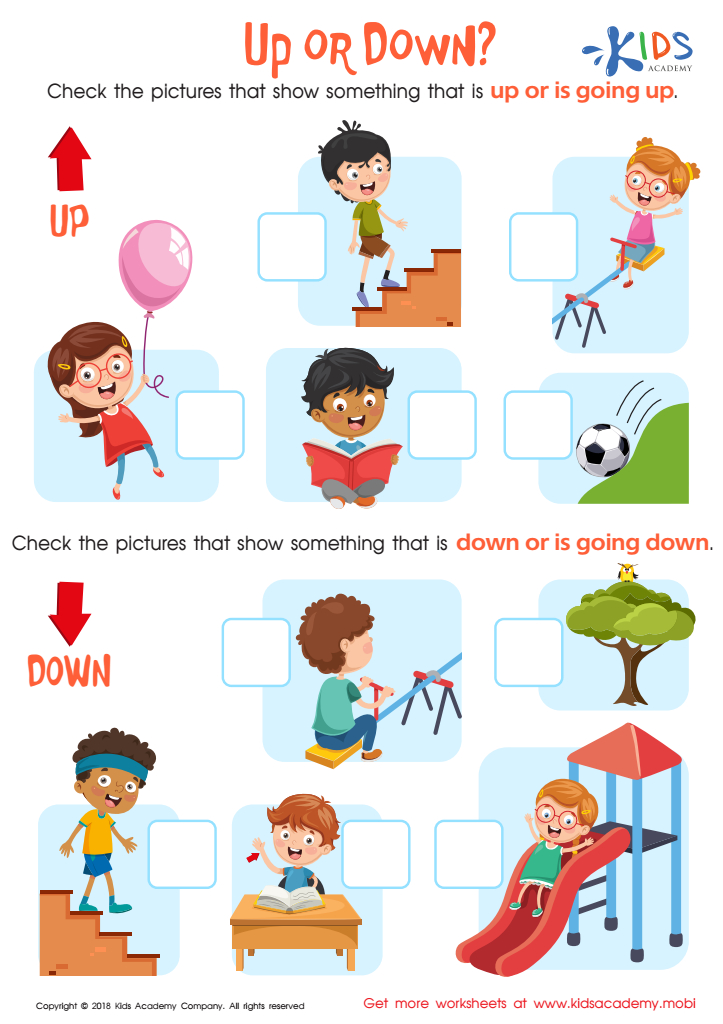
Up or Down Worksheet
Teach your toddlers the concepts of up and down with Kids Academy's vivid worksheet! Use the seesaw analogy to reinforce this language with them and build a strong foundation for future learning. Show them how a balloon can float up but must come back down too.
Up or Down Worksheet
Worksheet
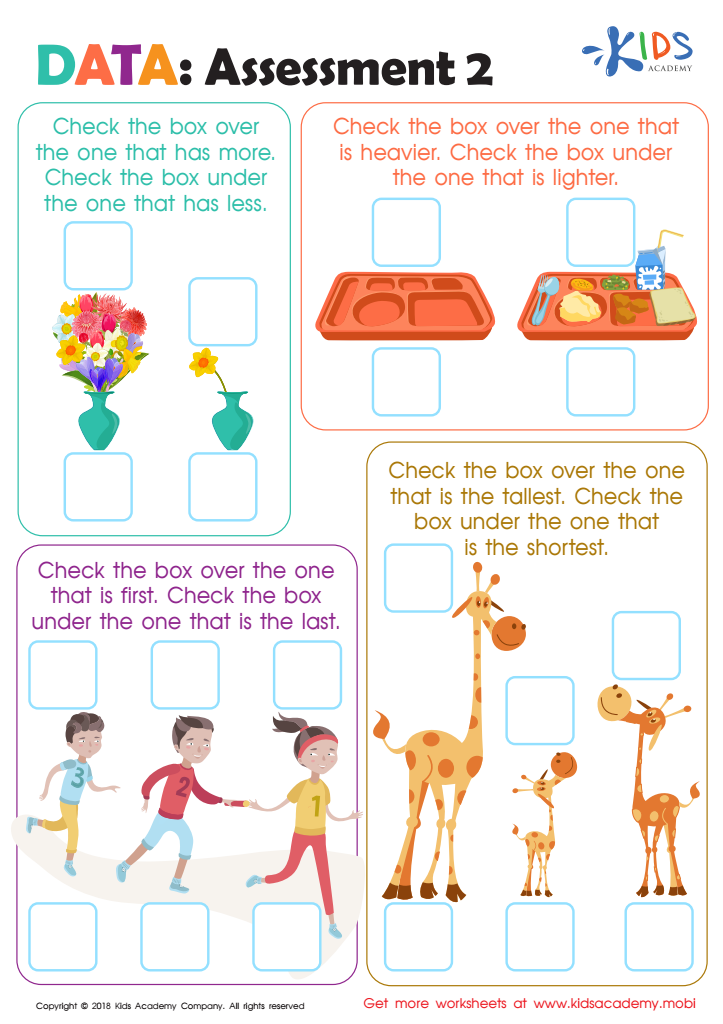
Data: Assessment 2 Worksheet
This printable worksheet tests students' understanding of words related to quantity and measurement, such as "more", "less", "heavy", "light", "first", "last", "tall", and "short". It helps children compare and contrast when solving measurement problems. Ideal for math classes, it encourages students to gain the essential skills needed in subjects like math, science, and reading.
Data: Assessment 2 Worksheet
Worksheet
Join Kids Academy for Free
Who is primarily going to use this learning content?








Parents and teachers should prioritize basic geometry skills for children aged 4-5 as these foundational concepts play a critical role in cognitive development and future academic success. At this age, children are naturally curious and eager to explore their environment, making it an ideal time to introduce geometric shapes and spatial reasoning.
Understanding shapes helps children develop observational skills and enhances their ability to categorize and describe the world around them. Basic geometry lays the groundwork for problem-solving and logical thinking, enabling young learners to recognize patterns and understand relationships between different objects.
Additionally, early exposure to geometry fosters creativity and imagination. As children manipulate shapes, they engage in hands-on learning that stimulates critical thinking and fine motor skills. Geometry also connects to various areas of learning, including art, science, and everyday activities, reinforcing the importance of math in real life.
Moreover, encouraging geometric learning reinforces a positive attitude towards math. When children build a solid arithmetic foundation, they become more confident in their abilities and excited about learning new concepts. Ultimately, supporting the development of basic geometry skills prepares children for more complex mathematical challenges in the future, paving the way for lifelong success in mathematics and beyond.








