
Addition up to 5 Math Worksheets for Ages 4-5
4 filtered results
Difficulty Level
Grade
Age
-
From - To
Subject
Activity
Standards
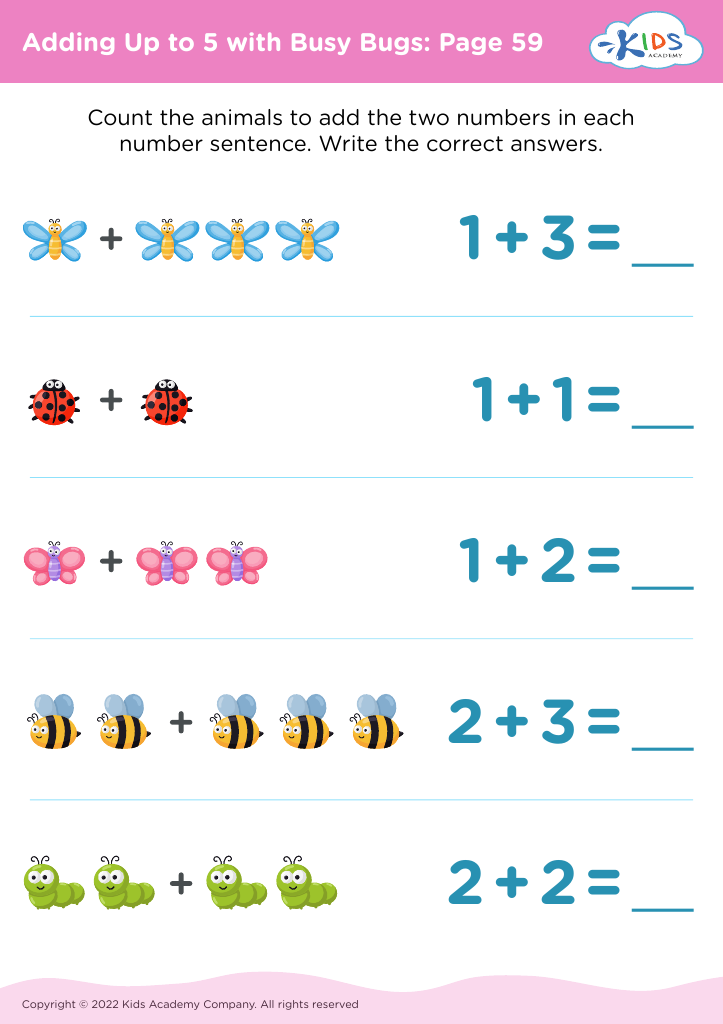
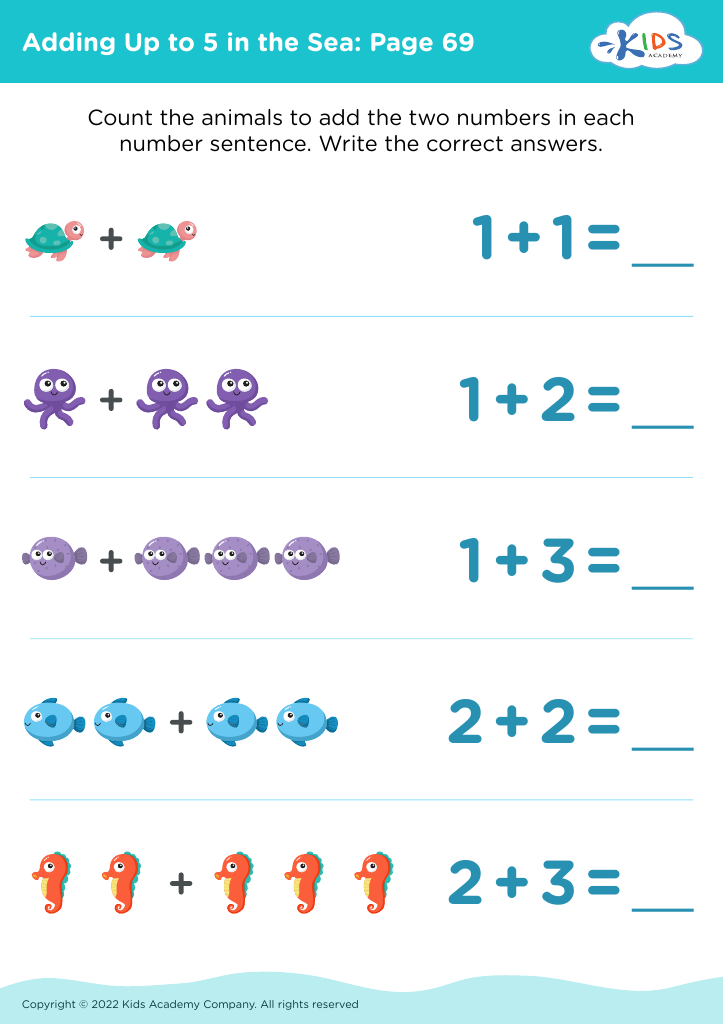
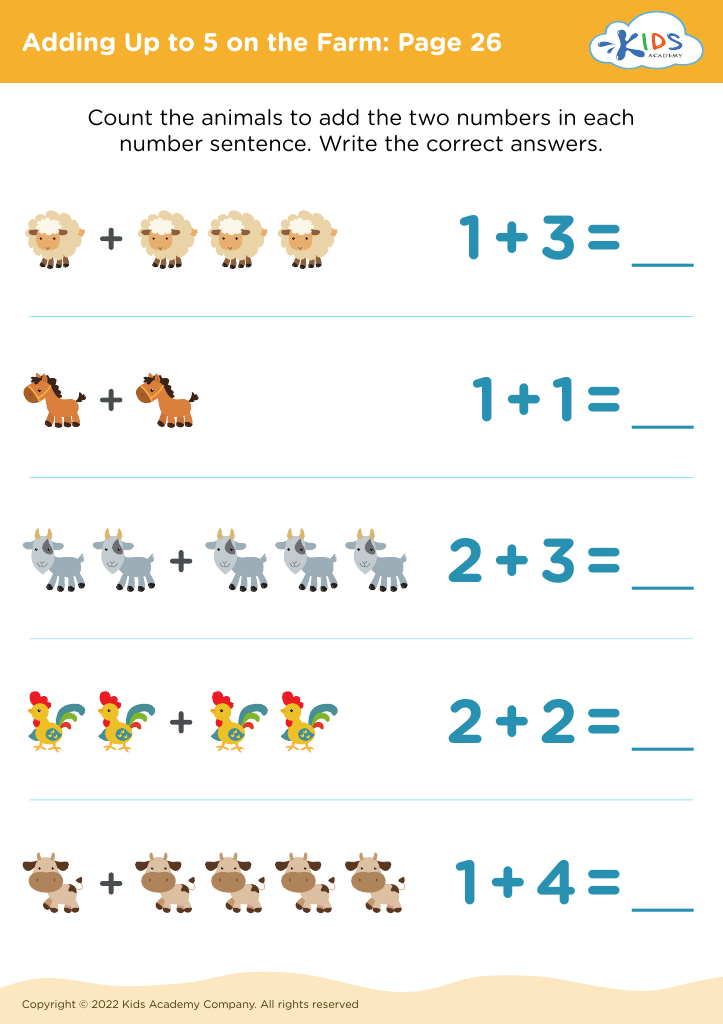
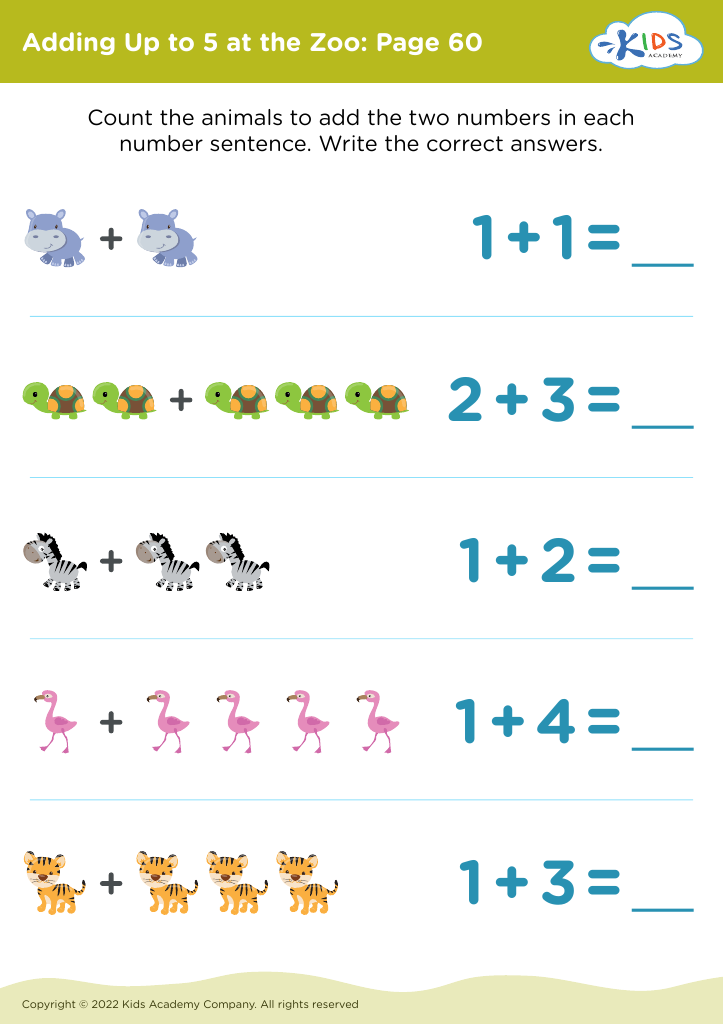
Welcome to our collection of "Addition up to 5 Math Worksheets" designed for children ages 4 to 5! These engaging worksheets aim to introduce young learners to basic addition concepts through fun and interactive activities. Utilizing colorful visuals and age-appropriate exercises, your child will develop essential math skills while boosting their confidence in numeracy. Our worksheets include matching games, number lines, and simple equations that make learning subtraction enjoyable. Perfect for at-home learning or classroom use, these resources will set a strong foundation for your child’s academic journey. Explore our printable materials and help your little one master addition in no time!
Favorites
With answer key
Interactive
Join Kids Academy for Free
Who is primarily going to use this learning content?







Parents and teachers should prioritize teaching addition up to 5 for children aged 4-5 because it lays the foundation for all future mathematical learning. At this early age, children are highly receptive to new concepts, and introducing them to basic addition fosters a positive attitude towards math while instilling confidence in their abilities.
By mastering addition up to 5, children enhance their cognitive skills, such as problem-solving and critical thinking. This early exposure also aids in developing number sense, enabling them to understand quantities, relationships, and simple calculations in everyday situations. Furthermore, engaging children through playful activities, such as counting objects or using visual aids, makes learning fun and interactive.
Additionally, early proficiency in basic math lays groundwork for more advanced concepts. Understanding addition is essential for tackling more complex math skills later on, such as subtraction and multiplication. It also benefits cross-curricular learning, as math intertwines with science, reading, and even art.
Ultimately, fostering a positive relationship with numbers at a young age encourages lifelong learning and helps children build a strong educational foundation, equipping them for success in school and beyond. Investing time in teaching addition up to 5 is critical for their holistic development.








