
Attention to Detail Math Worksheets for Ages 4-5
6 filtered results
Difficulty Level
Grade
Age
-
From - To
Subject
Activity
Standards
Explore our Attention to Detail Math Worksheets for ages 4-5, designed to enhance young learners' focus and precision in math. These engaging worksheets encourage children to pay close attention while developing essential skills such as number recognition, counting, and spatial awareness. With fun and colorful themes, each activity promotes critical thinking and problem-solving abilities, making learning enjoyable and interactive. Perfect for classroom use or at-home practice, these worksheets cultivate a strong foundation in math while fostering attention to detail — a vital skill for future academic success. Download now and inspire your child’s love for learning through hands-on math activities!
Favorites
With answer key
Interactive
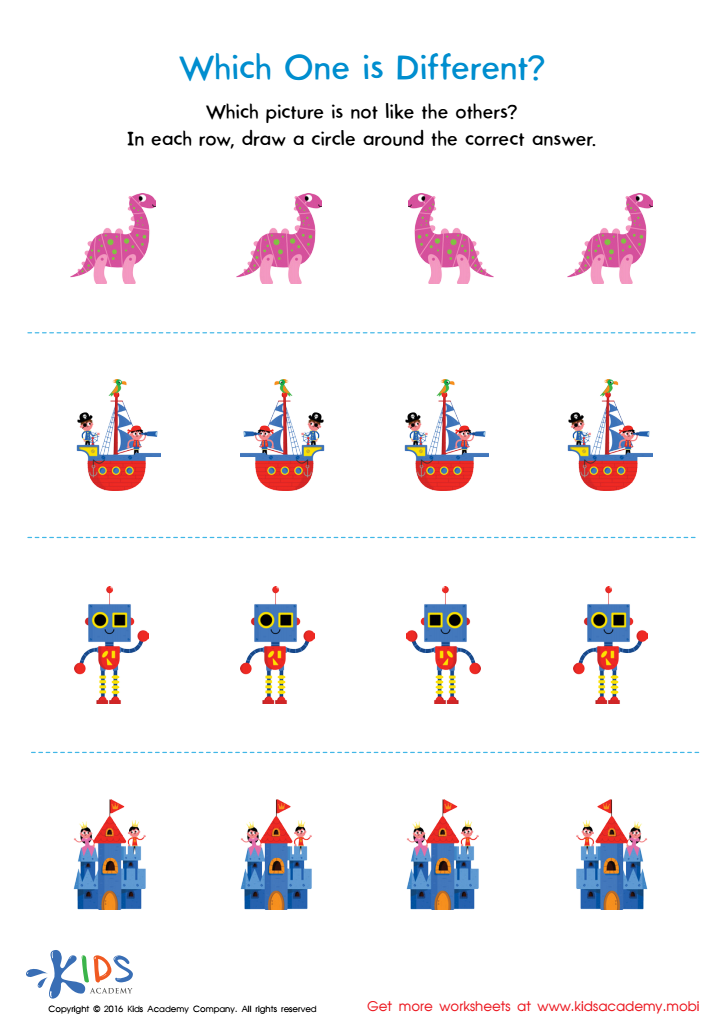
Which One Is Different Worksheet
Preschoolers can hone logical reasoning and critical analysis skills with this "Which one is Different?" worksheet. Kids must look closely and pick out unique attributes of objects and images. It's a skill that can serve them throughout their lifetime.
 Assign to My Students
Which One Is Different Worksheet
Worksheet
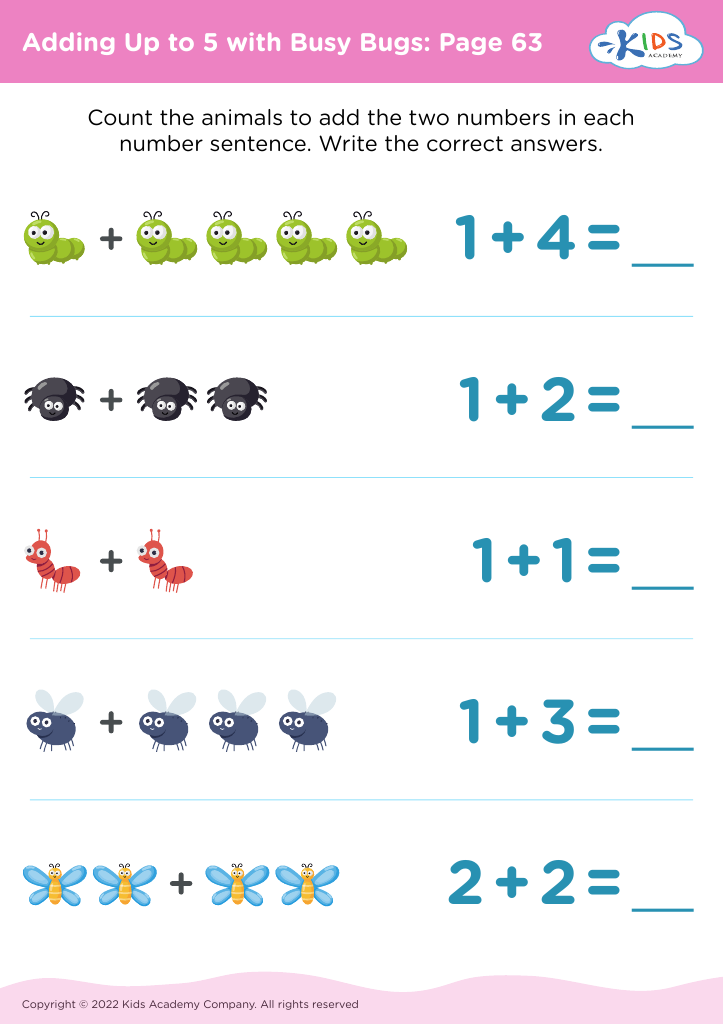
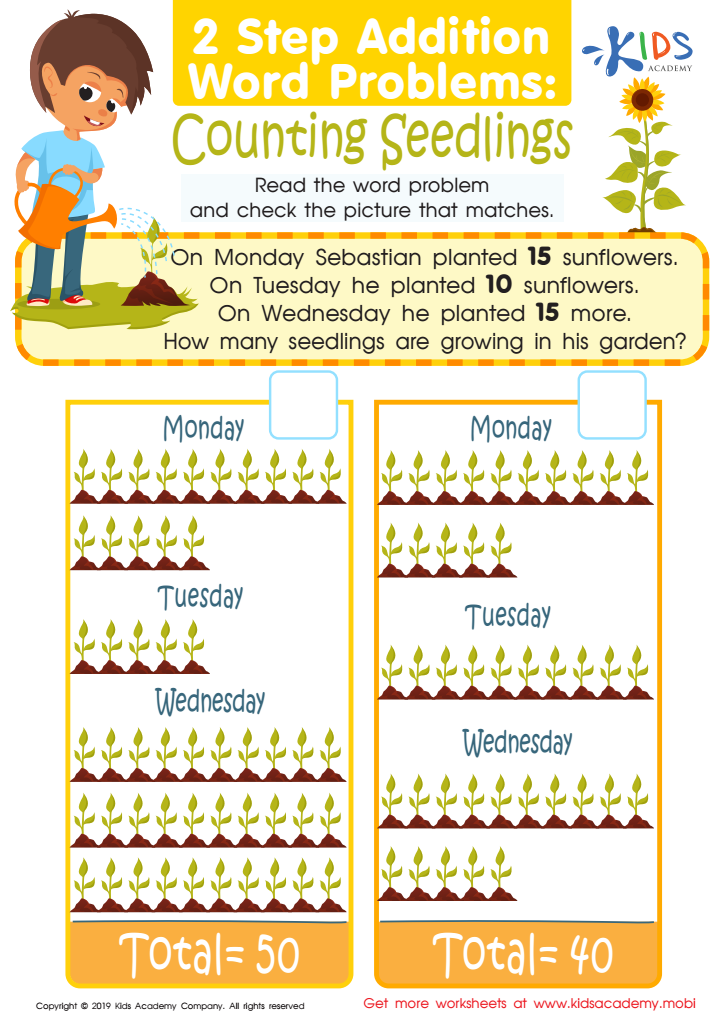
Counting Seedlings Worksheet
Understanding math word problems is key. Multiple steps can prove challenging - this free worksheet provides one-to-one picture representation to help kids solve multi-step addition word problems. Strengthen addition skills by choosing the matching picture to the answer.
Counting Seedlings Worksheet
Worksheet
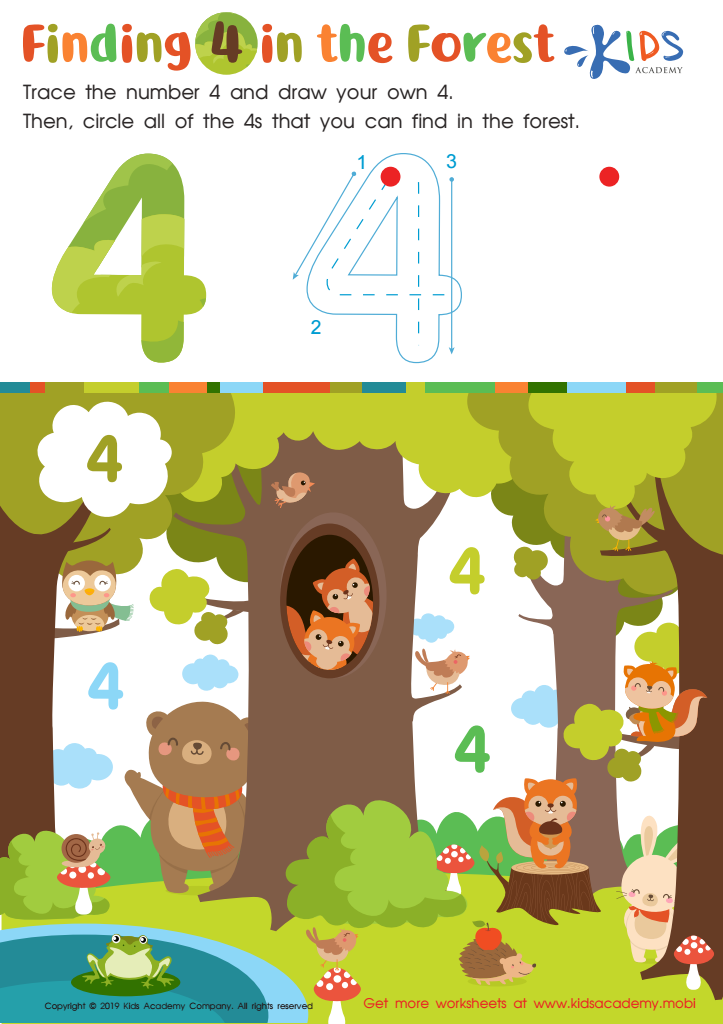
Finding 4 in the Forest Worksheet
Before starting, have your kids count as high as they can. Ask them to identify the setting and point out the 4s. Trace 4 and draw your own. Help your kids circle all the 4s they can find in the forest. How far can they count? How well did they find the hidden 4s?
Finding 4 in the Forest Worksheet
Worksheet
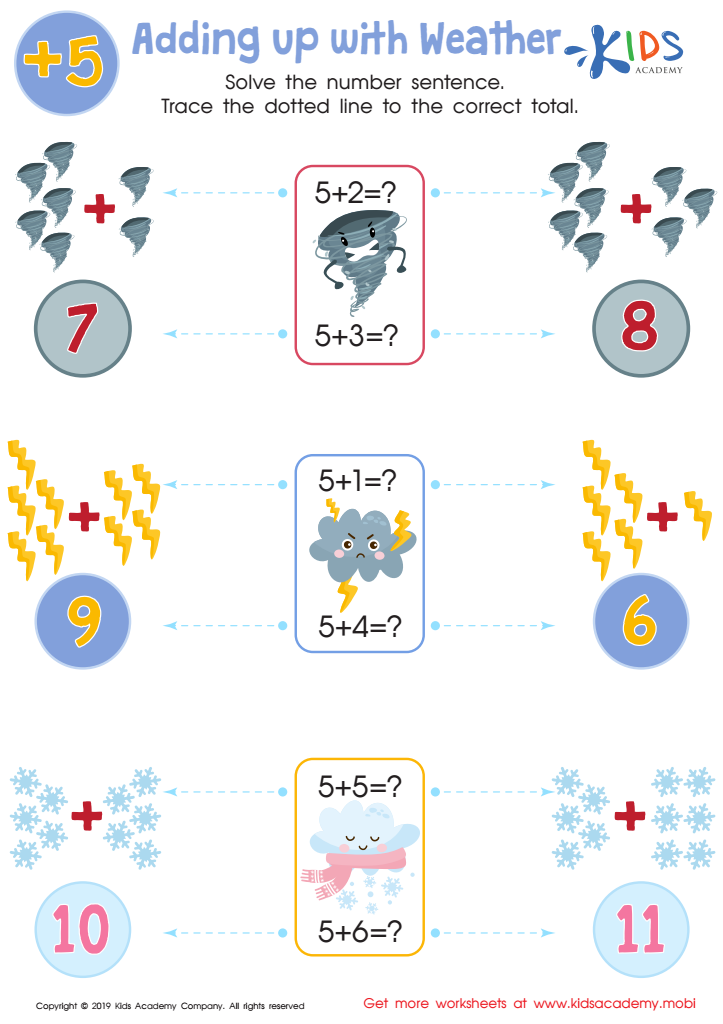
Adding up With Water Worksheet
Ask your kids to name different kinds of weather and what it's like outside now. Then, help them solve the number sentences on the worksheet by tracing the dotted line to the correct total.
Adding up With Water Worksheet
Worksheet
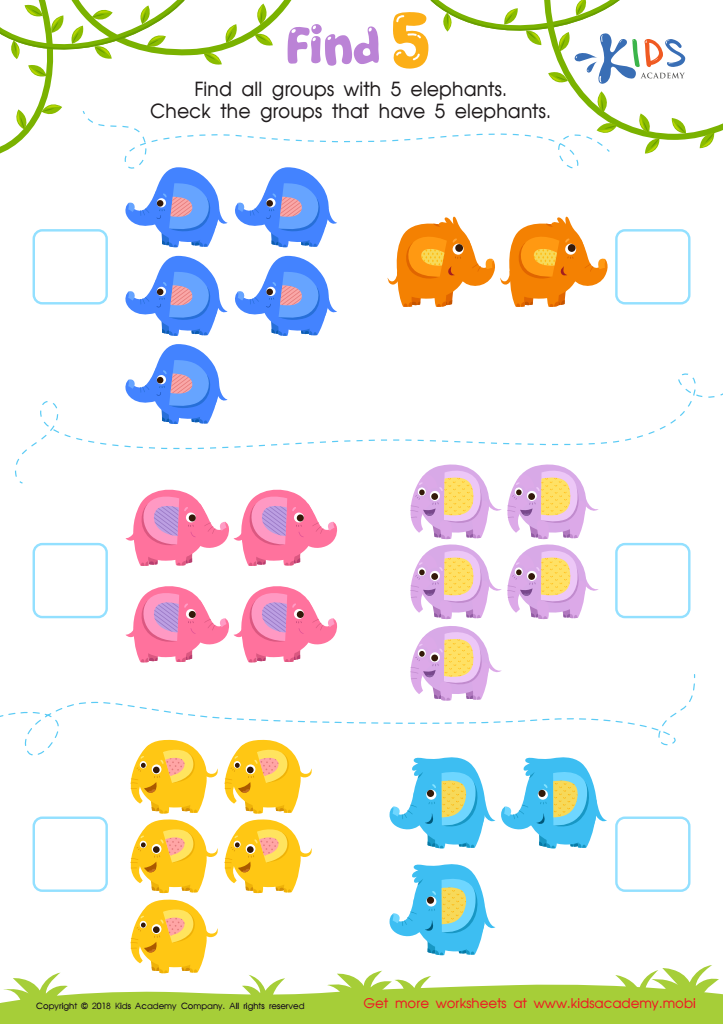
Find 5 Worksheet
Kids will love these cheery elephants that help them discover grouping and counting by fives. It's a great way to start learning addition and multiplication, while also developing fine motor skills. Download the free PDF and let the fun begin.
Find 5 Worksheet
Worksheet
Join Kids Academy for Free
Who is primarily going to use this learning content?







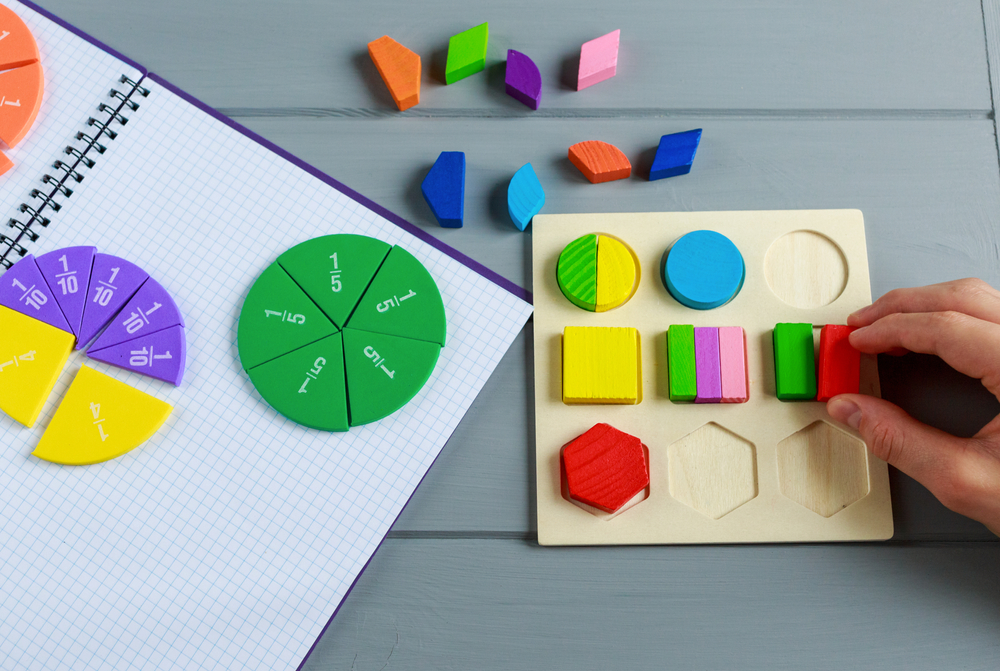
Attention to Detail Math for Ages 4-5 is crucial for early childhood development because it builds foundational skills that support later learning. At this stage, children are naturally curious, and engaging them with math through detailed tasks helps sharpen their observation and concentration. These early experiences pay off, fostering a love for math and enhancing critical thinking.
Focusing on attention to detail teaches children to recognize patterns, categorize objects, and solve problems. These skills translate into better understanding in more complex concepts as they progress through school. Moreover, math at this age isn't just about numbers; it involves shapes, size comparison, and spatial relationships, all of which enhance cognitive abilities.
Parents and teachers should care because early exposure to detailed mathematical thinking can prevent future learning difficulties. Engaging children in active, playful experiences around math can help demystify the subject, making it relatable and enjoyable. This positive relationship establishes a strong learning disposition that supports academic success.
Ultimately, integrating Attention to Detail Math into the learning environment nurtures essential skills that children utilize not only in school but also throughout their lives, preparing them for a structured yet flexible approach to problem-solving and decision-making in various contexts.








