
Comparing sizes Math Worksheets for Ages 4-5
6 filtered results
Difficulty Level
Grade
Age
-
From - To
Subject
Activity
Standards
Enhance your child's understanding of comparative sizes with our engaging "Comparing Sizes Math Worksheets" designed specifically for ages 4-5. These worksheets encourage young learners to explore concepts of big and small, tall and short, and more, through fun activities and relatable visuals. With a variety of interactive exercises, your child will build foundational math skills while boosting their observational abilities. Ideal for both classroom and home settings, these easy-to-follow worksheets provide the perfect introduction to measurement concepts. Start fostering your child’s love for learning and strengthen their early math skills today with our captivating comparing sizes resources!
Favorites
With answer key
Interactive
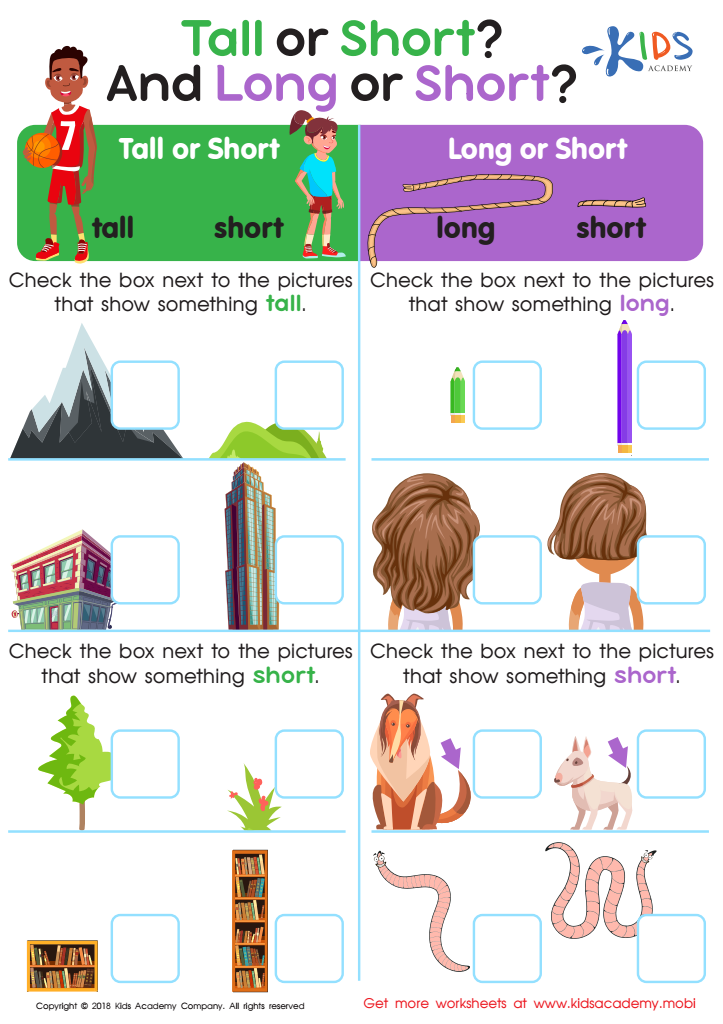
Tall or Short and Long or Short? Worksheet
This worksheet is fun and helpful for kids to understand the difference between height and length. With pictures of familiar objects, they can compare and choose the box with the right answer. This helps them gain skills and a better foundation for future measuring.
 Assign to My Students
Tall or Short and Long or Short? Worksheet
Worksheet
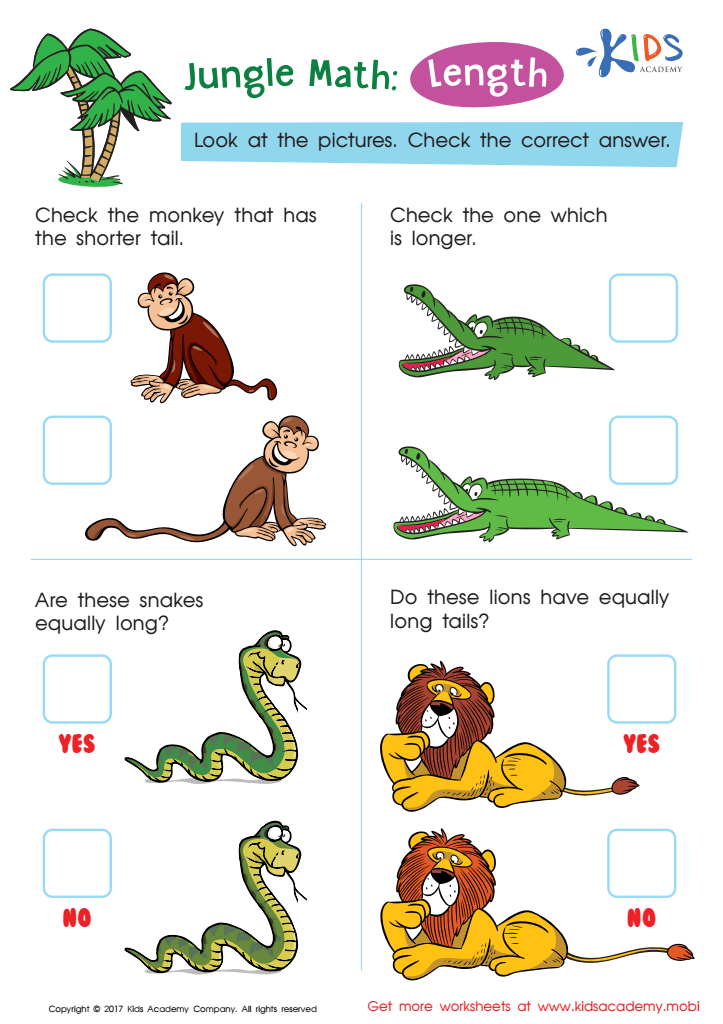
Which One Is Longer - Length Worksheet
Let's go to the jungle - kids get excited to practice math with animal-filled worksheets! This one is sure to have your pupil mastering length in no time.
Which One Is Longer - Length Worksheet
Worksheet
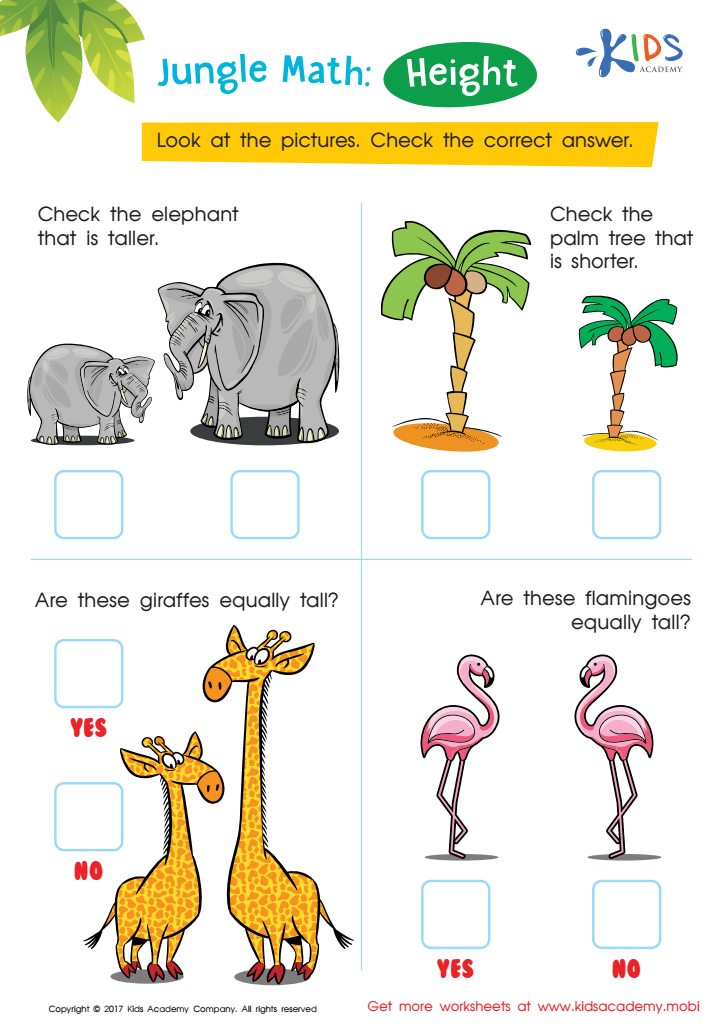
Which Is Taller Worksheet
Help your kindergartner learn about height with this fun worksheet! They'll love comparing zoo animals and deciding which are taller, shorter, or equal. It's a great way to practice math and have fun!
Which Is Taller Worksheet
Worksheet
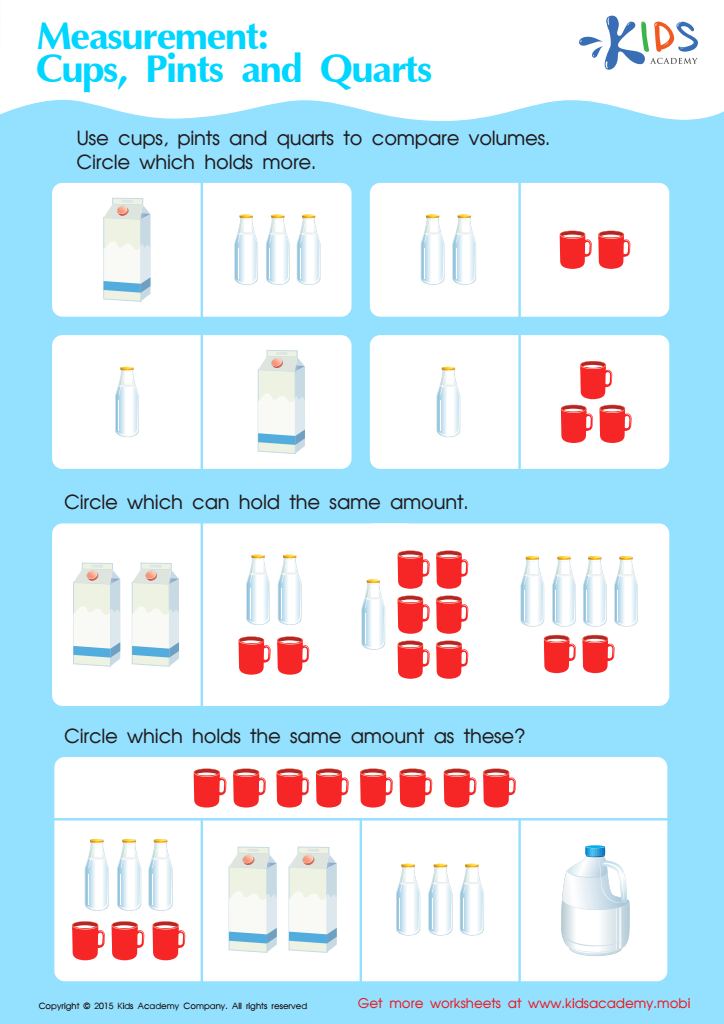
Measurement: Compare Volumes Worksheet
Compare volumes with Kids Academy and have fun! (80 words)
Practice measuring with Kids Academy and have fun! Compare volumes in pictures and circle which holds more. Keep learning with free math worksheets available on our website. Enjoy the process and have fun!
Measurement: Compare Volumes Worksheet
Worksheet
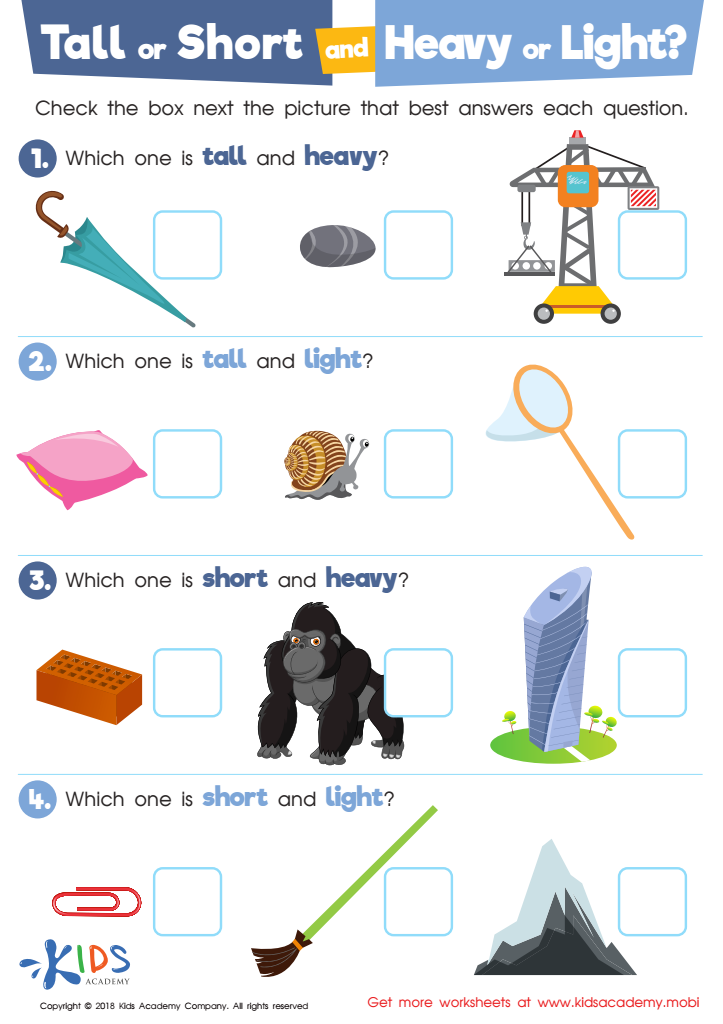
Tall or Short and Heavy or Light? Worksheet
Young children can find basic measurement concepts tricky. This PDF introduces them to the appropriate vocabulary for describing heavy, light, tall and short items, by using familiar pictures. It helps them accurately select which items fit each category.
Tall or Short and Heavy or Light? Worksheet
Worksheet
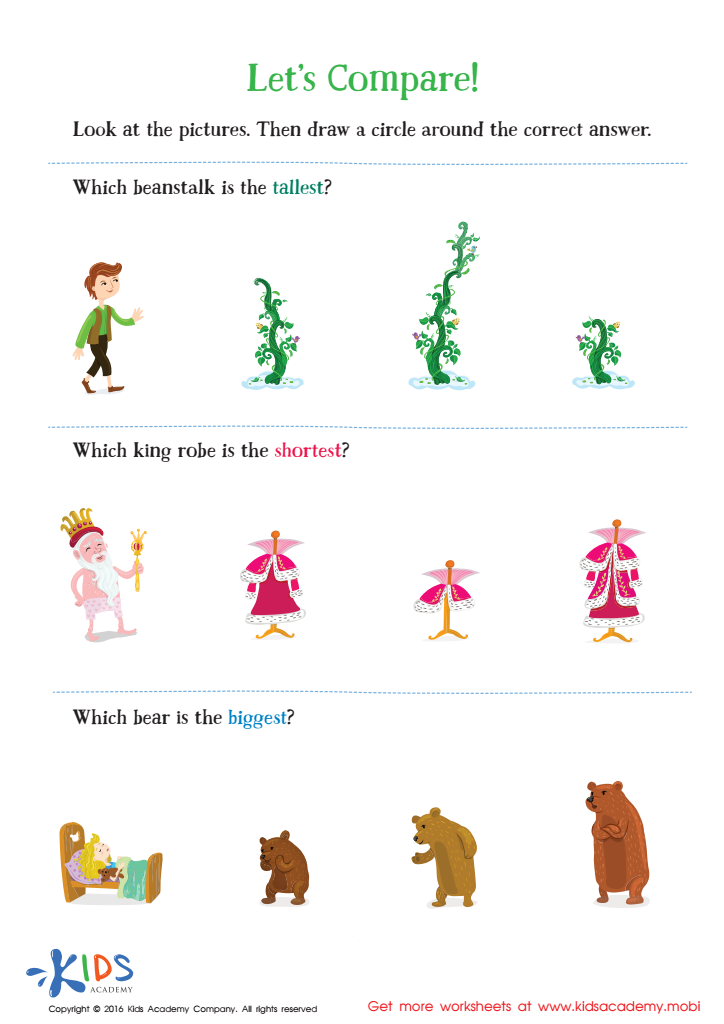
Fairy Tale Worksheet: Let's Compare
Preschoolers need to recognize different sizes of objects. This worksheet combines fun fairy tales with size practice, helping them read, problem solve, and sort through pictures. Your child will love the images and be eager to complete it. Enhance their learning by talking about the tales to build comprehension.
Fairy Tale Worksheet: Let's Compare
Worksheet
Join Kids Academy for Free
Who is primarily going to use this learning content?


.jpg)




Comparing sizes is a foundational mathematical skill that children ages 4-5 must master as it plays a critical role in their cognitive development and everyday understanding of the world. For parents and teachers, fostering this skill means helping young learners develop analytical thinking, problem-solving abilities, and a strong grasp of numeracy that will benefit them in later academic pursuits.
At this age, children learn to differentiate between "bigger," "smaller," "taller," and "shorter." Understanding these concepts enables them to categorize objects, which is essential for making sense of their environment. Engaging in size comparison activities also enhances language development, as children learn to articulate their observations and apply new vocabulary.
Moreover, size comparison lays the groundwork for more complex mathematical concepts such as measurement and geometry. It serves as a gateway for introducing children to basic arithmetic when they start to quantify their observations.
Beyond academics, the ability to compare sizes can help children develop social awareness by fostering practices like sharing and cooperation in play. Such skills promote a sense of community and enhance emotional intelligence. Therefore, prioritizing size comparison in early education enriches the developmental trajectory of young learners, making it crucial for parents and teachers alike.








