
Fine motor skills (writing numbers) Math Worksheets for Ages 4-5
15 filtered results
Difficulty Level
Grade
Age
-
From - To
Subject
Activity
Standards
Welcome to our collection of Fine Motor Skills Math Worksheets, designed specifically for children ages 4-5! These engaging activities focus on helping young learners practice writing numbers while developing essential fine motor skills. Our worksheets enhance hand-eye coordination and dexterity through fun numbers tracing and writing exercises. Perfect for preschool and kindergarten settings, these worksheets make learning enjoyable and interactive. As children work through these tasks, they build confidence in their writing abilities, laying a strong foundation for future math success. Explore our resources today to support your child's early math journey and fine motor development!
Favorites
With answer key
Interactive
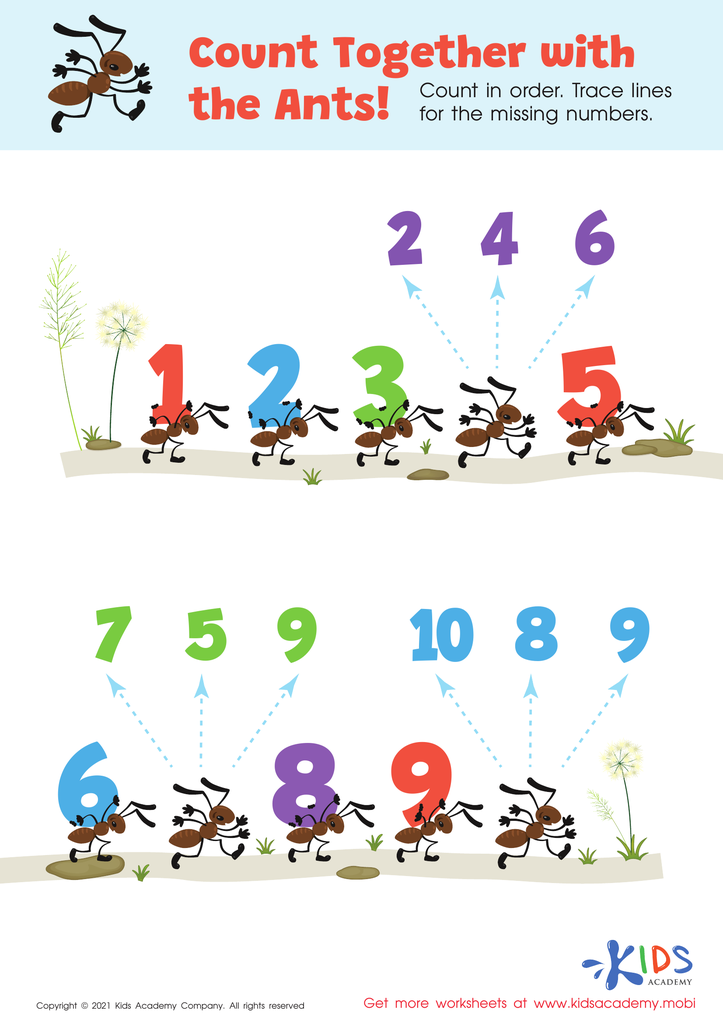
Count Together with the Ants Worksheet
Rather than letting kids get too deep in online games, keep them engaged with learning worksheets. Ask them to identify the insect in the picture, then count the ants. Help them trace lines to the missing numbers. It's simple and straightforward for young children to comprehend.
Count Together with the Ants Worksheet
Worksheet
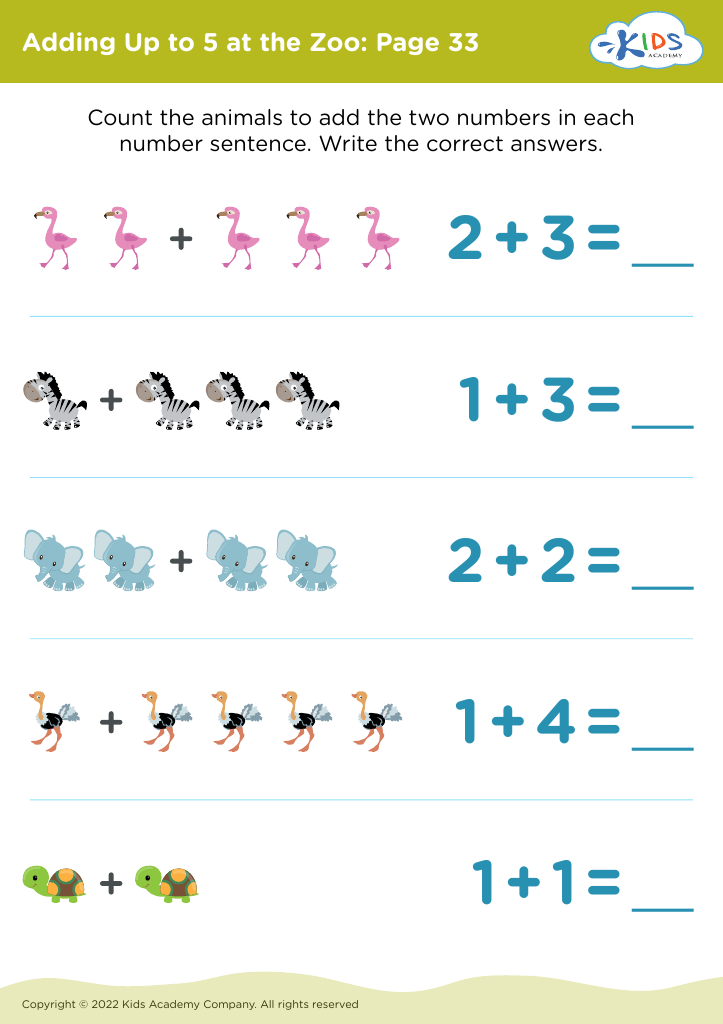
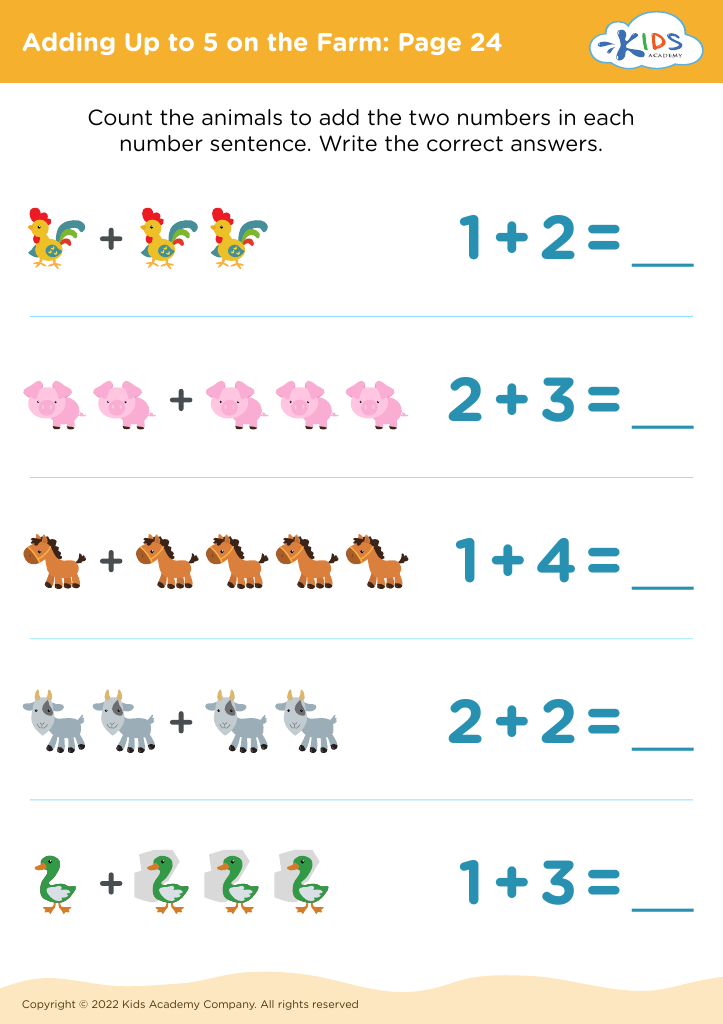
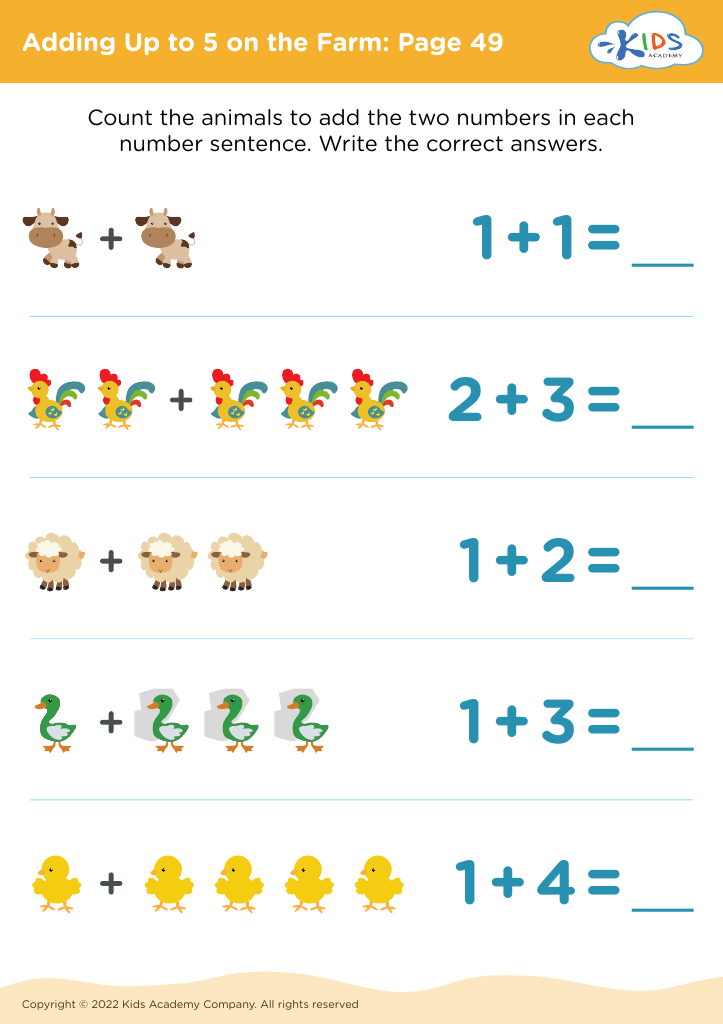

Finding 4 in the Forest Worksheet
Before starting, have your kids count as high as they can. Ask them to identify the setting and point out the 4s. Trace 4 and draw your own. Help your kids circle all the 4s they can find in the forest. How far can they count? How well did they find the hidden 4s?
 Assign to My Students
Finding 4 in the Forest Worksheet
Worksheet
Join Kids Academy for Free
Who is primarily going to use this learning content?



.jpg)




Fine motor skills are essential for children aged 4-5 as they form the foundation for effective writing and numerical understanding. As young learners begin to explore math concepts, the ability to write numbers neatly and accurately becomes crucial for their academic success. Mastering fine motor skills not only helps in writing numbers but also enhances hand-eye coordination, dexterity, and overall concentration.
For parents and teachers, fostering these skills early on is vital. Children with well-developed fine motor skills find tasks like drawing, cutting, and writing less frustrating and more enjoyable. This boosts their confidence and encourages a positive attitude towards learning, particularly in math, where clarity and presentation matter.
Moreover, as children learn to write numbers, they also explore counting, number recognition, and basic problem-solving. This integration of fine motor skill development with math introduces a hands-on, engaging way to learn. Children are more likely to retain concepts when they are physically involved in the learning process.
By prioritizing fine motor skill development, parents and teachers create an enriching environment where children can thrive not just in math, but in various academic areas, ultimately preparing them for future academic challenges.








