Logical thinking development Math Worksheets for Ages 4-5
5 filtered results
-
From - To
Enhance your child's logical thinking with our expertly crafted math worksheets designed for ages 4-5. At Kids Academy, we provide engaging, educational activities that challenge young minds to recognize patterns, solve puzzles, and develop critical problem-solving skills. Our worksheets cover various topics including counting, sequencing, matching, and sorting, making learning a fun and interactive experience. With colorful illustrations and age-appropriate exercises, our resources help preschoolers build a strong foundation in math while boosting their confidence and readiness for school. Equip your child with the tools they need to succeed and nurture their love for learning with our logical thinking development worksheets.
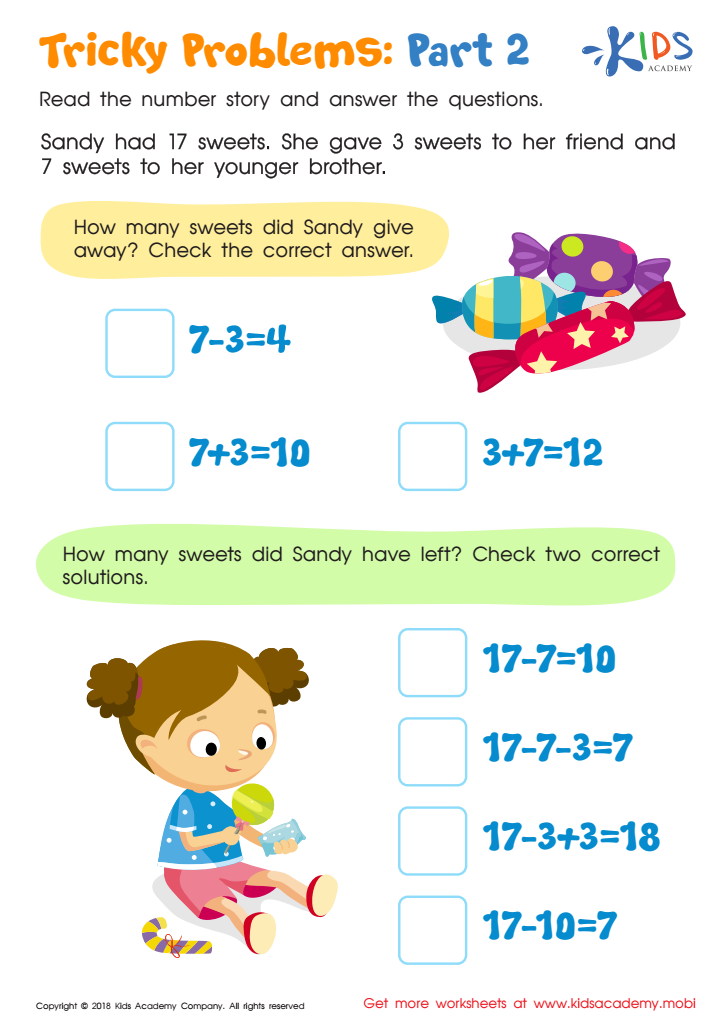
Tricky Problems Worksheet: Part 2
 Assign to My Students
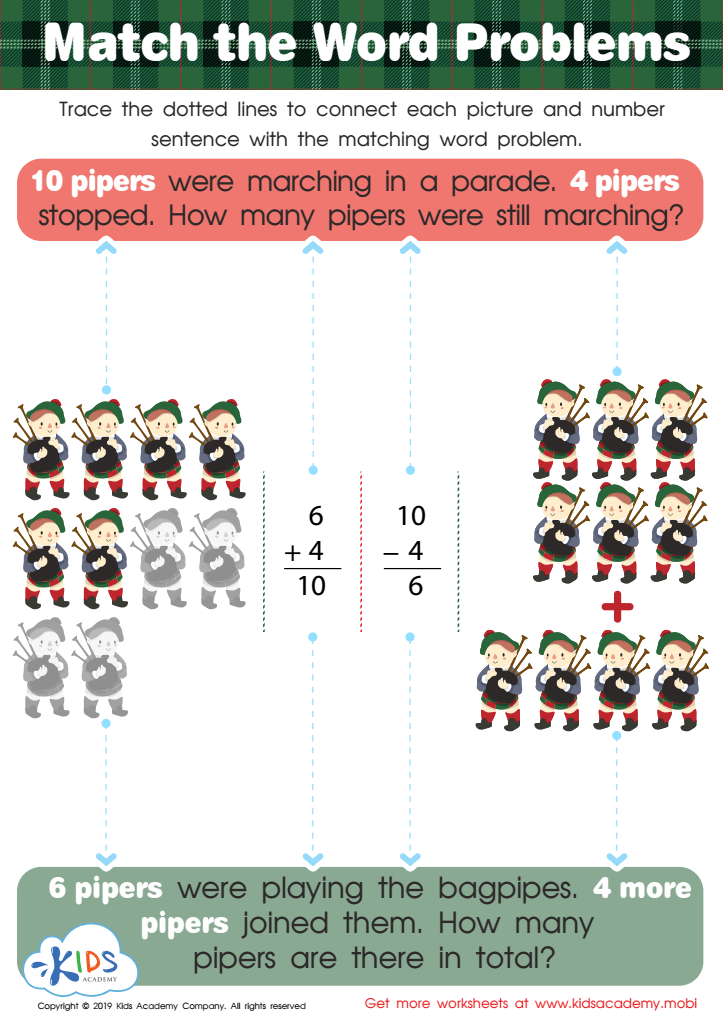
Match the Word Problems Worksheet
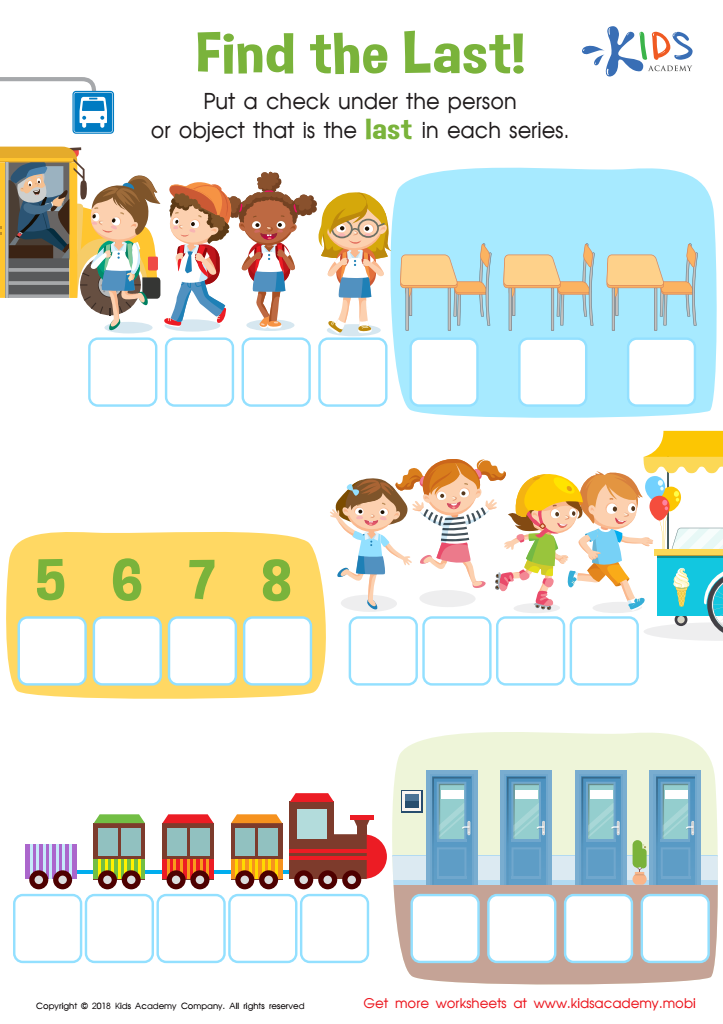
Find the Last! Worksheet
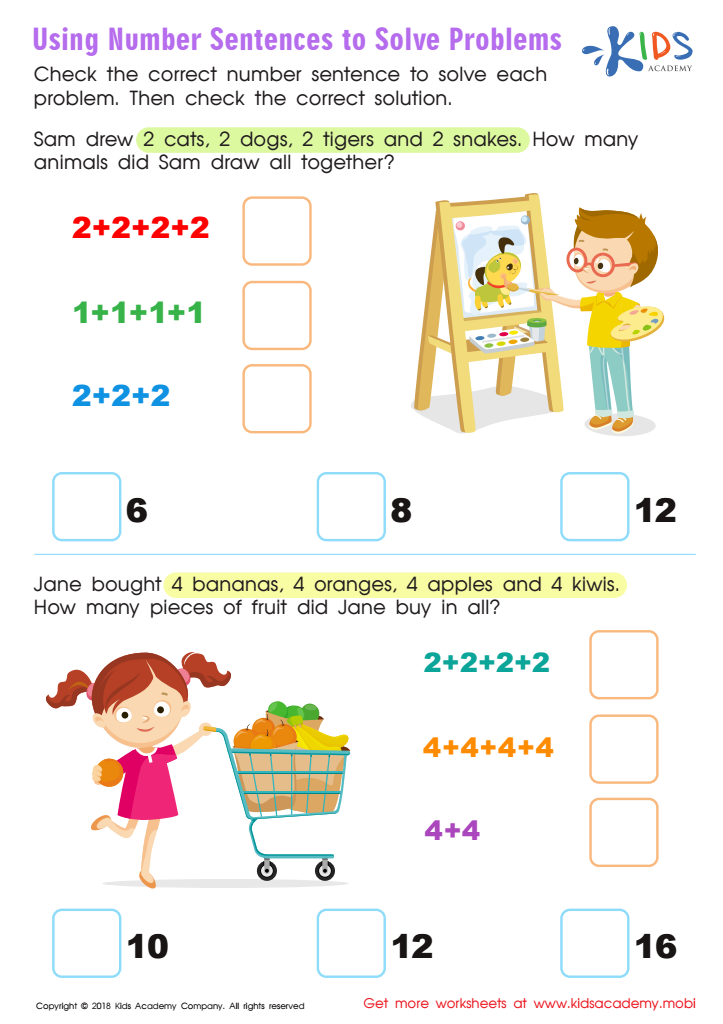
Using Number Sentences to Solve Problems Worksheet
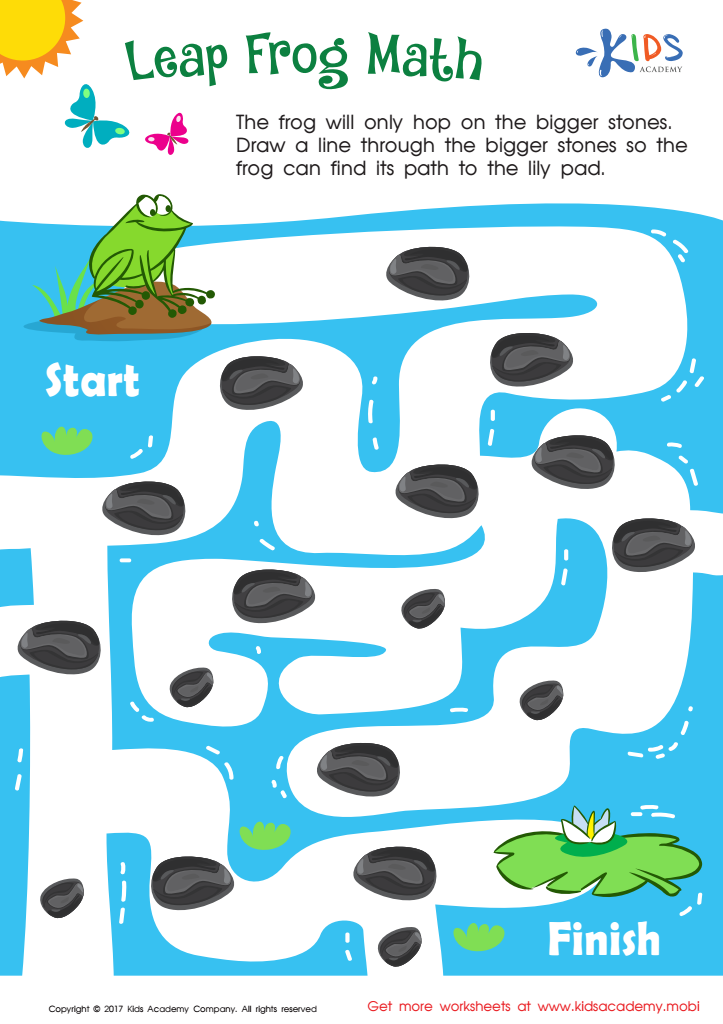
Math Puzzle Worksheet





.jpg)


Developing logical thinking in math for children aged 4-5 is crucial for numerous reasons and should be a priority for both parents and teachers. Firstly, logical thinking forms the foundation of problem-solving skills which are essential in everyday life. When children learn to think logically, they can understand patterns, relationships, and sequences, crucial aspects of early math learning.
This not only helps them grasp basic math concepts but also facilitates clearer thinking in other subjects and real-world situations. For example, recognizing a sequence helps children predict what comes next, a skill that extends to reading and understanding daily routines.
Moreover, nurturing logical thinking boosts children's confidence and independence in learning. When kids successfully solve problems on their own, they gain a sense of achievement and learn persistence. These skills are fundamental in academic settings and beyond, encouraging lifelong learning and a can-do attitude.
Engaging in math-related activities also enhances children’s language development and ability to follow instructions, which are vital in cognitive development. Puzzles, sorting games, and simple counting tasks not only make math fun but actively involve the youngsters in critical thinking exercises, setting a valuable precedent for future educational success.
Therefore, emphasizing logical thinking through early math experiences equips children with important tools, fostering comprehensive intellectual growth and a solid educational foundation.








