Mathematical problem-solving Math Worksheets for Ages 4-5
4 filtered results
-
From - To
Discover our engaging Mathematical Problem-Solving Worksheets designed specifically for children aged 4-5! These worksheets provide an excellent way to introduce young learners to essential problem-solving skills through fun and interactive activities. Tailored to a toddler's developmental stage, each worksheet incorporates colorful visuals and relatable situations to captivate their interest while building foundational math concepts. From basic addition and subtraction to recognizing patterns, your child will enjoy learning through play. Perfect for homeschooling or supplemental practice, our problem-solving resources foster critical thinking and confidence in young mathematicians. Download now and support your child's early math journey with cheerful learning experiences!
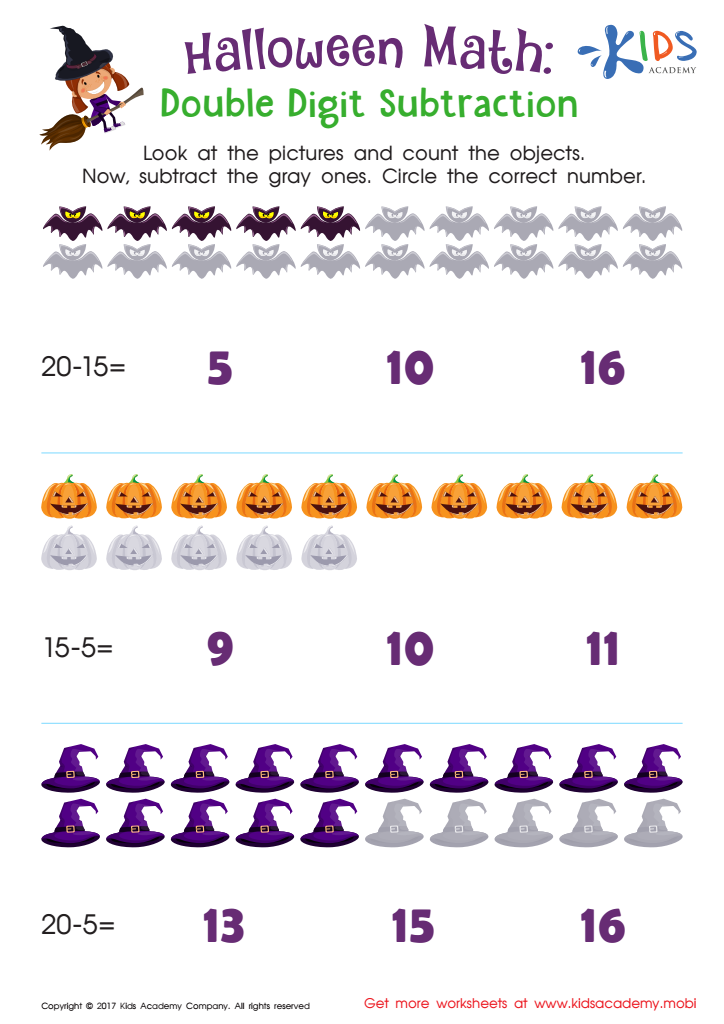
Halloween Math Subtraction Worksheet
 Assign to My Students
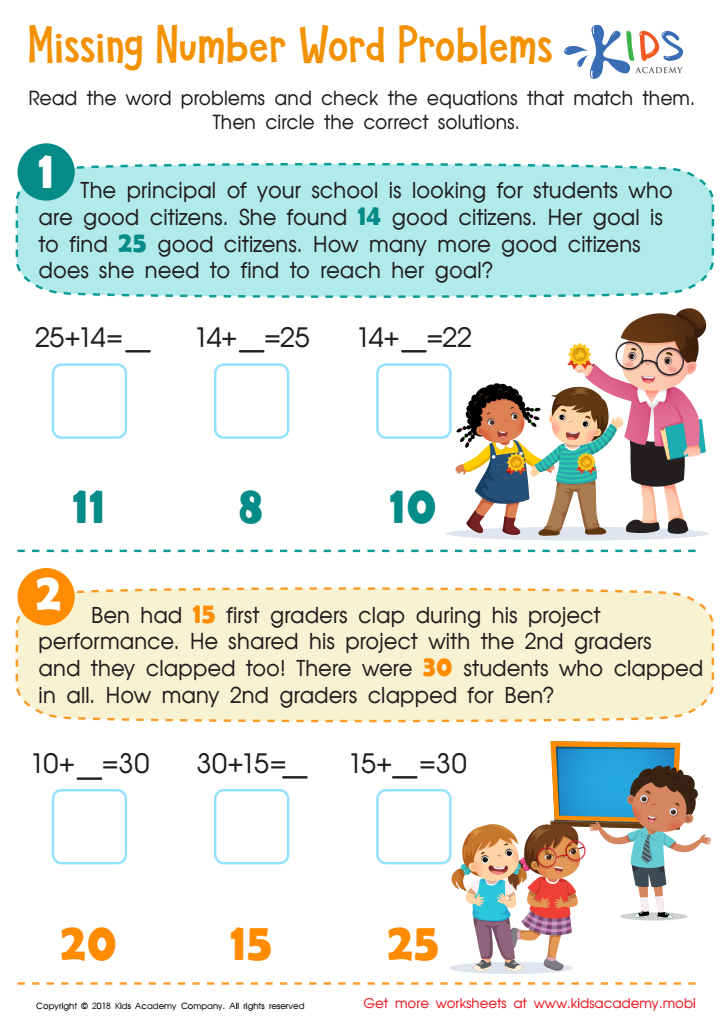
Missing Number Word Problems Worksheet
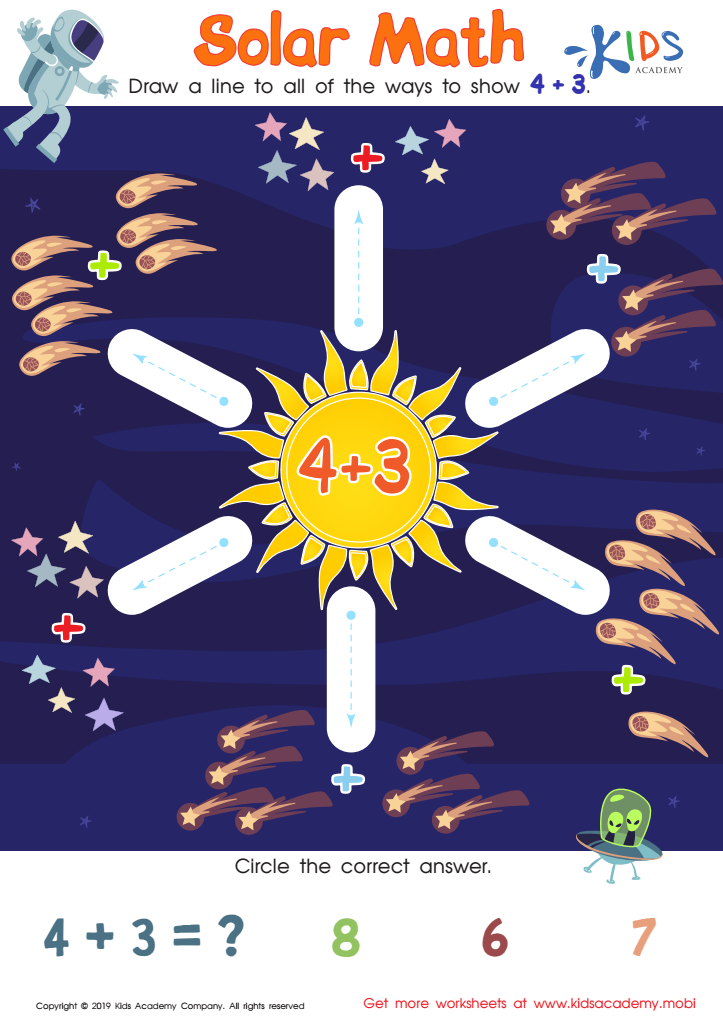
Solar Math Worksheet
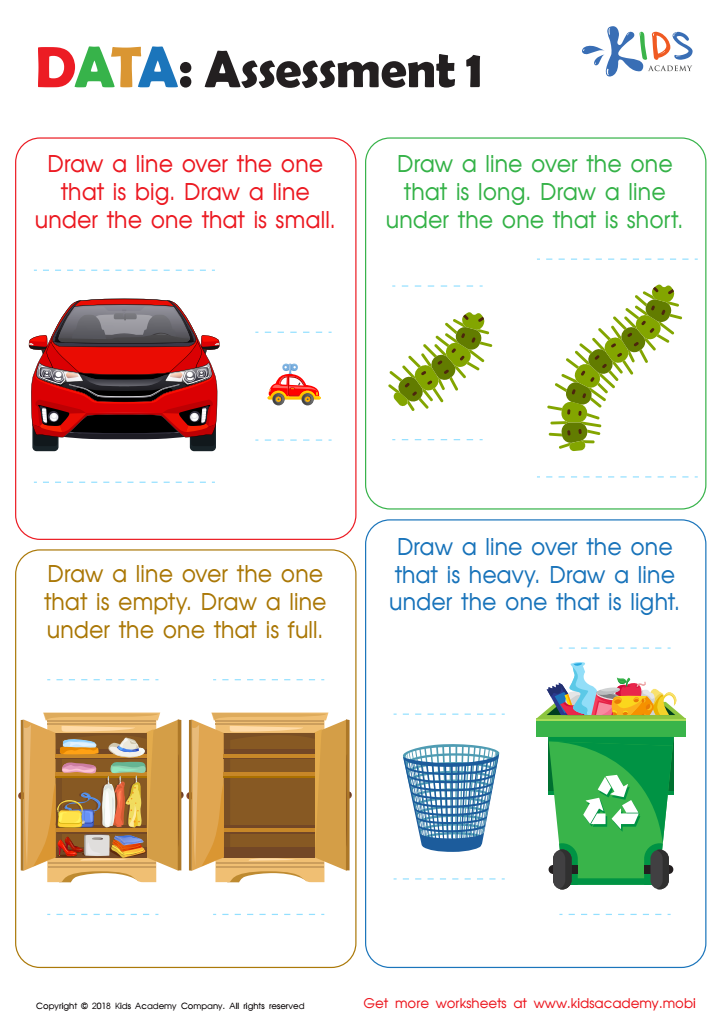
Data: Assessment 1 Worksheet








Mathematical problem-solving at ages 4-5 is crucial for early development because it lays the foundation for future learning. During this age, children are naturally curious and eager to explore the world around them. Engaging them in math not only promotes cognitive skills but also enhances critical thinking, creativity, and persistence.
Parents and teachers should value problem-solving as it enables children to make connections between numbers and real-life situations, fostering a sense of relevance and application. Through hands-on activities, students learn to approach challenges methodically, breaking down complex problems into manageable steps. This process develops their reasoning skills and confidence, important attributes for academic success.
Moreover, early exposure to math helps children develop a positive attitude towards the subject. By encouraging exploration and open-ended thinking, adults can combat the anxiety that often accompanies math later in life. Collaborative problem-solving also nurtures social skills, as children learn to communicate their ideas and work together.
Lastly, fostering math skills from a young age equips children for tomorrow’s challenges in a technology-driven world, where analytical thinking is paramount. By caring about mathematical problem-solving today, parents and teachers invest in a brighter future for their children.








