Money management skills Math Worksheets for Ages 4-5
3 filtered results
-
From - To
Introduce your little ones to essential money management skills with our engaging math worksheets designed specifically for ages 4-5! These interactive worksheets make learning fun and help preschoolers understand the basics of money, including recognition of coins, simple counting, and the importance of saving. With colorful illustrations and age-appropriate activities, children will develop their early math skills while grasping the foundational concepts of financial literacy. Our worksheets encourage hands-on learning, fostering a sense of responsibility and confidence in managing money. Explore our diverse selection today and equip your child with valuable skills for a bright financial future!
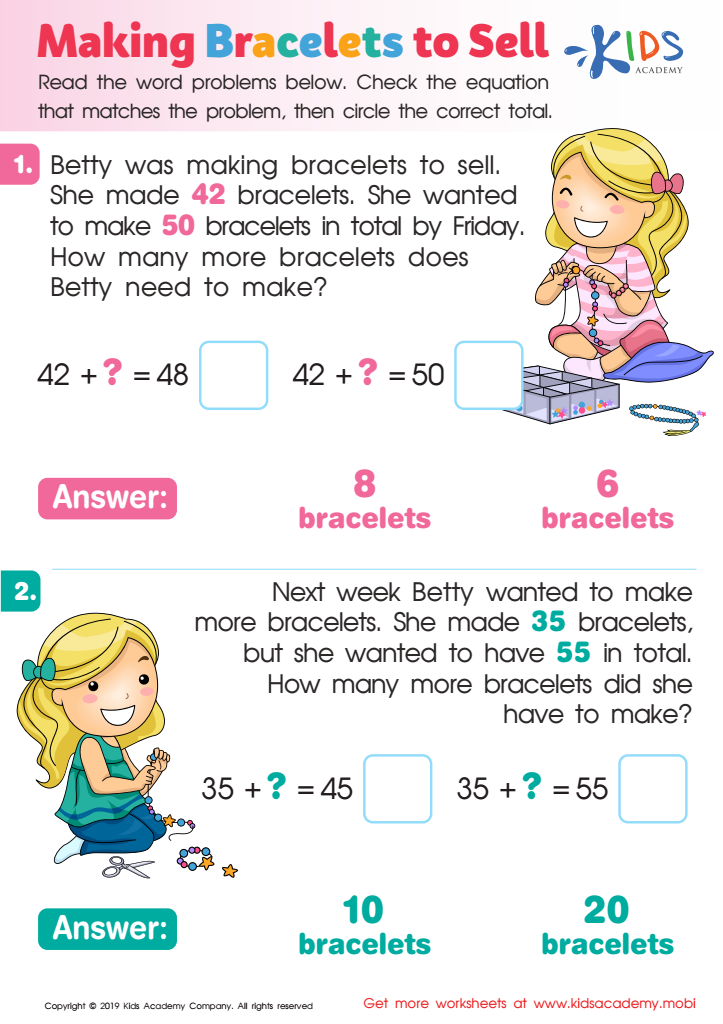
Making Bracelets to Sell Worksheet
 Assign to My Students
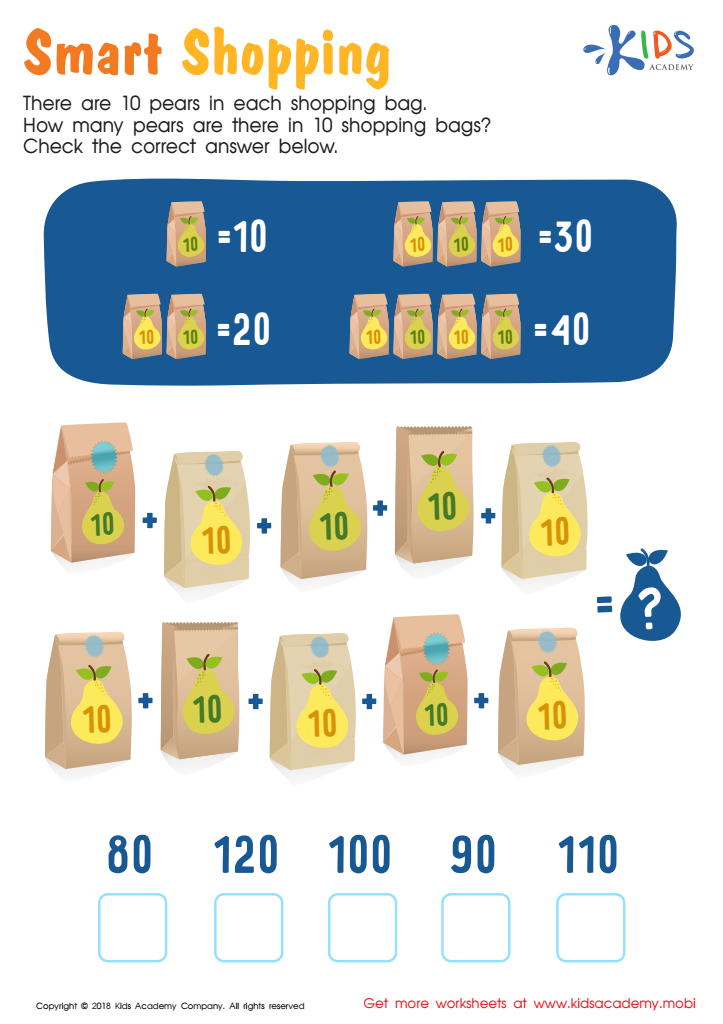
Smart Shopping: Trade Tens for a Hundred Worksheet
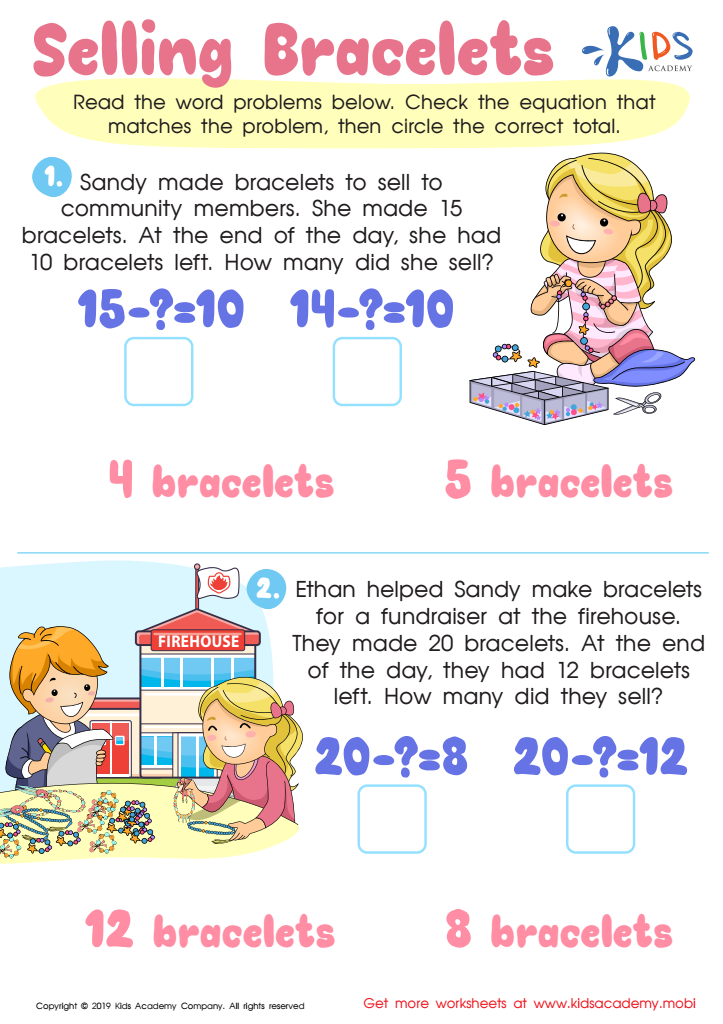
Selling the Bracelets Worksheet







Parents and teachers should prioritize money management skills for children aged 4-5 as these foundational lessons are crucial for fostering financial literacy from an early age. At this age, children are naturally curious about their environment, including concepts related to money. Introducing basic money management skills cultivates an understanding of value, spending, saving, and budgeting, setting the stage for responsible financial behavior later in life.
Engaging young children in simple activities, like playing store or counting coins, helps develop both math skills and an understanding of money’s role in daily life. These activities enhance critical cognitive abilities such as counting, sorting, and problem-solving. They also provide opportunities for children to learn about making choices and the consequences of those choices, reinforcing decision-making skills.
Moreover, establishing a solid grounding in financial concepts can nurture a sense of responsibility and independence in children, promoting confidence in their ability to manage their own finances as they grow. By emphasizing money management at an early age, parents and teachers can help cultivate responsible habits that will benefit children throughout their lives, ultimately contributing to their well-being and financial stability in adulthood. Engaging in this learning process ensures children are well-equipped to navigate the complexities of finances in the future.








