Number comparison skills Math Worksheets for Ages 4-5
3 filtered results
-
From - To
Enhance your child's mathematical abilities with our engaging Number Comparison Skills Math Worksheets designed specifically for ages 4-5. These interactive worksheets provide a fun way for young learners to develop crucial skills by comparing numbers, understanding greater than and less than concepts, and enhancing their overall number sense. Packed with colorful illustrations and age-appropriate activities, our worksheets will keep your little ones excited about learning while building a strong foundation in mathematics. Perfect for homeschooling or classroom settings, these materials foster independent thinking, critical reasoning, and confidence in young mathematicians. Start your child's mathematical journey today with our expert-approved worksheets!
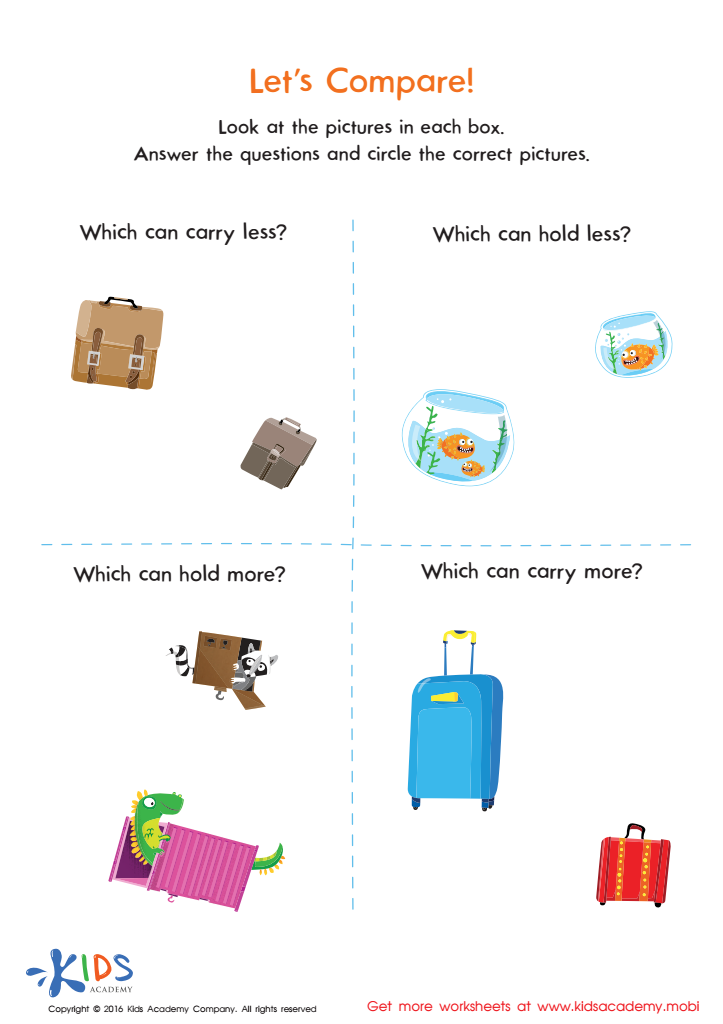
Let's Compare Worksheet: Big or Small
 Assign to My Students
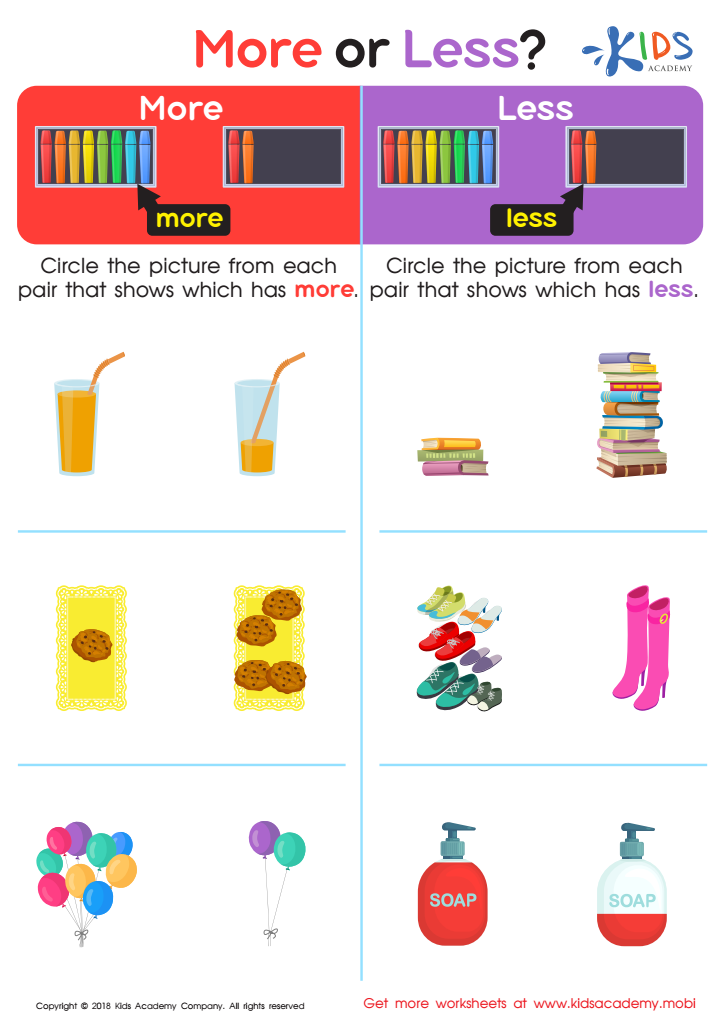
More or Less? Worksheet
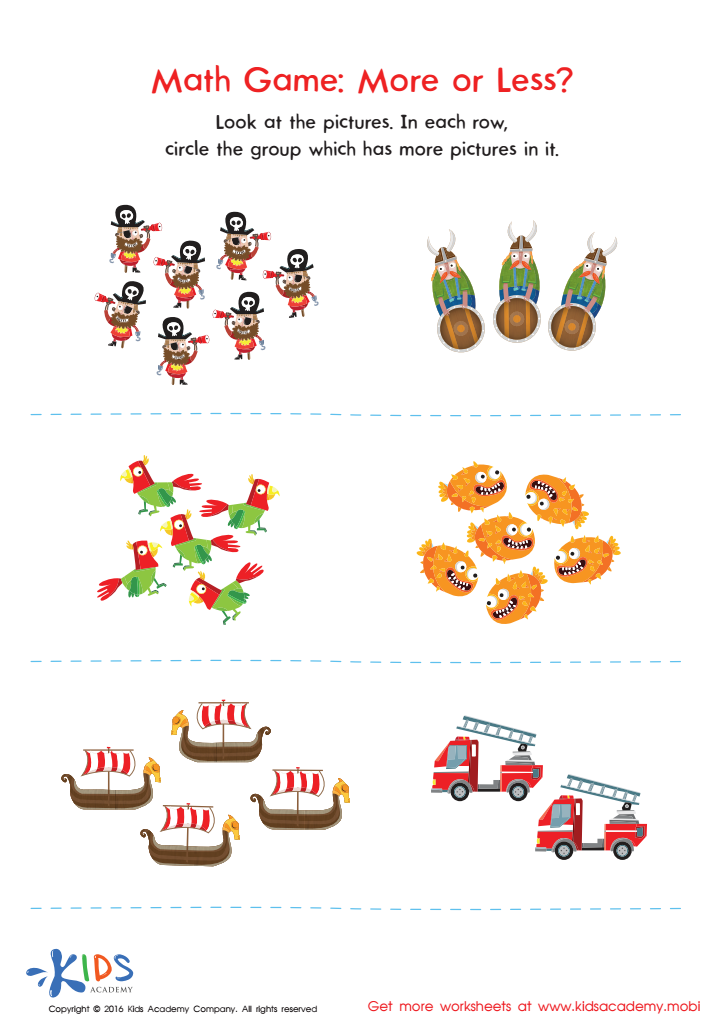
More or Less Worksheet







Number comparison skills are essential for young children as they lay the foundation for mathematical understanding and problem-solving. For children aged 4-5, mastering this skill can enhance cognitive development and support critical thinking abilities. Understanding how to compare numbers helps children develop numeracy skills, which are directly linked to academic success in later years.
When children learn to compare numbers, they grasp concepts such as bigger, smaller, equal, and more, allowing them to engage with basic math in their everyday lives. These skills not only boost their confidence in approaching math but also help them make sense of their world, such as understanding quantities while sharing toys or identifying patterns during play.
For parents and teachers, fostering number comparison skills also promotes communication and social interaction. Encouraging children to verbalize their reasoning while comparing numbers nurtures language development and enhances their ability to articulate thoughts clearly.
In addition, strong number comparison skills set the groundwork for more advanced math concepts such as addition, subtraction, and later, multiplication and division. Prioritizing these early mathematical skills will ultimately lead to an enriching learning experience, helping children thrive academically and socially both inside and outside the classroom.








