Number tracing Math Worksheets for Ages 4-5
3 filtered results
-
From - To
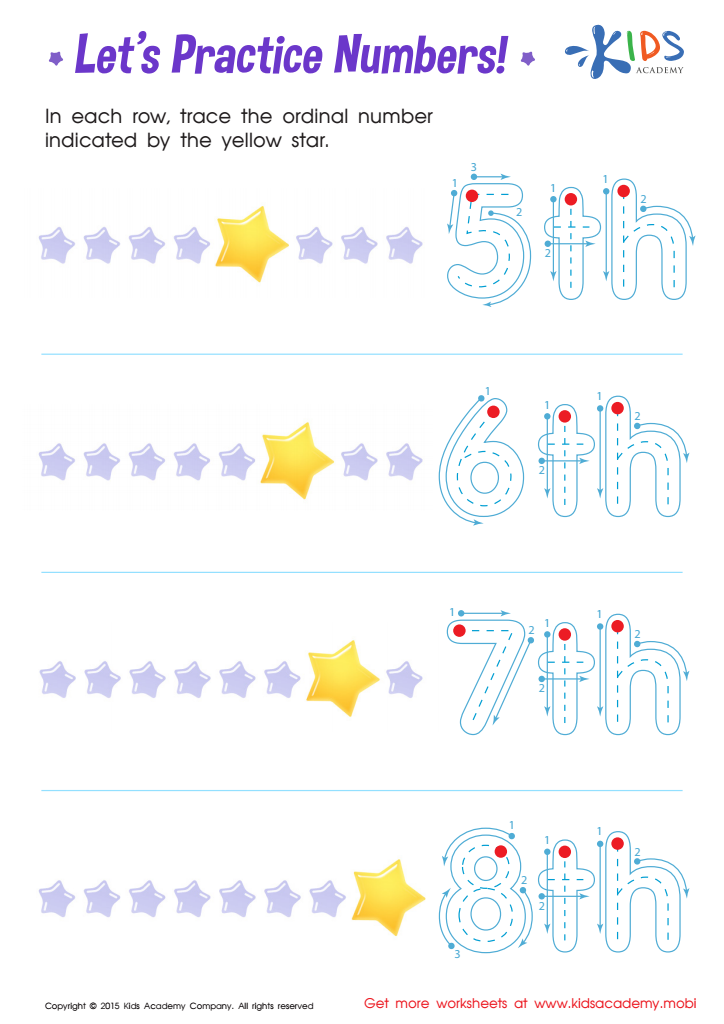
Welcome to our Number Tracing Math Worksheets for Ages 4-5! These engaging worksheets are designed to help young learners develop their number recognition and handwriting skills. With a variety of fun-filled activities, children will practice tracing numbers 0-20, strengthening their fine motor skills while boosting confidence in their early math abilities. Our user-friendly layout and vibrant illustrations keep kids motivated and excited to learn. Ideal for both classroom and home use, these worksheets promote early mathematical understanding and prepare children for future success. Explore our collection today, and inspire a love for math in your little learners!
 Assign to My Students
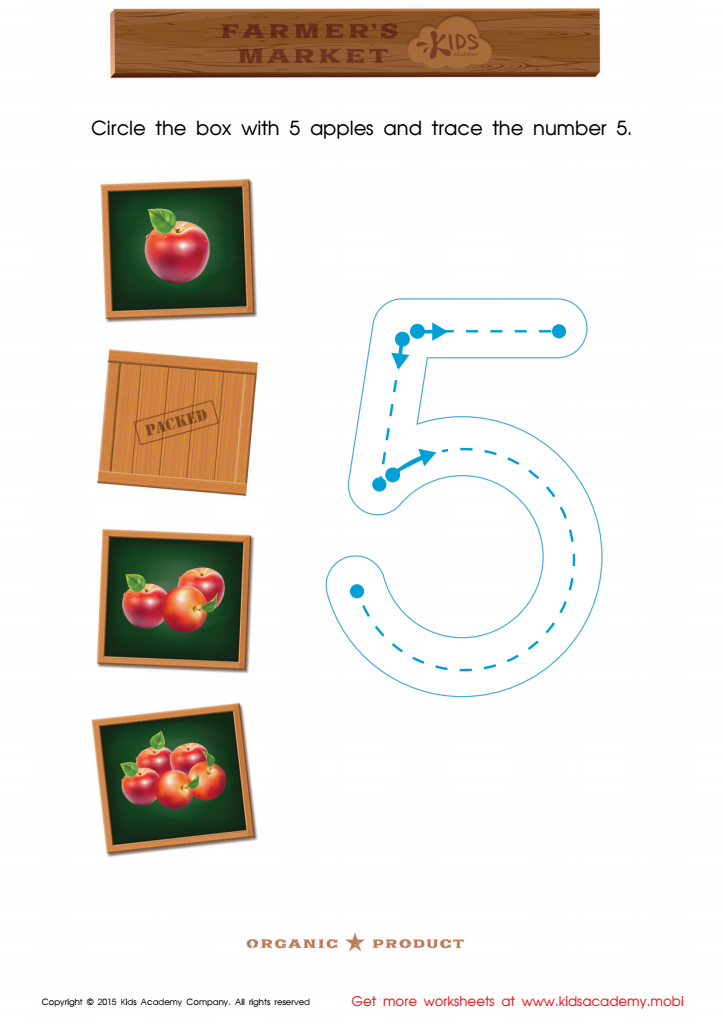
Count the Apples and Trace the Number 5 Printable





%20(1).jpg)


Number tracing is a crucial early math activity for children aged 4-5, as it lays a strong foundation for future mathematical understanding. First and foremost, tracing numbers helps develop fine motor skills, enhancing hand-eye coordination and dexterity. These motor skills are essential for writing and other tasks later in school.
Additionally, number tracing introduces children to numerical concepts and introduces both recognition and formation of numbers. This foundational skill fosters confidence in math, making it more approachable as they progress in their education. Engaging in tracing promotes active learning, allowing children to visualize and tactilely interact with numbers.
Furthermore, number tracing can enhance memory retention. Repetitive practice helps children remember how to write numbers and reinforces their understanding of number sequences. It also allows for parents and teachers to create supportive learning environments by incorporating tracing into interactive activities, encouraging collaboration and communication.
Ultimately, prioritizing number tracing sets a positive tone for mathematical learning, ensuring children are well-prepared for more complex concepts as they advance in their education. By caring about this early learning tool, parents and teachers play a significant role in fostering a child's love for math and enhancing their overall academic success.








