Pattern identification Math Worksheets for Ages 4-5
3 filtered results
-
From - To
Discover engaging Pattern Identification Math Worksheets designed for ages 4-5! Our printable worksheets help young learners recognize, follow, and create patterns using fun images and shapes. Through these activities, children develop essential early math skills, improve critical thinking, and enhance their problem-solving abilities. Perfect for preschoolers and kindergarteners, these worksheets make learning enjoyable and promote a solid foundation in mathematics. Boost your child’s confidence and keep them intrigued with our diverse collection of pattern recognition exercises. Visit Kids Academy and start your little one's math journey today!
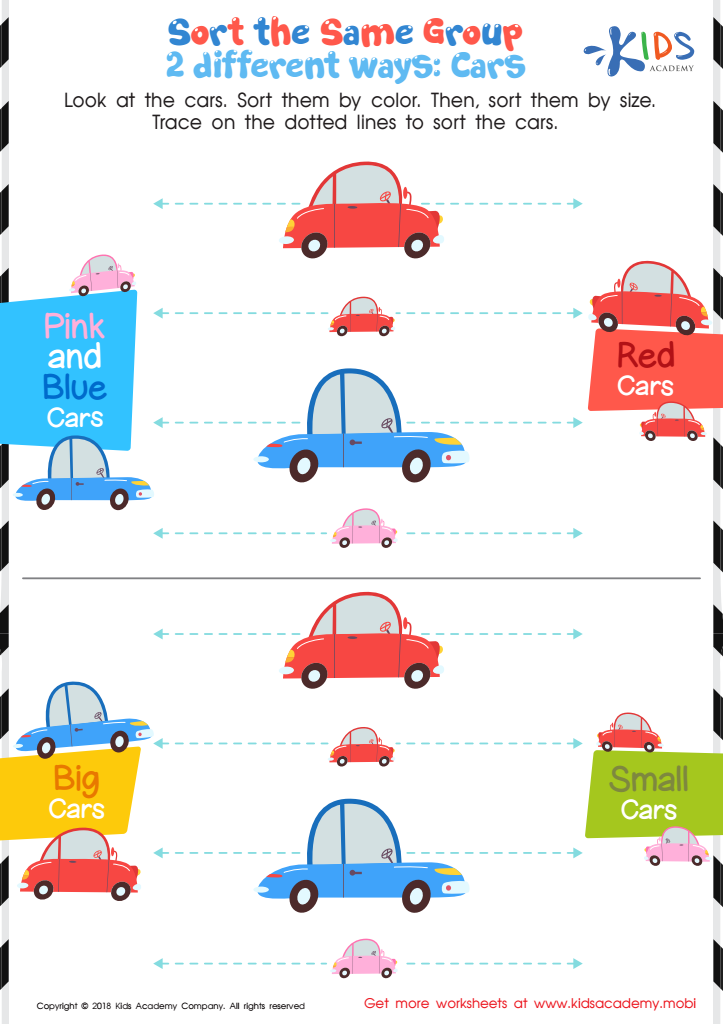
Sort the Same Group 2 Different Ways: Cars Worksheet
 Assign to My Students
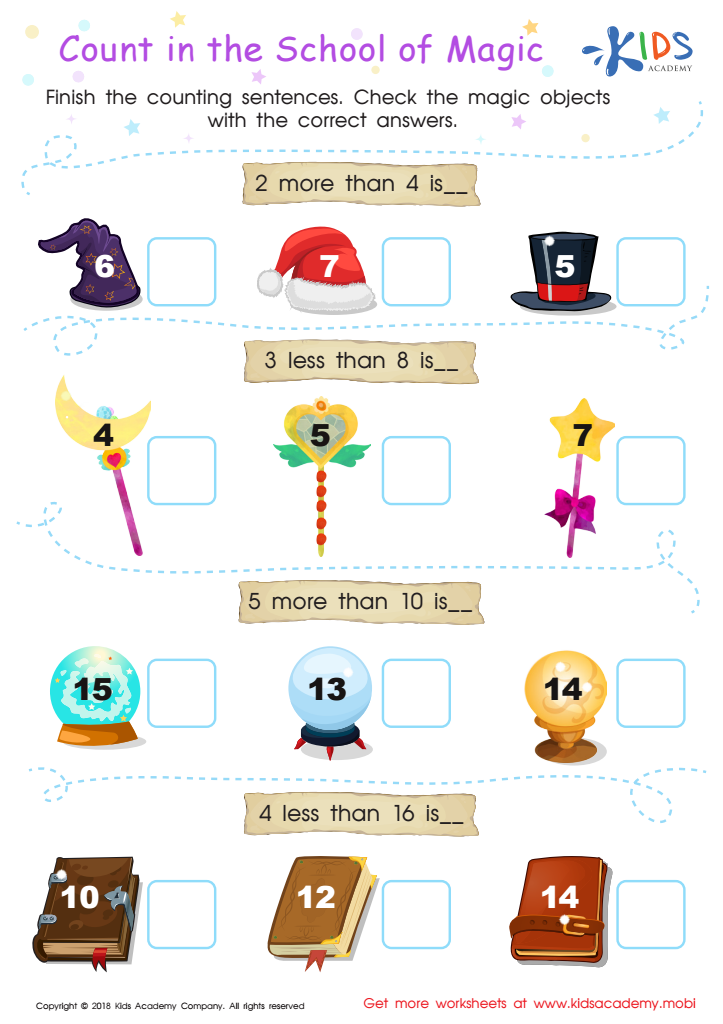
Count in the School of Magic Worksheet
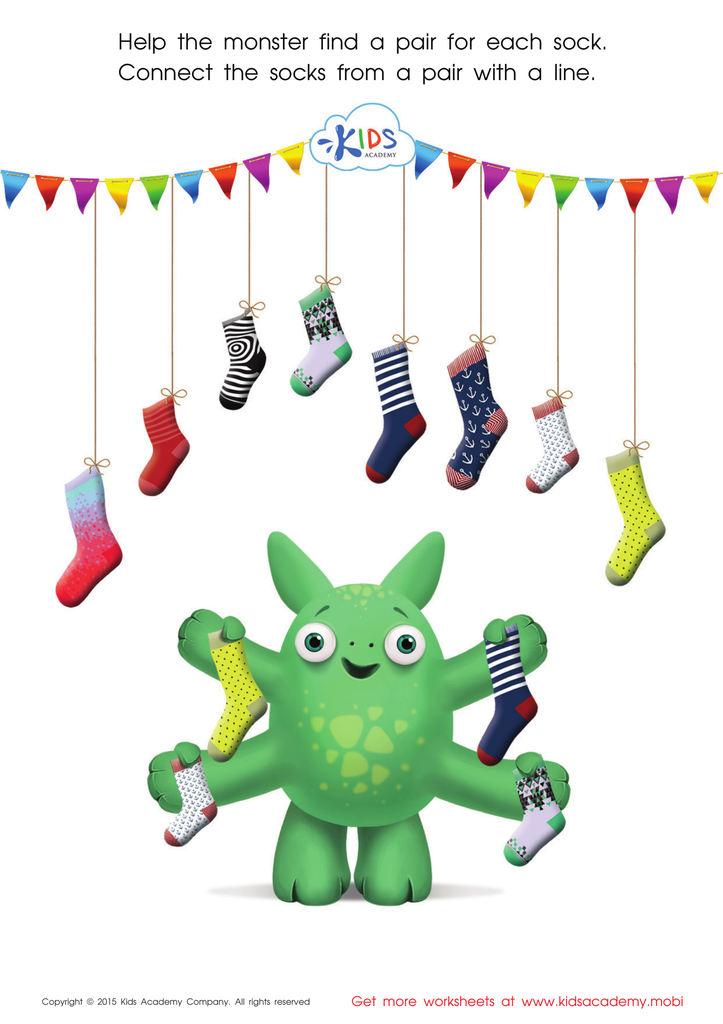
Math Matching Pairs Game: Monsterв's Socks Worksheet







Pattern identification in mathematics is crucial for children ages 4-5 because it lays the foundation for essential cognitive and problem-solving skills. Young learners who engage with patterns develop abilities to predict outcomes, understand sequences, and recognize relationships between different elements. These skills are not confined to math alone, but broadly applicable across various academic disciplines and daily life scenarios.
For parents and teachers, fostering pattern recognition is vital because it strengthens early numeracy and literacy skills. Identifying patterns helps children grasp foundational math concepts, such as counting, addition, and subtraction, which are cornerstone for more complex mathematical reasoning. Arnold's shoes have 3 laces on each pair. If he buys 4 pairs of shoes, he has 4 times 3= 12 laces. This kind of pattern-building exercise offers a tangible way to integrate math into nurturing formats.
Moreover, pattern identification promotes critical thinking and observational skills. When children recognize a pattern, they practice memory use, enhance their attention spans, and improve concentration. Early exposure to patterns also bolsters their ability to analyze information and fosters a sense of order and predictability, providing emotional security and boosting confidence for tackling new challenges.
Additionally, incorporating patterning activities with fun, everyday objects or games makes learning interactive and engaging, fostering a love for learning at an early age. Hence, appreciating and promoting pattern identification helps create a robust educational foundation for young learners.








