
Visual recognition Math Worksheets for Ages 4-5
3 filtered results
Difficulty Level
Grade
Age
-
From - To
Subject
Activity
Standards
Discover our engaging Visual Recognition Math Worksheets designed specifically for children ages 4-5! These worksheets help young learners develop essential skills in recognizing shapes, colors, and patterns, foundational components of early math understanding. Through fun and interactive activities, kids will enhance their visual discrimination abilities while building confidence in their math skills. Our carefully crafted resources encourage creativity and critical thinking, making learning enjoyable and effective. Perfect for at home or in the classroom, these worksheets enrich early education experiences and set the stage for future academic success. Start your child’s learning journey with our visual recognition math activities today!
Favorites
With answer key
Interactive
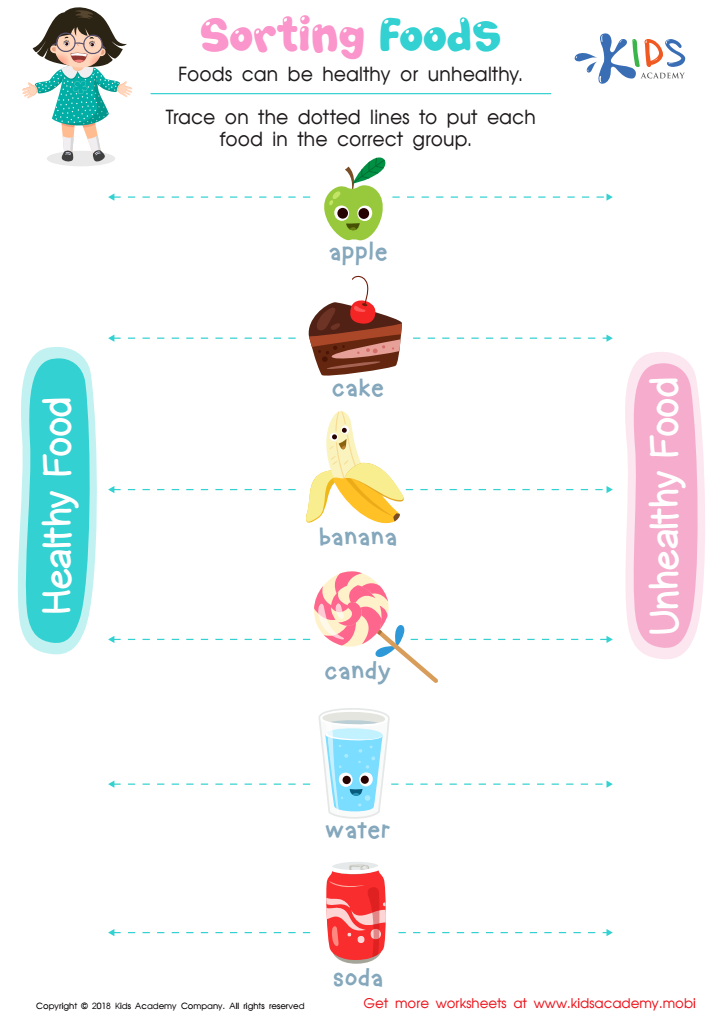
Sorting Food Worksheet
This delightful worksheet boosts critical thinking and fine motor skills. Kids use prior knowledge and pictures to sort foods into healthy and unhealthy groups. Tracing lines support accurate sorting and matching. Enjoy fun and free learning!
 Assign to My Students
Sorting Food Worksheet
Worksheet
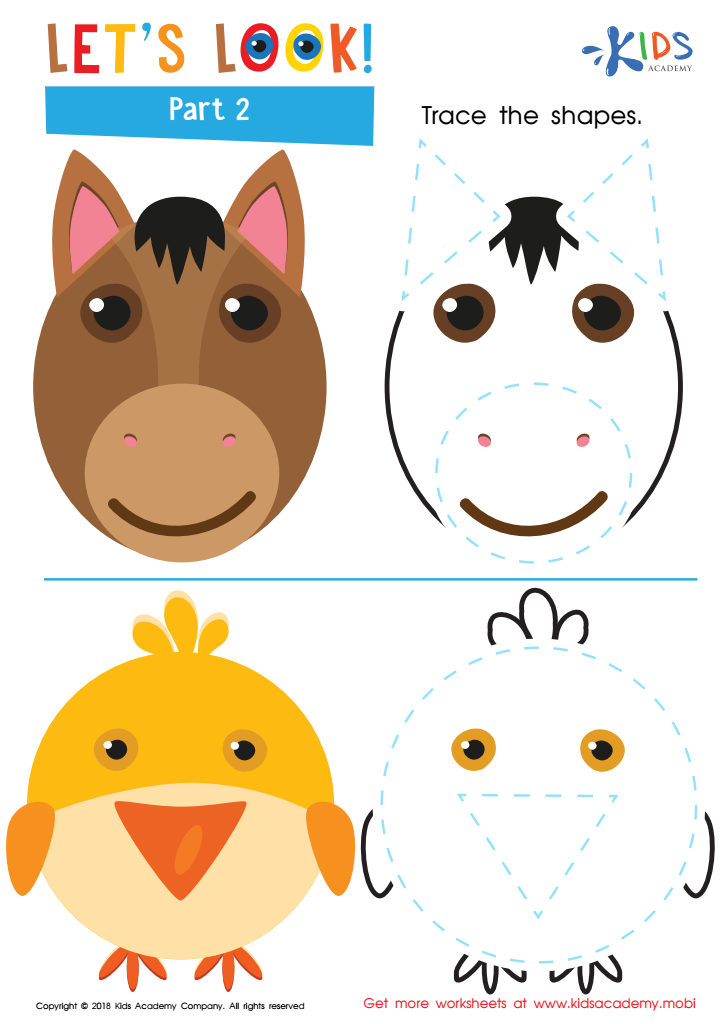
Let's Look! Part 2 Worksheet
This tracing sheet helps your little ones develop their skills. Ask them to identify the animals, then trace the shapes in the space provided, following the dotted lines. It's a simple task that can help them grow and have fun!
Let's Look! Part 2 Worksheet
Worksheet
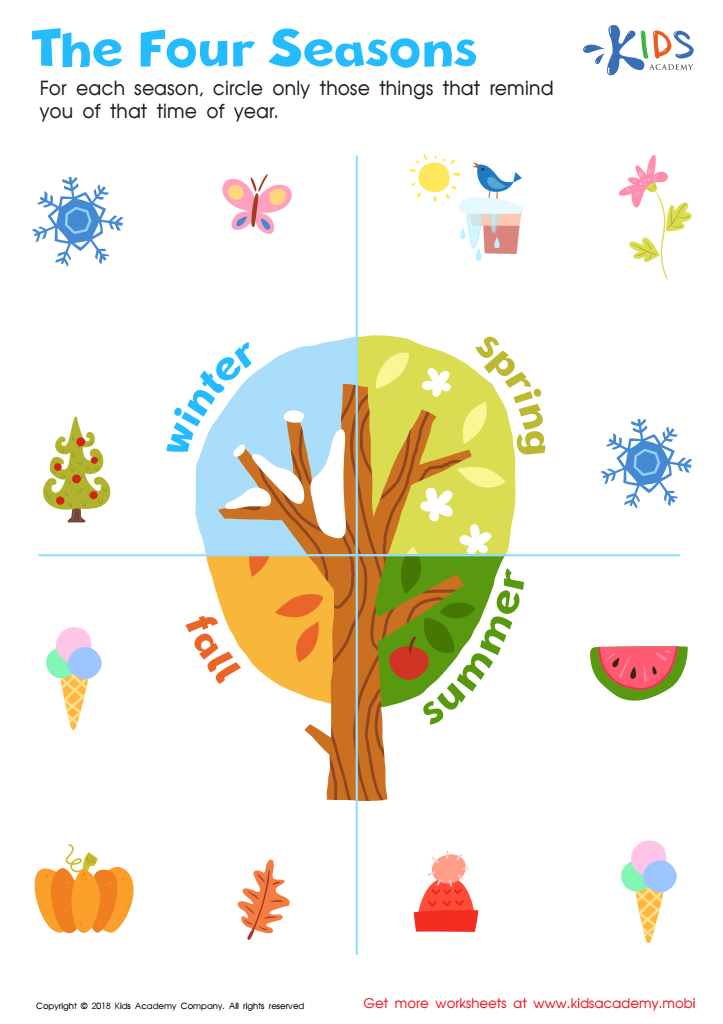
The Four Seasons Worksheet
Tell your child to circle things that remind them of each season. The tree has four squares, one for each season. Some things in each square match the season, others don't. Ask if any are out of place. Help them circle only items that remind them of that season.
The Four Seasons Worksheet
Worksheet
Join Kids Academy for Free
Who is primarily going to use this learning content?


.jpg)





Visual recognition in mathematics is crucial for children aged 4-5 as it lays the foundation for future mathematical understanding and success. At this age, young learners are naturally curious and develop skills through engaging experiences. By incorporating visual recognition activities, educators and parents can help children identify shapes, patterns, and numerical concepts in a playful manner.
This early exposure to visually recognizing mathematical concepts—like comparing sizes, identifying colors, or recognizing patterns—enhances cognitive development. It fosters critical thinking, problem-solving abilities, and spatial awareness, essential for more advanced math skills later on.
Additionally, visual recognition aids in constructing number sense, enabling children to understand quantities and relationships, which are fundamental in later learning of addition and subtraction. Engaging in these activities also bolsters fine motor skills through manipulatives like blocks or beads, providing sensory experiences that reinforce learning.
Moreover, early comprehension of math through visual means supports self-esteem and enthusiasm for learning, promoting a lifelong positive attitude toward math education. In summary, parents and teachers should prioritize visual recognition in math for young children, acknowledging its significant role in their overall academic growth and confidence in STEM-related subjects as they progress.








