
Color Identification Matching Worksheets for Ages 4-5
3 filtered results
Difficulty Level
Grade
Age
-
From - To
Subject
Activity
Standards
Introduce your little ones to the vibrant world of colors with our Color Identification Matching Worksheets for Ages 4-5! Designed to engage and educate, these printable worksheets help children recognize, match, and name colors through fun and interactive activities. Perfect for preschool and kindergarten-aged kids, these exercises enhance visual discrimination skills and boost cognitive development. Ideal for both classroom and home settings, our worksheets offer a delightful way for children to master essential color concepts while enjoying the learning process. Let the learning adventure begin with our color identification matching worksheets, where education meets creativity!
Favorites
With answer key
Interactive
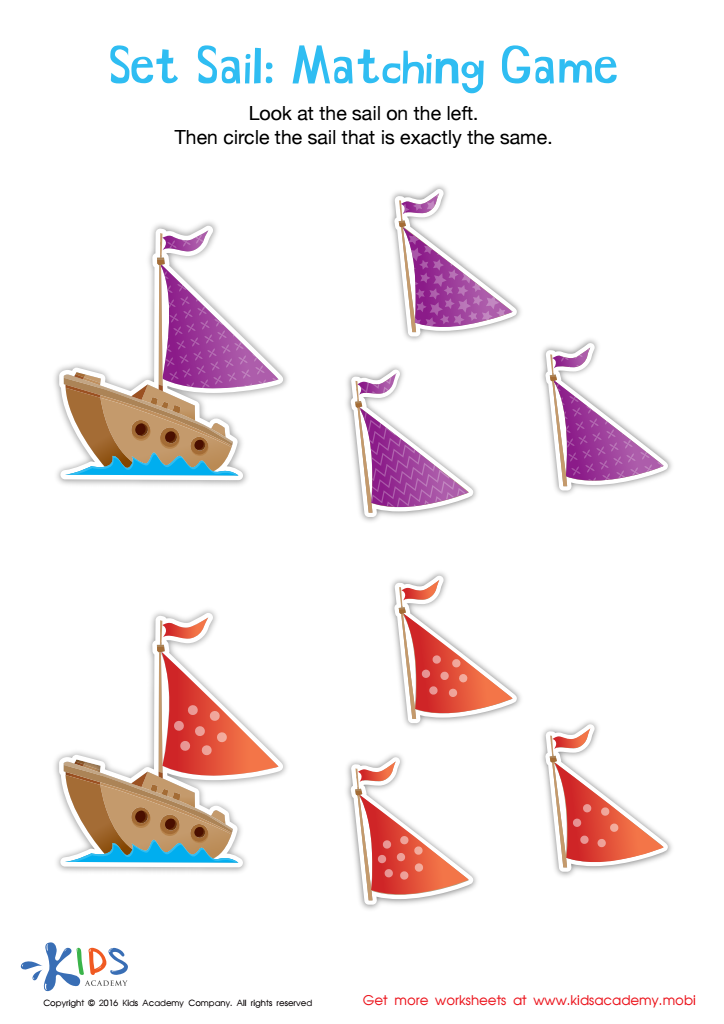
Set Sail Worksheet
Set sail with this fun matching game for toddlers! Kids will love finding the same pattern on the sails, improving their problem-solving and counting skills. Enjoy this bright and engaging worksheet!
 Assign to My Students
Set Sail Worksheet
Worksheet
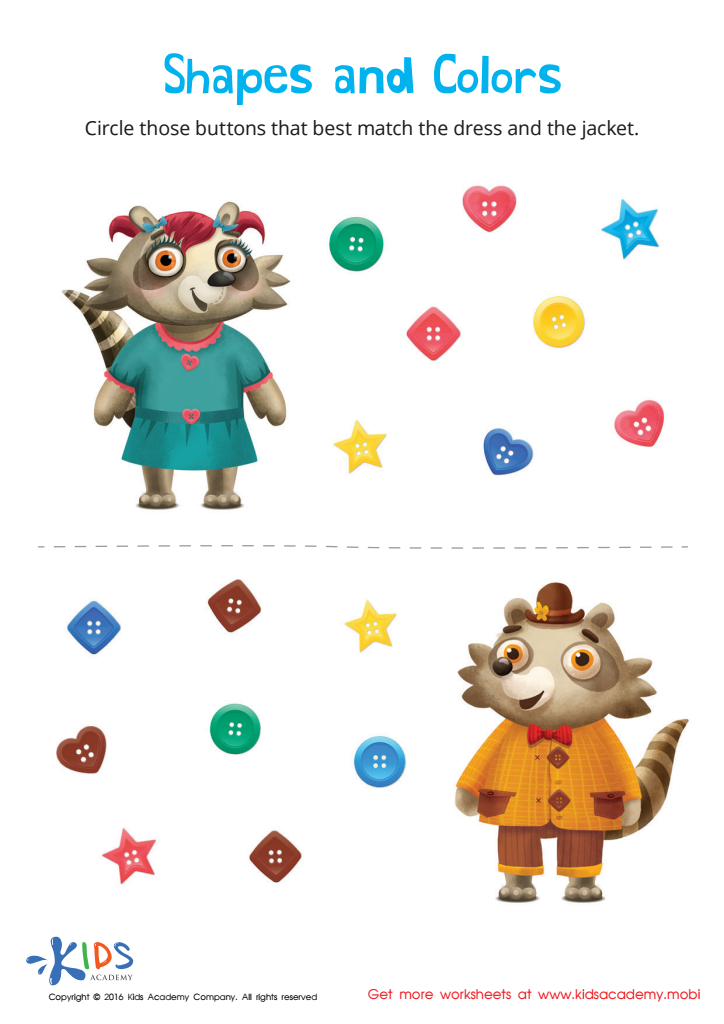
Matching: Shapes and Colors Worksheet
Help Mr. and Mrs. Raccoon find the right buttons to match their shirts! Kids will identify shapes and colors and learn to match them correctly.
Matching: Shapes and Colors Worksheet
Worksheet
Join Kids Academy for Free
Who is primarily going to use this learning content?








Color identification and matching are critical activities for children aged 4-5 because they play a significant role in early development. At this stage, children are rapidly expanding their cognitive and motor skills. Learning to identify and match colors enhances their visual perception, which is essential for recognizing patterns, similarities, and differences in objects. This foundational skill is directly linked to future academic achievements, particularly in areas like math and science, where pattern recognition is key.
Furthermore, engaging in color identification activities fosters language development as children learn color names and practice verbalizing them, which can improve their vocabulary and communication skills. Socially, these activities offer opportunities for interaction; children learn to cooperate and share with peers during group tasks.
Emotionally, successful color matching boosts self-confidence and encourages a positive attitude towards learning. It can also be an enjoyable exercise, making it easier to keep young learners engaged and eager to participate in educational activities.
For teachers and parents, facilitating color identification and matching can provide insight into a child's cognitive and perceptual abilities, helping to identify areas where a child may need additional support or enrichment. Overall, these activities are a fun and essential part of early childhood education that support developmental milestones across multiple domains.








