Comparing objects Measurement Worksheets for Ages 4-5
3 filtered results
-
From - To
Explore our engaging "Comparing Objects Measurement Worksheets" designed specifically for children ages 4-5! These worksheets focus on developing essential measurement skills by encouraging young learners to compare different objects based on size, length, and weight. With vibrant illustrations and interactive activities, children will enjoy sorting and categorizing items, which builds their critical thinking and observational skills. Our user-friendly worksheets are perfect for home or classroom use, providing educators and parents with valuable resources to enhance early math learning. Help your little ones become confident in their measurement skills while fostering a love for learning through fun and interactive exercises!
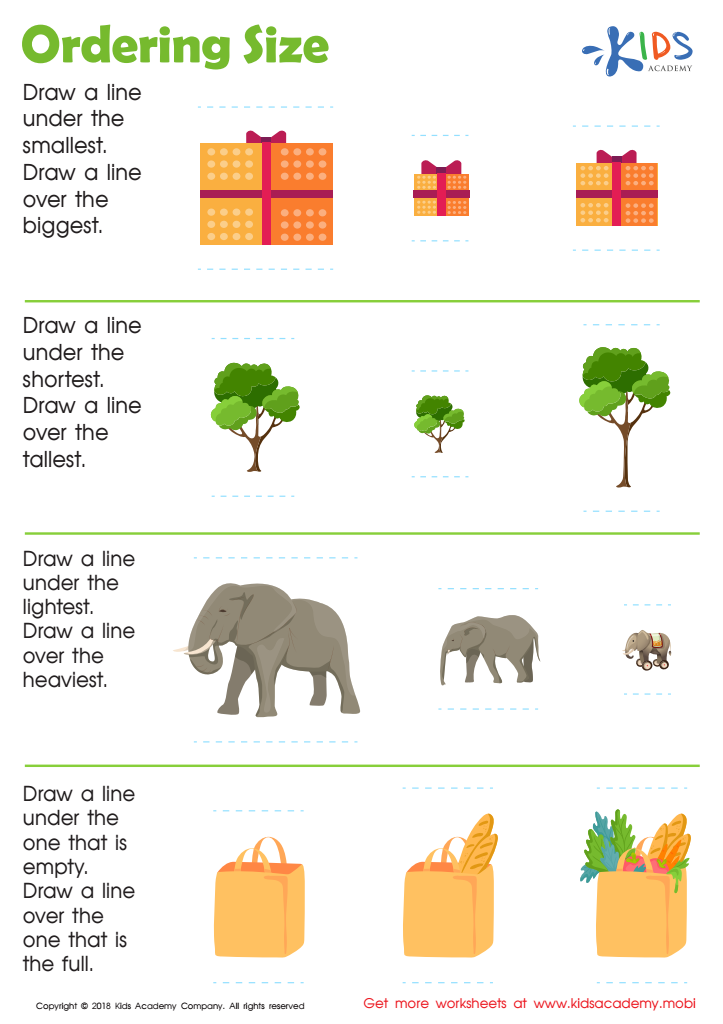
Ordering Size Worksheet
 Assign to My Students
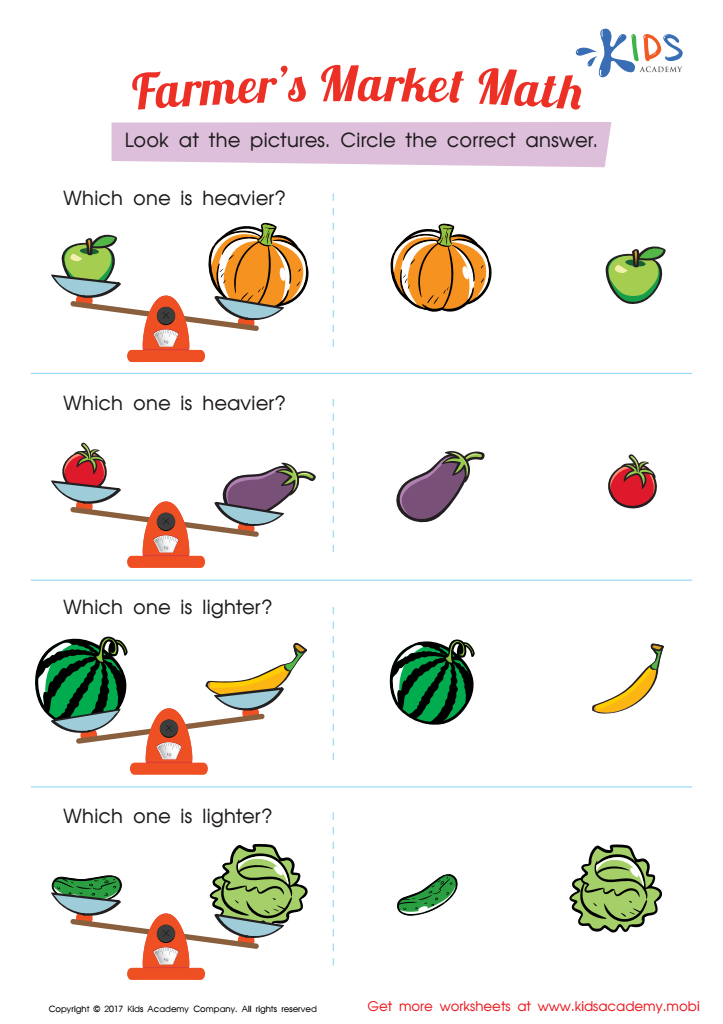
Which One Is Heavier Worksheet
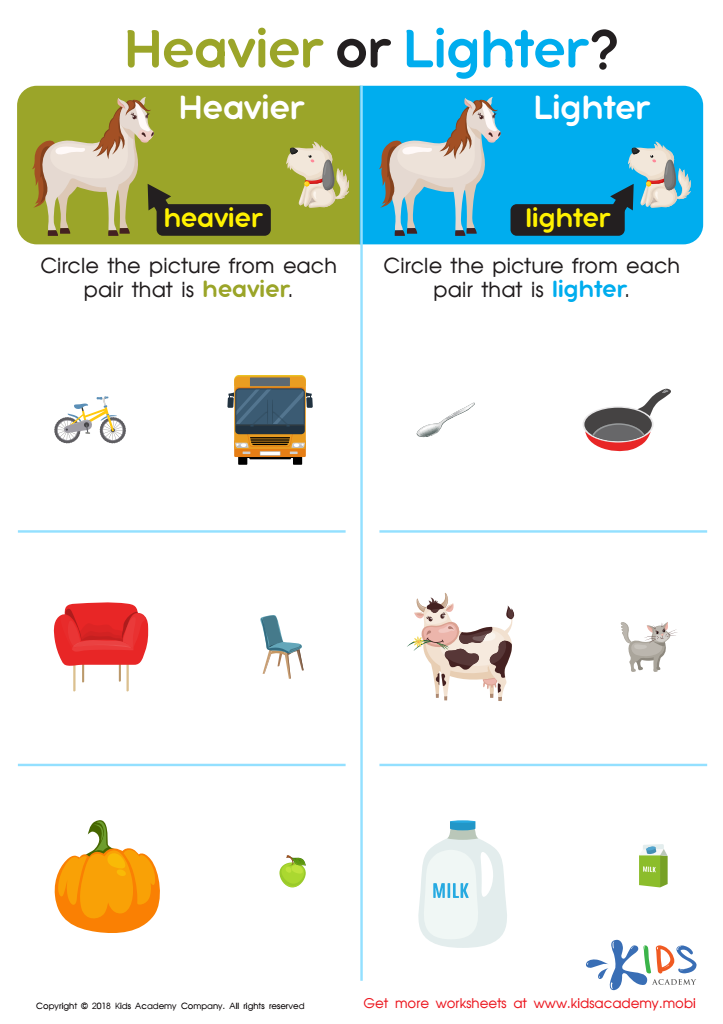
Heavier or Lighter? Worksheet








Comparing objects through measurement is crucial for early childhood development, particularly for children aged 4-5. This foundational skill helps youngsters understand concepts of size, length, weight, and volume, which are essential for future mathematical learning. When children compare objects, they engage critical thinking and problem-solving, enhancing their cognitive skills.
Moreover, measurement fosters language development. As children describe what they see—using terms such as "bigger," "smaller," "heavier," or "lighter"—they enrich their vocabulary. These interactions also encourage social skills through collaborative activities, as children often work in pairs or groups.
Furthermore, comparing objects promotes sensory experiences. Hands-on activities involving tangible items—like toys, blocks, or everyday household objects—allow children to explore and learn through play. This kinesthetic learning is essential for reinforcing understanding and retention of concepts.
In a broader context, these early measurement skills build a foundation for later academic success in STEM (Science, Technology, Engineering, and Mathematics) fields. Parents and teachers who recognize the importance of these foundational skills lay the groundwork for children to become confident problem solvers and critical thinkers, preparing them for a future filled with possibilities. Thus, engaging in measurement comparisons is not merely an academic exercise but a vital step in fostering holistic development.








