Visual Learning Word Problems Worksheets for Ages 4-5
5 filtered results
-
From - To
Introduce your little ones to the magic of math with our Visual Learning Word Problems Worksheets for ages 4-5. Designed to engage young minds, these worksheets combine vibrant illustrations with basic math concepts. Each activity encourages children to solve problems by interpreting visual cues, fostering early critical thinking and problem-solving skills. Perfect for preschool and kindergarten students, our visual learning approach makes math interactive and fun, ensuring that foundational skills are built with enthusiasm. Download now and watch your child’s confidence in math grow as they explore numbers, patterns, and simple arithmetic in an exciting, visual way!
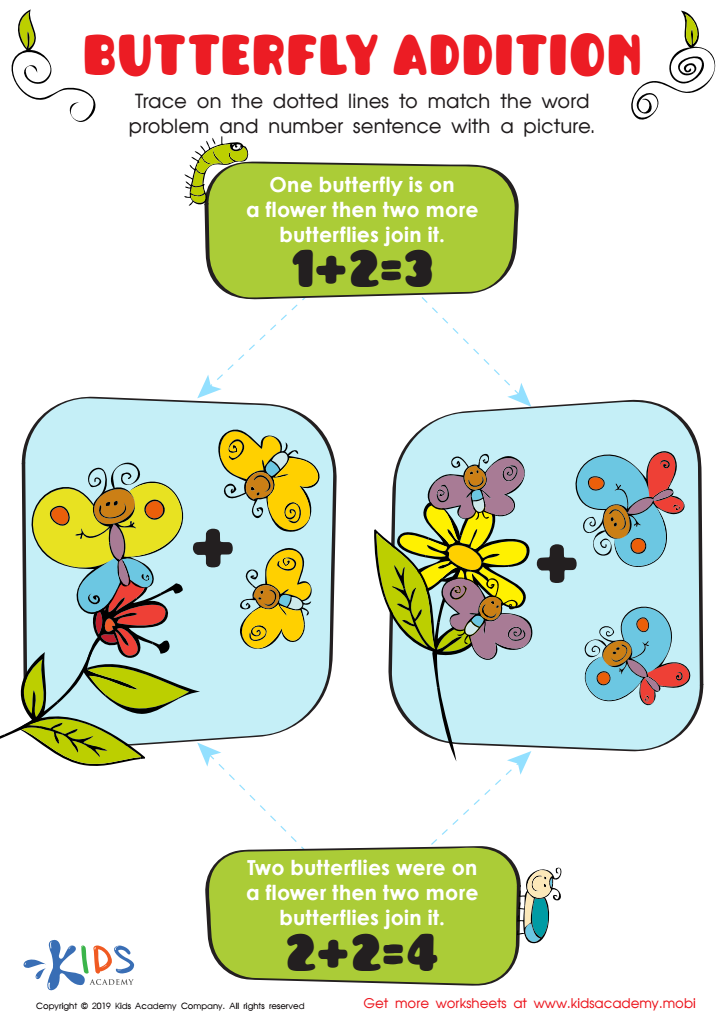
Butterfly Addition Worksheet
 Assign to My Students
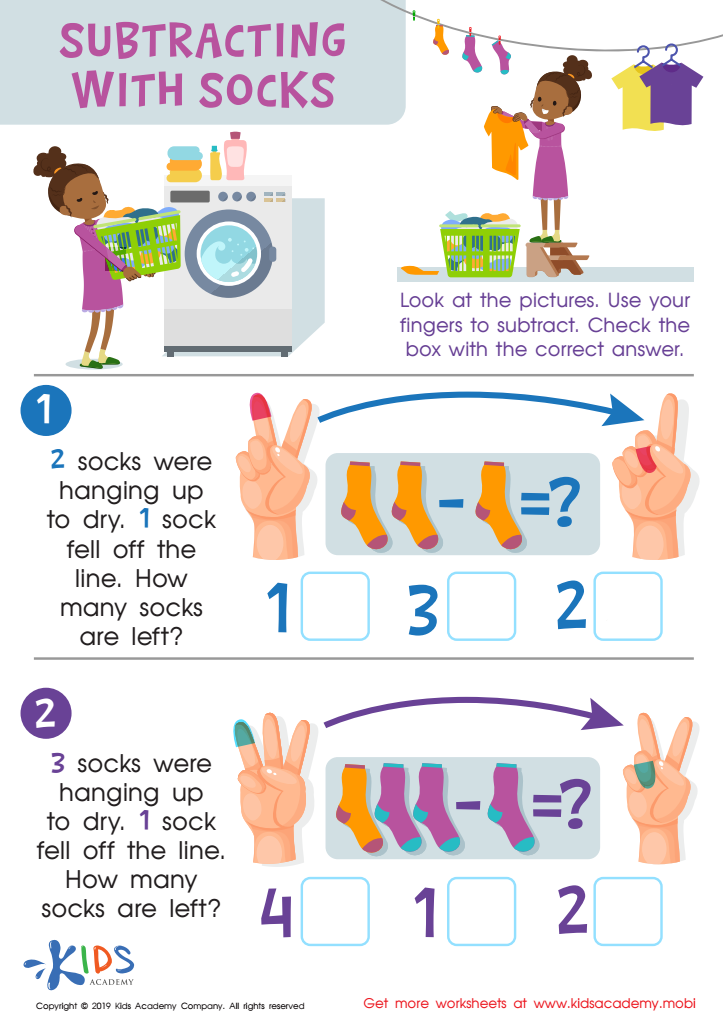
Subtracting Socks Worksheet
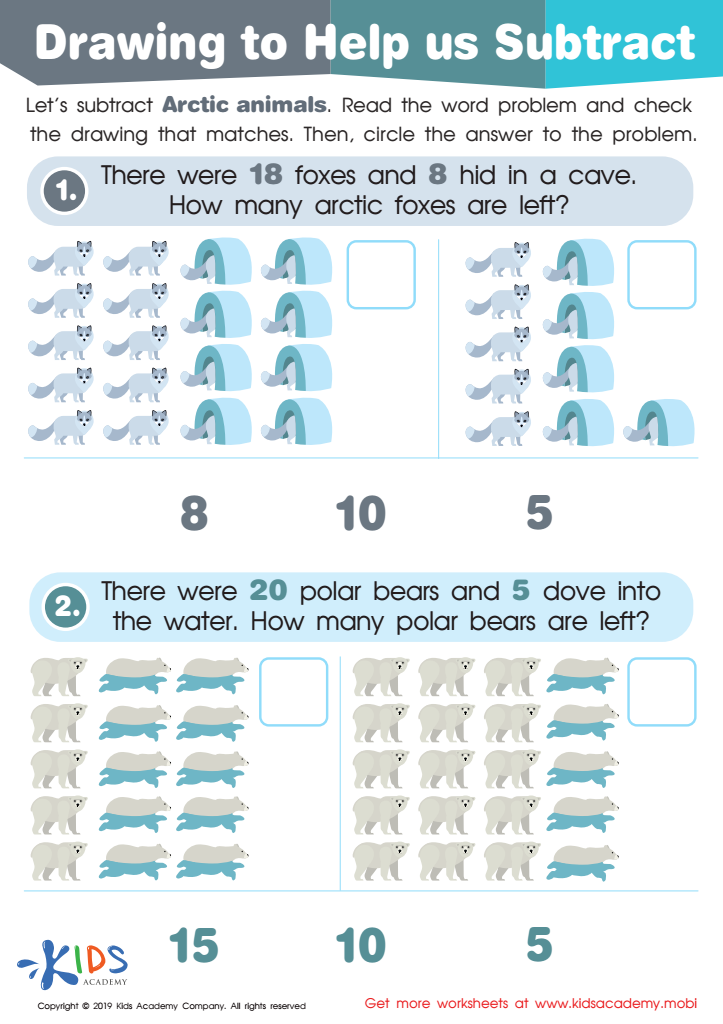
Drawing to Help Us Subtract Worksheet
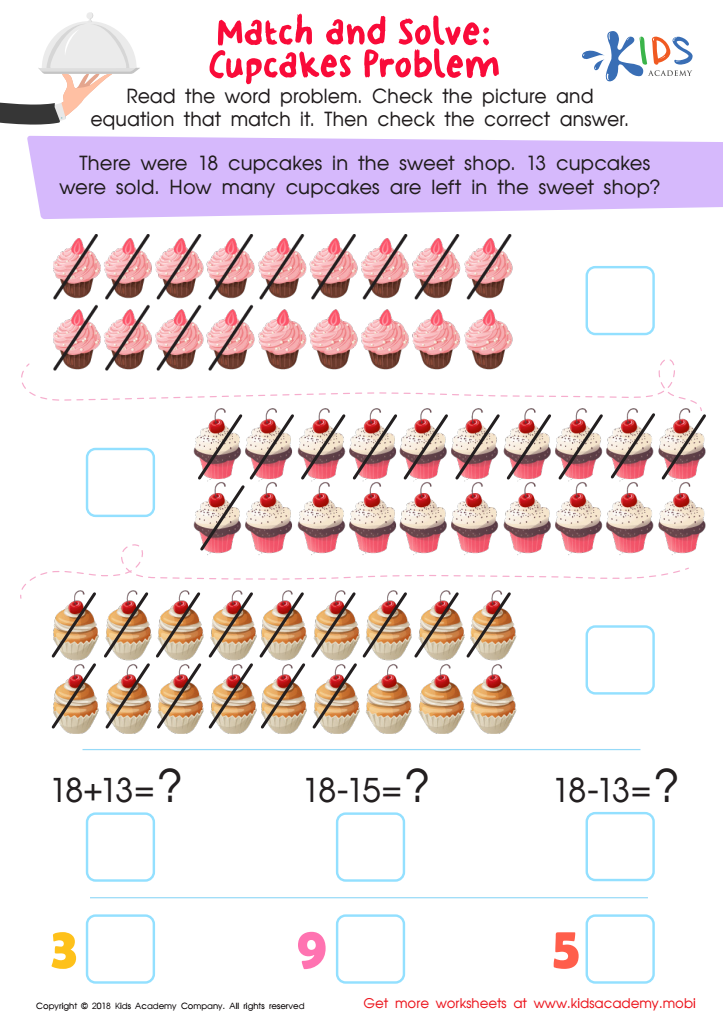
Match and Solve: Cupcakes Problem Worksheet
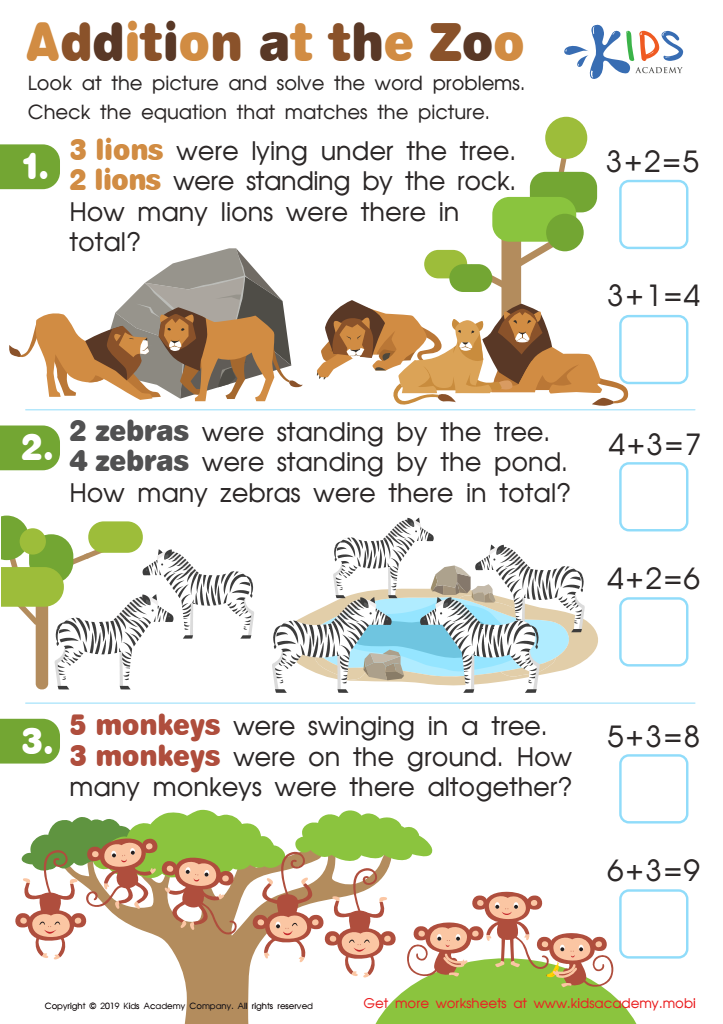
Addition at the Zoo Worksheet








Parents and teachers should care about visual learning word problems for ages 4-5 because these engage young learners in a crucial stage of cognitive development. Children in this age bracket are transitioning from concrete to abstract thinking, and visual learning techniques provide the bridge they need. Visual aids, like pictures and diagrams, help these young minds grasp concepts that words alone cannot sufficiently convey.
Encountering word problems with visual elements supports the development of essential problem-solving skills. When children see a scenario depicted visually, it is easier for them to comprehend the steps they need to take to find a solution. This approach enhances their numerical literacy and understanding of basic math operations like addition and subtraction.
Additionally, integrating visual word problems into early education can make learning more enjoyable and less intimidating. Engaging a child’s visual curiosity can stimulate an interest in math, setting a foundation for positive attitudes toward the subject in future academic pursuits.
Ultimately, such learning methods foster critical thinking, spatial awareness, and effective learning strategies early on. It helps in building the confidence needed to tackle more complex problem-solving tasks, making it vital for that tender age group. Therefore, incorporating visual tools in word problems is a sophisticated strategy to nurture well-rounded, enthusiastic learners.








