Hand-eye Coordination Building Vocabulary Coloring Pages Worksheets for Ages 4-5
3 filtered results
-
From - To
Enhance your child's learning journey with our Hand-eye Coordination Building Vocabulary Coloring Pages and Worksheets, designed for ages 4-5! These engaging activities seamlessly combine creativity with essential skill development. As children color and interact with vibrant illustrations, they strengthen their hand-eye coordination and expand their vocabulary. Each worksheet is crafted to make learning fun while reinforcing the connection between words and corresponding images. Perfect for preschool and kindergarten environments, these resources promote fine motor skills and cognitive growth. Discover a world of imagination and knowledge that will set the foundation for your child's educational success with our thoughtfully designed worksheets!

Long and Short U Worksheet
 Assign to My Students
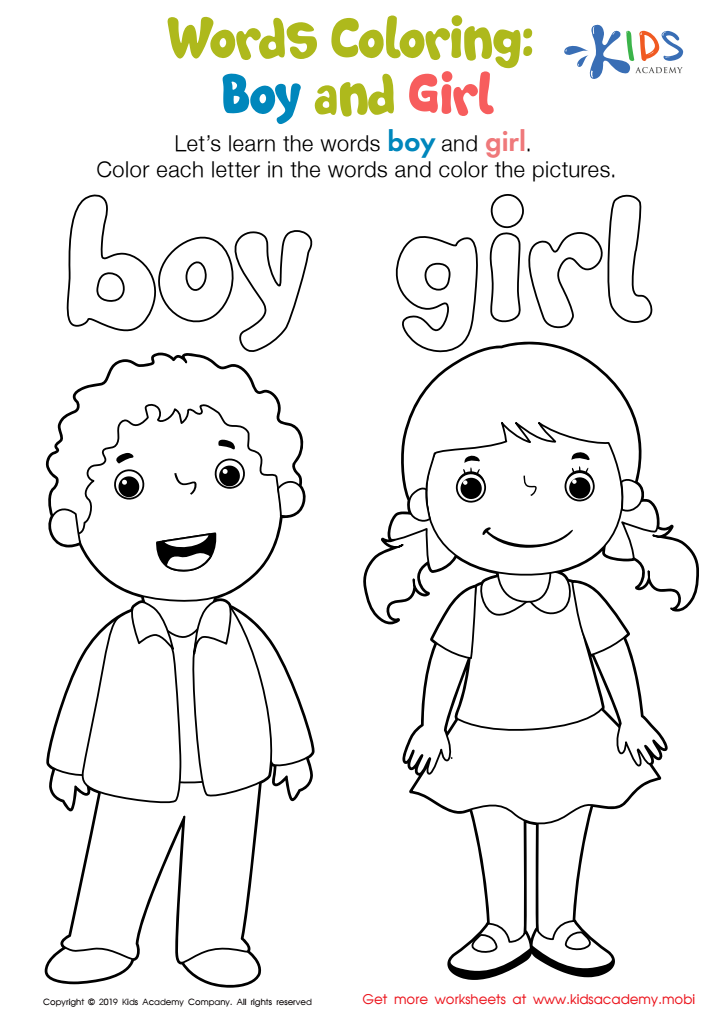
Boy and Girl Words Coloring Worksheet
Assign to My Students

Long and Short E Worksheet
Assign to My Students



Hand-eye coordination is a fundamental skill that significantly impacts a child's development, particularly in early education settings. For children aged 4-5, engaging in activities such as hand-eye coordination building strategies, vocabulary enrichment, and utilizing coloring pages serves multiple purposes that parents and teachers should prioritize.
Firstly, hand-eye coordination activities, such as coloring, help refine fine motor skills, which are crucial for tasks that children will encounter in school, like writing, cutting, and even manipulating objects. Improved coordination lays a strong foundation for academic skills and everyday functioning.
Secondly, vocabulary-building components integrated into coloring pages can bolster language development. When children describe their artwork or engage in discussions about colors and shapes, they are simultaneously enhancing their verbal skills and expanding their vocabulary. This dual-focus approach makes learning engaging and fun.
Moreover, coloring promotes creativity and self-expression, allowing children to explore their imaginations while gaining confidence in their abilities. By combining these aspects, hand-eye coordination coloring pages not only make learning enjoyable but also nurture essential life skills. Thus, both parents and teachers should actively encourage and facilitate such interactive learning experiences for children in this crucial developmental stage.








