Contextual understanding Building Vocabulary Worksheets for Ages 4-5
3 filtered results
-
From - To
Our "Contextual Understanding Building Vocabulary Worksheets for Ages 4-5" are designed to bolster early language skills through fun and engaging activities. Tailored for young minds, these worksheets offer a variety of colorful exercises that foster contextual understanding, crucial for vocabulary development. By interacting with captivating images and simple sentences, children learn new words within a context, promoting better retention and usage. Perfect for both classroom and home use, these tools provide a foundational step in reading proficiency, making learning an enjoyable journey for kids. Discover how enriching vocabulary at an early age can spark a lifelong love for reading!
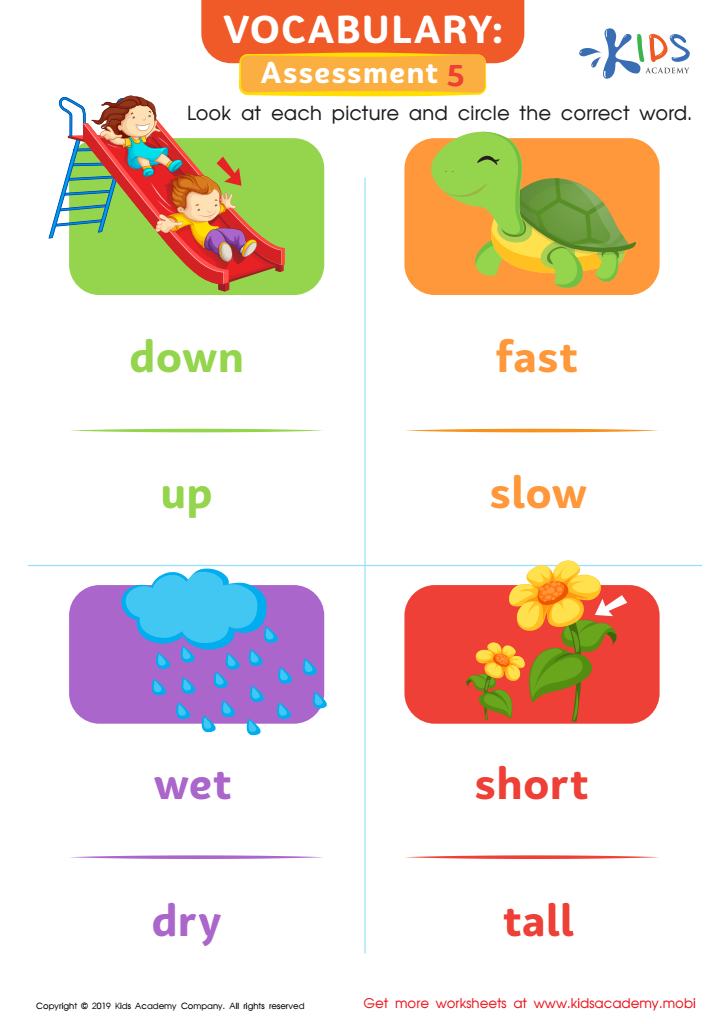
Vocabulary: Assessment 5 Worksheet
 Assign to My Students











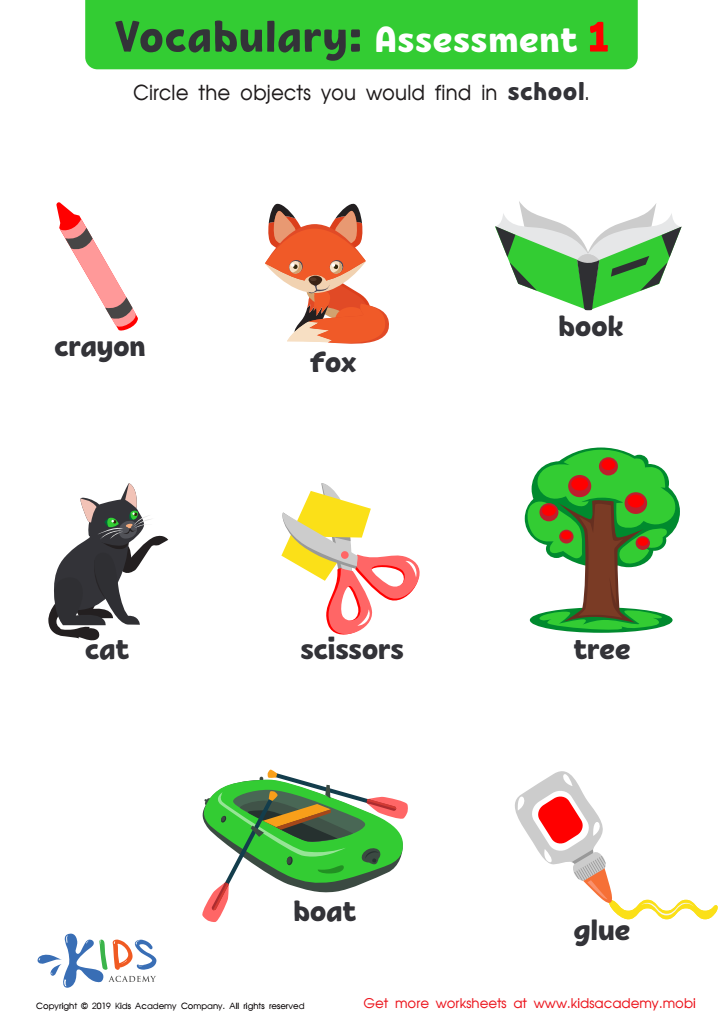
Vocabulary: Assessment 1 Worksheet
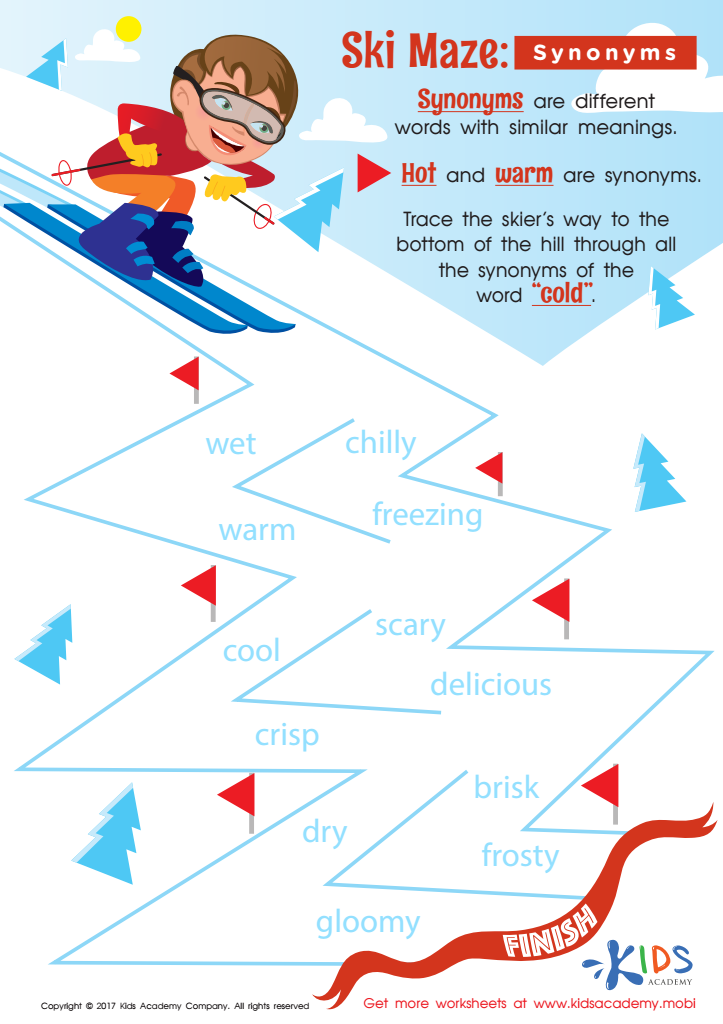
Free Printable Synonym Worksheet








Parents and teachers of 4-5-year-olds should prioritize building contextual understanding and vocabulary because it lays the groundwork for literacy and overall cognitive development. At this formative stage, children's brains are highly receptive and rapidly acquiring language skills. Understanding words in context helps them make sense of their world, aiding in communication, comprehension, and critical thinking.
Contextual learning ties words to meaningful experiences, making them more memorable. For example, learning the word "happy" through a story about a cheerful character or during a delightful game embeds the term with tangible emotions and scenarios. This contextual grasp not only enriches vocabulary but also enhances the ability to string words into coherent thoughts and sentences, honing effective communication skills.
Moreover, a robust vocabulary is a significant predictor of academic success. It eases reading comprehension and fosters a love for reading, crucial for learning across all subjects. As young children demonstrate and share new words, it boosts their confidence and encourages positive interactions with peers and adults. Investing time in contextual vocabulary building introduces children to a diverse world and equips them with the tools needed for lifelong learning and social success. Therefore, nurturing this aspect of child development is vital for unlocking their full educational potential.








