Hand-eye Coordination Building Vocabulary Worksheets for Ages 4-5
3 filtered results
-
From - To
Discover our engaging "Hand-eye Coordination Building Vocabulary Worksheets" designed for children ages 4-5! These worksheets seamlessly combine vocabulary development with fun hand-eye coordination activities, helping young learners enhance their motor skills while expanding their word knowledge. Each worksheet presents colorful illustrations and easy-to-follow tasks that promote not only language acquisition but also fine motor development. Perfect for parents and educators, these resources make learning exciting and interactive. Watch your child thrive as they connect words to images, practice writing, and improve their coordination with each engaging exercise. Start building your child's vocabulary foundation today with our creative and educational worksheets!
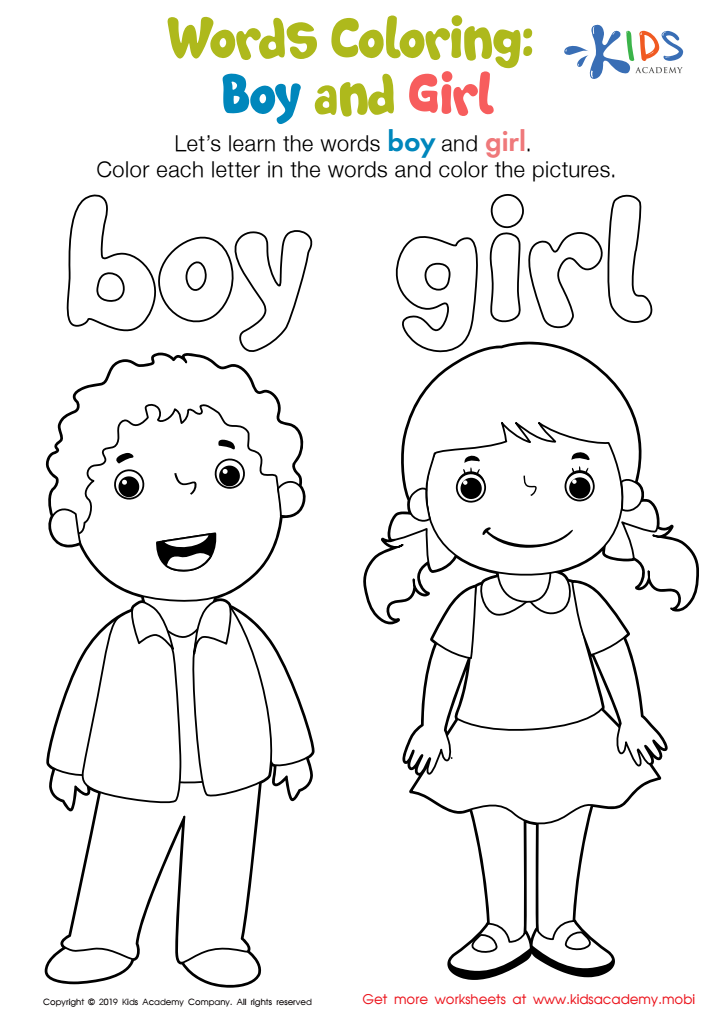
Boy and Girl Words Coloring Worksheet
 Assign to My Students











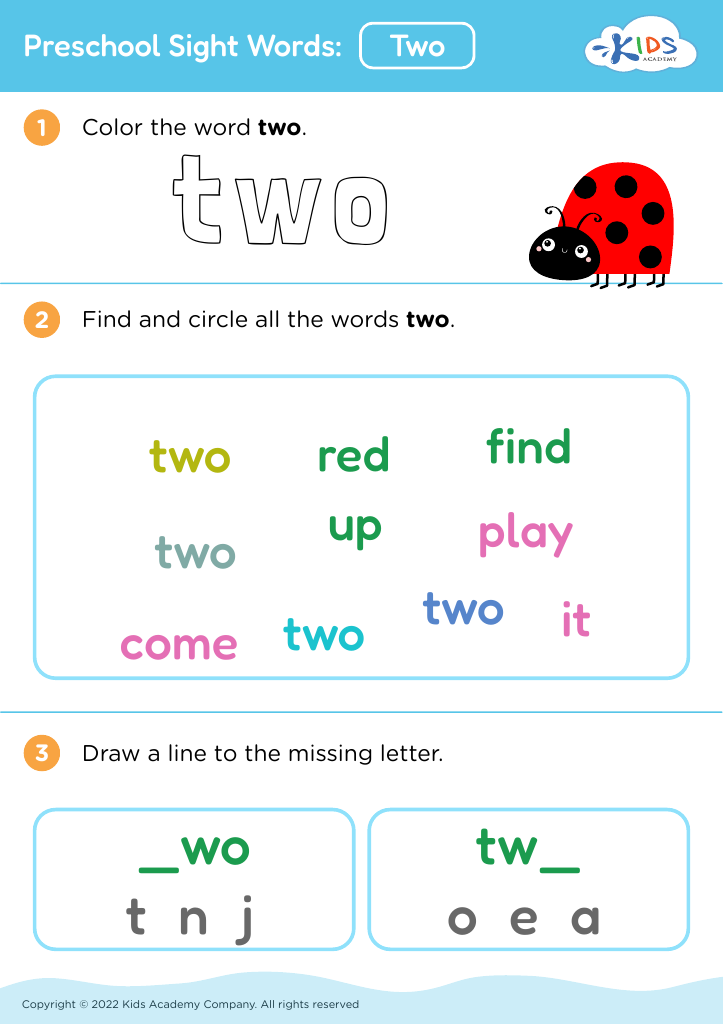
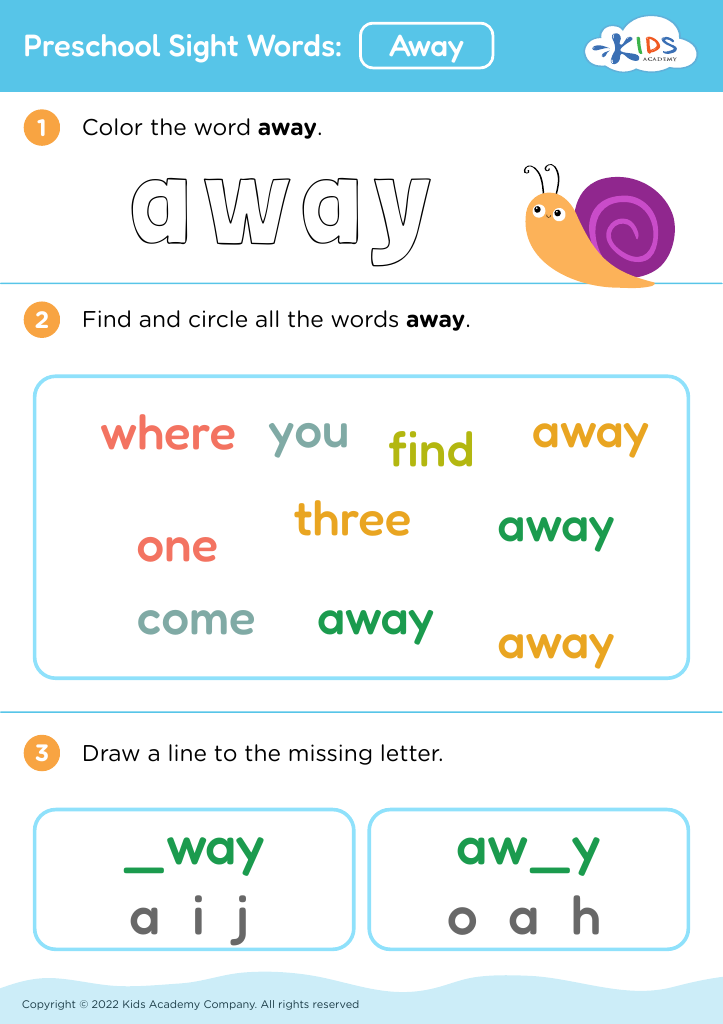








Hand-eye coordination is a crucial developmental skill for children ages 4-5, influencing their ability to perform everyday tasks and engage in more complex activities later on. This skill involves the simultaneous use of the visual system and motor functions, enabling children to grasp, throw, catch, and draw with precision. For parents and teachers, nurturing hand-eye coordination is essential because it lays the groundwork for future achievements in academics and sports.
Building vocabulary linked to hand-eye coordination, such as terms related to movement, spatial awareness, and object manipulation, enhances a child's understanding and expression. This enrichment supports cognitive development as children learn to articulate their actions, making connections between their movements and the words they use. Alongside physical activities, discussions about these concepts encourage imaginative play and problem-solving skills.
Furthermore, strong hand-eye coordination often leads to increased self-esteem and motivation, as children gain confidence in their abilities. Engaging children in interactive play, art, and crafts while incorporating relevant vocabulary not only boosts their physical capabilities but fortifies language development, preparing them for success in school and beyond. By prioritizing these skills and vocabulary, parents and teachers can foster holistic growth in young learners.








