Introduce your preschooler to the world of fractions with our engaging "Understanding Fractions Building Vocabulary Worksheets for Ages 4-5." Tailored specifically for young learners, these worksheets combine fun activities and essential vocabulary lessons to help children grasp the basics of fractions early on. Through colorful visuals and simple exercises, kids will learn terms like "half," "whole," and "quarter," laying a strong foundation for future math skills. Perfectly designed for curious minds, our worksheets ensure your child thrives with confidence. Prepare your little one for a successful educational journey with our expertly crafted fraction-focused resources.

Check out this FREE Trial Lesson on Building Vocabulary for age 4-5!

Exactly the Same, or Not

Favorites
With answer key
Interactive
  • 4-5
  • Understanding fractions
  • Building Vocabulary
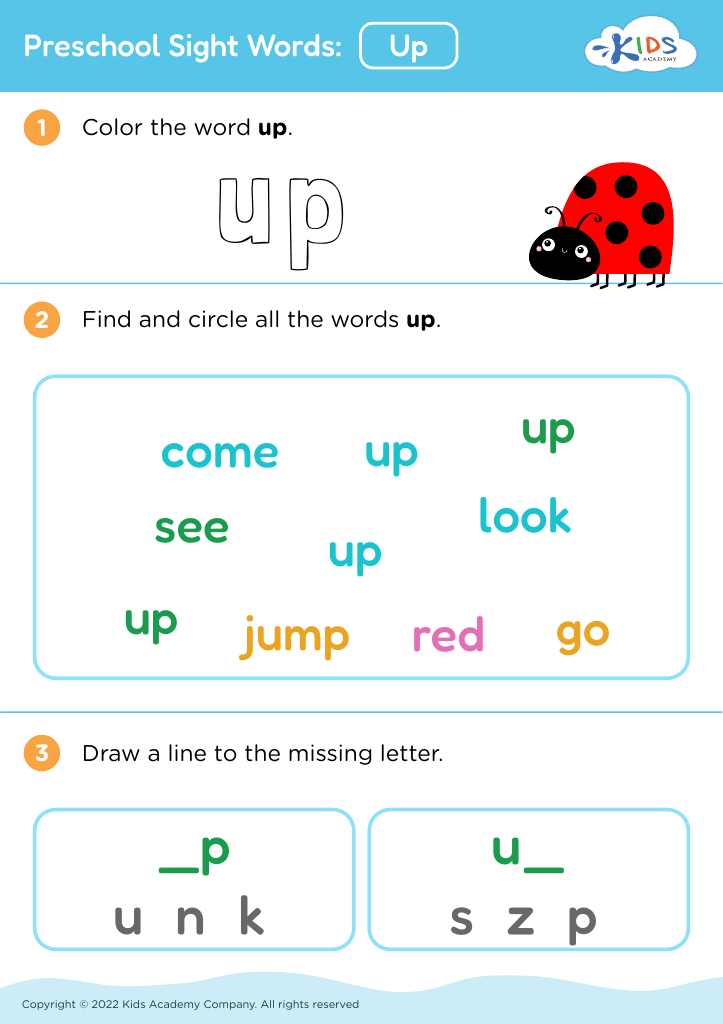
Preschool Sight Words: Up

Preschool Sight Words: Up

Preschool Sight Words: Up
Worksheet
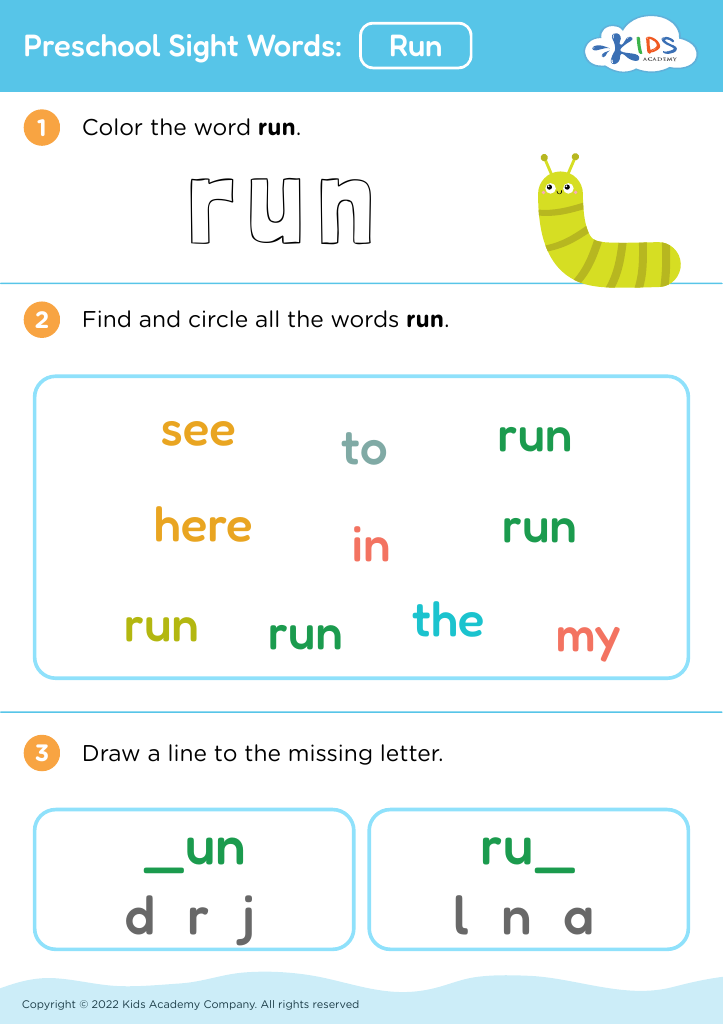
Preschool Sight Words: Run

Preschool Sight Words: Run

Preschool Sight Words: Run
Worksheet
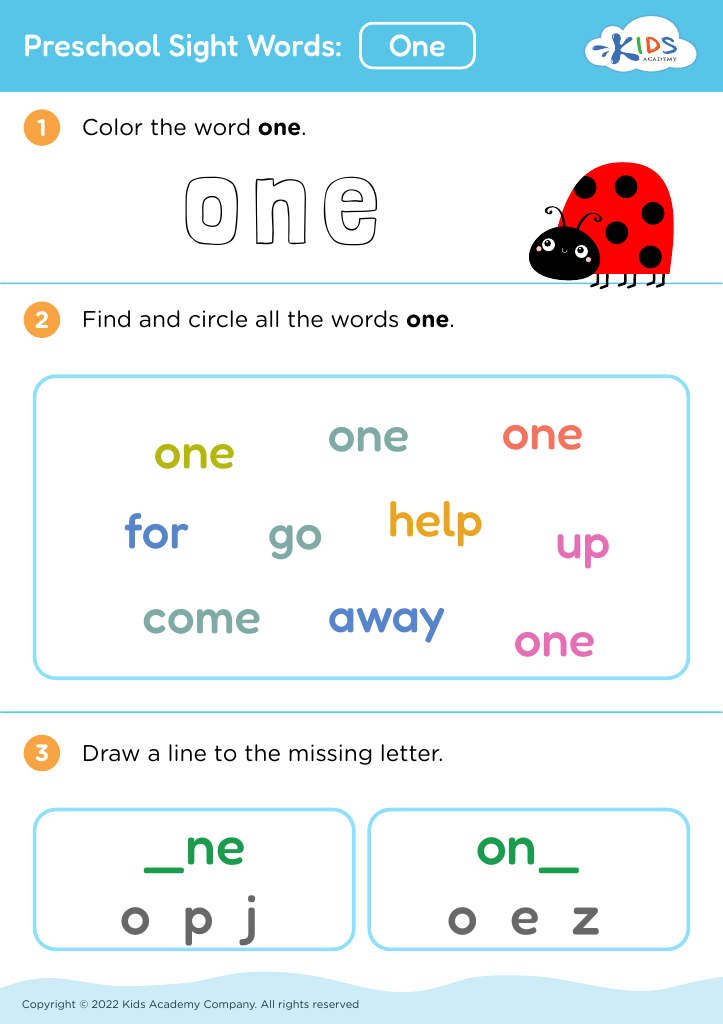
Preschool Sight Words: One

Preschool Sight Words: One

Preschool Sight Words: One
Worksheet
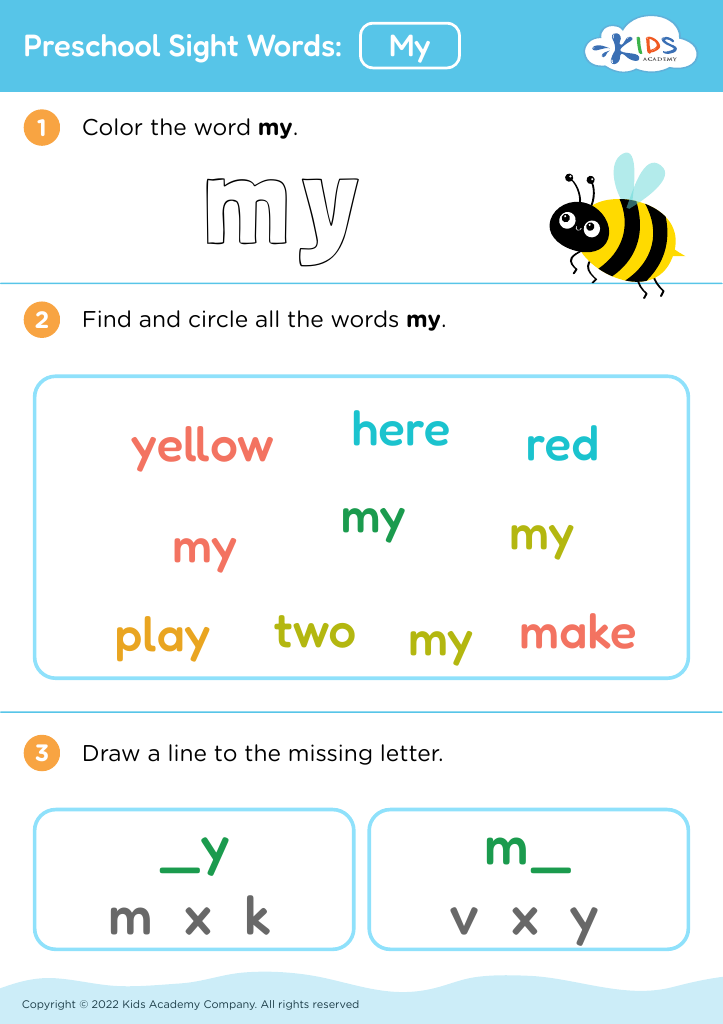
Preschool Sight Words: My

Preschool Sight Words: My

Preschool Sight Words: My
Worksheet
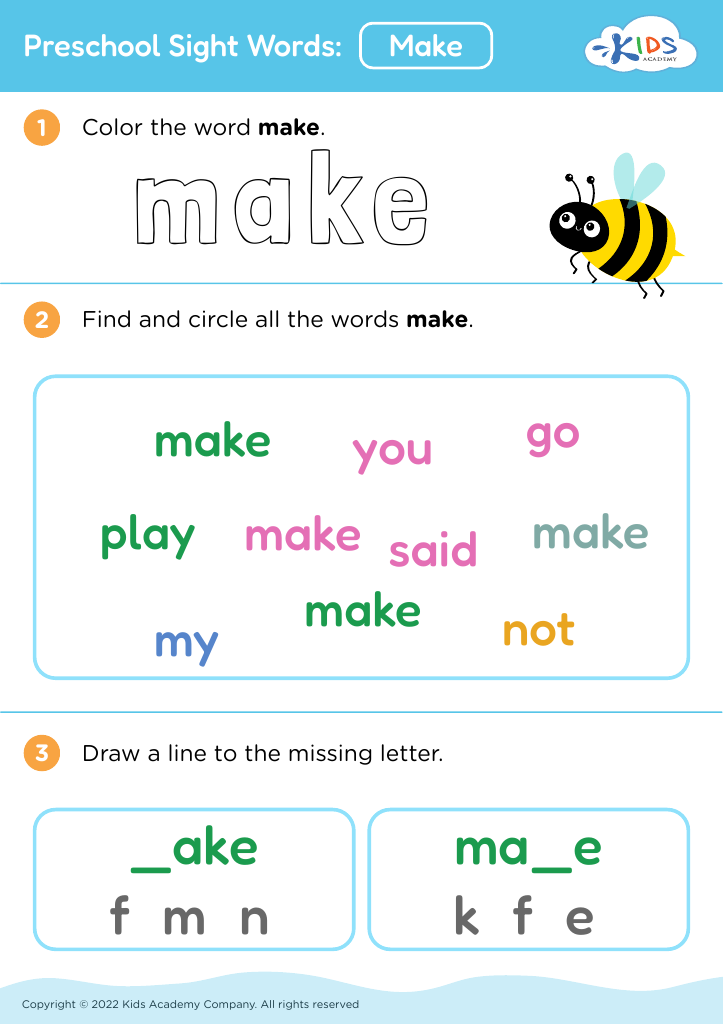
Preschool Sight Words: Make

Preschool Sight Words: Make

Preschool Sight Words: Make
Worksheet
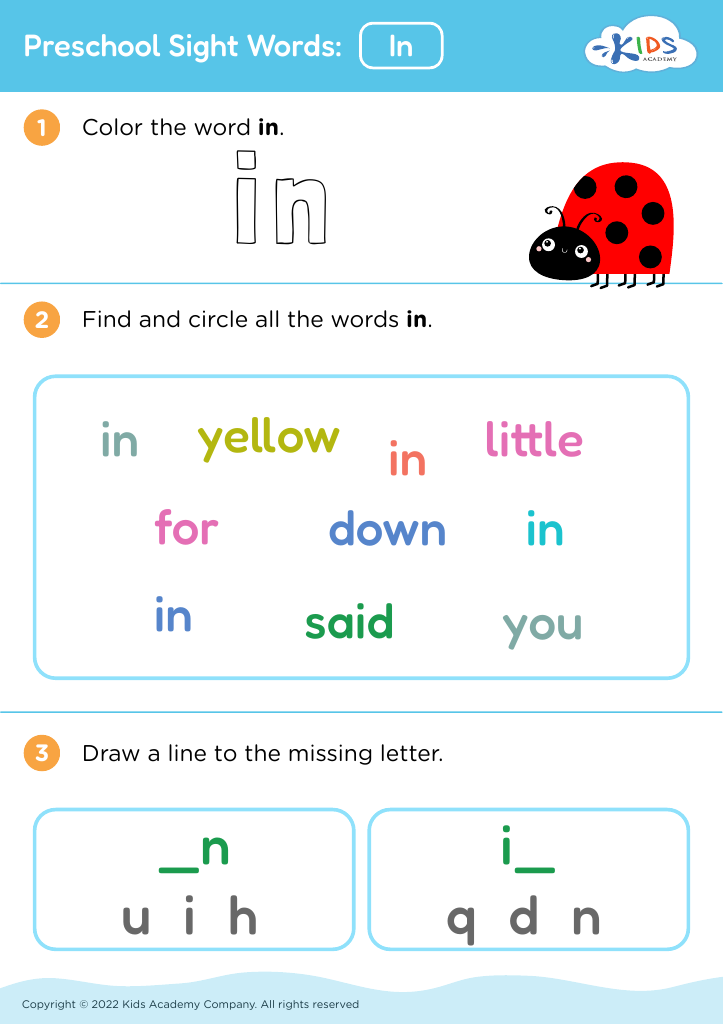
Preschool Sight Words: In

Preschool Sight Words: In

Preschool Sight Words: In
Worksheet
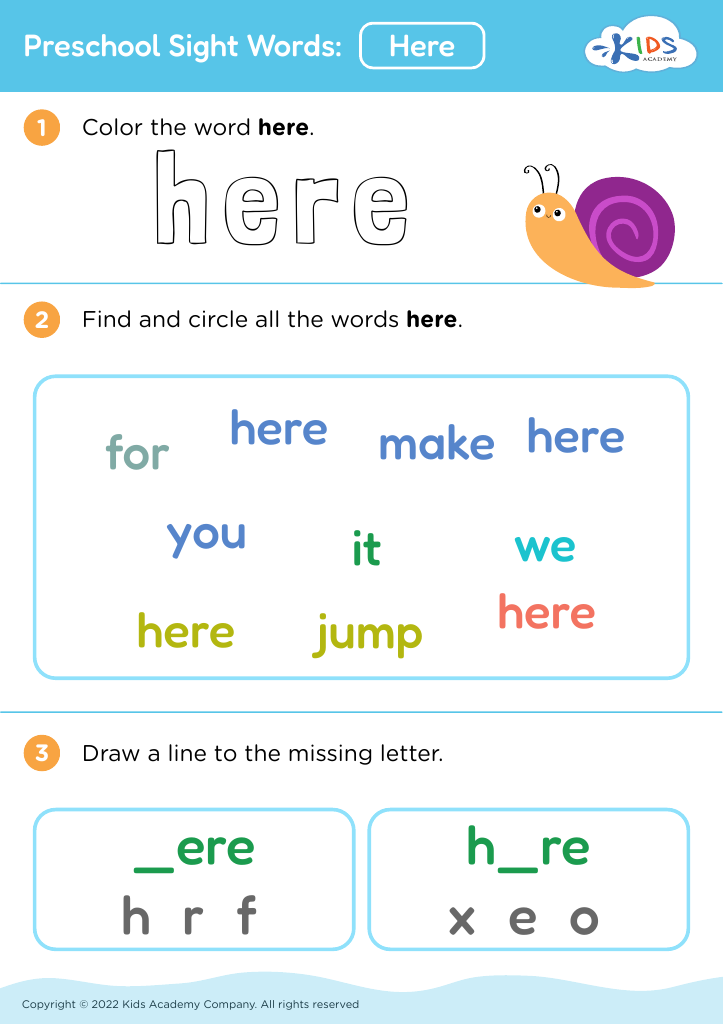
Preschool Sight Words: Here

Preschool Sight Words: Here

Preschool Sight Words: Here
Worksheet
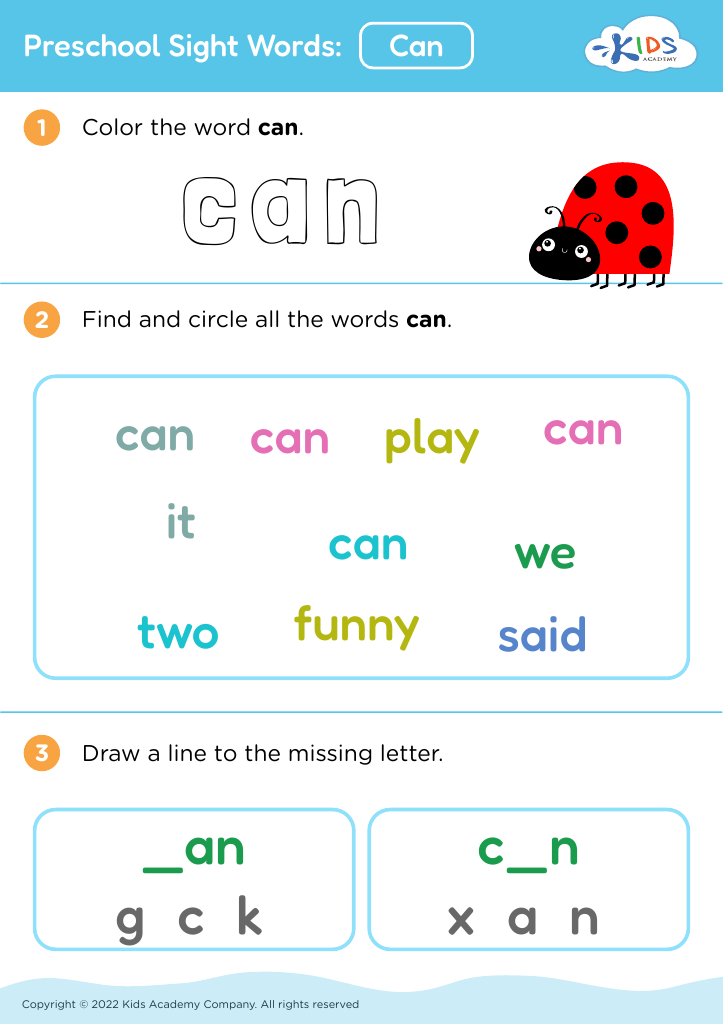
Preschool Sight Words: Can

Preschool Sight Words: Can

Preschool Sight Words: Can
Worksheet
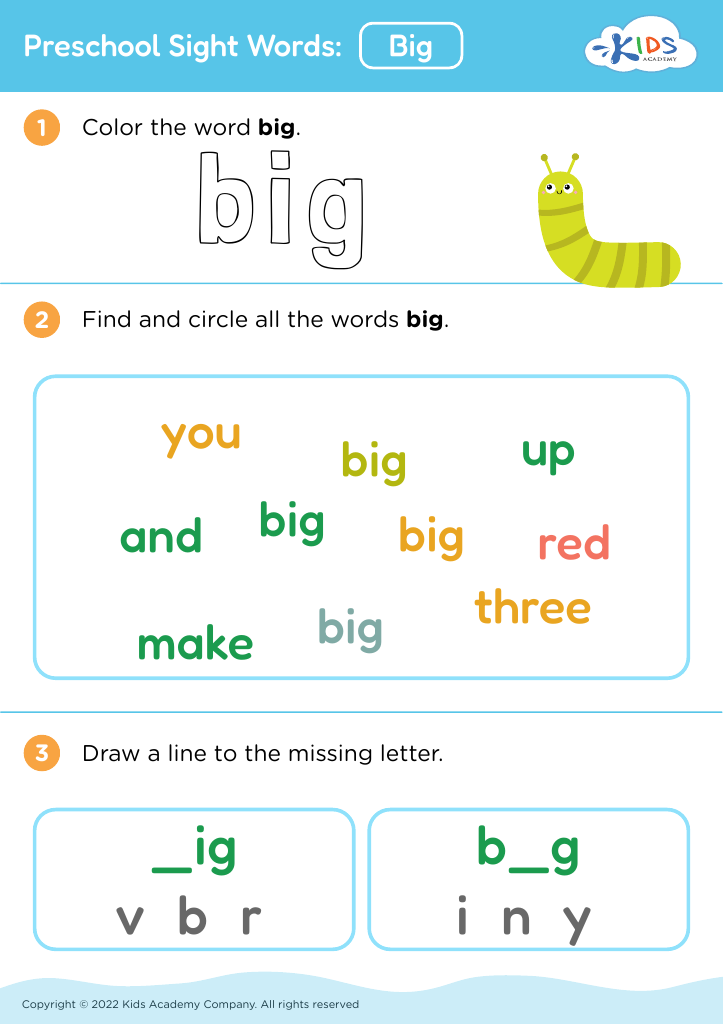
Preschool Sight Words: Big

Preschool Sight Words: Big

Preschool Sight Words: Big
Worksheet
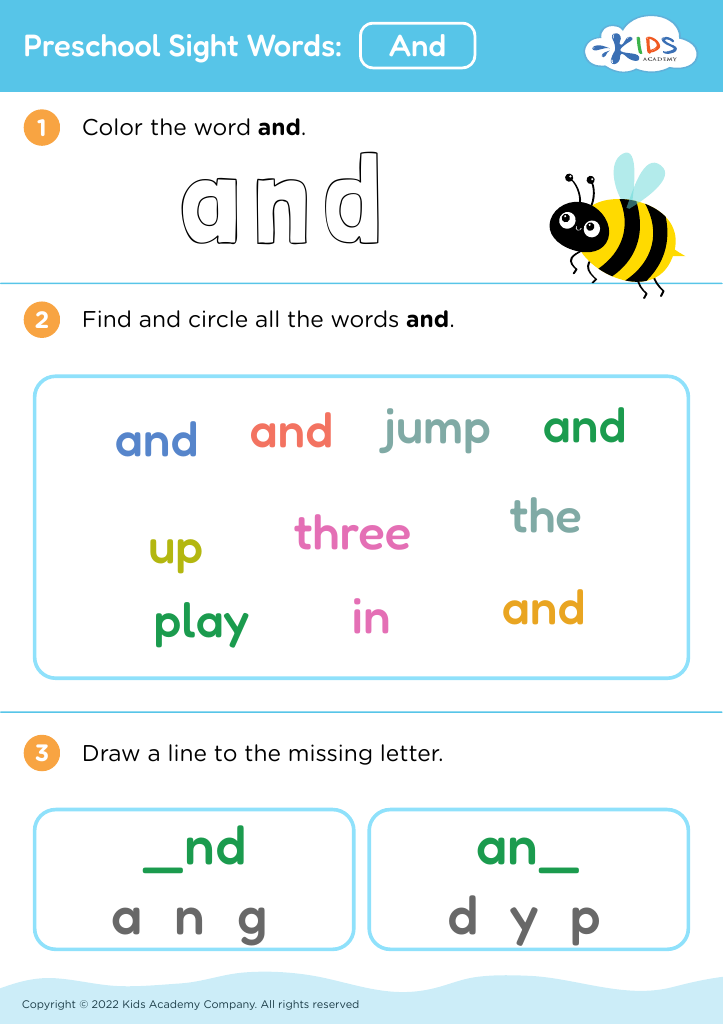
Preschool Sight Words: And

Preschool Sight Words: And

Preschool Sight Words: And
Worksheet
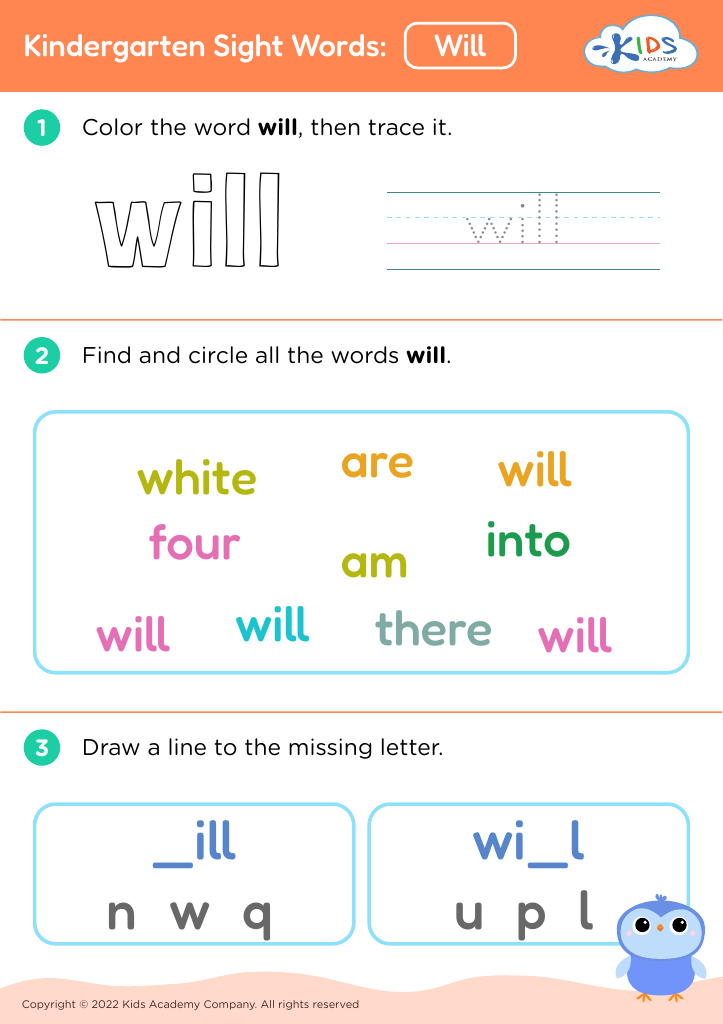
Kindergarten Sight Words: Will

Kindergarten Sight Words: Will

Kindergarten Sight Words: Will
Worksheet
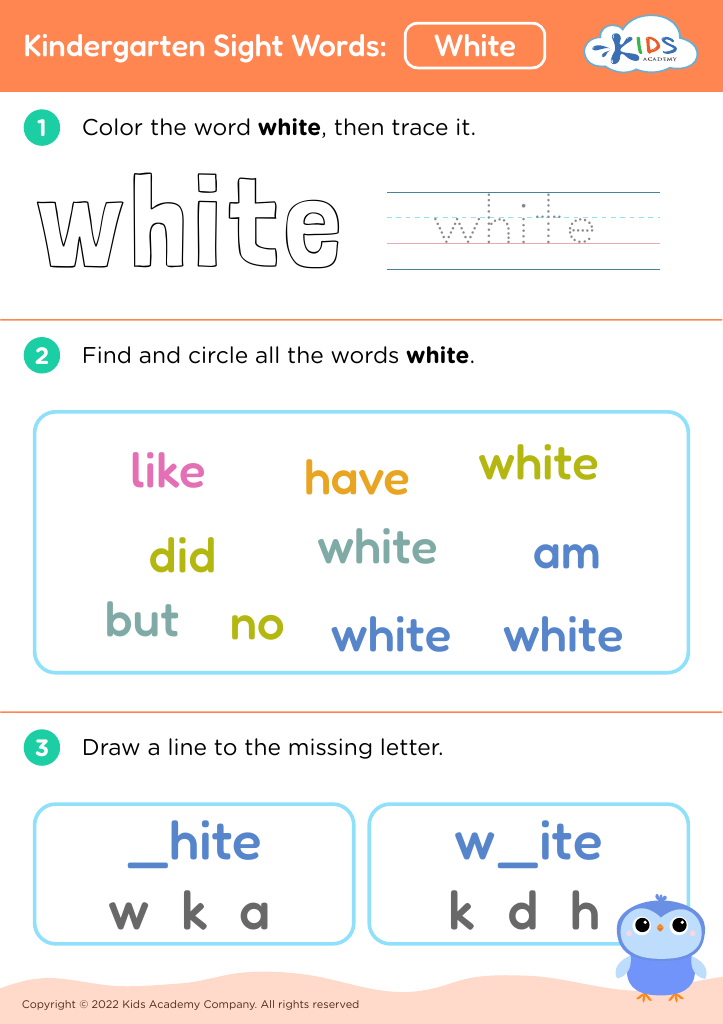
Kindergarten Sight Words: White

Kindergarten Sight Words: White

Kindergarten Sight Words: White
Worksheet
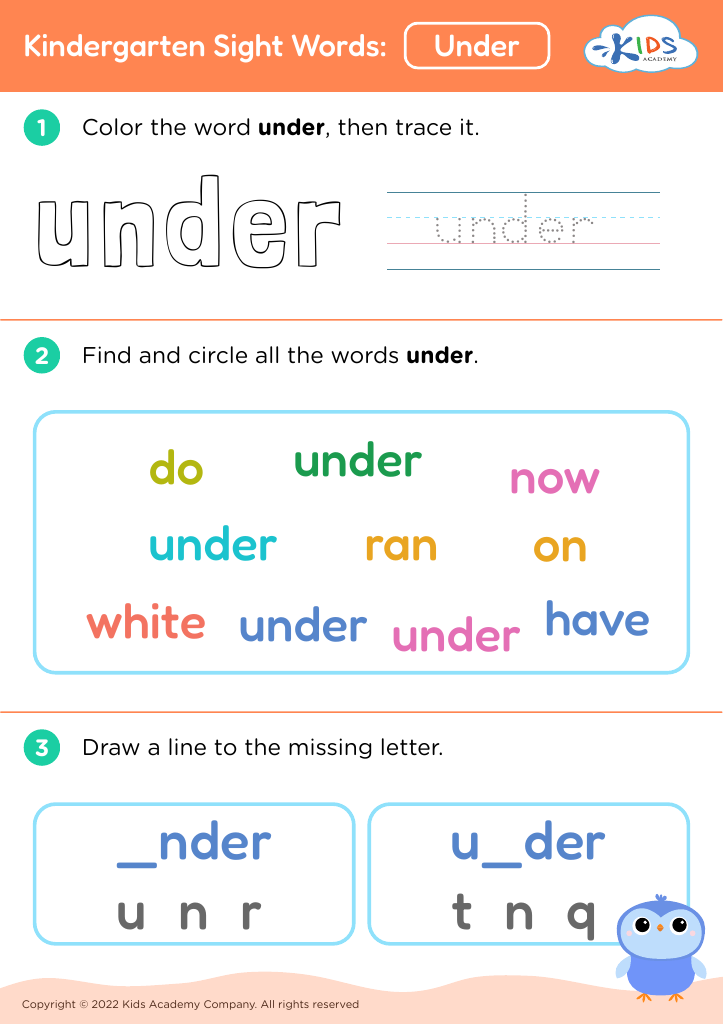
Kindergarten Sight Words: Under

Kindergarten Sight Words: Under

Kindergarten Sight Words: Under
Worksheet
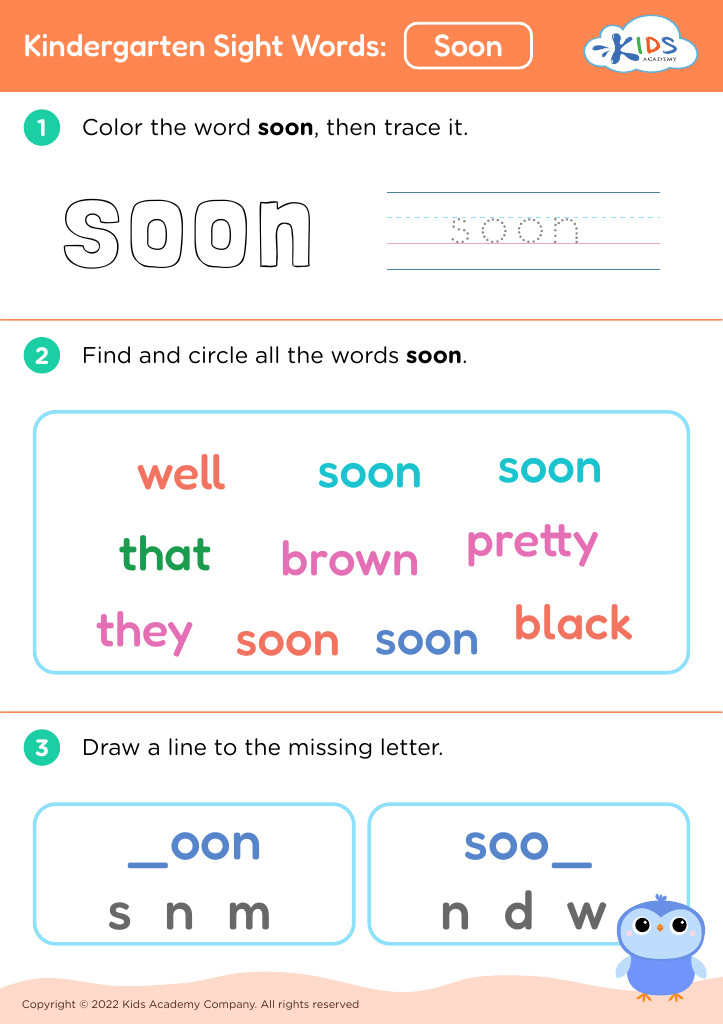
Kindergarten Sight Words: Soon

Kindergarten Sight Words: Soon

Kindergarten Sight Words: Soon
Worksheet
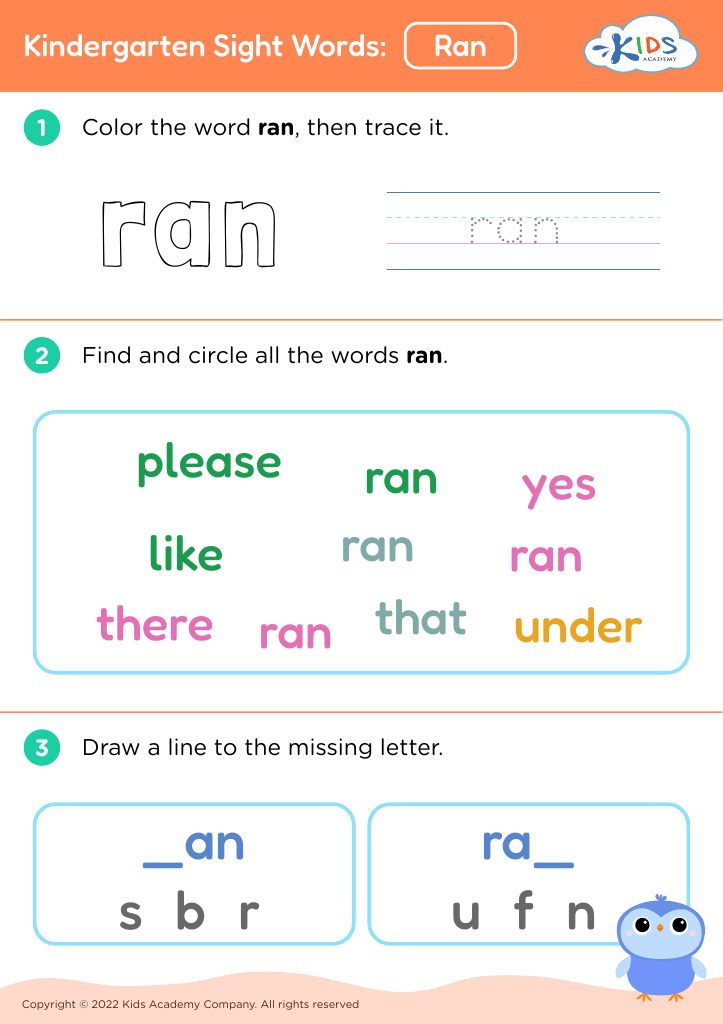
Kindergarten Sight Words: Ran

Kindergarten Sight Words: Ran

Kindergarten Sight Words: Ran
Worksheet
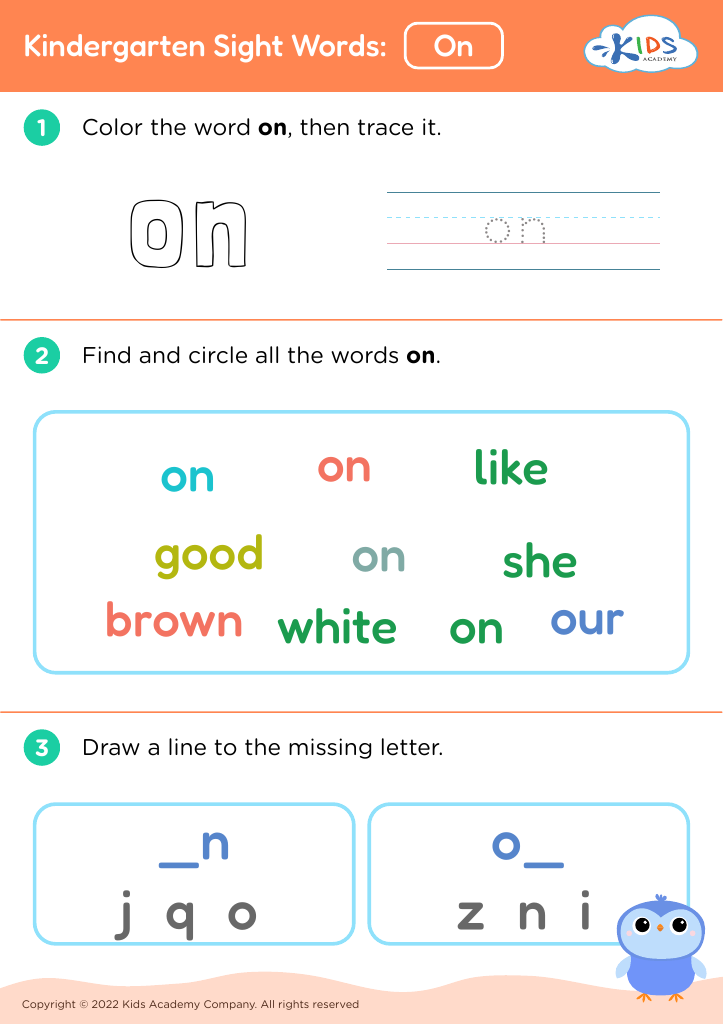
Kindergarten Sight Words: On

Kindergarten Sight Words: On

Kindergarten Sight Words: On
Worksheet
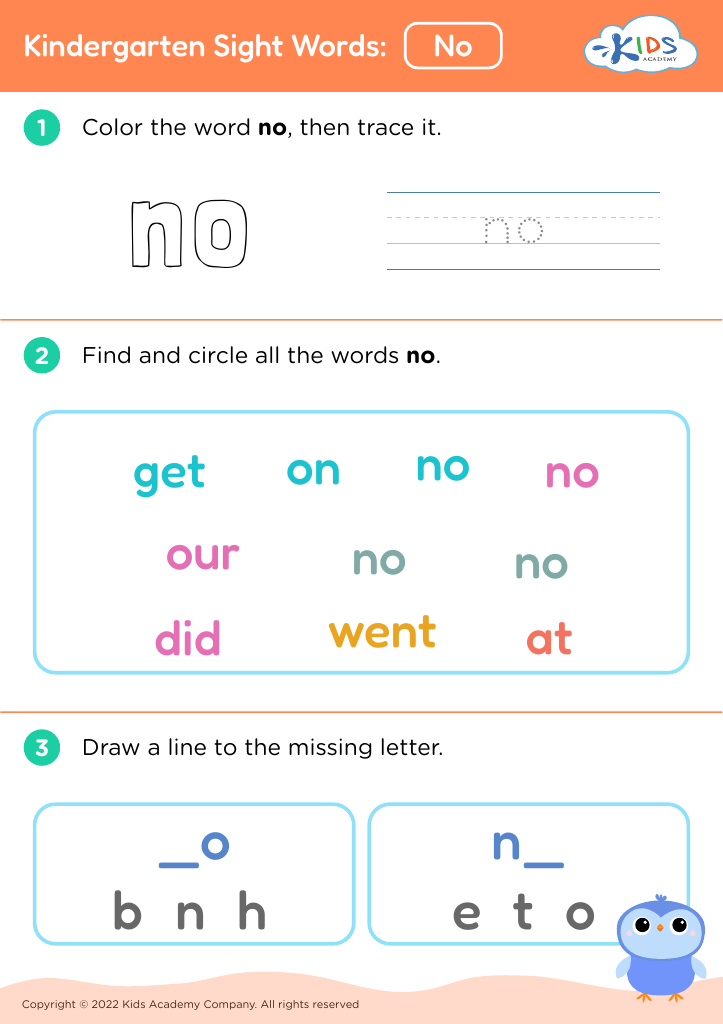
Kindergarten Sight Words: No

Kindergarten Sight Words: No

Kindergarten Sight Words: No
Worksheet
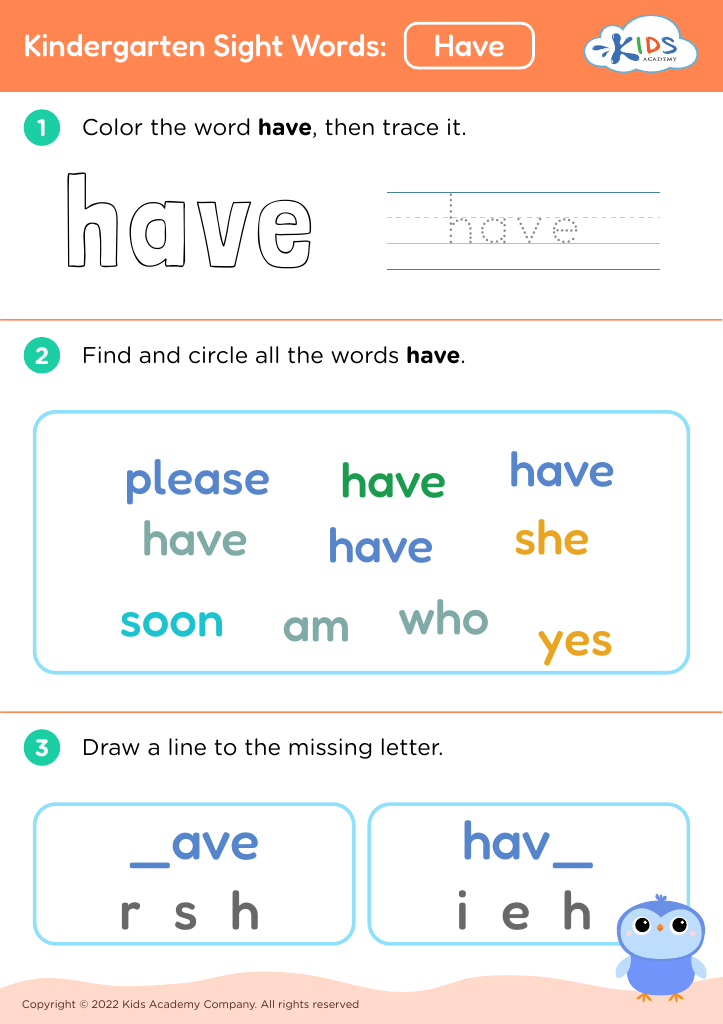
Kindergarten Sight Words: Have

Kindergarten Sight Words: Have

Kindergarten Sight Words: Have
Worksheet
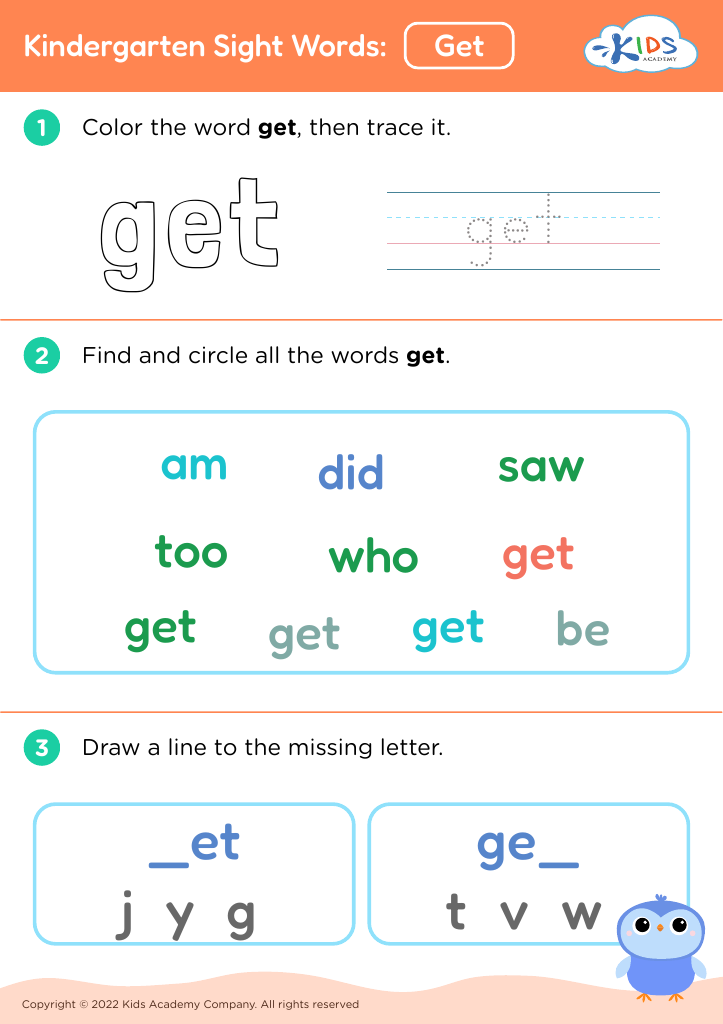
Kindergarten Sight Words: Get

Kindergarten Sight Words: Get

Kindergarten Sight Words: Get
Worksheet
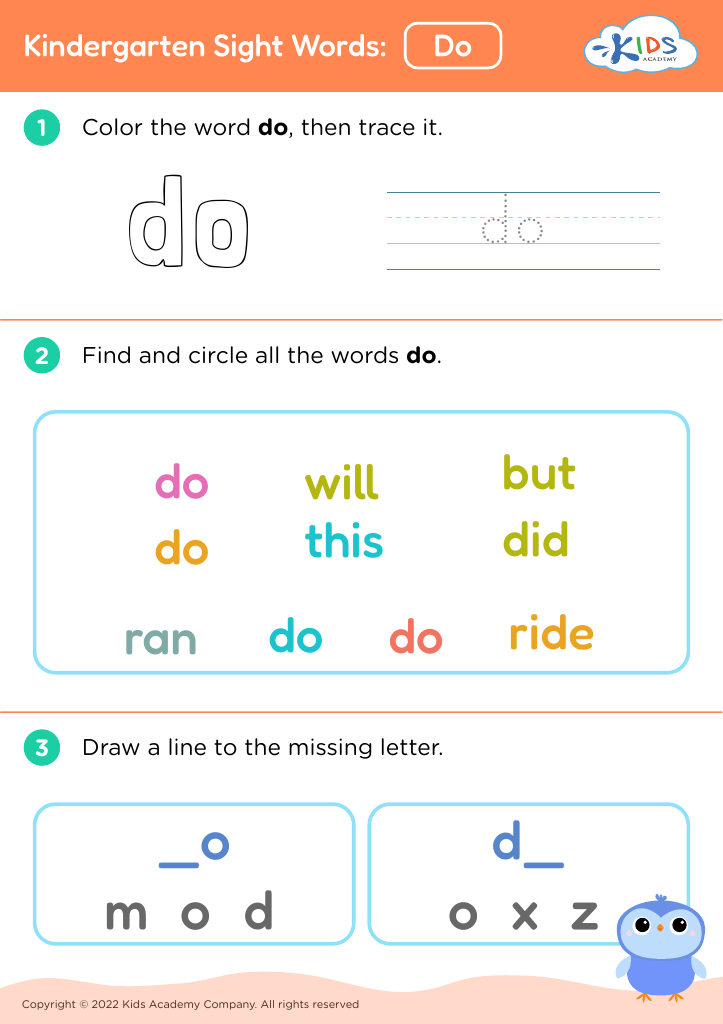
Kindergarten Sight Words: Do

Kindergarten Sight Words: Do

Kindergarten Sight Words: Do
Worksheet
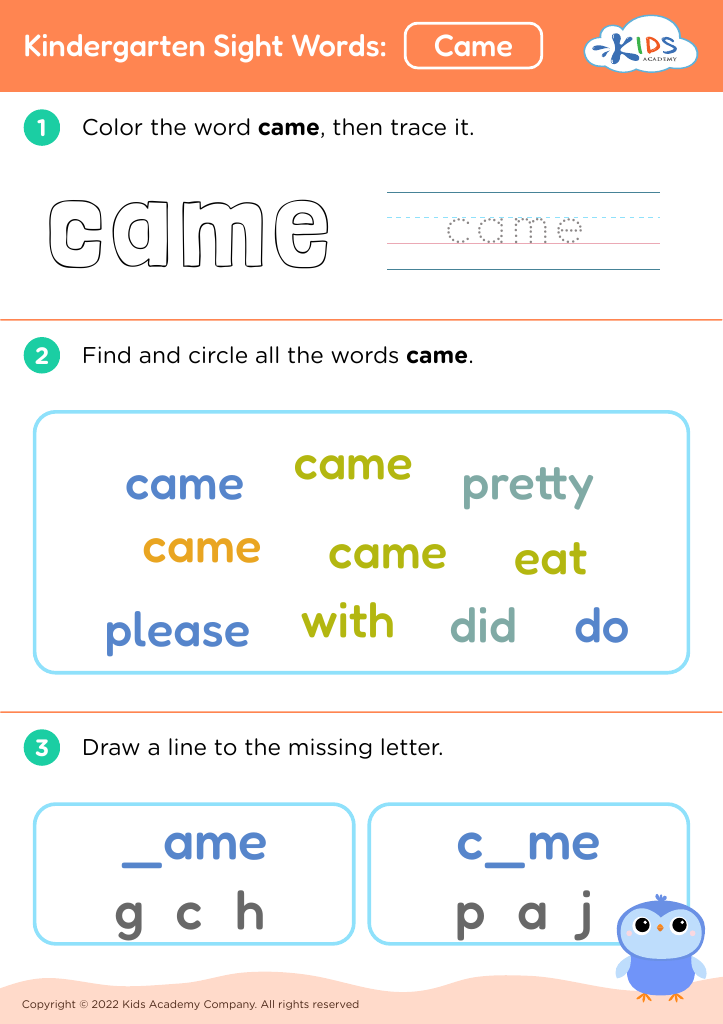
Kindergarten Sight Words: Came

Kindergarten Sight Words: Came

Kindergarten Sight Words: Came
Worksheet
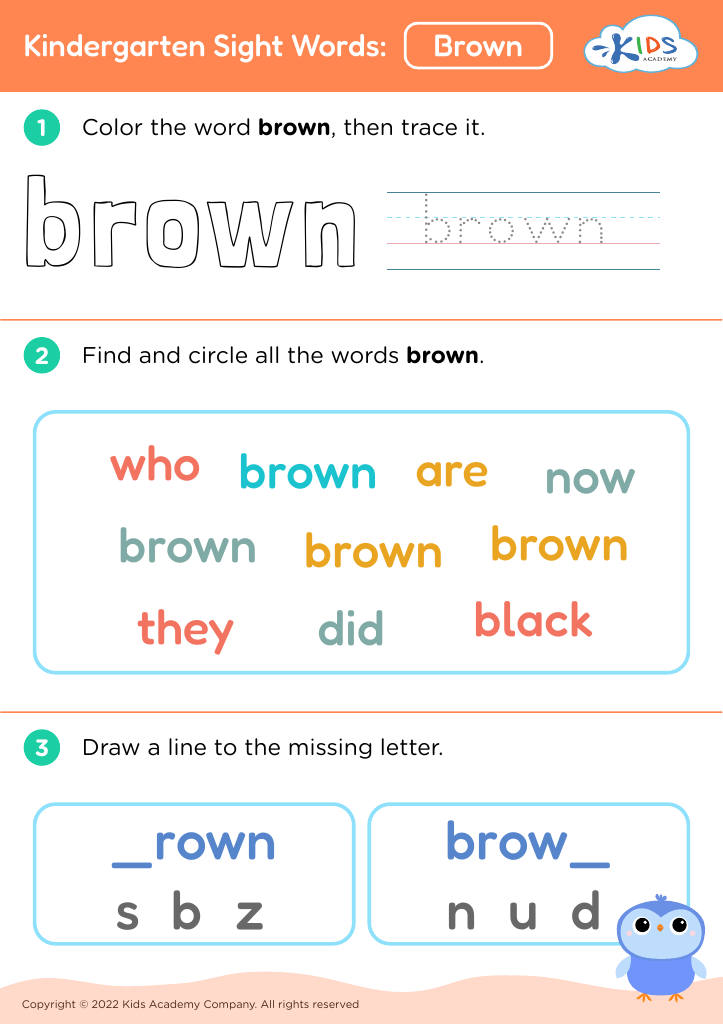
Kindergarten Sight Words: Brown

Kindergarten Sight Words: Brown

Kindergarten Sight Words: Brown
Worksheet
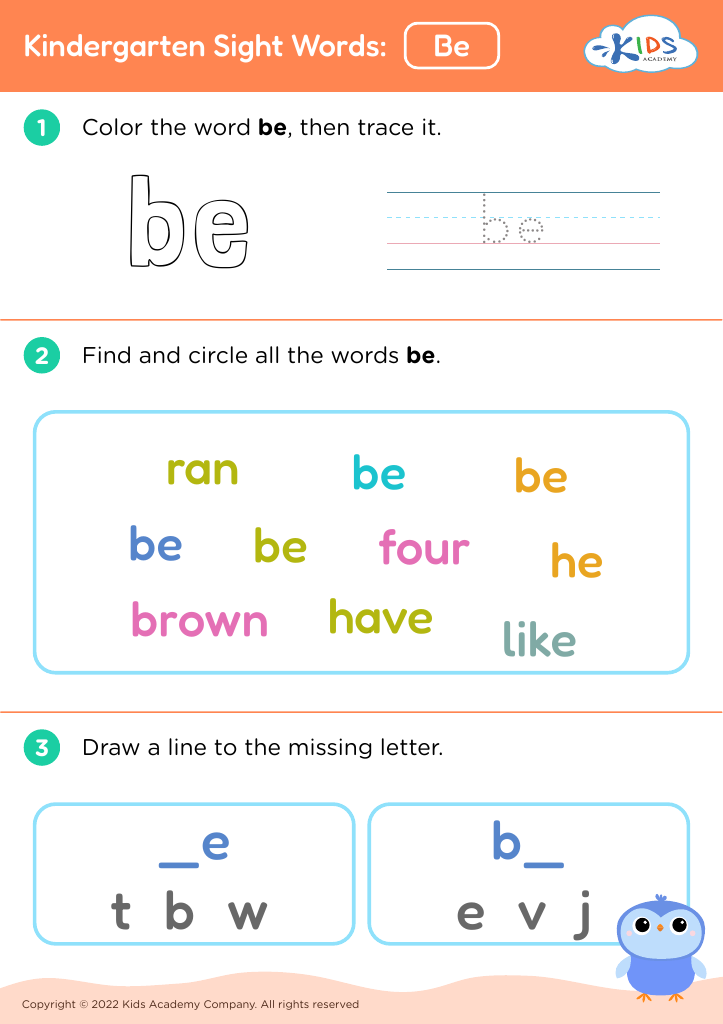
Kindergarten Sight Words: Be

Kindergarten Sight Words: Be

Kindergarten Sight Words: Be
Worksheet
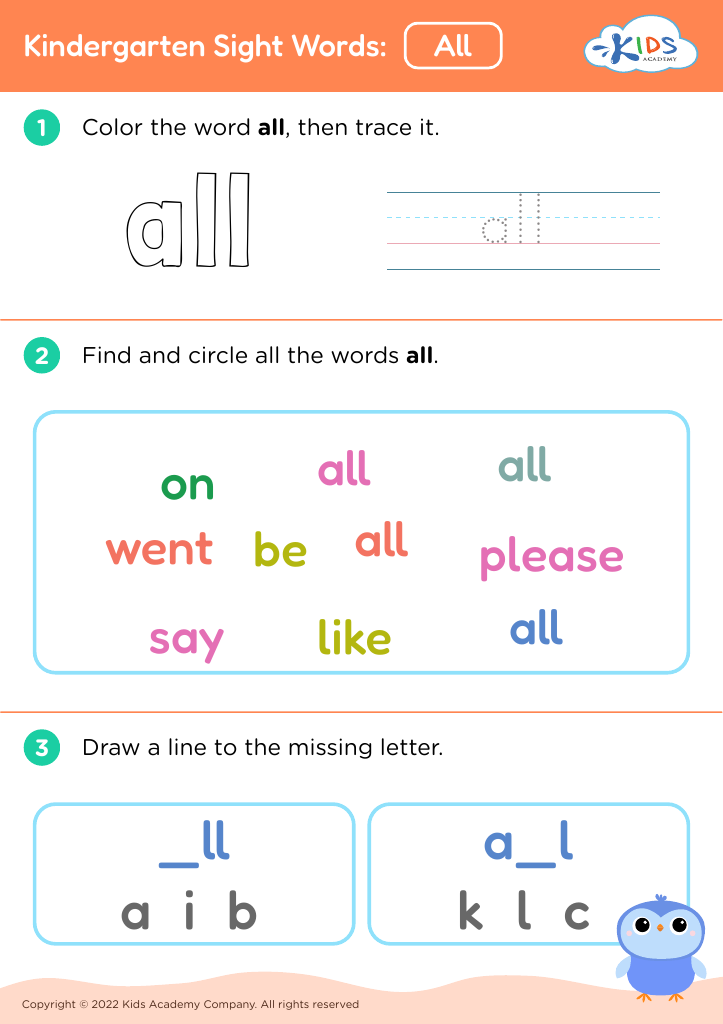
Kindergarten Sight Words: All

Kindergarten Sight Words: All

Kindergarten Sight Words: All
Worksheet


Understanding fractions and building vocabulary are essential components in the early educational development of children ages 4-5.

Firstly, introducing fractions at an early age lays the foundation for mathematical expertise. While children may not delve into complex fractions, simple concepts such as half, whole, and quarter form a basis for more advanced math skills. These early experiences with fractions encourage logical thinking and problem-solving abilities. Kids who grasp basic fractions are often better prepared for future mathematical learning.

Secondly, early childhood is a crucial period for language acquisition. Building vocabulary at ages 4-5 aids in their overall communication skills. A rich vocabulary enhances reading comprehension, making it easier for children to understand stories and instructions. It also empowers them to express their thoughts, emotions, and ideas more clearly. Engaging in conversations, reading books, and introducing new words daily can significantly expand a child's vocabulary.

Moreover, strong communication and math skills are closely linked to academic success and confidence. When parents and teachers focus on these areas, they promote a life-long love for learning.

Ultimately, fostering both foundational math and language skills ensures a well-rounded early education, equipping children with tools they will use for years to come.